水产养殖

Search documents
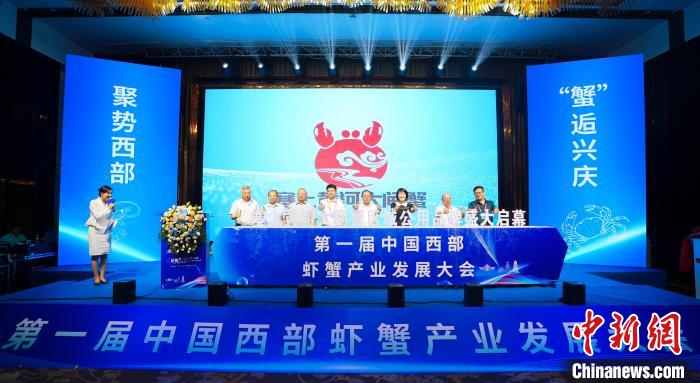
专家学者齐聚银川 为西部虾蟹产业发展把脉问诊
Zhong Guo Xin Wen Wang· 2025-07-07 16:50
Core Viewpoint - The first China Western Shrimp and Crab Industry Development Conference was held in Yinchuan, Ningxia, focusing on the development experiences of the shrimp and crab industry in the western region [1][3]. Group 1: Industry Development - The shrimp and crab industry connects agricultural production with market consumption, forming a value chain that integrates primary, secondary, and tertiary industries [3]. - Yinchuan's Xingqing District is recognized as a major aquaculture area and a national-level demonstration zone for green and healthy aquaculture, leveraging unique climate, quality Yellow River water, and saline-alkali soil for diverse species cultivation [3][5]. - The district aims to establish itself as the "Western Crab Valley," promoting industrial clusters, concentrated enterprises, integrated policies, and functional synergies to enhance the reach of aquatic products nationally and globally [3]. Group 2: Brand and Economic Impact - The "Saishang Yellow River Hairy Crab" regional public brand was launched, with a comprehensive quality control system established from breeding to sales [5][6]. - In 2024, the price of "Saishang Yellow River Hairy Crab" is expected to be 40%-60% higher than non-branded crabs, benefiting over 30 farming households and achieving an output value exceeding 100 million yuan [6]. - The district plans to invest at least 1 million yuan annually in brand promotion, technology research, and market expansion, supporting high-standard breeding bases and modern demonstration parks [6]. Group 3: Collaboration and Events - The conference featured expert discussions to address challenges in the shrimp and crab industry and foster collaboration among stakeholders [5]. - A series of cooperation agreements were signed, covering technical services, brand authorization, supply chain strategies, and the construction of the Western Crab Valley project [6]. - The first Shrimp and Crab Food Festival was launched simultaneously, allowing citizens and tourists to enjoy a culinary feast [6].

天马科技: 天马科技2025年6月鳗鱼出池情况简报
Zheng Quan Zhi Xing· 2025-07-07 08:12
福建天马科技集团股份有限公司 本公司董事会及全体董事保证本公告内容不存在任何虚假记载、误导性陈述 或者重大遗漏,并对其内容的真实性、准确性和完整性承担法律责任。 福建天马科技集团股份有限公司(以下简称"公司")现将 2025 年 6 月鳗 鱼出池情况披露如下: 一、2025 年 6 月鳗鱼出池情况 约 656.62 吨,本月鳗鱼出池规格主要在 1P~4P 之间,销售价格区间为 5.7 万元/ 吨~8.7 万元/吨。 证券代码:603668 证券简称:天马科技 公告编号:2025-049 董 事 会 | 月份 | 出池量(吨) | 外销数量(吨) | 自用数量(吨) | | --- | --- | --- | --- | | | | | (万元/吨) | 注:因四舍五入,以上数据可能存在尾差。 二、其他说明 本次披露的 2025 年 6 月鳗鱼出池情况相关数据来自公司内部统计,未经审 计,仅供投资者及时了解公司鳗鱼养殖业务生产经营概况,未对公司未来经营情 况作出任何承诺或保证,敬请投资者审慎使用,注意投资风险。 特此公告。 福建天马科技集团股份有限公司 自用约 3,262.17 吨,出池规格主要在 1P~4P ...

海南万宁改善水环境促水产养殖转型升级
Zhong Guo Jing Ji Wang· 2025-07-07 02:19
Core Insights - The project aims to significantly reduce pollution from aquaculture by implementing a tail water treatment system, enhancing ecological balance in the local marine environment [1][3] - The initiative has led to increased rental income for local fishponds, with rental prices doubling and an expected income of over 3 million yuan by 2025, compared to the previous year [2] - The project has also created job opportunities for local residents, particularly for those who have transitioned from other forms of employment [2] Group 1: Project Overview - The tail water treatment demonstration project covers an area of 467,000 square meters (approximately 700 acres), with a dedicated treatment area of 81,800 square meters (approximately 123 acres) [1] - The project utilizes a "three ponds and two dams" treatment process, integrating biological technology and equipment to effectively manage aquaculture waste [1] Group 2: Economic and Social Impact - The project has transformed the rental terms for fishponds, extending lease periods from 5 to 7 years, which has encouraged more investment from local aquaculture operators [2] - The local community has seen tangible benefits, including improved environmental conditions and enhanced livelihoods, as the project addresses both ecological and economic challenges [2][3] Group 3: Future Developments - The second phase of the tail water treatment project is expected to be completed within the year, further improving water quality and promoting sustainable development in the aquaculture sector [3] - The initiative aligns with broader governmental efforts to enhance work practices and address key issues in the aquaculture industry [3]
四川南充分类施策推动水产产业高质量发展
Zhong Guo Chan Ye Jing Ji Xin Xi Wang· 2025-07-06 22:32
Group 1 - The core viewpoint of the article is the introduction of measures by Nanchong City, Sichuan Province to support the high-quality development of the aquatic industry through various initiatives [1][2] Group 2 - The measures focus on four main areas: seed industry revitalization, base construction, full-chain development, and element support [1] - The seed industry revitalization includes infrastructure construction for breeding bases, creation of new varieties, and support for breeding facilities and parent stock updates [1] - Base construction emphasizes standardized transformation of concentrated breeding ponds over 50 acres, integrated rice-fish farming over 300 acres, and ecological circle breeding in reservoirs with over 1,000 cubic meters [1] Group 3 - Full-chain development aims to enhance key aspects such as entity cultivation, aquatic product processing, brand creation, and market expansion [1] - The support includes the establishment of leading enterprises at various levels, acquisition of processing facilities, and promotion of online marketing through e-commerce platforms [1] Group 4 - Element support focuses on enhancing core factors such as talent, funding, and projects, including the introduction of high-level talent and financial support for aquatic production [2] - The city aims to strengthen financial support for the aquatic industry, including interest subsidies for loans and innovative insurance models [2] - Efforts will be made to attract key projects related to green circular development and aquatic product processing to Nanchong [2]
锦鲤跃动直播间
Jing Ji Ri Bao· 2025-07-06 03:42
Core Insights - The article highlights the successful transformation of Songzhuang Village's agricultural practices through e-commerce and educational tourism, leading to increased income for local residents [1][2] Group 1: E-commerce Development - Songzhuang Village has established a robust e-commerce platform for selling koi fish, achieving an average of 200 daily orders and a daily transaction volume of approximately 20,000 yuan, with an expected annual sales exceeding 5 million yuan [2] - The rise of e-commerce has encouraged many young workers to return to their hometowns to start businesses, creating job opportunities for over 60 villagers in logistics and packaging [2] Group 2: Agricultural Innovation - The village has implemented modern agricultural techniques, including drip irrigation and temperature control, to enhance productivity in their greenhouses, with high demand for products like Provence tomatoes [2] - The local government and village leadership have developed a strategy to diversify agricultural sales through e-commerce and educational experiences, ensuring sustainable growth for traditional farming practices [2] Group 3: Community Impact - The establishment of a shared canteen in the village provides affordable meals for low-income residents, with prices as low as 1 yuan for certain groups, reflecting the community's commitment to supporting its members [2] - The village has developed its own koi fish food formula and upgraded breeding technologies, enhancing the brand of Songzhuang koi while promoting sustainable agricultural practices [2]
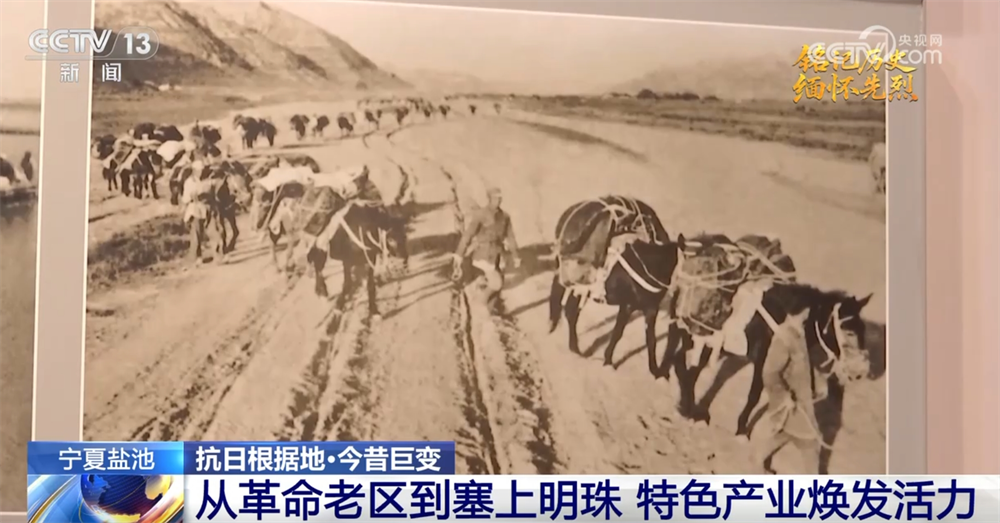
抗日根据地·今昔巨变|特色产业澎湃“新”活力 “塞上明珠”迎绿色蝶变
Yang Shi Wang· 2025-07-04 02:30
Core Viewpoint - The article highlights the transformation of Yanchi County in Ningxia, which has evolved from a key economic center during the Anti-Japanese War to a modern agricultural and renewable energy hub, showcasing significant advancements in local industries and living standards [1][15]. Economic Development - Yanchi County was historically significant for its salt production, contributing 12.5 billion kilograms of salt from 1938 to 1943, which was a major source of revenue for the region during the war [7]. - The county has shifted its economic focus from salt production to diverse agricultural practices, including the cultivation of specialty crops like goji berries and the development of aquaculture, such as salmon farming [9][11]. - By 2024, the county's GDP is projected to reach 21.54 billion yuan, with urban residents' disposable income at 37,386 yuan (up 4.5%) and rural residents' disposable income at 19,472 yuan (up 7.9%) [21]. Agricultural Innovation - The introduction of salmon farming has allowed for the rehabilitation of saline-alkali land, creating a sustainable model of "fishing to treat alkali" that enhances soil quality [9]. - The traditional sheep farming industry has been modernized, with 330,000 sheep expected to be raised by 2024, contributing significantly to local income and branding [15]. Renewable Energy Initiatives - Yanchi County has capitalized on its natural resources to develop renewable energy, with installed solar capacity of 2.15 million kilowatts and wind capacity of 3.05 million kilowatts, generating approximately 9 billion kilowatt-hours annually [19]. - Future plans include the construction of seven large-scale solar projects, aiming for a total capacity exceeding 3.2 million kilowatts [19]. Historical Significance - The county's historical role as a logistics base during the Anti-Japanese War is commemorated, with efforts to remember the contributions of past generations while fostering current economic growth [1][15].
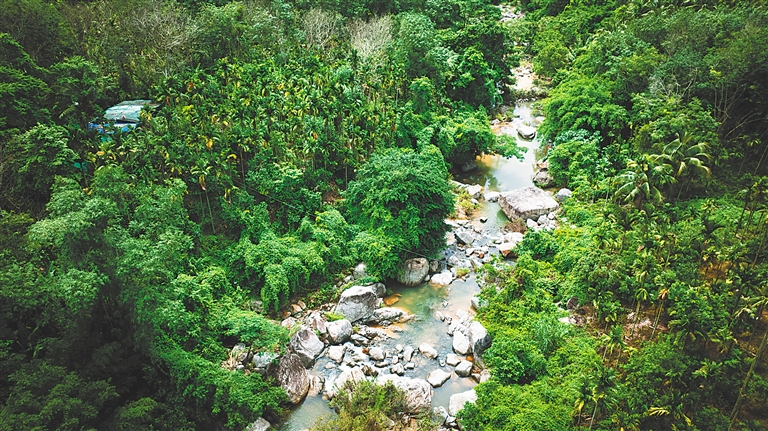
溯源藤桥河上游——保亭响水河:一汪碧水奏响生态经济“协奏曲”
Hai Nan Ri Bao· 2025-07-04 01:38
Core Viewpoint - The article highlights the significance of the Xiangshui River in Baoting County, Hainan, emphasizing its role in local culture, economy, and ecology, while showcasing the unique natural resources and culinary delights it provides to the community [4][10]. Group 1: Cultural Significance - The Xiangshui River, known for its unique sound, has become a vital part of the local identity, with its name derived from the river's natural acoustics [5][6]. - Local residents have a deep connection to the river, relying on it for drinking water and as a source of livelihood, with historical practices of fetching water from the river [6][7]. Group 2: Culinary Delights - The river supports a variety of local delicacies, including "stone fish" and "shilong fish," which thrive in its clean waters, contributing to the region's culinary heritage [8][9]. - Traditional dishes like "fish tea" are made from local fish, showcasing the community's sustainable practices and respect for the river's resources [9]. Group 3: Economic Development - The Xiangshui River has fostered a riverbank economy, with attractions like the Xiangshui Valley Shared Farm drawing tourists seeking natural experiences [10][11]. - The river's water quality and surrounding environment support the cultivation of high-quality tropical fruits and traditional crops, enhancing local agricultural productivity and income [11][12].
海南小伙王启腾扎根广东茂名农村—— 村里来了个养鱼创业的年轻人(追梦路上)
Ren Min Ri Bao· 2025-07-03 00:21
Core Insights - The article highlights the innovative approach of a young entrepreneur in the aquaculture industry, focusing on the cultivation of crispy-flesh tilapia to enhance profitability and sustainability in fish farming [1][2]. Group 1: Industry Overview - The tilapia farming industry in Guangdong faces challenges such as low prices and high competition due to homogeneous products, leading to difficulties for farmers in increasing their income [1]. - The introduction of new techniques, such as feeding tilapia with fava beans to improve meat quality, represents a potential breakthrough in the industry [1][2]. Group 2: Company Development - The entrepreneur has successfully achieved a stable survival rate of over 95% for crispy-flesh tilapia, with production costs controlled at approximately 6 yuan per pound and market prices reaching around 9 yuan per pound, significantly higher than standard tilapia [2]. - The business model has expanded to include over 15 cooperatives and 8 enterprises, covering more than 3,000 acres of farming area, with an annual production exceeding 25 million pounds and a total output value surpassing 200 million yuan [3].

港媒探访全国最大冷水鱼生产基地
Zhong Guo Xin Wen Wang· 2025-07-02 17:34
Core Insights - The article highlights the development of the cold-water fish industry in Qinghai, specifically focusing on the salmon farming at Longyangxia Reservoir, which is the largest cold-water fish production base in China [1][3]. Industry Overview - Longyangxia Reservoir is located at an average altitude of over 2600 meters, with water sourced from glaciers and snowmelt, covering an area of 383 square kilometers and maintaining an average water temperature of around 12 degrees Celsius, creating an ideal environment for salmon farming [3]. - The salmon farm at Longyangxia is the only one in China to receive both ASC and BAP 4-star international certifications, indicating high standards in aquaculture practices [3]. Production and Export Data - The annual production of salmon at Longyangxia exceeds 15,000 tons, with exports to countries such as Singapore, Thailand, and Spain [3]. - The salmon produced in Longyangxia accounts for 60% of the domestic market share, with an export value projected to reach 350 million yuan in 2024, representing 98% of the domestic salmon export volume [4]. - In the first five months of this year, Qinghai Province exported 2,344.7 tons of frozen trout and related products, marking a 130% increase compared to the previous year [4].
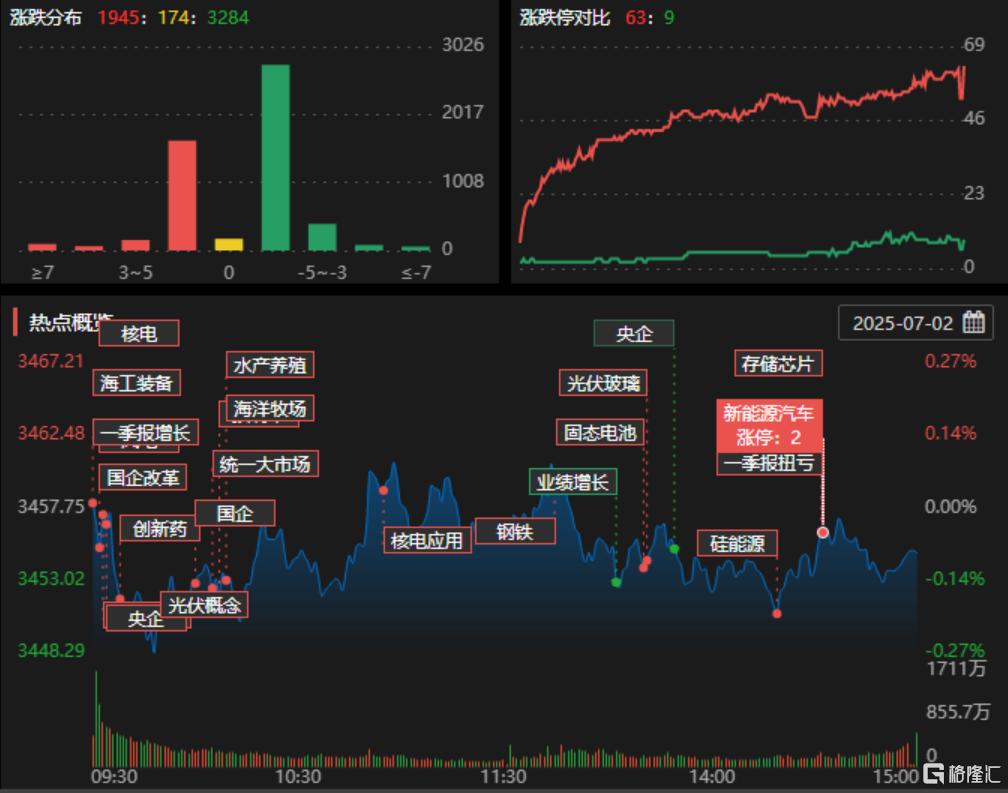
龙虎榜 | 融发核电被抢筹!深股通买了1.23亿,游资、机构、量化扎堆20CM国联水产
Ge Long Hui· 2025-07-02 10:43
7月2日,3200多只个股下跌,近2000只个股上涨,63只个股涨停,9只个股跌停。市场热点聚焦核电、海工装备、水产养殖、光伏、钢铁等板 块。 | 代码 | | 名称 | 儿天儿板 价格 | 涨幅% 涨停分析 | 换手率 | 成交额 | 首次涨停时间 | | --- | --- | --- | --- | --- | --- | --- | --- | | 1 | 603316 | 诚邦股份 | 5连板 10.88 | +10.01% 存储芯片+团林景观 | 28.54% | 8.18亿 | 09:30:39 | | 2 | 000026 | 图内达 | 5大4板 18.16 | +9.99% 航空航天表+精密减速器+央1 | 23.85% | 15.49亿 | 09:34:45 | | 3 | 002940 | 昂利康 | 4天3板 44.90 | +10.00% NHKC-1+特色中间体+化学制? 11.45% | | 9.27亿 | 09:56:54 | | ষ | 605151 | 西上海 | 3连板 23.47 | +9.98% 汽车零部件+物流服务+股权化 | 1.05% | 3309.22万 | ...