乳制品

Search documents
《重生90》定档12·26!王劲松化身科学家,岳雨婷穿越养牛,甘望星为爱“吃饲料”
Zhong Jin Zai Xian· 2025-12-25 09:25
Core Viewpoint - The interactive short drama "Rebirth 90: I Rank First on the Rich List, Beef Second," produced by Yili Group, showcases the evolution of China's dairy industry from catching up to surpassing, highlighting the industry's growth and potential opportunities for investment [1]. Group 1: Plot and Character Development - The drama features a compelling storyline with a focus on character development, including a protagonist who transforms from a pressured individual into a knowledgeable dairy expert, symbolizing the industry's advancement [3]. - The character dynamics illustrate the journey of China's dairy sector, emphasizing collaboration and knowledge sharing among dairy farmers, which reflects Yili's real-life initiatives to support the industry [4][6]. Group 2: Industry Representation - The narrative encapsulates the historical transformation of China's dairy industry, portraying the shift from fragmented practices to a more scientific and large-scale approach, which is essential for the industry's future [4][7]. - The drama integrates technical aspects of dairy farming, such as precise feed ratios and animal welfare practices, demonstrating the importance of these details in achieving quality milk production and building confidence in the national dairy brand [7]. Group 3: Audience Engagement - The interactive format allows viewers to influence the protagonist's fate, enhancing engagement and providing a unique experience that connects them to the entrepreneurial spirit of the 1990s dairy industry [8]. - This innovative approach not only entertains but also educates the audience about the challenges and opportunities within the dairy sector, fostering a deeper understanding of the industry's evolution [6][8].



对欧盟乳制品征收反补贴政策点评:深加工是中国乳业的发展方向
Xiangcai Securities· 2025-12-25 08:54
证券研究报告 2025 年 12 月 25 日 湘财证券研究所 行业研究 食品饮料行业点评 深加工是中国乳业的发展方向 ——对欧盟乳制品征收反补贴政策点评 相关研究: | 1.《品类创新扬帆,穿越液奶周期 | | | --- | --- | | ——伊利股份2026年经销商大会 | | | 点评》 | 2025.12.19 | | 2.《妙可蓝多:品牌破圈,国产替 | | | 代加速》 | 2025.11.28 | | 3.《板块情绪回暖,估值极具性价 | | | 比》 | 2025.11.24 | 行业评级:买入(维持) 近十二个月行业表现 % 1 个月 3 个月 12 个月 | 相对收益 | -3.8% | 0.3% | -22.9% | | --- | --- | --- | --- | | 绝对收益 | 4.4% | 1.4% | -13.7% | | | | 注:相对收益与沪深 300 相比 | | 分析师:张弛 证书编号:S0500525110001 Tel:17621838100 Email:zc08241@xcsc.com 地址:上海市浦东新区银城路88号 中国人寿金融中心10楼 ❑ 首先利好 ...
国元国际:对原产于欧盟的进口相关乳制品实施反补贴 建议关注优然牧业(09858)
Zhi Tong Cai Jing· 2025-12-25 07:24
Core Viewpoint - The report from Guoyuan International indicates that with the gradual stabilization of domestic dairy product demand and the implementation of countervailing measures, there is an expected increase in the demand for raw milk, suggesting a potential investment opportunity in Youran Dairy (09858) [1] Group 1: Countervailing Measures - The Ministry of Commerce of China announced a preliminary ruling on December 22, 2024, to implement temporary countervailing duties on dairy products imported from the EU starting December 23, 2025 [2] - The countervailing investigation began in July 2024, initiated by the China Dairy Industry Association and the China Dairy Products Industry Association, citing substantial damage to the domestic industry due to EU subsidies [2] - The preliminary evidence indicates that the EU provided significant subsidies to its dairy sector, leading to a causal relationship with the damage to the Chinese domestic industry, resulting in a countervailing duty range of 21.9%-42.7% on various dairy products [2] Group 2: Impact on Supply and Demand - The implementation of countervailing measures is expected to increase import prices, which may help restore the balance between supply and demand for raw milk in China [2] - In the first ten months of 2025, China imported 2.1824 million tons of various dairy products, with cheese, cream, and sour cream accounting for 156,000 tons, 118,100 tons, and 214,500 tons respectively, with the EU being a significant supplier [2] - The countervailing measures are anticipated to weaken the price advantage of imported dairy products, potentially reducing overseas supply and promoting a return to supply-demand equilibrium in the domestic raw milk industry [2]
食品饮料:对欧盟部分乳制品进口反补贴,利好国内乳制品深加工
Dongxing Securities· 2025-12-25 07:17
Investment Rating - The industry investment rating is "Positive" [5] Core Viewpoints - The Chinese Ministry of Commerce has announced a preliminary ruling on anti-subsidy measures against certain dairy products imported from the EU, which is expected to benefit domestic dairy processing [1][20] - The investigation revealed that the EU provided substantial subsidies to its dairy sector, leading to significant damage to the domestic industry in China, with the preliminary subsidy rates ranging from 28.6% to 42.7% [2][3] - The affected products include cream and cheese, with imports from the EU accounting for a significant share of the Chinese market, which has negatively impacted domestic companies' profitability [3][4] Summary by Sections Section 1: Anti-Subsidy Measures - The Ministry of Commerce decided to impose temporary anti-subsidy duties on EU dairy products starting December 23, 2025, following a year-long investigation [1][2] - The investigation found that the EU's subsidies led to increased imports of subsidized products, which harmed domestic producers [2] Section 2: Market Impact - The total import volume of the six affected product codes from January to November 2025 was 415,000 tons, valued at $1.94 billion [3] - During the investigation period, the market share of subsidized imports in China ranged from 23.61% to 34.63%, with EU products being a major source [3] Section 3: Domestic Industry Response - Domestic milk prices remain low at 3.03 yuan per kilogram, putting pressure on dairy companies and leading to a need for accelerated development in high-value dairy processing [4] - The anti-subsidy measures are expected to create market opportunities for domestic leaders in cheese and cream production, benefiting companies like Li Gao, Hai Rong, and Nanjiao [4]
该来的躲不过,中欧加税战打响,冯德莱恩提醒美国:中国才是敌人
Sou Hu Cai Jing· 2025-12-25 07:10
Group 1 - The EU has decided to impose a fixed fee on all small packages entering the EU starting in 2026, targeting Chinese e-commerce which holds a 90% market share in this segment [1] - China's Ministry of Commerce has swiftly responded by implementing temporary counter-subsidy measures on certain dairy products from the EU, primarily affecting French producers [3] - The trade friction between China and the EU is escalating, with mutual warnings exchanged, particularly following French President Macron's decoupling warnings [3] Group 2 - The EU's criticism of China by Commission President von der Leyen is seen as an attempt to divert attention from its own challenges and strategic pressures [3] - The ongoing trade conflict reflects a more complex adjustment in transatlantic relations and global strategic dynamics, particularly in light of the US's focus on the Russia-Ukraine conflict [3]
澳优旗下佳贝艾特荣获“年度IP创新品牌”,持续引领羊奶品类破圈
Huan Qiu Wang Zi Xun· 2025-12-25 06:17
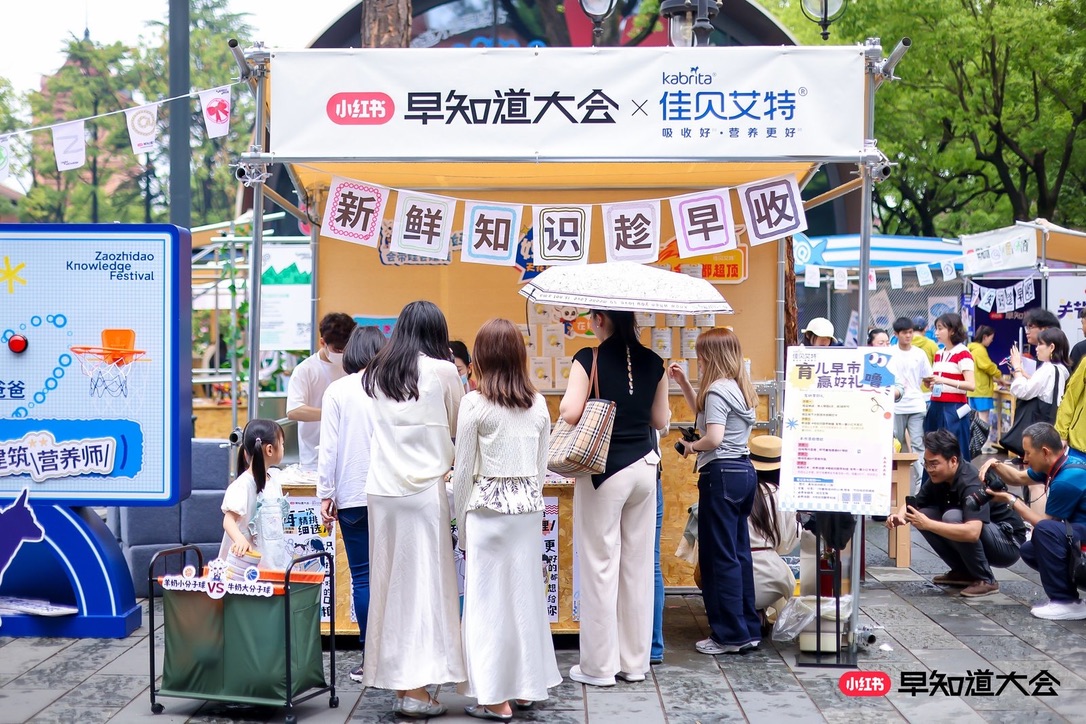
Core Insights - The article highlights the innovative communication strategies employed by the company, Aoyou, through its brand, Kabrita, which has won the "Annual IP Innovation Brand" award at the Xiaohongshu Annual Conference, recognizing its efforts in engaging consumers and leading the goat milk category [1][5] Group 1: Consumer Engagement - Kabrita has identified that new-generation parents prioritize emotional resonance and interactive experiences when choosing infant formula, beyond just the scientific aspects of the formula [2] - The brand launched two innovative IP activities, "Early Knowledge Conference" and "Trace the World," to foster engagement and dialogue with consumers [4] Group 2: Innovative Communication - The "Early Knowledge Conference" redefined traditional educational models by facilitating open discussions between parents and experts, attracting thousands of consumers to participate [4] - The "Trace the World" initiative marked the first overseas traceability for a milk powder brand on Xiaohongshu, addressing parents' concerns about product safety through transparent live streaming from Dutch farms and factories [4][5] Group 3: Industry Impact - Kabrita's initiatives have led to the creation of the first industry report on infant formula feeding trends, developed in collaboration with Xiaohongshu, JD.com, and Kantar, which has sparked significant media coverage and industry discussions [5] - The brand aims to enhance consumer understanding of the nutritional benefits of goat milk formula, promoting its digestibility, absorption, and low allergenicity through real-life sharing experiences [5] Group 4: Future Commitment - The recognition received by Kabrita serves as both encouragement and motivation to continue innovating and providing high-quality products and experiences for consumers in the maternal and infant industry [6] - The company is committed to maintaining a focus on research and quality while engaging in meaningful communication to enhance the nutritional offerings of goat milk for families [6]
乳制品行业气候风险再识别:从不可控外力到经营中的可控变量
MSC咨询· 2025-12-25 03:37
Investment Rating - The report provides a comprehensive analysis of the dairy industry, focusing on climate risks and their financial implications, but does not explicitly state an investment rating [1]. Core Insights - The dairy industry is facing significant climate risks that can impact milk production and financial performance. Companies need to assess these risks as controllable variables in their operations rather than as uncontrollable external forces [11][19]. - The report emphasizes the importance of sustainability consulting in helping dairy companies navigate climate-related challenges and improve operational resilience [1][11]. Summary by Sections - **Overview**: The dairy industry is increasingly recognizing climate risks as critical factors affecting production and profitability. Companies are encouraged to adopt strategies that mitigate these risks [6][11]. - **Financial Impact Assessment**: The report discusses how climate risks can directly affect milk yield and overall financial health, urging companies to implement robust risk management frameworks [11][39]. - **Sustainability Strategies**: It highlights the need for dairy companies to integrate sustainability into their business models, focusing on operational adjustments that can lead to better environmental outcomes and financial performance [1][11]. - **Consulting Services**: The role of sustainability consulting is underscored, with recommendations for dairy companies to engage with experts to develop tailored strategies for climate risk management [1][11].
24小时已过!中方收费准时开始,卢拉通知欧盟:再不签协议就晚了
Sou Hu Cai Jing· 2025-12-25 03:28
Group 1 - China's temporary anti-subsidy tax on EU dairy products has come into effect, marking a significant trade response [1][5][6] - The EU is facing multiple challenges, including Brazil's ultimatum regarding the long-discussed free trade agreement with the EU [3][16] - The EU's agricultural policies, particularly the Common Agricultural Policy, have allowed its dairy products to be sold at artificially low prices in China, leading to accusations of unfair competition [9][11] Group 2 - The imposition of the anti-subsidy tax is a response to the substantial damage caused to local Chinese dairy companies by subsidized EU imports [11][15] - The investigation into EU dairy subsidies revealed that a significant number of the companies involved are French, highlighting the role of France in the EU's agricultural policy [26][28] - Brazil's President Lula has expressed frustration over the EU's reluctance to finalize the trade agreement, indicating a shift towards seeking partnerships with other markets, including China [22][39] Group 3 - The EU's dual approach of subsidizing its farmers while restricting imports from South America has been criticized as hypocritical and unsustainable [20][32] - The current trade dynamics suggest that if the EU continues its protectionist policies, it risks being isolated in the global market [41][46] - The situation serves as a warning to the EU about the consequences of maintaining a double standard in trade practices, as emerging markets are increasingly unwilling to accept such tactics [43][44]
“谢添地”被曝降价,靠稀缺、营销打造的高端定位走不通了?
Xi Niu Cai Jing· 2025-12-25 03:22
Core Insights - The article discusses the pricing and market performance of Xieti Dairy, a brand under Yuexiu Dairy, which focuses on high-end organic milk products. The brand's initial pricing strategy has significantly changed, with current prices being lower than when the products first launched [2][3]. Pricing and Product Comparison - Xieti's 6-pack organic milk is priced at 19.9 yuan, while a 10-pack of 250ml milk is priced at 48 yuan, indicating a shift from its initial higher pricing strategy [2]. - Initially, Xieti's products were priced at 12.8 yuan for a 200ml box and 78 yuan for A2 milk, reflecting a premium positioning that has not been sustained [2]. Marketing and Brand Positioning - To enhance market presence, Yuexiu Dairy invested heavily in marketing, including exclusive sponsorships of popular TV shows, which increased brand visibility but did not translate into proportional sales growth [2][3]. - The brand's slogan emphasizes the natural origins of its milk, aiming to attract consumers seeking premium products [2]. Market Dynamics and Consumer Behavior - The dairy market is experiencing a downturn, with a significant decline in retail sales growth for regular milk products, showing a year-on-year decrease of approximately 2% in the first three quarters [3]. - Consumers are becoming more price-sensitive, leading to a dilution of the perceived value of high-end products, as they now prefer cost-effective options over premium-priced items [3][4]. Competitive Landscape - The high-end milk market is already dominated by established brands like Jindian and Telunsu, which have created strong brand recognition and loyalty, making it challenging for Xieti to penetrate the market effectively [4]. - The competitive environment has led to price wars among high-end milk brands, further impacting Xieti's pricing strategy and market positioning [4]. Challenges Ahead - Xieti Dairy faces significant challenges in establishing brand differentiation and gaining consumer acceptance in a crowded market, where merely relying on product features and nutritional claims may not suffice [5].
把广场舞跳上舞台:蒙牛悠瑞携手央视打造银发活力盛典
Xin Hua Wang· 2025-12-25 01:50
Group 1 - The core event "Jinwu Kaijiao Ba!" organized by Mengniu's "Yourui" brand was broadcasted on CCTV, showcasing over a hundred offline performances across six provinces in China [1] - The event achieved a peak viewership rating of over 0.80%, surpassing the historical average by 28%, with a total online view count exceeding 12.72 million and an interaction volume of 450,000 [1] - Mengniu's "Yourui" brand has transitioned from being a provider of nutritional solutions for middle-aged and elderly individuals to becoming a key contributor to the vibrant lifestyle of China's elderly community, emphasizing core values of vitality, confidence, community, and culture [1] Group 2 - Mengniu's "Yourui" has established a joint research center with Sun Yat-sen University focused on nutrition and health for the elderly, aiming to provide scientific support for improving the nutritional health of this demographic [2] - The product "Yourui Bone Strength Gold" was launched, featuring a scientific formula that includes N-acetylglucosamine and patented ingredients, addressing health needs related to bones, joints, and muscles [2] - The innovative product has received multiple awards, including the "Best Formula Innovation Award" at the 2025 World Beverage Innovation Awards and the "Annual Nutrition Product Award for Elderly Action" at the Asia-Pacific Functional Food Industry Awards, highlighting the company's commitment to elderly health through scientific advancements [2]