
出境游

Search documents
出境游黄金时代,回不去了
投资界· 2026-03-12 07:41
Core Viewpoint - The article reflects on the nostalgia for the past golden era of outbound travel, highlighting the significant changes in travel dynamics, costs, and safety concerns that have emerged over the years [3][10][15]. Group 1: Changes in Outbound Travel - The cost of outbound travel has significantly increased over the past decade, with round-trip tickets from Beijing to Paris and Rome now costing around 8,000 to 9,000 yuan, compared to just over 3,000 yuan a decade ago [10]. - The travel experience has become more complicated due to geopolitical tensions, with recent conflicts in the Middle East causing flight cancellations and leaving many travelers stranded [11][12]. - There is a noticeable shift in the perception of safety and friendliness in foreign countries, with travelers feeling more apprehensive about their security compared to previous years [12]. Group 2: Industry Challenges - Travel agencies are facing severe challenges due to rising operational costs, including increased labor costs and inflation, which are making it difficult to maintain competitive pricing for travel packages [13][14]. - The traditional low-cost travel model is becoming unsustainable as fewer travelers are willing to spend at duty-free shops, leading to a decline in group travel and a shift towards customized travel experiences [14]. - The outbound travel market is expected to undergo significant segmentation, with high-net-worth individuals remaining less sensitive to price increases, while middle-class families are becoming more budget-conscious and seeking affordable travel options [14].


中年人的出境游黄金时代,回不去了
虎嗅APP· 2026-03-11 09:55
Core Viewpoint - The article reflects on the significant changes in the outbound tourism landscape, highlighting nostalgia for the past when travel was more accessible and affordable, contrasting it with the current challenges faced by travelers and the industry due to rising costs and geopolitical instability [4][18][46]. Group 1: Changes in Outbound Tourism - The nostalgia for the past travel experiences is prevalent among many individuals, reminiscing about the ease and affordability of travel from 2010 to 2019, where flights were cheaper and destinations felt safer [5][9][18]. - The current cost of flights has increased dramatically, with round-trip tickets from Beijing to Paris or Rome now costing around 8,000 to 9,000 yuan, compared to just over 3,000 yuan a decade ago [18][19]. - Geopolitical tensions have made travel more unpredictable, with recent conflicts in the Middle East causing flight cancellations and leaving many travelers stranded [25][30]. Group 2: Industry Challenges - The outbound tourism industry is facing significant challenges, including rising operational costs due to inflation and a shortage of experienced staff, which has led to increased prices for travel packages [40][41]. - The traditional low-cost travel model is becoming unsustainable as fewer travelers are willing to pay high prices, leading to a stalemate between travel agencies and consumers [42][45]. - The market is expected to split, with high-net-worth individuals continuing to travel despite rising costs, while middle-class families may seek more budget-friendly options, indicating a shift in consumer behavior [45][46].

信达证券:春节超长假期刺激出游 景区、入境游表现靓丽
智通财经网· 2026-02-25 06:16
Core Viewpoint - The extended Spring Festival holiday has stimulated travel demand, with total domestic travel expenditure reaching 803.48 billion yuan, averaging 89.3 billion yuan per day, a year-on-year increase of 5.5%, recovering to 122% of the level in the same period of 2019 [1][2]. Group 1: Travel Demand and Expenditure - During the 2026 Spring Festival holiday, there were 596 million domestic travelers, averaging 66 million per day, a year-on-year increase of 5.7%, recovering to 112% of the level in 2019 [2]. - The total domestic travel expenditure was 803.48 billion yuan, averaging 89.3 billion yuan per day, a year-on-year increase of 5.5%, recovering to 122% of the level in 2019 [2]. - The per capita consumption was 1,348 yuan, averaging 150 yuan per day, a year-on-year decrease of 11.3%, recovering to 84.7% of the level in 2019 [2]. Group 2: Scenic Spots Performance - Scenic spots experienced high visitor flow during the holiday, with many reaching maximum capacity for several days [3]. - Notable scenic spots such as Emei Mountain and the Three Gorges Dam showed strong performance, with significant year-on-year growth [3]. - The number of visitors to the projects under SanTe Cableway increased by 18.2% in the first eight days, while destinations under Xiangyuan Cultural Tourism saw a 31.3% increase [3]. Group 3: Duty-Free Sales - Duty-free sales in Hainan experienced double-digit growth, with Sanya outperforming Haikou [4]. - During the Spring Festival holiday, the duty-free shopping amount reached 2.72 billion yuan, averaging 303 million yuan per day, a year-on-year increase of 16.5% [4]. - Sanya's duty-free sales amounted to 1.96 billion yuan, averaging 218 million yuan per day, a year-on-year increase of 21% [4]. Group 4: Performance of Entertainment - The number of performances during the Spring Festival holiday remained stable or slightly increased [5]. - Songcheng Performance's "Romance of the Three Kingdoms" had 580 shows, increasing by 30 shows compared to the previous year [5]. - "The Long Song of Love" had a total of 32 shows during the holiday, an increase of 4 shows compared to the previous year [5]. Group 5: Outbound and Inbound Travel - The extended holiday combined with "leave-sharing" travel has stimulated outbound travel demand [6]. - During the Spring Festival holiday, the number of people entering and exiting the country reached 17.796 million, averaging 1.977 million per day, a year-on-year increase of 10.1% [6]. - The number of mainland residents traveling to Hong Kong and Macau increased by 11.7% and 7.2%, respectively [6]. Group 6: Inbound Travel - The visa-free policy has positively impacted inbound travel [7]. - During the Spring Festival holiday, the number of foreign visitors entering and exiting the country reached 1.313 million, averaging a daily increase of 21.8% [7]. - Among the inbound foreign visitors, 460,000 entered under the visa-free policy, with a daily increase of 28.5% [7].

2026年中国旅客出境游人群调研及洞察报告
MoonFox· 2026-02-12 10:02
Investment Rating - The report indicates a positive outlook for the outbound tourism industry in China, suggesting a return to growth with significant increases in traveler numbers and spending expected in 2026 [9][12][51]. Core Insights - The outbound tourism industry is projected to experience a resurgence, with key travel periods such as the Spring Festival, May Day, and National Day expected to see record passenger volumes in 2026 [9][12]. - High-income families and residents of first and second-tier cities are identified as the core audience for outbound tourism, with an increasing willingness to travel among lower-tier markets due to improved supply [9][12]. - Travelers' motivations are evolving from basic experiences to more personalized, in-depth, and social travel experiences, with a notable trend towards rational and quality-focused spending [9][12]. - The report highlights a shift towards longer-distance travel, particularly among high-net-worth individuals, driven by favorable visa policies and a desire for unique experiences [9][12]. - Digital platforms are significantly influencing travel decisions, prompting traditional service providers to adapt and upgrade their offerings [9][12]. Summary by Sections 1. Current Development of China's Outbound Tourism Industry - The number of outbound travelers and spending is on an upward trend, supported by visa facilitation agreements with 158 countries, enhancing travel convenience [12][13]. - The outbound tourism market is expected to exceed 220 million travelers by 2026, with a substantial increase in revenue for travel agencies [16][51]. 2. Analysis of Chinese Travelers' Outbound Behavior - The demographic profile of outbound travelers shows a balanced gender distribution and a significant proportion of young, high-income individuals [8][23]. - High-net-worth individuals are identified as the primary consumers in the high-end outbound tourism segment, with a strong inclination towards family travel [36][51]. 3. Analysis of Chinese Travelers' Outbound Consumption - The report indicates that higher family income levels correlate with increased frequency of outbound travel, with affluent families planning multiple trips annually [39][45]. - The average annual expenditure on travel for high-net-worth individuals is substantial, with a preference for luxury experiences [49][51]. 4. Trends in the Outbound Tourism Industry - The report forecasts that major holidays will become peak travel times, with significant increases in outbound travel expected during these periods [73][76]. - Short-distance travel remains popular, with a diverse range of destinations being planned for 2026, including traditional favorites and emerging hotspots [77][81].
免签潮背后,中国护照开始悄悄值钱
虎嗅APP· 2026-01-27 09:14
Core Viewpoint - The article discusses the increasing number of countries offering visa exemptions to Chinese citizens, highlighting the implications for international relations and the tourism industry as China’s passport becomes more powerful post-pandemic [4][6][13]. Group 1: Visa Exemption Trends - Brazil has announced visa exemptions for certain short-term categories for Chinese citizens, following similar moves by Russia, Cambodia, Turkey, and the Philippines, indicating a growing trend in visa facilitation [4][5]. - The Henley Passport Index shows that by 2026, the Chinese passport will rank 59th, allowing visa-free or visa-on-arrival access to 81 countries, a significant improvement from its position before the pandemic [6]. Group 2: Impact on Tourism - Following the announcement of Brazil's visa exemption, travel searches for cities like Rio de Janeiro, São Paulo, and Brasília surged, with search volumes increasing over five times compared to the previous week [5]. - The easing of visa restrictions is seen as a strategic move by countries to attract Chinese tourists, who are crucial for the recovery of the global tourism market, especially in the context of a weak global economic recovery [20][22]. Group 3: Economic and Political Implications - The article emphasizes that visa policies reflect the trust and diplomatic relations between countries, with China’s unilateral visa exemptions being reciprocated by other nations as a sign of mutual trust [13][18]. - Countries like Turkey and Cambodia are using visa exemptions as a low-cost marketing strategy to boost tourism and foreign exchange earnings, highlighting the economic dependency on Chinese tourists [20][22]. Group 4: Future of Chinese Outbound Tourism - The combination of improved visa access, favorable exchange rates, and extended holiday periods is positioning the Chinese outbound tourism industry for significant growth in 2026 [25][28]. - The upcoming long Spring Festival holiday, lasting nine days, is expected to facilitate longer trips to destinations that were previously less accessible, indicating a shift towards deeper travel experiences [29][30].

人民币兑美元破7,有人算账,现在换10万美元,能比六七月省1.7万元
Sou Hu Cai Jing· 2025-12-29 03:42
Core Viewpoint - The recent appreciation of the offshore RMB, breaking the 7.0 barrier and returning to the "6 era," is reshaping individual wealth dynamics and presents both opportunities and challenges for consumers and investors [2][15]. Consumer Impact - The RMB appreciation acts as a universal "discount season" for consumers, particularly benefiting those engaged in overseas shopping and travel, as prices for imported goods and services have effectively decreased [2][4]. - For families supporting children studying abroad, the currency shift can lead to significant savings; for instance, a drop in the exchange rate from 7.2 to 6.99 can save over 10,000 RMB on a total annual expenditure of 50,000 USD for studying in the U.S. [5]. Investment Opportunities - The appreciation of the RMB is likely to attract foreign capital inflows, benefiting A-shares and core asset valuations, particularly in sectors like consumption, finance, and real estate, leading to potential valuation recovery for investors [7]. - Chinese government bonds are becoming increasingly attractive to global investors, especially in the context of U.S. interest rate cuts, highlighting the stability of RMB-denominated debt [7]. Debt Management - For those with foreign currency debts, such as USD mortgages, the appreciation of the RMB effectively reduces the debt burden. However, domestic interest rates remain unchanged, which could impact those with RMB-denominated debts [10]. - It is advisable for individuals holding cash with high-interest loans to prioritize paying off these debts, as reducing high-interest liabilities is a prudent financial strategy in a declining investment return environment [12]. Strategic Recommendations - Individuals with upcoming foreign expenditures should consider locking in current exchange rates by gradually purchasing foreign currency to mitigate risks associated with future fluctuations [12]. - Those holding excess USD cash should consider converting to RMB or investing in USD-denominated financial products to avoid losses from currency depreciation and inflation [12]. - Maintaining a liquidity buffer of 3-6 months' worth of expenses is recommended, along with increasing allocations to RMB-denominated equity assets to capitalize on economic recovery and currency appreciation [14].
人民币“破7”创15个月来新高
Sou Hu Cai Jing· 2025-12-25 23:12
Core Viewpoint - The offshore RMB has surpassed the 7.0 mark against the USD, indicating the start of a new appreciation cycle for the RMB, with significant implications for the economy and capital markets [2]. Impact on the Real Economy - The appreciation of the RMB is expected to lower import costs for raw materials and advanced technology equipment, supporting industrial upgrades [2]. - The shift towards a stronger RMB will encourage the economy to transition from "price competition" to "brand, technology, and market diversification" [2]. - Companies will be pressured to enhance product value and competitiveness due to the appreciation of the RMB amidst positive growth in merchandise exports [2][3]. Impact on Specific Industries - Import-dependent industries, companies with significant USD liabilities, and certain service trade sectors are likely to benefit from RMB appreciation [3]. - Sectors such as energy, agriculture, and materials may see reduced import costs, while industries like aviation, duty-free, and outbound tourism could experience increased revenues [3]. Impact on Capital Markets - RMB appreciation is likely to attract capital inflows, positively affecting stocks and bonds across various asset classes [4]. - The valuation repair effect suggests that a 0.1 percentage point increase in the exchange rate could enhance stock valuations by 3% to 5% [5]. - The attractiveness of RMB-denominated assets is expected to increase, particularly for foreign investors, leading to accelerated cross-border capital inflows [5]. - Improved market confidence and liquidity are anticipated as the RMB strengthens, enhancing the appeal of A-shares and Hong Kong stocks to foreign capital [5]. Summary of Effects on Households - The appreciation of the RMB enhances its purchasing power against foreign currencies, reducing costs for overseas travel, shopping, education, and medical services [6]. - A 10% appreciation of the RMB against the USD could lower costs for Chinese citizens traveling or studying in the U.S. by nearly 10% [6]. - The appreciation cycle may lead to rising asset prices, increasing the real value of RMB-denominated assets held by households, such as real estate [6].

年终报道丨说走就走 拿起护照去旅行
Xin Hua She· 2025-12-23 02:51
Group 1 - The core idea of the article highlights the increasing trend of Chinese tourists planning international trips during the upcoming New Year and Spring Festival holidays, with a focus on the "cross-year world tour" [2] - China has established visa-free travel agreements with 29 countries, enhancing travel opportunities for its citizens [2] - By 2025, five additional countries—Samoa, Uzbekistan, Azerbaijan, Malaysia, and Russia—will introduce new visa facilitation policies for Chinese passport holders, expanding travel options for the winter season [2] Group 2 - Samoa, located in the South Pacific, is known for its picturesque landscapes and is one of the first countries to see the sunrise due to its proximity to the International Date Line [3][5] - Uzbekistan serves as a cultural crossroads in Central Asia, historically significant as part of the Silk Road, attracting tourists with its rich heritage [7][9] - Azerbaijan, positioned as a key hub for international transport across the Caspian Sea, offers a blend of modern and historical attractions [10][12] - Malaysia, recognized as a "tropical tourism paradise," features diverse attractions across its two regions, East and West Malaysia [17][19] - Russia, the largest country in the world, spans across Europe and Asia, providing a wide array of cultural and historical sites for travelers [20][22]

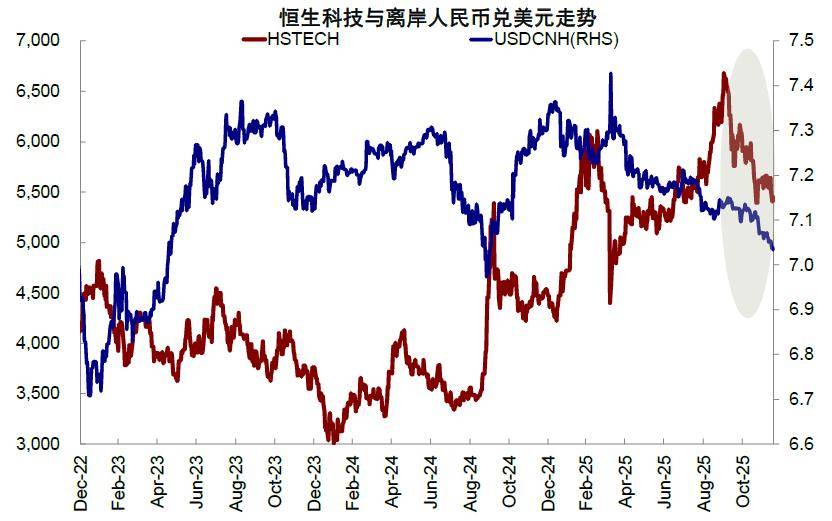
股市和汇率谁“错”了?
Sou Hu Cai Jing· 2025-12-22 00:24
Group 1 - The recent phenomenon of a strong renminbi against the US dollar, appreciating by 1.3% since early October, contrasts with a declining stock market, particularly in Hong Kong where the Hang Seng Index has dropped 15% from its peak [1][4] - Historically, a strong currency correlates positively with stock market performance, as a stronger renminbi typically indicates foreign capital inflow and a favorable economic outlook [1][4] - The current divergence between currency strength and stock market weakness raises questions about whether the currency or the stock market is misaligned, with historical examples indicating that such divergences can occur [4][10] Group 2 - The relationship between the renminbi and the stock market has been predominantly positive, with recent divergence being rare and primarily driven by different underlying factors [8][18] - The renminbi's appreciation is attributed to a record trade surplus of $1.08 trillion and expectations of a weaker US dollar, while the stock market reflects weakening domestic demand and economic pressures [19][31] - The stock market's decline is linked to weak internal demand, with indicators such as PMI remaining below the growth line and fixed asset investment showing negative growth for three consecutive months [25][31] Group 3 - The recent strength of the renminbi is not primarily driven by foreign capital inflow, as evidenced by the stock market's decline and a lack of significant foreign investment in the bond market [19][21] - The central bank's intervention in the foreign exchange market appears to be diminishing, as indicated by changes in the onshore and offshore renminbi swap rates [26][27] - The divergence between the renminbi and the stock market may persist due to differing driving factors, with the potential for the renminbi to continue appreciating based on seasonal capital settlement and external economic conditions [30][32] Group 4 - The implications of a strong renminbi include potential benefits for import-dependent industries and sectors related to service trade, while negatively impacting exports and price pressures [42][49] - A sustained appreciation of the renminbi could lead to a temporary boost in market sentiment, particularly if it breaks key psychological levels, but the sustainability of this trend is uncertain without fundamental support [44][45] - The future trajectory of the renminbi and stock market will depend on the underlying economic fundamentals and whether fiscal policies can effectively stimulate growth [41][44]
凑齐12天长假,中国打工人挤满日韩
Hu Xiu· 2025-10-02 02:34
Core Insights - The combination of the National Day and Mid-Autumn Festival holidays has led to a surge in outbound tourism, with daily entry and exit travelers expected to exceed 2 million during the holiday period [1][2] - The outbound tourism market is experiencing a significant rebound, with a notable increase in early bookings and a shift in consumer behavior towards planning trips well in advance [3][4][6] Group 1: Outbound Tourism Trends - The first wave of outbound tourists for the National Day holiday began departing as early as September 25, with over 300 outbound tour groups organized by a travel agency, marking a year-on-year increase of over 30% [3] - Many consumers are adopting a "request 3 days off for 12 days" strategy to extend their holidays, leading to a noticeable rise in inquiries and bookings for outbound travel [4] - Data from Qunar indicates that Chinese tourists booked flights to 599 cities globally during the National Day holiday, with a year-on-year increase in hotel bookings for popular destinations [4] Group 2: Flight and Accommodation Pricing - The overall price of outbound flights has increased due to high demand during the holiday, with over 1.79 million tickets booked by September 30, reflecting a year-on-year increase of approximately 13% [7] - Some popular destinations have seen flight prices rise to two to three times their usual rates, with travelers reporting significant increases in hotel prices as well [7][17] - For example, hotel prices in Tokyo have surged from around 700 RMB per night last year to 1300 RMB this year during the holiday period [17] Group 3: Popular Destinations and Market Dynamics - Japan and South Korea are among the most popular destinations for Chinese tourists, with Japan seeing a 46% year-on-year increase in visitors from mainland China [16][17] - The introduction of a trial visa-free policy for group tourists to South Korea has further boosted interest, with a 53% increase in tourism product orders during the holiday period [19][20] - Conversely, Thailand has experienced a decline in tourist numbers, with a 7.2% drop in foreign visitors in the first eight months of the year, particularly from China [23][24]