折扣超市

Search documents
2025全球家族财富榜出炉:沃尔顿家族以5134亿美元稳居第一
3 6 Ke· 2025-12-18 07:48
Group 1 - The Walton family, founders of Walmart, tops the global wealth list with a net worth of $513.4 billion, marking the first time their wealth exceeds $500 billion [1][7] - The total wealth of the top 25 richest families globally increased by $358.7 billion over the past year, reaching a combined net worth of $2.9 trillion [2] - The entry threshold for the list reached a historical high of $46.4 billion, an increase of $9.7 billion from the previous year [2] Group 2 - Walmart generated $681 billion in revenue from over 10,750 stores worldwide in the last fiscal year, serving 270 million customers weekly [4] - The Al Nahyan family, ruling in the UAE, has significant control over the country's oil wealth and has diversified investments, including in AI [6][9] - The Koch family, through Koch Industries, has a revenue of approximately $125 billion, managing their wealth through a family office [17][24] Group 3 - The Mars family, known for their candy and pet care products, has a wealth of $143.4 billion, with pet care now accounting for over half of their revenue [20][25] - The Ambani family, controlling Reliance Industries, has a net worth of $105.6 billion, with significant assets in oil refining [23][26] - The Ferrero family, with a wealth of $54.9 billion, has expanded their business through acquisitions, including the purchase of Kellogg's US candy business [57][60]



盒马“超盒算NB”开放加盟 硬折扣赛道竞速升温
Zhong Guo Jing Ying Bao· 2025-12-05 21:16
Core Viewpoint - Hema's discount brand "Chao He Suan NB" has opened its franchise channel for the first time, marking a new phase of scaled expansion in the hard discount sector [1][2] Group 1: Expansion Strategy - "Chao He Suan NB" is expanding at a rate of over 20 stores per month, with the current store count exceeding 350 [2] - The franchise model aims to quickly capture market share and share supply chain costs, leveraging economies of scale as a competitive advantage [2][3] - The brand's expansion is based on a successful operational model from over 300 direct stores, allowing for rapid scaling through franchising [2][3] Group 2: Market Competition - The hard discount retail sector is experiencing intensified competition, with major players like JD and Meituan also entering the market [1][7] - The overall penetration rate of hard discount stores in China is only 8%, indicating significant growth potential compared to mature markets like Germany and Japan [7] - Hema's "Chao He Suan NB" focuses on community fresh produce and benefits from Alibaba's ecosystem for online traffic [8][9] Group 3: Franchise Model and Costs - Franchisees are required to invest approximately 2.65 million yuan for a standard 600 square meter store, which includes various upfront costs [3][4] - The expected payback period for franchisees is around three years, assuming a gross margin of 15% and annual sales of 30 million yuan [3] - The brand emphasizes the importance of site selection, requiring stores to be located in large residential communities or mature business districts [3] Group 4: Operational Strategy - "Chao He Suan NB" operates with a strategy focused on high efficiency and low costs, utilizing a simplified operational model with pre-packaged goods [5] - The brand's private label products account for 60% of its offerings, allowing for cost reductions through direct factory connections and self-pricing [5] - The brand has integrated digital tools for demand forecasting and inventory management, enhancing its operational efficiency [5] Group 5: Challenges and Risks - The franchise model presents challenges in maintaining product quality and operational standards, especially in lower-tier cities with varying cold chain logistics [6] - Ensuring consistent quality across franchise locations is critical, as the brand must balance rapid expansion with maintaining control over product offerings [6][4] - The complexity of managing a franchise system requires standardized processes across various operational aspects, which poses a significant challenge [6]
盒马“超盒算NB”开放加盟,硬折扣赛道激战再起
Guo Ji Jin Rong Bao· 2025-11-24 14:43
Core Insights - Hema's budget community supermarket brand "Chao He Suan NB" has officially opened its franchise application channel, marking its first foray into franchising [2] - The initial cities for franchise openings are Shanghai, Hangzhou, Jiaxing, and Huzhou, with an annual franchise fee of 50,000 yuan, excluding store renovation, equipment, and deposit costs [2][4] - The overall cost for operating a Chao He Suan NB store is estimated to be between 1.5 million to 2 million yuan, which includes various operational expenses [2][4] Franchise Model - The brand offers two types of franchise models: individual and corporate [2] - Franchisees are required to select locations in large residential communities or mature business districts, with store sizes ranging from 500 to 650 square meters [2] Brand Development - Chao He Suan NB, previously known as Hema NB, has evolved since its inception in July 2021, initially focusing on selling discounted perishable goods and inventory clearance [4] - The brand has accelerated its expansion, opening over 20 new stores monthly, with a total of more than 350 stores and a private label product share of nearly 60% [5] Market Context - The timing of the franchise launch coincides with a significant growth opportunity in China's hard discount market, projected to exceed 200 billion yuan by 2024 [7] - Compared to international markets, China's hard discount retail sector has substantial room for growth, with a current penetration rate of only 8% [7] Competitive Landscape - The hard discount sector is becoming increasingly competitive, with new entrants like JD.com and Meituan launching their discount supermarket projects [7][8] - JD.com has opened its first discount supermarket in Hebei and plans further expansions, while Meituan's "Happy Monkey" project aims to establish a significant presence in major cities [8]
硬折扣狂飙:在价格撕裂声中,看见中国消费的真相
3 6 Ke· 2025-10-14 00:03
Core Viewpoint - The rise of hard discount stores in China reflects a significant shift in consumer behavior, driven by economic uncertainty and a focus on value over brand loyalty [12][30][39] Group 1: Market Trends - Hard discount stores are rapidly expanding across China, with major players like JD and Meituan entering the market, indicating a shift in retail dynamics [3][4][6] - The number of hard discount stores is increasing at a remarkable pace, with new openings in key cities and a growing presence of traditional discount brands like Aldi [6][8] - Consumers are increasingly opting for hard discount options, with many choosing lower-priced alternatives over premium brands, highlighting a change in spending habits [3][10][12] Group 2: Economic Context - The economic environment has shifted from a focus on consumption upgrades to a more cautious spending approach, influenced by slowing income growth and rising living costs [12][14][31] - Data shows that while disposable income has increased, the growth rate has slowed, leading to a perception of reduced purchasing power among consumers [14][17][19] - The concept of "preventive savings" has emerged, where consumers are saving more due to uncertainties about future income, impacting their spending behavior [25][27][28] Group 3: Consumer Behavior - Consumers are now prioritizing essential needs over wants, reflecting a more rational approach to spending in response to economic pressures [16][30][35] - The perception of value has become paramount, with consumers scrutinizing every purchase for necessity and cost-effectiveness [16][36][40] - The rise of hard discount stores is seen as a societal adjustment to economic uncertainty, where consumers seek products that offer better value rather than simply opting for higher-priced items [39][40][41] Group 4: Retail Efficiency - Hard discount stores operate on a model that emphasizes efficiency, with a limited number of SKUs and a focus on private label products to reduce costs [36][38] - The operational strategies of hard discount retailers include minimizing overhead costs and maximizing supply chain efficiency, which allows them to offer lower prices [36][38] - This shift towards hard discounting represents a broader "efficiency revolution" in the retail sector, challenging traditional retail models and prompting brands to reassess their value propositions [38][39]
外卖战后,盒马、美团、京东盯上折扣超市
2 1 Shi Ji Jing Ji Bao Dao· 2025-09-22 06:41
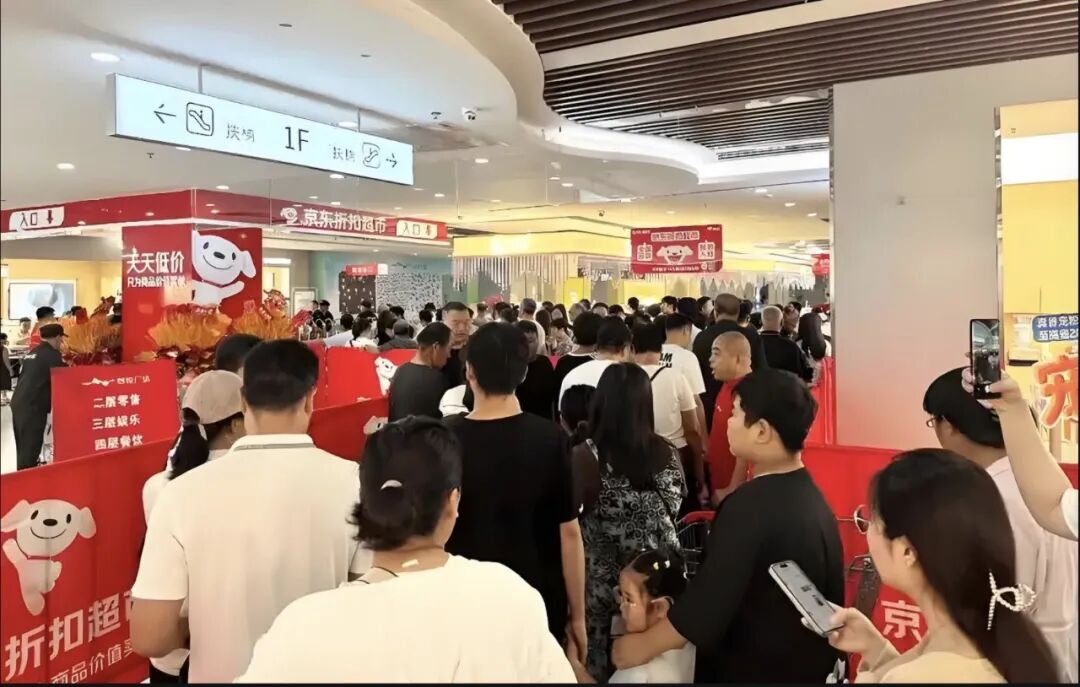
Core Insights - Hard discount supermarkets are emerging as a new trend in the retail sector, with major players like Hema, Meituan, and JD entering the market, leading to increased competition [2][6] - The primary appeal of hard discount stores is their low prices, but product quality and brand differentiation are crucial for success [2][3] - The global discount retail channel is projected to grow by 8.2% in 2024, with significant growth potential in the Chinese market, which currently has a penetration rate of only 8% compared to more mature markets like Germany and Japan [3] Group 1: Market Dynamics - Hema's new hard discount store "Super Box" and Meituan's "Happy Monkey" are similar in their focus on high foot traffic locations, smaller store sizes, and a curated selection of products [2] - The competition is intensifying as these new entrants face established players like Aldi, which has a strong foothold in the market with a high percentage of private label products [2][5] - The hard discount model is seen as a response to the growing competition from online retail, with a focus on value for consumers [2] Group 2: Supply Chain and Product Strategy - Aldi has developed a robust supply chain and a high percentage of private label products, achieving up to 90% in some categories, while Hema's private label share is around 60% [2][5] - The success of hard discount retailers hinges on their ability to collaborate with suppliers for product development and customization to meet local market demands [8] - Companies like Ferrero are recognizing the importance of the hard discount channel and are adapting their strategies to capitalize on this growth opportunity [8] Group 3: Operational Efficiency - Hard discount stores are characterized by a "everyday low price" strategy, focusing on cost control and operational efficiency [5][9] - The operational model includes simplified store layouts and reduced product variety to minimize costs and enhance efficiency [9] - There is a recognition that while private label products can enhance margins, retailers must first establish brand recognition and market share to succeed [9]

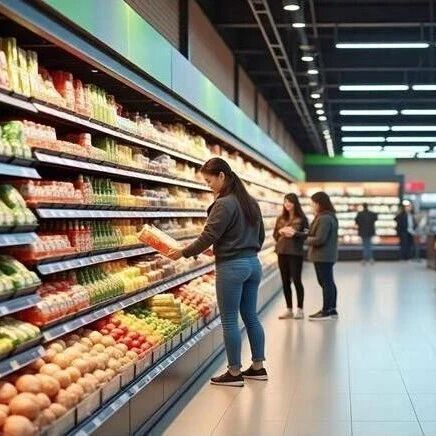
9.9元折扣超市,互联网巨头新战场
凤凰网财经· 2025-09-21 12:29
Core Viewpoint - The article discusses the recent surge of internet giants entering the discount supermarket sector, highlighting the competitive landscape and strategies employed by companies like Meituan, JD, and Hema NB in response to the growing demand for affordable daily necessities [2][3][4]. Group 1: Market Entry and Expansion - The discount supermarket battle began in late August, with Meituan's "Happy Monkey" opening stores in Hangzhou, JD launching five stores in Hebei and Jiangsu, and Hema NB rebranding and opening 17 new stores in the Yangtze River Delta [2][3]. - Hema NB has over 300 stores, while JD's discount supermarket is expanding into northern markets, indicating a strategic focus on densely populated areas [3][7]. - The discount supermarket model is characterized by smaller store sizes (600-800 square meters) and a limited SKU range (1000-1500), allowing for lower prices and higher efficiency [3][4]. Group 2: Operational Efficiency and Profitability - The profitability of discount supermarkets relies on extreme efficiency, with operational costs around 14-15% and gross profit margins of 16-17%, generating daily sales of 100,000 to 120,000 yuan per store [3][4]. - The success of discount supermarkets in China is partly attributed to the performance of Aldi, which has seen significant sales growth despite a modest increase in store count [4][5]. - Hema NB's self-operated products account for over 60% of its offerings, while Aldi's self-operated products exceed 90%, highlighting the importance of private labels in driving profitability [8][9]. Group 3: Competitive Landscape and Strategies - The entry of internet giants into the discount supermarket space is seen as a move to capture new market segments, with a focus on leveraging existing supply chain capabilities [10][12]. - Companies are exploring synergies between their online and offline operations, with JD and Meituan integrating their discount stores with community group buying and instant retail services [10][11]. - Price wars are emerging, with Aldi announcing price reductions on over 50 frequently purchased items, indicating a competitive push to attract price-sensitive consumers [12].

9.9元折扣超市,互联网巨头新战场
3 6 Ke· 2025-09-16 11:11
Core Insights - The competition in the discount supermarket sector is intensifying as major internet companies like Meituan, JD.com, and Hema are entering the market, focusing on hard discount supermarkets to attract price-sensitive consumers [1][2][4] Group 1: Market Dynamics - The hard discount supermarket model typically operates in smaller spaces (600-800 square meters) and offers a limited range of products (1000-1500 SKUs) at lower prices compared to traditional supermarkets [2][4] - The market for hard discount supermarkets in China is projected to exceed 200 billion yuan in 2024, with a penetration rate of only 8%, significantly lower than Germany's 42% and Japan's 31% [9] - The entry of internet giants into this sector is seen as a strategy to tap into new growth markets, leveraging existing resources and supply chain capabilities [7][9] Group 2: Competitive Strategies - Companies are adopting a model that emphasizes operational efficiency, with minimal store decoration and a focus on frozen goods to reduce costs [2][3] - Hema NB has rebranded to focus on hard discounting, while Meituan's "Happy Monkey" and JD.com's discount supermarkets are expanding aggressively in key regions like Jiangsu and Zhejiang [1][3][4] - The competitive landscape is characterized by a price war, with companies like Aoleqi announcing price reductions on frequently purchased items by up to 30% [9] Group 3: Operational Insights - The profitability of hard discount supermarkets relies heavily on efficient supply chain management and the ability to offer self-branded products, with Aoleqi achieving over 90% of its sales from self-branded items [5][9] - The average operating cost for discount stores is around 14-15%, with gross profit margins between 16-17%, indicating a tight margin environment [2][5] - Companies are increasingly focusing on high-turnover, essential goods that are price-sensitive, aiming to attract a broader customer base beyond just older consumers [3][5] Group 4: Future Outlook - The integration of online and offline strategies is becoming crucial, with companies exploring community group buying and instant retail to enhance their market presence [8][9] - The success of discount supermarkets will depend on their ability to scale operations quickly and efficiently, optimizing supply chains to maintain competitive pricing [9]
山姆特供好丽友五折进好特卖,临期商店又把中产会员气到了
创业邦· 2025-09-06 03:24
Core Viewpoint - The article discusses the competitive dynamics between Sam's Club and a discount supermarket called "好特卖" (Hao Te Mai), highlighting how the latter has begun to offer similar products at lower prices, leading to dissatisfaction among Sam's Club members who pay for membership fees [7][10][12]. Group 1: Market Dynamics - Sam's Club has faced backlash after the introduction of a low-sugar version of a popular snack, which subsequently appeared at Hao Te Mai, leading to a perception of betrayal among its members [7][8][12]. - Hao Te Mai has been noted for selling products that are similar to those found at Sam's Club but at significantly lower prices, creating a shift in consumer trust and loyalty [10][18]. - The article suggests that Hao Te Mai is effectively leveraging Sam's Club's brand recognition to attract customers, positioning itself as a discount alternative [11][30]. Group 2: Product Strategy - Hao Te Mai's pricing strategy includes offering products at nearly half the price of Sam's Club, which has led to increased foot traffic and sales [17][18]. - The supermarket's inventory is primarily composed of unsold or near-expiry products, which allows it to maintain lower prices while appealing to cost-conscious consumers [40][60]. - The article notes that approximately 60% of Hao Te Mai's products are sourced from brand excess inventory, with a significant portion being near-expiry items [60][64]. Group 3: Consumer Behavior - Consumers are drawn to Hao Te Mai for the thrill of finding discounted products, often treating shopping there as a treasure hunt experience [64][65]. - The perception of buying near-expiry products has shifted towards a more sustainable lifestyle choice, appealing to environmentally conscious consumers [66][70]. - The article highlights that Hao Te Mai has successfully tapped into the male consumer market for beauty and personal care products, which is a relatively untapped demographic in this sector [56][58].
美团杀入折扣超市,“快乐猴”在杭州正式开业
Sou Hu Cai Jing· 2025-09-02 02:51
Core Insights - Meituan has launched its self-operated discount supermarket "Happy Monkey" in Hangzhou, marking its first store nationwide, strategically located near a subway station to cater to local residents [3] - The store spans approximately 1,000 square meters and offers over 1,000 carefully selected products focused on essential household needs, emphasizing fresh food items [3][9] - Meituan is engaging in a price war, aiming to offer core categories at 10%-30% lower prices than competitors like Hema, thereby reshaping consumer price perceptions [5] Group 1 - The store adopts a "small store boutique" model rather than the typical large discount store format, focusing on fewer but high-quality products and quick turnover [7] - Fresh food is a key traffic driver, with strict quality controls in place, including 30-point inspections for pork and daily pesticide residue testing for vegetables [9] - Meituan is not just a platform but is also committed to creating its own unique offerings, as seen in its self-branded products [11][12] Group 2 - The entry of "Happy Monkey" aligns with the current trend of "hard discounts" in retail, with competitors like Wumart and Zhongbai already established in this space [15] - The company's objectives include differentiating itself from major e-commerce players, expanding revenue sources through physical stores, and binding users with essential goods at low prices [15] - Meituan plans to rapidly expand its discount supermarket presence, with a goal of opening 10 stores this year and eventually exceeding 1,000 locations [16]
京东、美团、盒马的“硬折扣”博弈
3 6 Ke· 2025-08-28 06:50
Core Insights - The rise of discount supermarkets in China is driven by changing consumer attitudes, a significant market gap, and the growth anxiety of internet giants like JD, Meituan, and Alibaba [4][5][8][10] Group 1: Market Dynamics - Discount supermarkets, characterized by "hard discount" models, are gaining popularity across China, with record foot traffic and sales [1][3] - The hard discount market in China has a penetration rate of only 8%, indicating substantial growth potential compared to 42% in Germany and 31% in Japan [6][10] - The Chinese discount retail market is projected to exceed 200 billion yuan by 2024, highlighting the opportunity for growth [6] Group 2: Consumer Behavior - Consumers are increasingly focused on value for money, with over 70% prioritizing "quality-price matching" in their purchasing decisions [5] - Economic factors such as slowing growth and rising living costs are prompting consumers to be more price-sensitive [5] Group 3: Competitive Landscape - Major players in the discount supermarket sector include JD, Meituan, and Hema, each with distinct operational strategies [12] - JD's discount stores leverage its supply chain and logistics to offer a wide range of products at lower prices, targeting price-sensitive customers [13] - Hema's discount brand focuses on fresh produce and direct sourcing, aiming to create a community-centric shopping experience [14] - Meituan's upcoming discount store will utilize its delivery network to enhance customer convenience through dynamic pricing and quick delivery options [15] Group 4: Challenges Ahead - The discount supermarket model faces challenges such as achieving sustainable profitability, with average profit margins between 1.5% and 5% [17][19] - Increasing competition may lead to homogenization in offerings, necessitating differentiation for long-term survival [20] - Success in the discount retail space will depend on robust supply chain management, digital capabilities, and customer service [21][22]