
稀土等

Search documents
超4300家企业被摘帽高新资格
经济观察报· 2026-01-10 08:22
Core Viewpoint - The increasing number of companies losing their high-tech enterprise status is primarily due to stricter management and compliance requirements, particularly regarding R&D expenditure ratios and revenue from high-tech products [2][3][9]. Group 1: High-Tech Enterprise Qualification Cancellation - Over 4,300 companies were removed from the high-tech enterprise list in 2025, with significant cancellations occurring in provinces like Jiangxi, Beijing, and Guangdong [2][3]. - The main reason for disqualification is the failure to meet R&D expenditure ratios, with many companies not achieving the required 3% of R&D expenses relative to sales [6][10]. - The number of disqualified high-tech enterprises has been increasing, with 706, 1,758, and 3,935 cancellations reported in 2022, 2023, and 2024 respectively [3][9]. Group 2: Impact of Qualification Loss - Companies losing their high-tech status face tax implications, including the requirement to repay tax benefits received during the period of disqualification, with a standard tax rate of 25% applied [6][15]. - The cancellation of high-tech status can lead to significant financial burdens, as seen in cases where companies like 快意电梯 had to repay over 28.7 million yuan in taxes and penalties [16][17]. - The loss of high-tech status affects various aspects of business operations, including eligibility for government subsidies, access to capital markets, and potential difficulties in obtaining bank loans [17].


美论坛:若中国不再向美国出售任何东西,中国还能继续繁荣吗?
Sou Hu Cai Jing· 2026-01-01 12:12
Core Viewpoint - The article discusses the evolving economic relationship between China and the United States, highlighting China's decreasing reliance on the U.S. market and its growing trade partnerships with other regions, while also emphasizing the challenges faced by the U.S. due to its dependence on Chinese manufacturing and resources [2][4][9]. Group 1: Trade Dynamics - In 2025, U.S.-China trade tensions have escalated, with U.S. tariffs leading to a significant drop in bilateral trade, with China's exports to the U.S. falling by 18.9% to $385.9 billion and imports decreasing as well [4][5]. - China's total trade value reached $5.75 trillion in the first eleven months, with a record surplus of over $1 trillion, indicating a shift in export reliance from the U.S. to other regions such as ASEAN, EU, and Latin America [5][10]. - The share of U.S. exports in China's total exports has decreased from 20% in 2015-2018 to 11.4% in the current year, reflecting a diversification of China's trade partnerships [5][10]. Group 2: Manufacturing Strength - China's manufacturing sector remains robust, accounting for 31.6% of global manufacturing value added, with a total of $4.865 trillion, covering a wide range of industries [7][12]. - High-tech manufacturing is growing rapidly, with exports of electromechanical products exceeding 60% in the first three quarters, and companies like BYD reporting a 313.4% increase in passenger car exports [7][12]. - China has become a leader in various industrial categories, with over 220 products produced at the highest global levels, showcasing both quantity and quality improvements in manufacturing [7][12]. Group 3: U.S. Dependency on China - The U.S. is significantly dependent on China for critical resources, particularly rare earth elements, with 90% of global rare earth processing occurring in China, which poses challenges for U.S. defense industries [9][12]. - Despite efforts to build alternative supply chains, U.S. companies acknowledge their reliance on Chinese manufacturing, as tariffs and trade uncertainties create operational challenges [9][12]. - The U.S. is projected to face a 13.2% decline in exports to China, indicating the economic repercussions of the ongoing trade conflict [9][10]. Group 4: Future Outlook - China's economic resilience is highlighted by its ability to maintain growth despite trade disruptions, with a focus on domestic consumption and the "dual circulation" strategy, which emphasizes internal demand [10][12]. - The article suggests that if China were to halt exports to the U.S., it would not significantly impact its economy, while the U.S. would face severe consequences, including inflation and supply shortages [9][10]. - Long-term projections indicate that China's manufacturing sector will continue to evolve, with significant advancements in green technologies and digitalization, positioning it as a key player in the global economy [18][20].

工信部部长:推动人工智能等前沿技术研发和应用推广
Ren Min Ri Bao· 2025-11-26 09:40
Core Viewpoint - China's industrial development has made significant progress in recent years, with a focus on technological innovation leading the construction of a modern industrial system. The next steps involve promoting new industrialization vigorously [2][4]. Group 1: Achievements in Industrial Development - Since the 18th National Congress, China's industrialization has accelerated, with notable improvements in overall industrial strength, quality, efficiency, innovation, competitiveness, and risk resistance [2][3]. - China is the only country with all industrial categories recognized by the United Nations, boasting 41 major industrial categories and over 666 subcategories [3]. - In 2022, China's total industrial added value reached 40.16 trillion yuan, accounting for 33.2% of GDP, with manufacturing added value nearly doubling since 2012 [3]. - High-tech manufacturing's share of industrial added value increased from 9.4% in 2012 to 15.3% in the first three quarters of 2023 [3]. Group 2: Information and Communication Industry - China has built the world's largest and most advanced information and communication network, with 328.2 million 5G base stations [4]. - The country ranks second globally in computing power and leads in 5G standard essential patent declarations, holding 42% of the global share [4]. - The digital economy has become a significant market, with industrial internet applications integrated into 49 national economic categories [4]. Group 3: Industrial Economic Recovery - The industrial economy is showing signs of recovery, with a 4.3% year-on-year increase in industrial added value for large-scale industries in the first 11 months of last year [5]. - The government plans to implement a series of policies to support industrial growth, focusing on key regions and industries [5]. Group 4: Technological Innovation in Industry - China has become the second-largest R&D investor globally, with over 570 industrial enterprises in the top 2500 for R&D investment [6]. - The number of invention patent applications from industrial enterprises rose from 176,000 in 2012 to 555,000 in 2022 [6]. - The establishment of national manufacturing innovation centers and high-tech zones has fostered a robust innovation ecosystem [6]. Group 5: Modern Industrial System Construction - The focus is on strengthening and optimizing the manufacturing sector, with an emphasis on upgrading traditional industries and fostering new and emerging industries [8][9]. - The government aims to enhance the competitiveness of key industries such as rail transportation, new energy vehicles, and communication equipment [10][11]. Group 6: Enhancing Enterprise Competitiveness - The number of large-scale industrial enterprises increased from 344,000 in 2012 to 483,000 by the end of November 2023 [13]. - China has 142 companies in the Fortune Global 500, with 63 in manufacturing, and the revenue of the top 500 manufacturing companies reached 51.06 trillion yuan [13]. - The government plans to support the growth of small and medium-sized enterprises and promote their integration with larger enterprises [14][15].
ETF市场扫描与策略跟踪:内地黄金ETF合计规模突破2000亿元
Western Securities· 2025-10-19 12:48
Global and A-share Market Overview - The A-share market experienced an overall decline last week, with the Sci-Tech 50 index dropping the most at 6.16% [1][10] - The Hong Kong stock market also saw a decrease, with the Hang Seng Index falling by 3.97% [1][10] - In the US market, the Dow Jones Industrial Average increased by 1.56%, while the S&P 500 and Nasdaq indices rose by 1.70% and 2.14%, respectively [1][10] ETF New Issuance Statistics - Five new stock ETFs were reported in the A-share market last week, and three new stock ETFs were established [1][15] - In the US market, 11 equity ETFs were newly established, with 9 being actively managed ETFs [1][22] Fund Flow in A-share Market - The top 10 net inflows in A-share ETFs were primarily in the financial sector, with the Bank ETF seeing a net inflow of 52.77 billion yuan [2][24] - The top 10 net outflows were dominated by the CSI A500 ETF, which experienced a net outflow of 30.20 billion yuan [2][25] - Among broad-based ETFs, the CSI 200 index saw a net inflow of 14.44 billion yuan, while the CSI A500 index had a net outflow of 86.02 billion yuan [2][30] Fund Flow in US Market - In the US market, energy transition theme ETFs had the highest net inflow, while financial technology theme ETFs saw the largest net outflow [3][23] - The total net outflow from ETFs investing in A-shares and Hong Kong stocks amounted to 356 million USD [3][23] ETF Strategy Performance - The performance of the diffusion indicator + RRG ETF rotation strategy yielded a return of -5.37%, underperforming the CSI Equal Weight Index and the CSI 300 Index by 2.87% and 3.14%, respectively [4][29] - The 50% base + intraday momentum strategy showed varying returns across different ETFs, with the Shanghai 50 ETF yielding -0.34% [4][29]
股市面对面 | 124家公司已发三季报预告 46家公司预计净利同比翻番
Xin Hua Cai Jing· 2025-10-15 10:19
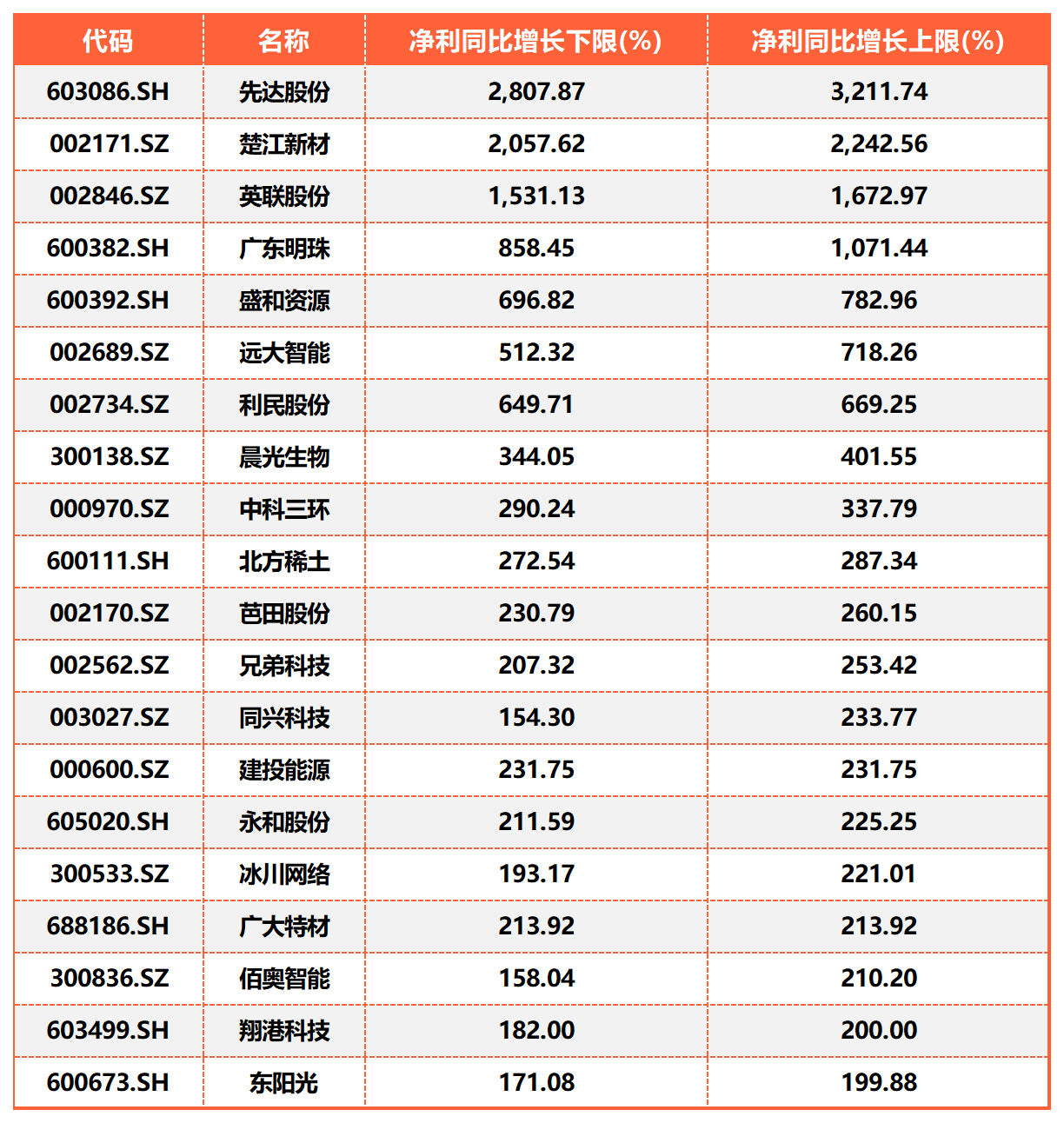
Core Viewpoint - The A-share market experienced a collective rise on October 15, with the Shanghai Composite Index closing above the 3900-point mark, driven by positive earnings reports from the first batch of listed companies for Q3 2025, where 11 out of 12 companies reported year-on-year profit growth [1] Summary by Category Market Performance - The A-share market showed a broad-based increase, with over 4300 stocks closing higher on the day [1] - The Shanghai Composite Index closed above 3900 points, indicating a positive market sentiment [1] Earnings Reports - The first batch of 12 listed companies released their Q3 2025 earnings reports, with 11 companies showing year-on-year profit growth and 8 companies reporting revenue growth [1] - Notable performers include: - Dao's Technology, with an expected net profit growth of 182.45% - Iolo Home, with an expected net profit growth of 70.92% [1] - A total of 124 A-share companies have released Q3 earnings forecasts, with 99 companies expecting profit growth and 9 companies expecting profit declines [1][6] Leading Companies by Profit Size - The top five companies by net profit size include: - New China Life Insurance, with an expected net profit of 29.986 billion to 34.122 billion yuan, projecting a growth of 45%-65% [2] - Luxshare Precision, with an expected net profit of 10.89 billion to 11.344 billion yuan [2] - Shandong Gold anticipates a net profit growth of 83.9%-98.5%, driven by rising gold prices [3] Companies with Significant Growth - Among the companies with the highest expected net profit growth, Sanda Co. leads with a projected increase of 2807%-3211%, attributed to rising product prices and operational reforms [5] - Other notable companies include: - Chuangjiang New Materials, with a projected growth of 2057%-2242% [5] - Several rare earth companies also reported strong performance, indicating a robust sector [5] Overall Growth Trends - 46 companies are expected to achieve a net profit growth of 100% or more, representing 37% of the 124 companies that have released forecasts [6] - This indicates a strong overall performance trend among the companies reporting earnings [6]
589股获融资买入超亿元,东方财富获买入30.47亿元居
Xin Lang Cai Jing· 2025-08-21 01:16
Group 1 - On August 20, a total of 3,713 stocks in the A-share market received financing funds, with 589 stocks having a buying amount exceeding 100 million yuan [1] - The top three stocks by financing buying amount were Dongfang Caifu, ZTE Corporation, and Northern Rare Earth, with amounts of 3.047 billion yuan, 2.287 billion yuan, and 2.213 billion yuan respectively [1] - Five stocks had financing buying amounts accounting for over 30% of the total transaction amount on that day, with Aiko Photonics, China Merchants Jinling, and Kosen Technology leading at 37.86%, 37.58%, and 32.49% respectively [1] Group 2 - There were 55 stocks with a net financing buying amount exceeding 100 million yuan, indicating strong investor interest [1] - The top three stocks by net financing buying amount were Zhongji Xuchuang, Cambricon Technologies, and SMIC, with net buying amounts of 559 million yuan, 496 million yuan, and 474 million yuan respectively [1]




