
餐饮/酒店/旅游

Search documents
离职率连续三年下滑,职场人的跳槽热情降温了?
第一财经· 2026-01-13 09:54
Core Viewpoint - The overall employee turnover rate in China decreased to 14.8% in 2025, reflecting a trend of job stability influenced by macroeconomic conditions, industry adjustments, and changing employment attitudes [3][4]. Group 1: Employee Turnover Rates - The turnover rate in the restaurant/hotel/tourism industry remains the highest at 16.5%, despite a slight decrease of 0.2 percentage points from 2024 [4][6]. - The manufacturing industry also has a turnover rate of 15.7%, which is linked to pressures from carbon neutrality goals and digital transformation, leading to adjustments in frontline worker positions [4][6]. - The real estate sector's turnover rate decreased to 15.4% from 15.9% in 2024, indicating ongoing personnel optimization amid deep industry adjustments [5][6]. Group 2: Industry Comparisons - The transportation/logistics sector saw the most significant decline in turnover rate, dropping 1.4 percentage points to 14.0%, suggesting a more stable employment ecosystem due to mature logistics systems and flexible labor models [5][6]. - Other industries such as high-tech and consumer goods also experienced slight decreases in turnover rates, with high-tech dropping to 15.3% and consumer goods to 15.2% [6]. Group 3: Regional Talent Mobility - The gap in turnover rates between first-tier cities and new first-tier cities is narrowing, with new first-tier cities becoming attractive destinations for talent due to industrial upgrades and lower living costs [7]. - The trend indicates a shift in employment choices among younger individuals, who are increasingly valuing work-life balance and sustainable career development over traditional aspirations of moving to first-tier cities [7]. Group 4: Implications for Employers - The trend towards lower turnover rates suggests a need for companies to optimize HR strategies, focusing on internal talent development rather than external recruitment [7]. - Employers are encouraged to balance efficiency with employee well-being to foster a more engaged workforce during this period of stability [7].


报告显示企业员工离职率已连续三年小幅走低
Zhong Guo Jing Ji Wang· 2026-01-13 09:41
Core Insights - The overall employee turnover rate in 2025 decreased to 14.8%, a decline of 0.5 percentage points year-on-year, marking a continuous decrease over three years since 2023 with a total drop of 1.8% [1][2] - The hospitality, manufacturing, and real estate sectors had the highest turnover rates, with the hospitality sector remaining at the top despite only a 0.2 percentage point decrease from 2024 [1] - The turnover rates in various cities showed a decline compared to 2024, with a narrowing gap between first-tier cities and new first-tier cities, as the latter improved their talent attraction capabilities through specialized industry clusters [1] Industry Trends - Many companies are implementing cost-cutting and efficiency-enhancing strategies, leading to reduced hiring scales and a decrease in external job supply, which has increased employees' perception of job-switching risks and opportunity costs [2] - This risk-averse sentiment has lowered the willingness to voluntarily leave jobs, resulting in a market trend focused on stability [2] - Government policies aimed at stabilizing employment, such as expanding skills training and employment subsidies, have also contributed to mitigating fluctuations in the labor market [2] Employer Considerations - While the decrease in turnover rates has positive implications, it is essential for employers to balance efficiency with human care for long-term success [2] - Companies are encouraged to utilize this stable period to deepen internal talent management and shift focus from external recruitment to enhancing internal vitality [2]
离职率连续三年下滑 职场人的跳槽热情降温了?
Di Yi Cai Jing· 2026-01-13 08:28
Core Insights - The overall employee turnover rate in China decreased to 14.8% in 2025, marking a 0.5 percentage point decline from 2024, continuing a three-year trend of gradual decrease [1] Industry Analysis - The hospitality and tourism sector has the highest turnover rate at 16.5%, despite a slight decrease of 0.2 percentage points from 2024, indicating persistent issues with employee turnover [1] - The manufacturing sector follows with a turnover rate of 15.7%, influenced by pressures from dual carbon goals and digital transformation, leading to adjustments in frontline worker positions [2] - The real estate sector's turnover rate decreased to 15.4% from 15.9% in 2024, reflecting ongoing personnel optimization amid deep industry adjustments [2] - In contrast, the transportation and logistics sector saw a significant decline in turnover rate by 1.4 percentage points to 14.0%, suggesting a more stable employment ecosystem due to mature logistics systems and flexible employment models [2] Regional Trends - The turnover rate gap between first-tier cities and new first-tier cities is narrowing, indicating a shift in talent flow dynamics, with new first-tier cities becoming attractive destinations due to industrial upgrades and lower living costs [2] - Cities like Chengdu are emerging as talent hubs, particularly in the electronic information industry, attracting a significant influx of skilled workers [2] Labor Market Dynamics - The labor market in China is transitioning towards a "stability-oriented" model, prompting companies to optimize HR strategies to address potential challenges [3] - The decrease in turnover rates, while positive, highlights the need for employers to balance efficiency with employee well-being for long-term success [3]
离职率连续三年下滑,职场人的跳槽热情降温了?
Di Yi Cai Jing· 2026-01-13 08:18
Core Insights - The "risk aversion" mentality is leading employees to prefer staying in their current positions rather than seeking new opportunities, as evidenced by a decline in the overall employee turnover rate to 14.8% in 2025, down 0.5 percentage points from 2024, marking a three-year trend of gradual decrease [1][2]. Industry Analysis - The hospitality and tourism sector has the highest turnover rate at 16.5%, despite a slight decrease of 0.2 percentage points from 2024, indicating persistent issues with employee turnover [1][3]. - The manufacturing sector maintains a turnover rate of 15.7%, influenced by pressures from dual carbon goals and digital transformation, which are causing adjustments in frontline worker positions [2][3]. - The real estate sector's turnover rate has decreased to 15.4% from 15.9% in 2024, reflecting ongoing personnel optimization amid industry adjustments [2][3]. - In contrast, the transportation and logistics sector has seen a significant decline in turnover rate to 14.0%, down 1.4 percentage points from 2024, suggesting a more stable employment ecosystem due to the maturation of logistics systems and flexible employment models [2][3]. Regional Trends - The turnover rate gap between first-tier cities and new first-tier cities is narrowing, indicating a shift in talent flow dynamics, with new first-tier cities becoming attractive destinations for talent due to industrial upgrades and lower living costs [3][4]. - The balance between salary competitiveness, industrial foundation, and quality of life in new first-tier cities is changing employment choices, as more young people prioritize work-life balance and sustainable career development over solely targeting first-tier cities [4]. Labor Market Dynamics - The labor market in China is transitioning towards a "stability-oriented" model, prompting companies to optimize HR strategies to address potential challenges, emphasizing the need for a balance between efficiency and employee well-being [4].
人才流动进入“沉淀期” 2025年离职率降至14.8%
Sou Hu Cai Jing· 2026-01-13 07:06
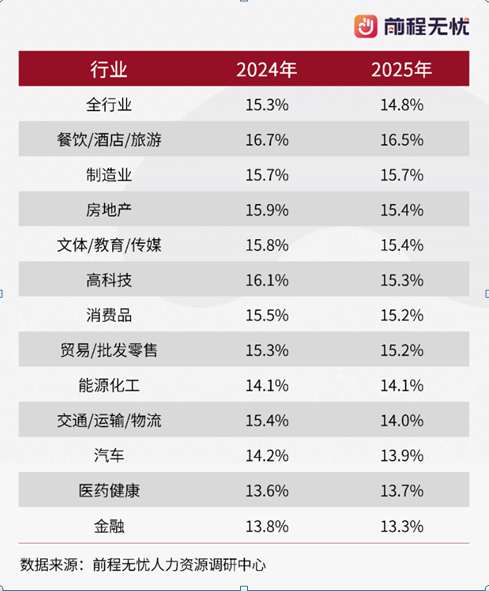
Core Insights - The overall employee turnover rate in 2025 is projected to decrease to 14.8%, down from 15.3% in 2024, indicating a trend towards a more stable labor market after recent fluctuations [1][3]. Industry Analysis - The decline in turnover rates is influenced by external economic conditions rather than solely increased employee loyalty. Companies are controlling labor costs and reducing hiring, leading employees to perceive higher risks and opportunity costs associated with job changes [3]. - The report identifies the top three industries with the highest turnover rates in 2025: - Hospitality/Tourism at 16.5% - Manufacturing at 15.7% - Real Estate at 15.4% [4]. - The manufacturing sector's turnover rate remains at 15.7%, linked to industry upgrades and a greater desire to retain skilled workers, although high turnover in basic assembly line positions persists [4]. - The real estate sector's turnover rate has decreased from 15.9% in 2024, reflecting ongoing personnel optimization and transformation within the industry [4]. - The transportation/logistics sector shows the most significant decline in turnover, dropping 1.4 percentage points to 14.0%, indicating a more stable employment ecosystem as logistics systems mature [4]. - A comparison of turnover rates across various industries shows a general decline, with notable changes in the following sectors: - High-tech: from 16.1% to 15.3% - Consumer goods: from 15.5% to 15.2% - Trade/Wholesale: from 15.3% to 15.2% - Automotive: from 14.2% to 13.9% [5]. City-Level Insights - Turnover rates in 2025 have decreased across all cities compared to 2024, with a narrowing gap between first-tier cities (e.g., Beijing, Shanghai, Shenzhen) and new first-tier cities (e.g., Chengdu, Hangzhou). This trend suggests that talent mobility is becoming more balanced and not solely favoring major metropolitan areas [5].
前程无忧报告:离职率连续三年下降
Jing Ji Guan Cha Bao· 2026-01-13 04:35
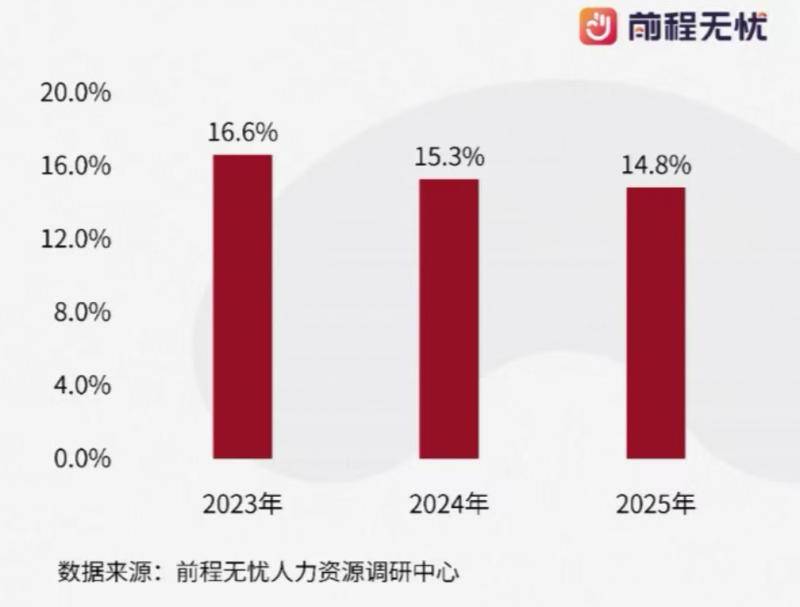
Core Insights - The overall employee turnover rate in 2025 decreased to 14.8%, marking a three-year decline, with previous rates at 16.6% in 2023 and 15.3% in 2024 [1][2] - The decline in turnover is attributed to external economic factors rather than increased employee loyalty, as companies are implementing cost-cutting strategies and reducing hiring, leading to fewer job opportunities [1] - Employees are exhibiting a risk-averse mentality, preferring to remain in their current positions due to perceived risks and opportunity costs associated with job changes [1] Industry Analysis - The industries with the highest turnover rates in 2025 are: - Hospitality/Tourism with a turnover rate of 16.5% - Manufacturing at 15.7% - Real Estate at 15.4% [2] - The manufacturing sector's turnover rate is closely linked to industry upgrades, with pressures from carbon neutrality goals and digital transformation leading to adjustments in frontline worker positions [2] - The real estate sector continues to experience high turnover due to ongoing industry adjustments, despite a decrease from 15.9% the previous year, indicating ongoing personnel optimization and transformation efforts [2]