New Energy Vehicles

Search documents
三位部长,重磅发声!
21世纪经济报道· 2026-03-05 06:17
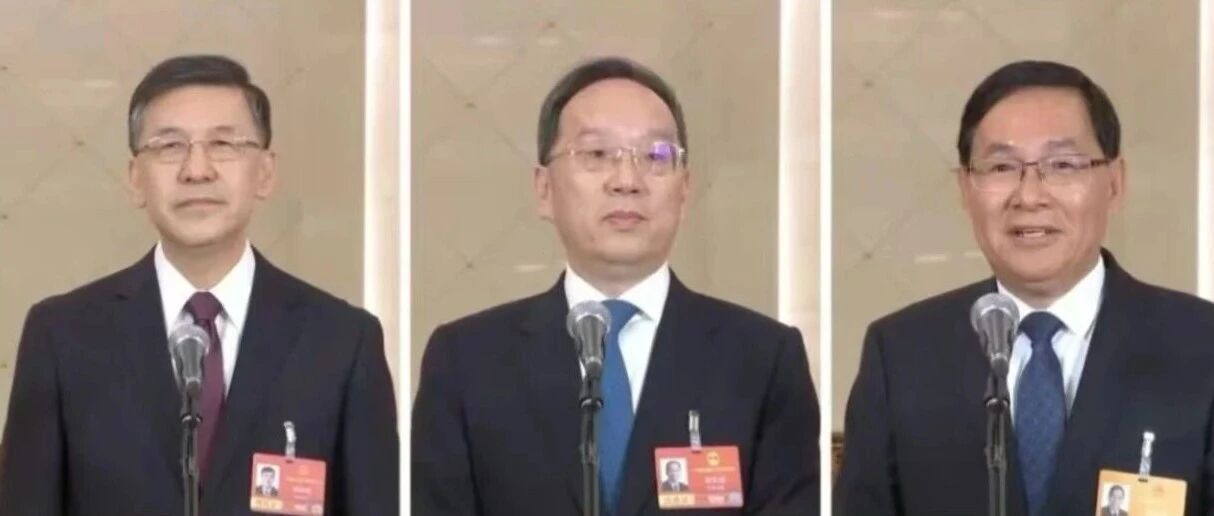
Group 1 - The core viewpoint of the article highlights the advancements in China's technology and industrial sectors, emphasizing the government's commitment to increasing investment in research and development, particularly in foundational research and artificial intelligence [2][3][4]. Group 2 - The Minister of Science and Technology, Yin Hejun, announced that by 2025, China's total R&D investment will exceed 3.92 trillion yuan, with a foundational research investment of nearly 280 billion yuan, marking a historic high of 7.08% [2]. - The Minister of Industry and Information Technology, Li Lecheng, stated that China leads globally in open-source model downloads, with AI technology application rates in large manufacturing enterprises expected to exceed 30% by the end of 2025 [3]. - The Director of the State-owned Assets Supervision and Administration Commission, Zhang Yuzhuo, reported that during the 14th Five-Year Plan period, central enterprises' total assets have crossed significant thresholds, with profits increasing by 56.2% compared to the previous five years [4]. - Central enterprises are focusing on three areas: leading in sectors like new energy and aerospace, catching up in industries such as new energy vehicles, and nurturing emerging fields like quantum information and biotechnology [6].

春节假期充电焦虑有效缓解
Jing Ji Ri Bao· 2026-02-27 22:23
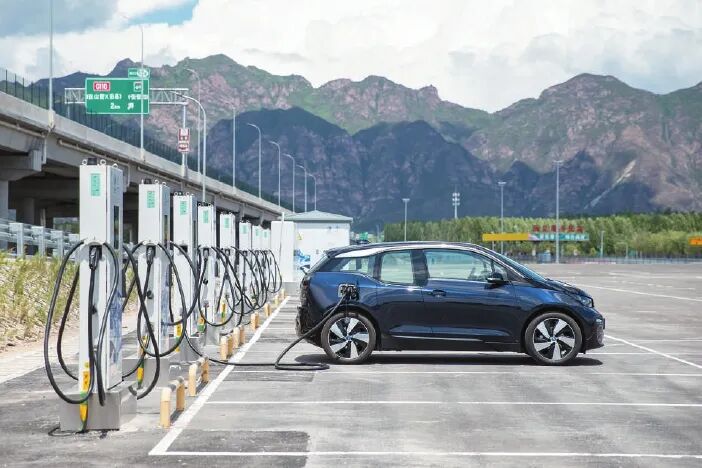
Core Insights - The number of electric vehicle (EV) users and charging activities significantly increased during the Spring Festival holiday, with a record high of 602.10 million charging instances and 14,976.75 million kilowatt-hours of charging, marking a 52.01% increase in daily charging volume compared to the previous year [2] Group 1: Technological Advancements - Continuous improvements in new energy vehicle and charging technology have led to enhanced vehicle quality, performance, and charging efficiency, with mainstream electric models now offering a range of 400 to 700 kilometers, and some high-end models exceeding 800 kilometers [3] - The adoption of 800V high-voltage platforms and the expansion of ultra-fast charging networks have made it possible to charge vehicles to 80% in just 15 minutes, alleviating range anxiety for drivers [3] Group 2: Charging Infrastructure Development - As of the end of last year, there were 71,500 electric vehicle charging guns installed at highway service areas, covering over 98% of these areas, with approximately 10,000 high-power charging facilities addressing the issues of slow charging and long wait times [3] - The charging network's optimization is crucial for long-distance travel, ensuring that electric vehicle users can meet their energy needs during peak travel times [3] Group 3: Enhanced Service and Emergency Response - The Ministry of Transport and the National Energy Administration have implemented a Spring Festival support plan that includes identifying busy charging areas and deploying mobile emergency charging equipment to meet driver needs [4] - The upgraded "e-road smooth" app provides real-time charging station information, improving resource utilization by allowing charging stations to proactively guide vehicles [4] Group 4: Future Infrastructure Goals - According to the "Three-Year Doubling Action Plan for Electric Vehicle Charging Facility Service Capacity (2025-2027)," the goal is to establish 28 million charging facilities nationwide by the end of 2027, providing over 300 million kilowatts of public charging capacity to support more than 80 million electric vehicles [5] - The large-scale deployment of new infrastructure will not only bolster the development of the new energy vehicle industry but also accelerate the construction of a new power system, enhancing the dual advantages in the electric vehicle and energy supply sectors [5]
用好京津资源打造高能级科创平台
Xin Lang Cai Jing· 2026-02-26 22:49
Core Viewpoint - The establishment of high-level scientific and technological innovation platforms is crucial for enhancing regional innovation capabilities and seizing technological competitive advantages, particularly in addressing critical technological challenges and fostering strategic emerging industries [1]. Group 1: Collaborative Development - The strategy emphasizes deepening collaboration among Beijing, Tianjin, and Hebei to break down institutional barriers and enhance platform support, thereby stimulating innovation vitality [2]. - There is a focus on mutual recognition of standards among the three regions and strengthening the alignment of major research projects and innovation platform layouts [2]. - The initiative aims to build and share major scientific infrastructure, such as national key laboratories, and enhance the openness and sharing of large-scale research instruments and data [2]. Group 2: Efficient Transformation of Achievements - The plan targets the key links in the transformation of collaborative innovation achievements, aiming to integrate innovation chains with industrial chains to enhance the core competitiveness of high-level innovation platforms [3]. - It proposes the establishment of cross-regional, full-chain application-oriented industrial service platforms, particularly in sectors like new energy vehicles and biomedicine [3]. - The initiative encourages the creation of demonstration bases for technology application in key areas, attracting research results from Beijing and Tianjin for testing and iteration [3]. Group 3: Innovation Ecosystem Enhancement - The strategy aims to create a virtuous cycle of innovation elements, including talent, capital, and culture, to support regional collaborative innovation development [4]. - It promotes the establishment of a talent development network across the three regions, optimizing policies for talent retention and creating an attractive environment for talent [4]. - The plan includes setting up a collaborative innovation investment fund to support cross-regional platform construction and technology transformation [4]. Group 4: Mechanism Innovation - The focus is on innovating the governance mechanisms of innovation platforms to create a more flexible and efficient regional innovation governance system [5]. - The initiative encourages exploring market-oriented governance models for cross-regional platforms, granting them greater autonomy in personnel management and financial operations [5]. - It aims to establish a differentiated evaluation system for high-level innovation platforms based on core indicators such as innovation quality and resource aggregation capacity [5].
观车 · 论势 || 护航春运这“桩”事不再是难事
Zhong Guo Qi Che Bao Wang· 2026-02-24 09:30
Core Viewpoint - The article highlights the significant improvements in charging infrastructure for electric vehicles (EVs) in China, particularly during the upcoming Spring Festival travel period, which is expected to alleviate previous issues of long charging queues for EV owners [2][7]. Charging Infrastructure Development - By the end of 2025, there will be 71,500 electric vehicle charging guns installed in highway service areas, with an additional 20,000 expected in 2025 and over 10,000 planned for 2026, ensuring at least 25% of these will be high-power chargers [2][7]. - As of December 2025, the total number of charging infrastructure units in China has surpassed 20 million, making it the largest in the world [7]. Smart Charging Solutions - The integration of smart technology in charging infrastructure has improved efficiency, allowing EV owners to use mobile apps to locate and reserve charging stations in advance [3][4]. - The "smart management" software monitors charging stations in real-time, enhancing operational efficiency and response to any malfunctions [4]. Emergency and Mobile Charging Support - Mobile charging units, including vehicles and robots, are being deployed to address sudden increases in charging demand, providing flexibility and cost-effectiveness in areas where fixed charging stations are less viable [5][6]. - The dual system of fixed and mobile charging solutions is designed to cover various charging scenarios, ensuring reliable support for long-distance EV travel [6]. Collaborative Efforts for Spring Festival - Multiple departments and organizations are working together to enhance the charging experience for EV users during the Spring Festival, aiming for a seamless travel experience [7]. - The goal of doubling the charging infrastructure within three years aims to reach 28 million units by 2027, further improving the charging experience for users [7].
29座万亿城市人均GDP出炉,南京首破20万,江苏成最大赢家
Sou Hu Cai Jing· 2026-02-10 11:10
Core Insights - Jiangsu Province has emerged as the leading region in China with five cities in the trillion-yuan GDP club, surpassing Guangdong, which has only four cities [2][11] - Nanjing's per capita GDP has exceeded 200,000 yuan for the first time, while Wuxi ranks third nationally, surpassing Shenzhen [2][8] - The total GDP of the 29 trillion-yuan cities exceeds 59.6 trillion yuan, accounting for 42.5% of the national economy [2] Economic Performance - Nanjing's GDP reached 1.94 trillion yuan in 2025, marking a significant growth driven by the integrated circuit industry and the production of new energy vehicles [6] - Wuxi's per capita GDP reached 217,000 yuan, ranking third among Chinese cities, driven by its strong IoT and integrated circuit industries [8][9] - Suzhou, Changzhou, and Nantong also show strong economic performance with significant contributions from their respective industries [10] Industry Development - Nanjing's economic growth is supported by the explosive growth of the integrated circuit industry, with over 300 supporting enterprises clustered around TSMC's factory [6] - Wuxi's IoT industry has surpassed 650 billion yuan, accounting for 1/8 of the national total, while its integrated circuit industry contributes 1/10 of the national output [9] - Suzhou's biopharmaceutical industry park has achieved a production value of over 350 billion yuan, and Changzhou's new energy vehicle production is significant [10] Regional Dynamics - All 13 cities in Jiangsu have GDPs exceeding 400 billion yuan, showcasing a balanced economic development across the province [10] - Jiangsu's economic model contrasts with Guangdong's, where there is a significant disparity in GDP among cities [11] - The integration of the Yangtze River Delta region has facilitated Jiangsu's industrial supply chain, with Jiangsu providing 45% of the intermediate goods for the region [11] Innovation and Competitiveness - Jiangsu's high-tech industry accounts for 52% of its total industrial output, with a strong emphasis on R&D investment [13] - The province has cultivated a complete industrial ecosystem, from basic research to large-scale production, fostering numerous "hidden champion" enterprises [16] - Jiangsu's pragmatic approach to economic development focuses on quality and efficiency rather than merely pursuing GDP growth [16]
春节开新能源车返乡,这份自驾安全攻略请收好!
Zhong Guo Qi Che Bao Wang· 2026-02-10 07:58
Core Viewpoint - The increasing popularity of electric vehicles (EVs) for family travel during the Spring Festival highlights the need for enhanced safety measures and systematic guarantees against unique risks associated with EVs, such as battery thermal runaway and charging anomalies [1] Group 1: Safety Testing Framework - The C-EVES (China Electric Vehicle Safety) testing framework was officially released, establishing a systematic evaluation system covering driving safety, battery safety, charging and discharging safety, and emergency safety [3] - This framework aims to promote the continuous upgrade of safety technologies and provide scientific and professional safety assessment standards for the EV industry [3] Group 2: Driving Safety Measures - The driving safety tests simulate scenarios such as simultaneous acceleration and braking, gear shifting errors, and unintended power-off during driving to assess the vehicle's ability to recognize risks and implement safety measures [5] - These measures are designed to ensure driving safety, particularly during long-distance travel when driver fatigue and operational errors are more likely [5] Group 3: Battery Safety Assessments - Battery safety tests include simulations of impacts from potholes and water immersion to evaluate the structural integrity, sealing performance, and insulation protection of the battery pack [6] - This ensures that the battery remains safe even in adverse conditions such as icy roads or construction zones [6] Group 4: Charging Safety Protocols - Charging safety tests cover various scenarios, including overcharging, microgrid fluctuations, short-circuit discharges, and charging in the rain [8] - These tests assess the vehicle's response capabilities and system recovery under abnormal charging conditions, ensuring safe electricity usage during travel [8] Group 5: Emergency Response Capabilities - Emergency safety tests focus on the vehicle's ability to respond to thermal events, including alarm systems, emergency door unlocking, smoke control, and thermal radiation protection [10] - The goal is to provide sufficient escape time for occupants and mitigate the spread of thermal runaway risks, thereby maximizing passenger safety [10] - The implementation of the C-EVES testing framework aims to enhance the safety of EV travel during the Spring Festival peak, ensuring a secure and warm return for consumers [10]
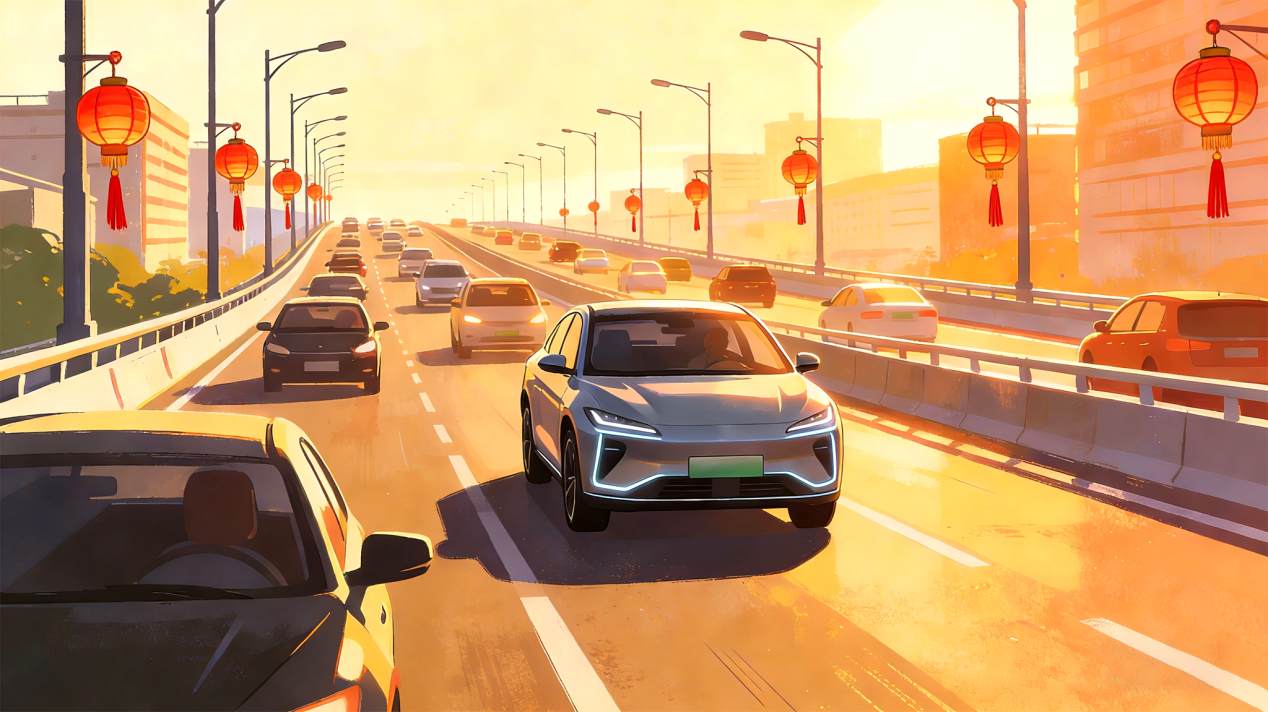
财政金融协同扩内需促消费,广东又有新动作!
Nan Fang Du Shi Bao· 2026-02-05 08:07
Core Viewpoint - Guangdong Province is implementing a comprehensive set of fiscal and financial policies to support the real economy, focusing on reducing financing costs and stimulating market vitality through a combination of "fund guidance + loan interest subsidies + risk sharing" [1] Group 1: Fiscal and Financial Policies - The Ministry of Finance launched a package of policies aimed at stimulating domestic demand, including four measures to support small and medium-sized enterprises (SMEs) with interest subsidies and guarantees, and one measure for personal consumption loan interest subsidies [2] - A loan interest subsidy policy for SMEs will provide a subsidy of 1.5% on principal for loans up to 50 million yuan, targeting 14 key industrial chains and sectors [2] - The equipment upgrade loan interest subsidy policy has been expanded to include additional sectors, maintaining a subsidy rate of 1.5% for up to two years [2][3] - The service industry loan interest subsidy policy has been expanded from 8 to 11 categories, increasing the maximum loan amount eligible for interest subsidies from 1 million yuan to 10 million yuan [3] - A special guarantee plan for private investment has been established with a total guarantee amount of 500 billion yuan, increasing the single credit guarantee limit from 10 million yuan to 20 million yuan [3] Group 2: Investment Guidance Fund - The Guangdong Provincial Strategic Emerging Industry Investment Guidance Fund has been established with a total scale of 100 billion yuan, with an initial phase of 50 billion yuan [5] - The fund aims to create a "long money long investment" policy system, providing stable long-term capital for the construction of a modern industrial system [6] - A three-tiered fund structure ("guidance fund - mother fund - sub-fund") is being developed to leverage fiscal funds and attract private investment [6] Group 3: Support for Manufacturing and High-tech Enterprises - Loan interest subsidies for manufacturing and high-tech enterprises will cover 35% of the loan interest rate, with a maximum annual subsidy of 20 million yuan [7] - The policy targets registered manufacturing enterprises and valid high-tech enterprises, focusing on areas such as factory construction, equipment purchase, and technological transformation [7] Group 4: Policy Synergy and Implementation - Guangdong's policies are designed to complement central policies, creating a synergistic effect that enhances overall support for SMEs and consumption [8] - The combination of provincial guidance funds with central interest subsidies and guarantee plans forms a comprehensive support system addressing financing challenges faced by enterprises [8] - Mechanisms for quarterly disbursement and streamlined processes are in place to reduce the policy implementation cycle and enhance the experience of market participants [9]
新能源新车销售量远超预期,绿色转型“加速度”从何而来?
Ren Min Ri Bao· 2026-02-05 02:10
Group 1 - By 2025, the sales volume of new energy vehicles in China is expected to exceed 50% of total new car sales, significantly surpassing the initial target of 20% set in 2020 [1] - The increase in non-fossil energy consumption is projected to rise from 16% in 2020 to over 20% by 2025, indicating a strong commitment to green energy [2] - China's forest coverage rate has exceeded 25%, making it the fastest-growing country in terms of afforestation globally [2] Group 2 - Traditional industries are transforming; for example, Taiyuan Iron and Steel Group has shifted focus to high-end stainless steel, showcasing innovation in a high-emission sector [3] - Various regions in China are leveraging their unique resources for green energy production, such as Inner Mongolia's wind power and Qinghai's solar energy, contributing to a comprehensive renewable energy industry [3] - The Ant Forest initiative has engaged millions of users in environmental actions, leading to the planting of over 600 million trees, reflecting a societal shift towards sustainable living [4] Group 3 - China's GDP is projected to exceed 140 trillion yuan in 2025, with a growth rate of 5.0%, while energy consumption per unit of added value in major energy-intensive industries has significantly decreased [4] - The shift towards green production is enhancing economic growth, demonstrating that high-quality development can be achieved without following the traditional path of pollution [4] - The ongoing green transformation is not only an environmental necessity but also a crucial aspect of future development, emphasizing the importance of sustainable practices [4]
Jiuzi Holdings, Inc. Further Deepens Cooperation with Xinhui Solar, with Xinhui Solar Planning an Additional US$30 Million Investment to Support Southeast Asia Expansion
Prnewswire· 2026-02-03 12:15
Core Viewpoint - Jiuzi Holdings, Inc. has deepened its strategic cooperation with Xinhui Solar Technology Group to enhance their collaboration in Southeast Asia's new energy infrastructure and electric vehicle service markets, supported by a planned US$30 million investment from Xinhui Solar [1][4]. Group 1: Strategic Cooperation - The two companies aim to leverage their strengths in new energy resources, technology, capital, and market development to advance EV charging infrastructure and energy management solutions in Southeast Asia [2]. - The cooperation will be implemented in a phased and project-based manner, focusing on scalability and replicability across the region [2]. Group 2: Joint Venture and Financial Support - A memorandum of understanding (MOU) has been established to guide future collaboration, with a proposed joint venture intended as a key platform for regional operations [3]. - The additional US$30 million investment from Xinhui Solar is expected to provide ongoing financial support for Jiuzi Holdings' strategy in Southeast Asia, contingent on relevant conditions and internal approvals [4].


车没上市AI黑稿已刷屏,起底新能源车圈黑水军产业链
Xin Lang Cai Jing· 2026-01-29 14:40
Core Viewpoint - The rapid growth of China's new energy vehicle (NEV) industry is accompanied by harmful practices such as malicious competition and misinformation, which hinder healthy industry development [1][9][11]. Industry Overview - By 2025, China's NEV production and sales are expected to exceed 16 million units, with NEVs accounting for over 50% of new car sales [1]. - The industry is experiencing a surge in malicious competition, with some influencers spreading false information to undermine competitors [1][10]. Regulatory Actions - Since September of last year, Chinese authorities have launched a special campaign to combat online misinformation and malicious attacks within the automotive sector [1][9]. - The National Internet Information Office has received over 28,000 complaints related to automotive industry infringements and has removed over 111,300 pieces of harmful content [10][11]. Impact of Malicious Practices - Malicious attacks not only damage individual brands but also threaten the overall integrity of the NEV industry [11][12]. - The prevalence of online misinformation is linked to unhealthy competition among car manufacturers, which has led to a toxic environment for fair competition [12][13]. Characteristics of Online Attacks - The attacks often involve organized efforts to discredit competitors, utilizing social media to spread negative information [10][14]. - Some influencers have been found to engage in coordinated campaigns to manipulate public perception, often for financial gain [15][18]. Use of Technology in Misinformation - The rise of AI technology has facilitated the rapid spread of false information, allowing for the mass production of misleading content [17][18]. - Influencers and content creators are using AI to generate deceptive reviews and comments, complicating the regulatory response [18][19]. Case Studies - A notable case involved the influencer "Wang Wukong Says Car," who was ordered to publicly apologize and compensate for defamation against a car brand [1][19]. - The court found that the influencer's statements contained false descriptions and derogatory evaluations that harmed the brand's reputation [19].