《平价医疗法案》(ACA)补贴

Search documents
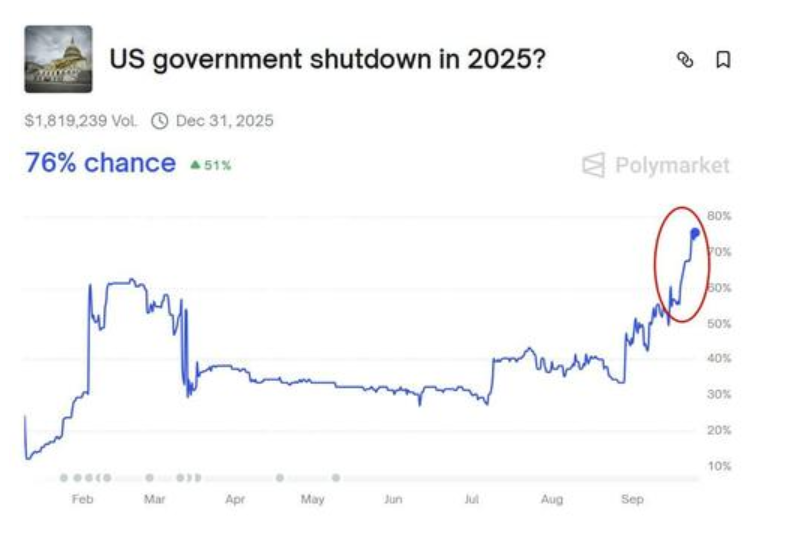
美国众议长约翰逊:并未承诺延长《平价医疗法案》补贴
Xin Lang Cai Jing· 2025-12-02 16:46
Core Viewpoint - House Speaker Johnson has not committed to extending subsidies for the Affordable Care Act (ACA) [2][4] Group 1 - Johnson made the statement during a press conference at the Capitol [2][4] - He responded to a question regarding a PBS report about potential short-term extensions of ACA subsidies by House Republicans [5] - The timing and duration of any proposed short-term extension remain uncertain according to the report [5]

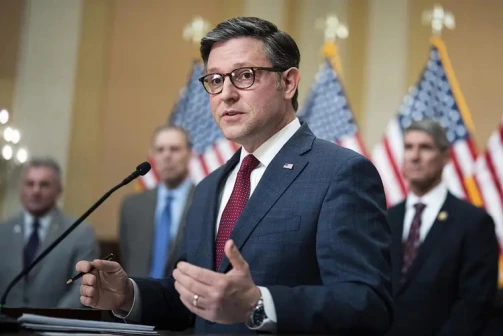
参议院领袖致信特朗普,要求会面,结束政府停摆
Hua Er Jie Jian Wen· 2025-11-06 07:00
Core Points - The U.S. federal government shutdown has reached its 36th day, becoming the longest in U.S. history, surpassing the previous record of 35 days from late 2018 to early 2019 [1] - Senate Democratic leaders have formally requested a bipartisan meeting with President Trump, indicating a potential thaw in political deadlock [1][4] - The economic impact of the shutdown is significant, with estimated losses of approximately $15 billion per week, affecting various sectors [4][8] Political Developments - Following recent electoral victories, Democratic leaders are seeking to negotiate an end to the shutdown, which has severely impacted the economy and public welfare [4] - A bipartisan group of senators is reportedly working on a proposal that includes funding for certain agencies and a short-term bill to reopen the government [7] - There is a possibility of support from moderate Democratic senators, which could help surpass the required votes to end the deadlock [7] Economic Impact - The ongoing shutdown is causing substantial economic losses, estimated between $10 billion and $30 billion weekly, with a consensus around $15 billion [8] - Specific impacts include a freeze on approximately $24 billion in federal procurement spending, hindering contractors and suppliers [12] - Small business loans have been disrupted, affecting around 4,800 businesses with a total of $2.5 billion in loans blocked [12] - Food assistance programs, such as SNAP, are facing funding issues, potentially affecting 42 million people [12] - Early childhood education services have been interrupted, impacting over 8,000 children and families [12] Market Reactions - President Trump has acknowledged the negative effects of the shutdown on the stock market and other sectors, urging for a swift resolution [10] - Despite the challenges, he remains optimistic about the long-term performance of the stock market [10]
周四破局时刻?美国政府关门破纪录,市场撑不住了
Hua Er Jie Jian Wen· 2025-11-05 10:17
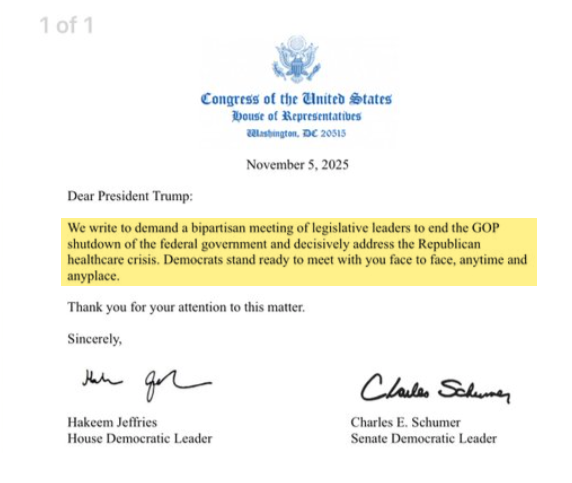
Core Insights - The U.S. government shutdown is pushing financial markets towards a dangerous edge, with signs of potential progress in negotiations between the two parties in Congress [1][3] - The shutdown has reached its 36th day, breaking the previous record and causing significant economic impacts, including a projected GDP decline of 1-2 percentage points for Q4 [2][3] Market Impact - The shutdown has led to a liquidity crisis comparable to multiple interest rate hikes, with major sell-offs in risk assets, particularly in the tech and semiconductor sectors [1][4] - The Treasury's General Account (TGA) balance has surged from approximately $300 billion to over $1 trillion, indicating a withdrawal of over $700 billion from the market [4] Political Developments - Senate Majority Leader John Thune proposed a potential solution that combines a short-term funding bill with a vote on extending ACA subsidies, seen as a key step to break the deadlock [3][5] - Some Republican senators express optimism about reaching an agreement this week, particularly after local elections, which may pressure Democrats to soften their stance [6][5] Internal Party Dynamics - There are visible divisions within the Democratic Party regarding the approach to the shutdown, with moderate members considering a compromise that would reopen the government in exchange for future votes on ACA subsidies [7][8] - Progressive Democrats are opposed to this compromise, viewing it as a betrayal of working families, highlighting the internal conflict that could hinder negotiations [8]
周四,破局时刻?美国政府关门破纪录,市场撑不住了
华尔街见闻· 2025-11-05 10:09
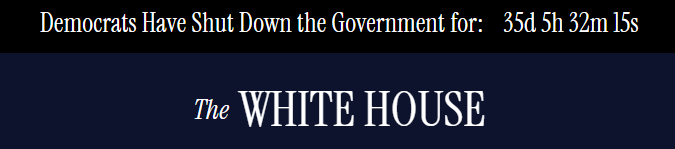
Core Viewpoint - The ongoing U.S. government shutdown is pushing financial markets towards a dangerous edge, but there are signs of potential breakthroughs in negotiations between the two parties in Congress [1][2]. Group 1: Impact of Government Shutdown - The U.S. federal government shutdown has entered its 36th day, breaking the previous record of 35 days from late 2018 to early 2019, making it the longest shutdown in U.S. history [3]. - The Congressional Budget Office estimates that the prolonged shutdown could lead to a decline in the annual GDP growth rate by 1 to 2 percentage points in Q4 of this year, with the BBC estimating a loss of approximately $15 billion for the U.S. GDP for each week the shutdown continues [4]. - The shutdown is causing significant liquidity issues in the financial markets, with effects comparable to multiple interest rate hikes [5]. Group 2: Political Developments - There are emerging signs of a potential resolution in Washington, with Senate Majority Leader John Thune proposing a solution that combines a short-term funding bill with a vote on extending subsidies for the Affordable Care Act (ACA) [6]. - Some Republican lawmakers express optimism about reaching an agreement this week, with Senator Markwayne Mullin indicating confidence that a deal could be finalized as early as Wednesday night or more likely by Thursday [7]. Group 3: Liquidity Crisis - The shutdown has led to a significant liquidity crisis, with the U.S. Treasury's General Account (TGA) balance increasing from approximately $300 billion to over $1 trillion in the past three months, effectively withdrawing over $700 billion from the market [8]. - Key financing rates are under pressure, with the Secured Overnight Financing Rate (SOFR) spiking 22 basis points, indicating that actual financing costs have not decreased despite the Federal Reserve's rate cuts [8]. Group 4: Negotiation Challenges - Despite the potential for a breakthrough, there are significant divisions within the Democratic Party regarding the proposed compromise, with moderate Democrats considering a temporary funding bill in exchange for future commitments on ACA subsidies [12][13]. - Progressive Democrats are opposed to this approach, viewing it as a betrayal of working families, while former President Trump is pressuring Republicans to eliminate the Senate's filibuster rule, adding complexity to the negotiations [14].

高盛:美政府停摆或在“11月第二周”结束,经济损失恐史无前例!
Jin Shi Shu Ju· 2025-11-05 09:52
Core Viewpoint - Goldman Sachs believes that the U.S. government shutdown may soon come to an end, as it has set a record for the longest shutdown in history [1] Group 1: Economic Impact - The current shutdown could become the most economically impactful on record, potentially exceeding the 35-day partial shutdown of 2018-2019, with a broader scope affecting more sectors [2] - Goldman Sachs estimates that the six-week shutdown could reduce the fourth-quarter economic growth rate by 1.15 percentage points to just 1%, with a rebound not expected until early 2026 [2] - The U.S. Chamber of Commerce reported that the shutdown has caused a weekly revenue loss of $3 billion for 65,500 small business contractors [2] Group 2: Government Operations and Assistance Programs - The shutdown has delayed the issuance of food stamp benefits, with the White House announcing the use of emergency funds to cover 50% of SNAP benefits [2] - DoorDash and Gopuff have initiated emergency food responses to assist SNAP recipients affected by the shutdown [3] - The core of the impasse lies in disagreements over healthcare subsidies, with Democrats seeking to extend ACA subsidies while Republicans refuse to attach conditions to the temporary funding bill [3] Group 3: Political Pressure and Compromise - Increasing operational and political pressures may drive lawmakers to reach a compromise, with expectations for a resolution around the second week of November [1] - The missed salary payments for air traffic controllers and airport security personnel could exacerbate pressures, particularly before the second pay date in November [1]

美股周四反弹?美国政府关门“势创纪录”,市场已然撑不住,周四或是“破局时刻”?
美股IPO· 2025-11-05 06:05
Core Viewpoint - The ongoing U.S. government shutdown, now in its 35th day, is causing significant turmoil in financial markets, with liquidity being drained similarly to multiple interest rate hikes. However, there are signs of potential progress in negotiations between the two parties in Congress, with some Republican lawmakers optimistic about reaching an agreement this week [1][3][4]. Group 1: Market Impact - The shutdown has led to a severe liquidity crisis, with the U.S. Treasury's General Account (TGA) balance increasing from approximately $300 billion to over $1 trillion in the past three months, effectively withdrawing over $700 billion from the market [5]. - The tightening effect of this liquidity withdrawal is comparable to several interest rate hikes, as key financing rates are under pressure. The Secured Overnight Financing Rate (SOFR) surged by 22 basis points on October 31, indicating that actual financing costs have not decreased despite the Federal Reserve's rate cuts [6]. Group 2: Political Developments - There are indications of a thaw in the political deadlock, with Senate Majority Leader John Thune proposing a potential solution that combines a short-term funding bill with a vote on extending subsidies for the Affordable Care Act (ACA), which is seen as a critical step to break the impasse [3][8]. - Some Republican senators express confidence that an agreement could be reached by the end of the week, particularly after local elections, which may pressure Democrats to soften their stance [4][8]. Group 3: Internal Party Divisions - Within the Democratic Party, there are noticeable divisions, with moderate members considering a compromise to temporarily reopen the government in exchange for a future vote on ACA subsidies. This proposal has angered progressive members who view it as a betrayal [9][10]. - Former President Trump has added complexity to the negotiations by pressuring Republicans to eliminate the Senate's filibuster rule, which could disrupt the negotiation process even if an agreement is reached in the Senate [10].
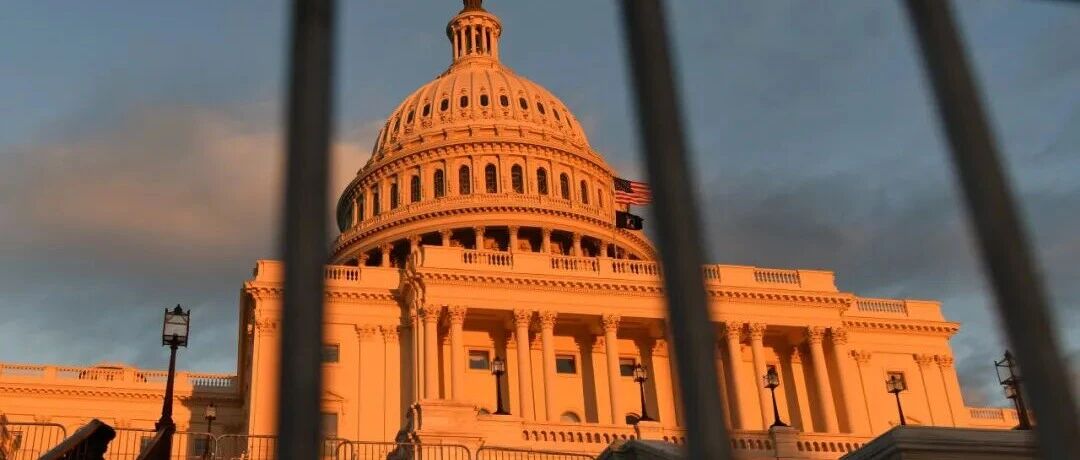
美国政府关门“势创纪录”,市场已然撑不住,周四或是“破局时刻”?
Hua Er Jie Jian Wen· 2025-11-05 00:33
Core Viewpoint - The U.S. government shutdown is pushing financial markets towards a dangerous edge, but there are signs of potential breakthroughs in bipartisan negotiations, with some Republican lawmakers optimistic about reaching an agreement this week [1][3]. Group 1: Market Reactions - On "Black Tuesday," major U.S. markets experienced significant declines, with the Nasdaq and S&P 500 indices recording their largest single-day drops in nearly a month, particularly affecting technology and semiconductor sectors [1]. - Bitcoin fell below the $100,000 mark for the first time since June, leading to over $1.3 billion in liquidations in the cryptocurrency market [1]. - The U.S. dollar index rose for the fifth consecutive trading day, reaching a three-month high, while the British pound, offshore yuan, and commodities faced widespread pressure [1]. Group 2: Liquidity Crisis - The government shutdown has exacerbated a growing liquidity crisis, with the U.S. Treasury's General Account (TGA) balance surging from approximately $300 billion to over $1 trillion in the past three months, effectively withdrawing over $700 billion from the market [2]. - This large-scale liquidity withdrawal has tightened market conditions, comparable to multiple interest rate hikes, with key financing rates under significant stress [2]. - The Secured Overnight Financing Rate (SOFR) spiked by 22 basis points, indicating that actual financing costs have not decreased despite the Federal Reserve's rate cuts [2]. Group 3: Political Developments - Some Republican senators express confidence that the political deadlock may end this week, with discussions around local elections influencing negotiations [3]. - The impact of the shutdown on public welfare programs is becoming increasingly evident, adding pressure on both parties to reach an agreement [3]. - Analysts from Goldman Sachs and Citigroup predict that the government is likely to reopen within the next two weeks [3]. Group 4: Democratic Party Divisions - Internal divisions within the Democratic Party are emerging, with moderate members considering a compromise to temporarily reopen the government in exchange for future commitments from Republicans regarding healthcare subsidies [5]. - This proposed "reopen first, vote later" strategy has angered progressive members, who view it as a betrayal of working families [6].
民主党这次“立场坚定”,美国政府距离关门“越来越近”
Hua Er Jie Jian Wen· 2025-09-26 00:56
Core Viewpoint - The U.S. government is rapidly approaching a shutdown due to a political stalemate between the two parties, with no signs of resolution as the deadline nears [1][3]. Group 1: Political Stalemate - House Republicans proposed a temporary spending bill to avoid a government shutdown on October 1, but it does not include healthcare funding demanded by Democrats, leading to increased tensions [1][6]. - Senate Minority Leader Chuck Schumer has taken a firmer stance, indicating that Democrats will not be intimidated by threats from the Trump administration regarding federal workforce cuts [1][6]. - The last opportunity to avoid a shutdown is seen as the Senate's return on September 29, but the likelihood of a bipartisan agreement is considered low [3][6]. Group 2: Economic Impact - Goldman Sachs estimates that each week of government shutdown could reduce quarterly GDP growth by 15 basis points, with a potential three-week shutdown leading to a 45 basis point reduction [2][7]. - The shutdown would create a "data vacuum," delaying the release of key economic indicators such as non-farm payrolls and CPI, complicating the Federal Reserve's policy assessments [2][9]. Group 3: Legislative Dynamics - The current impasse centers around healthcare funding, with Democrats viewing this as a critical legislative opportunity, contrasting with their previous support for Republican proposals [6]. - The White House's strategy to pressure Democrats has intensified the conflict, with accusations of "mob-style extortion" from Democratic representatives [6][9].