
丁二酸

Search documents
中国化学(601117):中国化学2025年报点评:2025Q4利润增19.1%,持续推进尼龙等研发
GUOTAI HAITONG SECURITIES· 2026-03-27 14:42
Investment Rating - The report maintains an "Accumulate" rating for the company [1][3] Core Views - The company's net profit attributable to shareholders increased by 13.2% in 2025, with a notable growth of 19.1% in Q4 [2][4] - New contracts signed in 2025 reached 403.66 billion yuan, marking a 10% increase, with a focus on advancing research in nylon and high-end polyolefins [5][6] Financial Summary - Total revenue for 2025 was 190.1 billion yuan, reflecting a 1.9% growth, while the net profit attributable to shareholders was 6.436 billion yuan, up 13.2% [4][7] - The company’s gross margin improved to 10.71%, with a net profit margin of 3.39% [4] - The operating cash flow for 2025 was 1.44 billion yuan, significantly lower than the previous year's 8.72 billion yuan [4][7] Future Projections - The company forecasts an EPS of 1.16 yuan for 2026, with a growth rate of 10%, and an EPS of 1.26 yuan for 2027, with a growth rate of 9% [3][6] - The target price for the company is set at 13.46 yuan, based on a PE ratio of 11.6 for 2026 [3][6] Dividend Policy - The proposed dividend payout ratio for 2025 is 20%, consistent with the previous year, resulting in a dividend yield of 2.3% [6]

中国化学(601117):业绩略超预期、实业扭亏为盈,看好煤化工、海外双向发力带动业绩稳增
GF SECURITIES· 2026-03-27 08:07
Investment Rating - The report maintains a "Buy" rating for the company, with a target price of 11.66 CNY per share based on a 10x PE for 2026 [7]. Core Insights - The company reported a slight earnings beat, with 2025 revenue reaching 190.1 billion CNY, a year-on-year growth of 1.9%, and a net profit attributable to shareholders of 6.44 billion CNY, up 13.2% year-on-year [7]. - The engineering segment showed stable revenue growth, with new contracts signed in chemical engineering increasing by 19% year-on-year, and overseas contracts accounting for 31% of total new contracts [7]. - The industrial segment turned profitable, achieving a revenue of 9.75 billion CNY, a year-on-year increase of 11.5%, and a gross margin improvement [7]. Financial Summary - **Revenue Forecast**: Projected revenues for 2024 to 2028 are 186.61 billion CNY, 190.13 billion CNY, 195.43 billion CNY, 201.66 billion CNY, and 208.79 billion CNY, respectively, with growth rates ranging from 1.9% to 4.1% [3]. - **Net Profit Forecast**: Expected net profits for the same period are 5.69 billion CNY, 6.44 billion CNY, 7.12 billion CNY, 7.85 billion CNY, and 8.63 billion CNY, with growth rates between 4.8% and 13.2% [3]. - **Earnings Per Share (EPS)**: EPS is projected to increase from 0.93 CNY in 2024 to 1.41 CNY in 2028 [3]. - **Profitability Ratios**: The company’s return on equity (ROE) is expected to improve from 9.1% in 2024 to 10.1% in 2028 [3]. Operational Performance - **Cash Flow**: The operating cash flow for 2025 was reported at 1.44 billion CNY, a decrease from the previous year, primarily due to reduced cash inflows from financial operations [7]. - **Gross Margin**: The overall gross margin for 2025 was 10.71%, with domestic and overseas margins at 10.89% and 11.24%, respectively, showing improvements year-on-year [7]. - **Order Backlog**: As of the end of 2025, the company had an order backlog of 452.8 billion CNY, reflecting a year-on-year increase of 12.4% [7].
2000万元!山东大学生物基丁二酸技术转化盛虹控股,已完成200吨产业化示范
合成生物学与绿色生物制造· 2026-03-21 06:04
Core Viewpoint - The article highlights the successful transformation of a bio-based succinic acid production technology developed by Shandong University, which has been recognized as a typical case of technology transfer in higher education by the Ministry of Education. This technology addresses plastic pollution by enabling the production of biodegradable plastics, thus contributing to environmental sustainability [2][3]. Group 1: Technology Overview - The technology focuses on the production of succinic acid, a key monomer for biodegradable plastics such as PBS and PBST, which are gaining global attention as alternatives to traditional plastics [3]. - The team has developed a low pH fermentation process for succinic acid production, achieving international leading production indicators and holding independent intellectual property rights. This process simplifies production by eliminating the need for neutralization and acidification steps, thereby reducing costs [3][4]. - The technology has completed pilot tests at a scale of 20 tons and is currently undergoing industrial demonstration with a target of achieving an annual economic benefit of 200 million yuan upon completion of the production line [5]. Group 2: Environmental Impact - The article emphasizes that plastic pollution is the second-largest environmental issue after climate change, and the global consensus is shifting towards reducing plastic usage. Biodegradable plastics can significantly alleviate the pollution caused by plastic waste [3]. - Traditional manufacturing processes for succinic acid generate substantial solid waste, including sodium sulfate, which increases downstream separation costs. The new low pH fermentation technology avoids these issues, leading to a more sustainable production method [4]. Group 3: Team and Collaboration - The project is led by Professor Qi Qingsheng and his team, who have a long-standing focus on bio-manufacturing research and have achieved several breakthroughs. Their work has been transferred to multiple companies, including Fortune 500 firms [6]. - The collaboration with Shenghong Holding Group, a major player in the industry, has resulted in a significant technology transfer valued at 20 million yuan, showcasing the practical application of academic research in the industry [4][5].


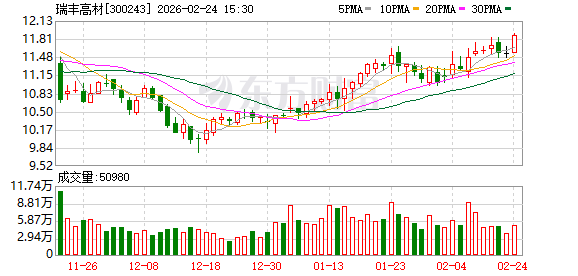
瑞丰高材:公司子公司瑞丰生物主要从事合成生物材料的开发
Zheng Quan Ri Bao· 2026-02-24 13:07
Core Viewpoint - Ruifeng High Materials' subsidiary, Ruifeng Bio, is engaged in the development of synthetic biomaterials, with a focus on products such as polylactic acid, succinic acid, and dextran, indicating a solid technical foundation in these areas [2] Group 1 - Ruifeng Bio has successfully commenced the external sales of dextran, actively exploring market opportunities, particularly for its use in animal iron supplements, dextran iron [2] - The company plans to expand dextran production capacity by 2026 and will continue to develop sales markets, although this expansion is not expected to have a significant short-term impact on performance [2] - Future strategies include expanding product categories through both in-house research and external technology collaborations, aiming for gradual large-scale implementation [2]

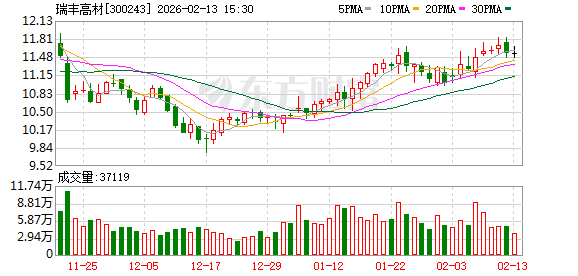
瑞丰高材:公司合成生物相关产品业务尚处于起步阶段,短期内不会对公司业绩产生较大影响
Mei Ri Jing Ji Xin Wen· 2026-02-13 13:56
Core Viewpoint - The company, Ruifeng High Materials, is focusing on the long-term development of synthetic biological materials, with plans for scaling up production and expanding market reach in the coming years [2]. Group 1: Company Development Plans - Ruifeng High Materials' subsidiary, Ruifeng Bio, is engaged in the development of synthetic biological materials, with established technology in polylactic acid, succinic acid, and dextran [2]. - The company has begun normal sales of dextran, actively exploring markets for its use in animal iron supplements, specifically dextran iron [2]. - By 2026, the company plans to further expand the production capacity of dextran and enhance its sales market [2]. Group 2: Business Strategy - The company aims to strengthen and grow its synthetic biological materials business through self-research and collaboration with established technology results [2]. - The synthetic biological product business is still in its early stages and is not expected to significantly impact the company's performance in the short term [2].
合成生物2025:资本退烧、技术落地,万亿赛道迈向“成年期”
Xin Lang Cai Jing· 2025-12-22 06:00
Core Insights - The synthetic biology industry is experiencing significant growth, with the global market expected to reach $24.58 billion in 2023 and potentially exceed $100 billion by 2032, while China's market is projected to surpass $70 billion this year [3][9][10] - The industry is transitioning from a story-driven phase to a focus on profitability and commercial viability, marking a maturation process [3][32] - The integration of AI into synthetic biology is reshaping the entire research and production process, enhancing efficiency and reducing development cycles [24][25] Market Overview - The global synthetic biology market was valued at approximately $14 billion in 2022 and is projected to grow to $38.7 billion by 2027 [9][10] - China's synthetic biology market has shown a steep growth trajectory, increasing from $9 million in 2016 to an estimated $70 billion in 2023 [10][11] - The A-share market features over 160 synthetic biology concept companies, collectively valued at around $1.69 trillion, indicating a robust ecosystem [17] Investment Trends - Investment in synthetic biology is shifting from a broad approach to a more targeted strategy, focusing on companies with clear commercialization pathways [11][12] - In 2025, the capital flow in the synthetic biology sector is characterized by a significant concentration in the healthcare field, with major investments in companies like Yikole Biotechnology [11][12] - The beauty sector is emerging as a hot investment area, with over 46.5% of financing events in the cosmetics field related to synthetic biology [11] Policy and Regulatory Environment - The Chinese government is actively supporting the synthetic biology industry through comprehensive policies, including the "14th Five-Year Plan" which emphasizes biomanufacturing [14][33] - Policies are being implemented to enhance the development of biomanufacturing capabilities, with a goal to establish over 20 pilot platforms by 2027 [31][33] Industry Dynamics - The synthetic biology sector is witnessing a diversification of applications beyond healthcare, extending into chemicals, materials, and agriculture [7][9] - The healthcare segment remains the largest market, with a projected size of $10.3 billion by 2027, driven by innovations like CAR-T therapies [17][18] - The food and agriculture sectors are expected to see the fastest growth rates, with annual compound growth rates of 45.4% and 56.4% respectively from 2022 to 2027 [18] Technological Innovations - AI is becoming a core driver in synthetic biology, moving from a supportive role to a central engine in research and production processes [24][25] - Significant advancements in AI and synthetic biology are enabling the design of complex biological systems and enhancing production efficiency [24][25] - Companies are leveraging AI to optimize fermentation processes and improve product quality, demonstrating the practical applications of these technologies [26][27] Challenges and Future Outlook - The industry faces challenges in scaling from laboratory results to commercial production, with a significant drop in success rates without pilot testing [29][31] - The need for a robust ecosystem that supports innovation and commercialization is critical for overcoming existing barriers [32][33] - The future of the synthetic biology industry is promising, with expectations for continued growth driven by technological advancements and supportive policies [32][33]



山东大学祁庆生团队开发新途径解决丁二酸生物制造瓶颈
合成生物学与绿色生物制造· 2025-12-11 04:20
Core Viewpoint - The research team from Shandong University has developed a novel non-canonical reductive TCA (Nc-rTCA) pathway for high-yield succinic acid biosynthesis in Yarrowia lipolytica, addressing the limitations of the traditional reductive TCA pathway [2][5]. Group 1: Research Background - C4 dicarboxylic acids, particularly succinic acid, are valuable compounds used in pharmaceuticals, chemicals, and food industries. Succinic acid serves as a platform compound for synthesizing various high-value chemicals [3]. - Yarrowia lipolytica is identified as a promising host for succinic acid biosynthesis due to its excellent acid tolerance and compatibility with low-cost raw materials [3]. Group 2: Challenges and Solutions - The traditional reductive TCA (rTCA) pathway faces challenges due to insufficient NADH levels in yeast, leading to lower than theoretical conversion rates for succinic acid production [3][5]. - The research team previously constructed a high-yield succinic acid-producing strain using alternative pathways but noted that conversion rates still had room for improvement [5]. Group 3: Novel Pathway Development - The team proposed the Nc-rTCA pathway to circumvent the redox imbalance associated with the traditional rTCA pathway. This new pathway utilizes endogenous aspartate transaminase (YlAAT) and heterologous aspartate ammonia-lyase (AAL) to convert oxaloacetate into fumarate, bypassing the NADH-dependent malate dehydrogenase [5]. - The introduction of NADPH-dependent glutamate dehydrogenase (YlGDH) facilitates the synthesis and utilization cycle of NH4, significantly improving the conversion rate of succinic acid [5]. Group 4: Experimental Results - The engineered Yarrowia lipolytica strain Ncr12 achieved a succinic acid yield of 98.16 g/L and a conversion rate of 0.91 g/g glucose in a 5-L fermentation tank, marking the highest conversion rate for succinic acid production from glucose in yeast [6]. - Using non-food low-cost raw materials such as crude glycerol and lignocellulose, the strain produced succinic acid yields of 117.74 g/L and 74.34 g/L, with conversion rates of 0.74 g/g glycerol and 0.98 g/g glucose, respectively, also representing the highest conversion rates for these carbon sources in yeast [6]. Group 5: Broader Implications - The Nc-rTCA pathway is theoretically universal and scalable, providing a new route for succinic acid production and a platform for the industrial production of other bio-based C4 dicarboxylic acids [6].

华恒生物(688639):单三季度利润同比增长,产品销量持续提升
Tianfeng Securities· 2025-11-12 15:18
Investment Rating - The investment rating for the company is "Hold" [5] Core Views - The company reported a revenue of 2.2 billion yuan for the first three quarters of 2025, representing a year-on-year increase of 43%. However, the net profit attributable to the parent company was 170 million yuan, a decrease of 1.3% year-on-year [1] - Despite weak price performance of main products, the increase in sales volume has contributed to revenue growth. The average price of valine was 14 yuan/kg, down 4.5% year-on-year, while tryptophan and arginine saw price declines of 29% and 25% respectively [2] - The company is optimizing product resource allocation and enhancing sustainable profitability through increased R&D investment in new products, including biobased materials [2][3] - The establishment of an AI digital laboratory aims to integrate AI technology into synthetic biology and company management, enhancing operational efficiency [3] - The company plans to issue overseas shares and list on the Hong Kong Stock Exchange to support its globalization strategy and improve capital structure [3] Financial Summary - For 2025, the company expects net profits of 230 million yuan, 310 million yuan, and 360 million yuan for the years 2025, 2026, and 2027 respectively, with adjustments made due to declining prices of some main products [3] - The projected revenue for 2025 is 3.16 billion yuan, with a growth rate of 44.98% [4] - The company’s EBITDA for 2025 is estimated at 495.79 million yuan, with a P/E ratio of 42.63 [4][10] Product and Market Strategy - The company is advancing projects in biobased materials and has initiated technical upgrades to existing production facilities to allow flexible production of various products [2] - The R&D expenditure for the first three quarters of 2025 was 110 million yuan, reflecting a year-on-year increase of 17.58% [3]
金明杰教授:非粮生物炼制如何实现全链条创新?
合成生物学与绿色生物制造· 2025-10-09 07:47
Core Viewpoint - The article emphasizes the economic feasibility of converting non-grain biomass waste, such as straw, into high-value products through comprehensive innovation across the entire supply chain [2][4]. Group 1: Research and Development - Professor Jin Mingjie’s team at Nanjing University of Science and Technology has addressed key challenges in the biorefining process of lignocellulosic biomass, including high raw material collection and transportation costs, stringent pretreatment conditions, toxic byproducts, low bioconversion efficiency, and difficulties in lignin degradation [2]. - A novel pretreatment technology and biorefining system have been developed to solve critical issues in the biorefining process [2]. - The team has developed a high-solid enzymatic hydrolysis technology that achieves a fermentable sugar concentration exceeding 200 g/L, allowing for efficient fermentation of hydrolysate into products like cellulose ethanol, lactic acid, succinic acid, citric acid, and lipids without the need for washing or detoxification [2]. Group 2: Lignin Utilization - The research includes the analysis of lignin biodegradation pathways and the discovery of new lignin-degrading enzymes, employing a "biological funnel" strategy to construct multiple engineered strains for the efficient conversion of lignin into high-value products such as muconic acid and gallic acid [2]. Group 3: Company Formation and Impact - In 2024, Professor Jin Mingjie founded Suzhou Limi Biotechnology Co., Ltd. in Suzhou High-tech Zone, which has developed globally leading complete technologies with independent intellectual property rights, breaking through the industrialization bottleneck of converting non-grain biomass waste into high-value biochemical products [4]. - The establishment of this company is considered epoch-making in the field of biomass utilization [4]. Group 4: Industry Engagement - Professor Jin Mingjie is scheduled to present a report titled "Biorefining of Lignocellulosic Biomass Based on 'Sugar' Platform" at the 2025 Non-Grain Biomass High-Value Utilization Forum (NFUCon 2025) in Hangzhou, Zhejiang, from January 27 to 29, 2025, inviting industry participation for exchange [5].
华恒生物(688639):公司推进“生物+AI”战略,构建多维产品体系
Great Wall Securities· 2025-09-15 12:49
Investment Rating - The investment rating for the company is "Buy" with expectations of a stock price increase of over 15% relative to the industry index in the next six months [5][20]. Core Viewpoints - The company is advancing its "Bio + AI" strategy to build a multi-dimensional product system, which includes amino acids, vitamins, and bio-based new material monomers. This diversification is expected to enhance profitability and growth potential as new products are gradually launched and technical upgrades are completed [9][10][11]. - The company reported a revenue of 1.489 billion yuan in the first half of 2025, a year-on-year increase of 46.54%, while the net profit attributable to the parent company was 115 million yuan, a decrease of 23.26% year-on-year [1][2]. Financial Performance Summary - **Revenue Growth**: The projected revenue for 2025 is 2.617 billion yuan, with a year-on-year growth rate of 20.1%. The revenue is expected to continue growing to 3.098 billion yuan in 2026 and 3.591 billion yuan in 2027 [1][11]. - **Net Profit**: The net profit attributable to the parent company is projected to be 240 million yuan in 2025, recovering to 298 million yuan in 2026 and 381 million yuan in 2027, with corresponding growth rates of 26.6%, 24.3%, and 27.6% respectively [1][11]. - **Profitability Ratios**: The return on equity (ROE) is expected to improve from 7.2% in 2024 to 12.2% in 2027, indicating a recovery in profitability [1][11]. - **Earnings Per Share (EPS)**: The EPS is projected to be 0.96 yuan in 2025, increasing to 1.19 yuan in 2026 and 1.52 yuan in 2027 [1][11]. Cash Flow and Financial Health - The net cash flow from operating activities in the first half of 2025 was 75 million yuan, a decrease of 9.93% year-on-year. The net cash flow from investing activities was -261 million yuan, an increase of 40.91% year-on-year, primarily due to reduced cash payments for fixed assets and intangible assets [3]. - The company’s cash and cash equivalents at the end of the period were 379 million yuan, a decrease of 3.63% year-on-year [3]. Market Conditions and Product Pricing - The overall gross profit margin for the first half of 2025 was 24.11%, a decline of 7.49 percentage points compared to the same period in 2024. This decline is attributed to rising costs of amino acids and vitamins, as well as a decrease in the prices of certain products [2][4]. - The price of L-alanine dropped approximately 42.86% from early 2025 to the end of June 2025, which has exerted pressure on the company's performance [4]. Strategic Initiatives - The company is focusing on enhancing its research and development capabilities, particularly in the integration of AI technology within its operations. This initiative aims to improve production efficiency and product quality, thereby supporting sustainable growth [10].