三星Galaxy S25 Edge

Search documents
荣耀将于1月19日发布全新超薄旗舰荣耀Magic8 Pro Air
Xin Lang Cai Jing· 2026-01-11 06:52
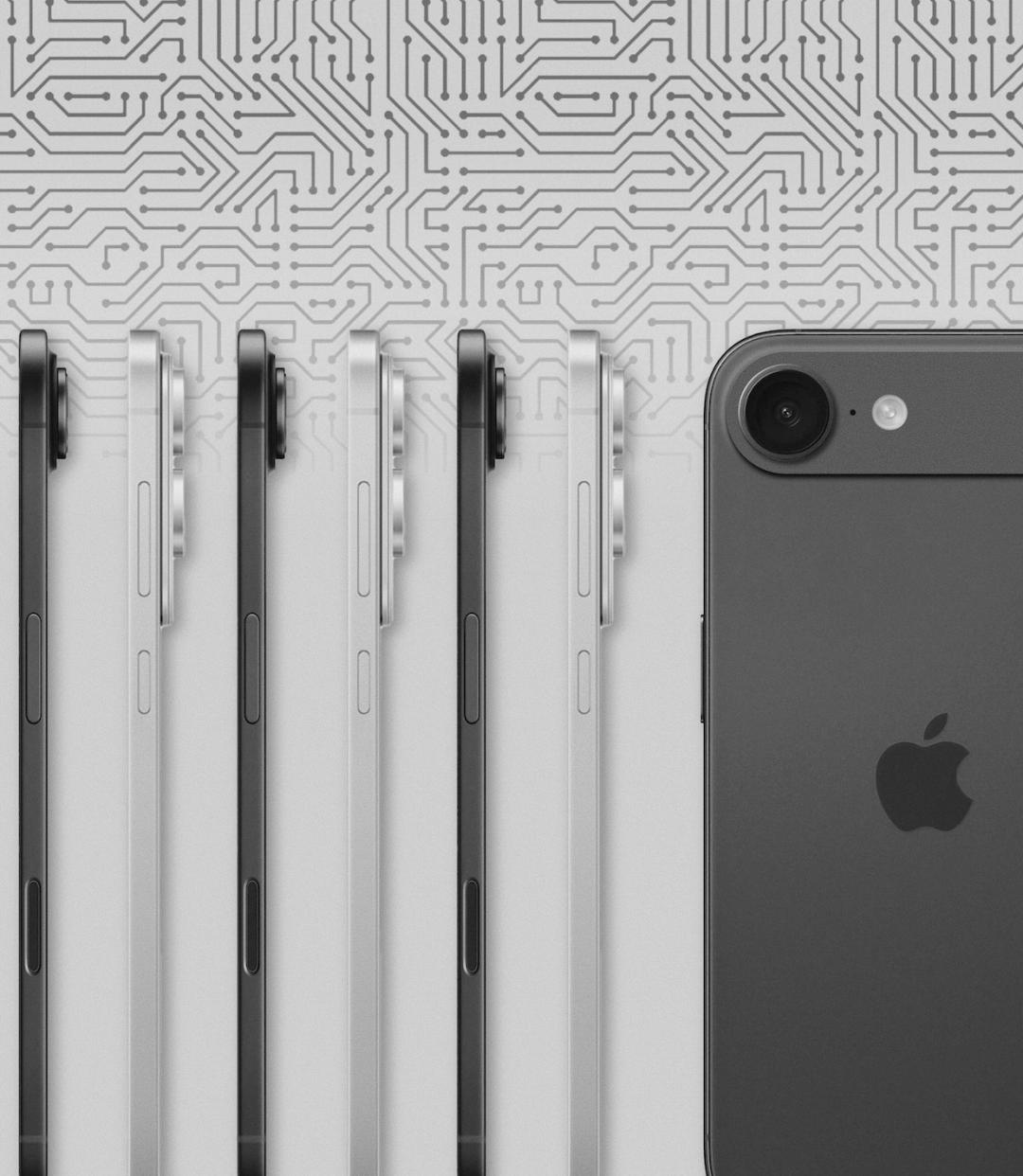
Core Viewpoint - Honor is set to launch the new ultra-thin flagship Honor Magic8 Pro Air on January 19, featuring a thickness of only 6.1mm and a weight of 155g, while incorporating a large 5500mAh battery, surpassing competitors like Apple and Samsung [1] Group 1: Product Specifications - The Honor Magic8 Pro Air maintains high-end imaging capabilities with a large main camera, periscope telephoto, and ultra-wide-angle lenses, along with support for 3D ultrasonic screen fingerprint technology and the latest Dimensity 9500 flagship platform [1] - In comparison, the iPhone Air features only a single 48MP camera, while the Samsung Galaxy S25 Edge lacks a telephoto lens, offering only a main camera and ultra-wide-angle [1] Group 2: Design and Innovation - The industrial design of the Honor Magic8 Pro Air includes a horizontally arranged camera module, a one-piece cold-formed glass back, and a metal right-angle frame, available in multiple color options, enhancing both texture and recognition [1] - The President of Honor's terminal product line, Fang Fei, stated that the introduction of the Air series represents both an opportunity and a challenge for all brands, requiring not only courage but also sufficient technological accumulation to innovate systematically [1]
智能手机2025年先扬后抑 2026年AI手机市占率或过半
Xin Lang Cai Jing· 2026-01-02 20:35
Core Insights - The Chinese smartphone market experienced a "first rise, then fall" pattern in 2025, driven by initial consumer demand from the "old-for-new" subsidy policy, followed by a market cooling due to tightening subsidy policies and rising costs [1][3][5] - Industry innovation continues with advancements in battery technology, imaging capabilities, and AI integration, shifting the competition from "parameter competition" to "experience competition" [1][8][10] Market Trends - The initial success of the smartphone market in early 2025 was marked by a significant sales surge during the Spring Festival, with over 4.5 million digital products sold, and smartphone sales reaching 14.1 billion yuan, a 182% year-on-year increase [3] - However, the market faced a 4% year-on-year decline in smartphone sales in Q2 2025 due to inventory adjustments by manufacturers and the diminishing effects of subsidy policies [3][5] - The global rise in storage chip prices, driven by AI demand, has significantly increased costs, with prices for Samsung LPDDR4X memory rising from approximately $6 to $25 per unit, a more than threefold increase [3][5] Pricing and Market Segmentation - Rising costs have led to increased retail prices for smartphones, with Xiaomi's Redmi K90 priced at 2,599 yuan, up 300 yuan from its predecessor [4] - High-end flagship models can better absorb cost increases, while the low-end market faces severe pressure, as price sensitivity among consumers can lead to reduced demand for new devices [4][6] - Forecasts for 2026 indicate a conservative outlook for smartphone production and shipment, with IDC predicting a 2.2% year-on-year decline in shipments to approximately 278 million units [5][6] Structural Changes in the Market - The high-end smartphone market (priced above $600) is expected to grow its market share by 5.4 percentage points to 35.9%, while the low-end market (below $200) is projected to shrink by 4.3 percentage points to 20% [6] - The second-hand smartphone market is anticipated to grow by 20% in 2026, reaching over 100 million units, as consumers may opt for second-hand devices due to rising new device prices [7] Technological Innovations - The industry is focusing on significant upgrades in battery capacity, with major brands adopting 6,000-7,000mAh batteries, and some models featuring batteries as large as 8,300mAh [8] - Imaging technology is advancing with new models featuring 200-megapixel cameras, while AI capabilities are being integrated into devices with high-performance chips [8][10] - The competition is shifting towards AI capabilities and ecosystem integration, with brands needing to differentiate themselves through innovation and emotional engagement with consumers [9][10] Future Outlook - The year 2026 is seen as critical for the Chinese smartphone market, where success will depend on manufacturers' ability to navigate cost pressures and establish emotional connections with consumers [2][5] - IDC forecasts that the shipment of AI-enabled smartphones will reach 147 million units in 2026, representing a 31.6% year-on-year growth and accounting for 53% of the overall market [10][11]
iPhone Air成苹果“滑铁卢” 库克未来要如何找回场子?
Sou Hu Cai Jing· 2025-12-19 07:55
Core Insights - Apple's iPhone Air, launched in 2025, faced significant market challenges due to a lack of innovation, high pricing, and technical issues, leading to poor sales performance [1][3][18] Product Performance - The iPhone Air's first-week activation was less than one-tenth of the iPhone 17 Pro Max, with pre-order sales accounting for only 6% of total orders, prompting a price cut within five days of launch [3][7] - The device's ultra-thin design resulted in compromises on key features, including a single 48MP camera, reduced battery capacity, and limited audio capabilities, which negatively impacted user experience [9][11] Market Reaction - The failure of iPhone Air has caused a ripple effect in the smartphone industry, leading competitors like Xiaomi, OPPO, and vivo to cancel similar lightweight models and refocus on other market segments [8] - Samsung's Galaxy S25 Edge also underperformed, resulting in the cancellation of its successor, indicating a shift in consumer preference towards comprehensive user experience rather than just thinness [8] Future Strategies - Apple is planning to launch iPhone Air 2, aiming to enhance its features and adjust pricing to improve competitiveness, including the addition of a dual-camera system to address previous shortcomings [12][15] - The potential new pricing strategy for iPhone Air 2 may lower the starting price to around 6000 yuan, significantly improving its value proposition [15][17] - The release of iPhone Air 2 has been postponed to spring 2027 to avoid internal competition with the iPhone 17 series and to allow more time for product optimization [17] Lessons Learned - The iPhone Air's failure highlights Apple's need for better market research and product definition, emphasizing that sacrificing core user experiences for design aesthetics can alienate consumers [11][20] - The smartphone market's competitive landscape has shifted towards optimizing overall user experience rather than focusing solely on individual features, necessitating a balanced approach in future product development [20]


手机走向“瘦身”:华为入局苹果受挫,轻薄机困于小众
Xin Jing Bao· 2025-11-11 11:01
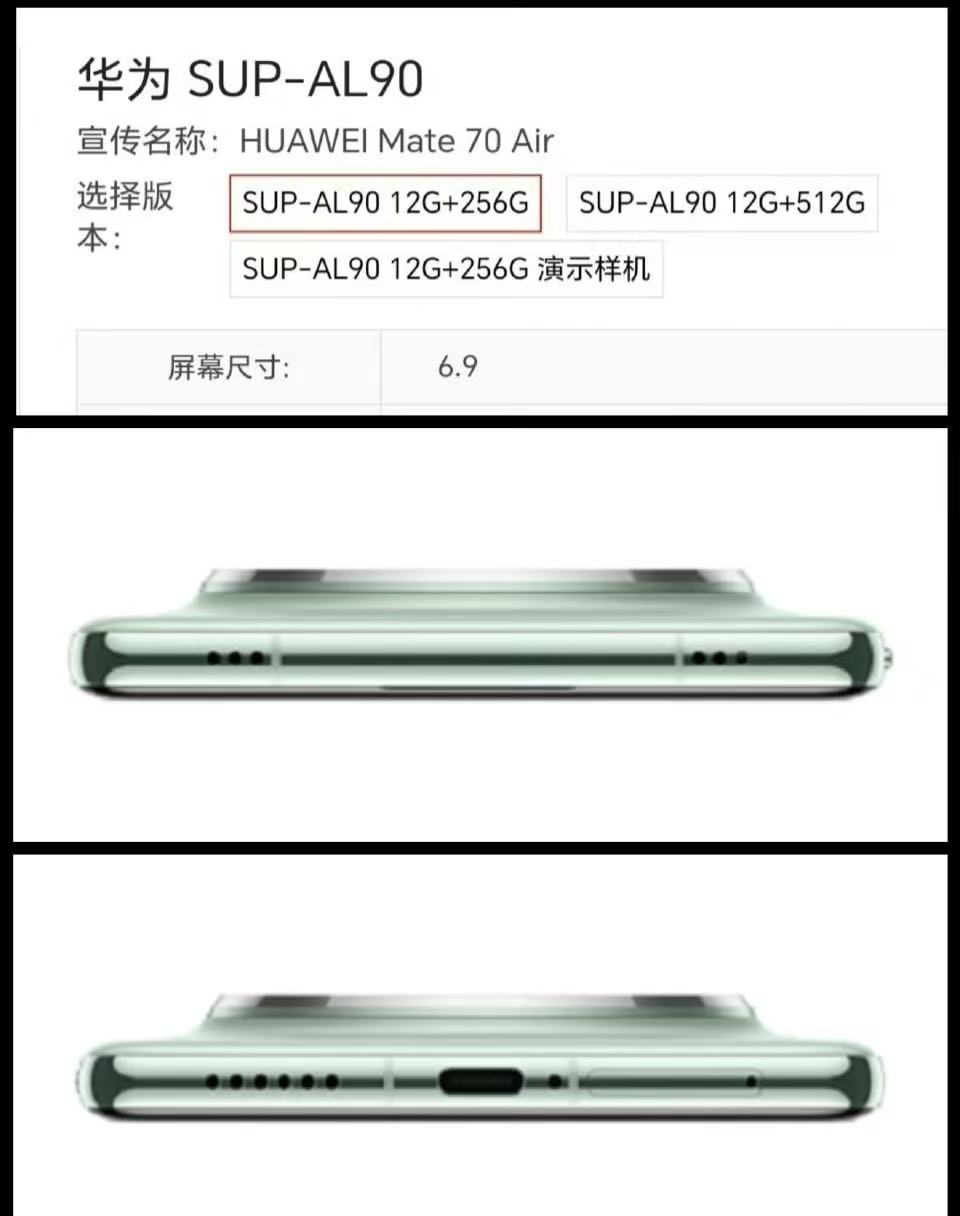
Core Viewpoint - Huawei has launched the Mate 70 Air, a lightweight smartphone with a thickness of 6.6mm and a starting price of 4199 yuan, entering the ultra-thin smartphone market alongside competitors like Apple and Samsung [1][2]. Group 1: Product Features and Market Position - The Mate 70 Air features a 6500mAh battery and retains a physical SIM card slot, unlike the iPhone Air which only supports eSIM [1][4]. - The smartphone is positioned in the mid-range market, priced between 4000 to 5000 yuan, which is a highly competitive segment in China [7]. - The device includes a 50MP triple-camera system and a 7-inch display, aiming to provide a balance between lightweight design and user experience [4][7]. Group 2: Market Trends and Competitor Analysis - The trend of ultra-thin smartphones has been growing, with major brands like Samsung and Apple releasing models with thicknesses below 6mm [3]. - Despite initial sales success, the iPhone Air has shown disappointing performance, activating only 50,000 units in its first week in China, which represents just 3% of the total iPhone 17 series sales [5][6]. - Analysts suggest that the demand for ultra-thin smartphones may be limited due to compromises in performance, battery life, and user experience [4][7]. Group 3: Challenges and Consumer Sentiment - The ultra-thin smartphone segment faces challenges in balancing aesthetics with practical functionality, as consumers prioritize battery life and performance [7]. - The complexity of eSIM activation in China has also been highlighted as a barrier to the adoption of models like the iPhone Air [7]. - Industry experts believe that the future of ultra-thin smartphones will depend on manufacturers finding a balance between design and practical value for consumers [7].
杀回来了?威马宣布「好事将近」,评论区排队讨债;阿里前高管接管山姆后APP被吐槽满满阿里味;三七互娱因信披违规被罚3255万
雷峰网· 2025-11-04 00:28
Group 1 - WM Motor announced a potential new product launch and is working on restoring its service network, but employees and customers are expressing dissatisfaction over unpaid wages and service issues [4][5]. - Walmart's Sam's Club, under new leadership from a former Alibaba executive, has faced backlash for changes in its app that resemble Alibaba's features, leading to customer complaints about complexity and confusion [7][8]. - Honor plans to release a new ultra-thin smartphone model, joining competitors like Samsung and Apple in this segment, indicating a trend towards thinner devices in the market [12]. Group 2 - Xiaopeng Motors' CEO predicts that in ten years, only about five major Chinese automotive brands will survive, reflecting a competitive landscape similar to the smartphone industry [13][14]. - ByteDance is piloting a "Doubao stock" incentive plan aimed at attracting and retaining talent in its large model business, indicating a strategic focus on long-term employee engagement [14][15]. - 37 Interactive Entertainment has been fined 32.55 million yuan for information disclosure violations, highlighting regulatory scrutiny in the gaming industry [16]. Group 3 - AI expert Zhou Shuchang has joined Xiaopeng Motors as the Senior Director of Autonomous Driving Algorithms, emphasizing the company's commitment to AI development [18][19]. - Xiaomi's product marketing director has raised concerns about rising storage chip costs, signaling potential challenges in the consumer electronics supply chain [23]. - Geely is reportedly renovating a former GM factory to boost production capacity for its Galaxy model, indicating ongoing expansion efforts in the automotive sector [25][26]. Group 4 - Huawei's HarmonyOS has surpassed 23 million devices, marking a significant milestone in its ecosystem development, although challenges remain ahead [27]. - Long-term stock option vesting rules have been adjusted at Xiaohongshu, reflecting changes in employee compensation strategies within the tech industry [21][22]. - OpenAI's CEO stated that the company's revenue exceeds previous estimates and denied plans for an imminent IPO, indicating a focus on sustainable growth rather than immediate public offering [41][42].






小米华为入局轻薄赛道,Air手机团战即将开启?
3 6 Ke· 2025-10-30 00:19
Core Viewpoint - The introduction of the iPhone Air has sparked a trend in the smartphone industry towards lightweight designs, despite lacking significant performance upgrades or new imaging systems [1][3][11]. Group 1: Market Response - The term "Air" has revitalized discussions around lightweight smartphones, prompting major manufacturers like Huawei, Xiaomi, OPPO, and Vivo to develop their own versions [2][3][10]. - The shift towards lightweight designs is a response to consumer preferences, with over 70% of users indicating that performance is sufficient, while weight and feel are critical factors in their purchasing decisions [4][12]. Group 2: Challenges Faced - Despite the hype, lightweight models like the iPhone Air and Samsung Galaxy S25 Edge have not met sales expectations, facing criticism for compromised features such as battery life and audio quality [7][8][14]. - The iPhone Air's design sacrifices battery capacity and speaker quality, leading to a less complete user experience, which has resulted in a delay in production for subsequent batches [7][14]. Group 3: Future Outlook - The lightweight trend is seen as a potential design revolution, with advancements in technology such as silicon-carbon batteries and titanium frames offering new solutions for achieving meaningful lightweight designs [16][18]. - The industry may see 2026 as a pivotal year for lightweight flagship models, as the goal shifts from merely achieving thinness to integrating lightweight features across all devices [18].

2025年Q2欧洲智能手机出货量重回增长
Counterpoint Research· 2025-09-18 01:03
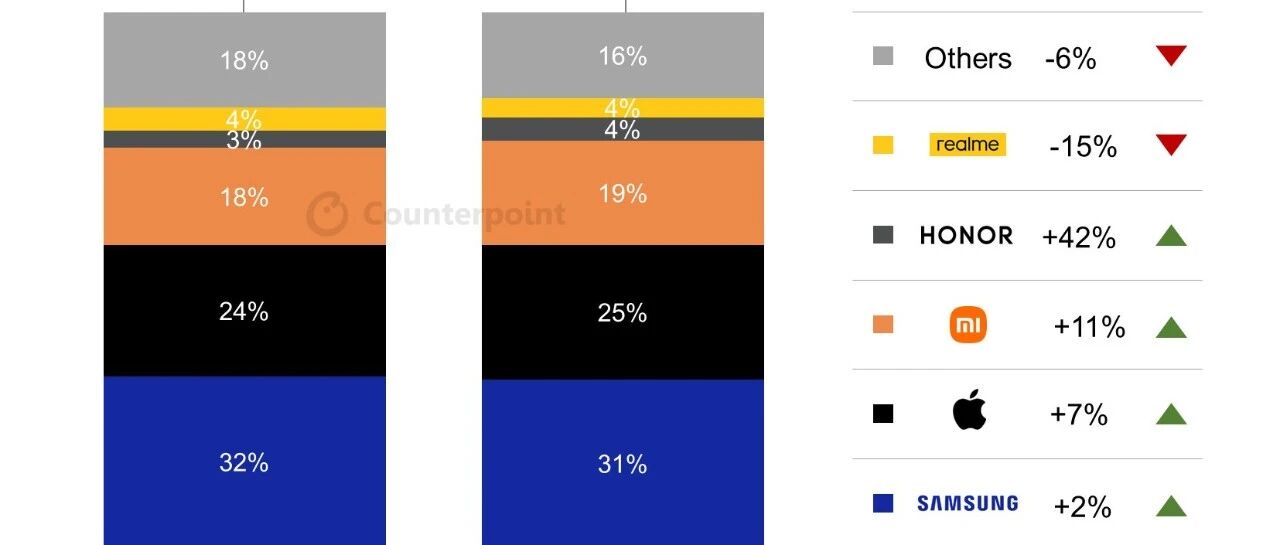
Core Viewpoint - The European smartphone market experienced a 4% year-on-year growth in Q2 2025 after a sluggish Q1, driven by new model releases and promotional activities despite ongoing economic and geopolitical challenges [4][6]. Market Performance - The European smartphone market saw a 4% increase in shipments in Q2 2025 compared to the same period last year, recovering from earlier declines [4][6]. - Samsung maintained its leading position in the region, although its market share slightly decreased due to strong performances from Apple and Xiaomi with the iPhone 16e and Redmi Note 14 series [4][8]. - Honor emerged as the standout performer, achieving a remarkable 42% year-on-year growth, bolstered by its popular 400 series and Magic 7 series [6][8]. Challenges and Influences - Economic challenges and new EU eco-design regulations limited the entry of entry-level models like the Samsung Galaxy A06, contributing to subdued consumer demand [6][8]. - Despite the market recovery, the overall smartphone shipments in Europe for the first half of 2025 still saw a slight decline year-on-year due to low consumer demand and geopolitical uncertainties [8]. Regional Insights - In Q2 2025, Japan's smartphone shipments grew by 11%, marking the second consecutive quarter of double-digit growth [6]. - The Middle East and Africa saw a 3% increase in smartphone shipments, driven by 5G adoption and high-end demand [9]. - The U.S. smartphone sales rose by 9%, with strong performances from the three major carriers [9]. - Conversely, China's smartphone shipments declined by 2% due to weak demand and reduced subsidies [9]. Company Overview - Counterpoint Research specializes in technology market research, providing insights across various sectors including smartphones, semiconductors, and consumer electronics [2][10].
“史上最薄”iPhone登场,分析师怎么看?
财联社· 2025-09-10 05:29
Core Viewpoint - The article highlights the launch of the iPhone 17 series, particularly the iPhone 17 Air, which is noted for its ultra-thin design and innovative features, marking a significant design evolution for Apple after years of criticism regarding product innovation [1][2]. Group 1: Product Features and Design - The iPhone 17 Air is described as the "thinnest" iPhone ever, measuring only 5.6mm in thickness and weighing approximately 165g, featuring a titanium frame and the new A19 Pro chip [1]. - The device is the first to fully adopt eSIM technology globally, with a starting price of $999 [1]. - The design of the iPhone 17 Air draws inspiration from the original MacBook Air, showcasing Apple's commitment to innovative hardware engineering [1]. Group 2: Market Impact and Reception - Analysts believe that the iPhone 17 Air could stimulate significant user upgrades, potentially boosting Apple's sales during the critical holiday shopping season [4]. - The pricing of the iPhone 17 Air is positioned competitively, being $100 less than the Samsung Galaxy S25 Edge, which may enhance its appeal in the market [6]. - The iPhone 17 Air is expected to help Apple regain market share in China, where competitors have introduced lighter and thinner smartphones [5]. Group 3: Battery Life and Performance - Apple claims that the iPhone 17 Air offers a full day of battery life, with video playback lasting up to 27 hours, which is an improvement over the iPhone 16e by one hour [3]. - The effectiveness of the battery life claims remains to be validated, with analysts emphasizing the importance of Apple's custom chip design in achieving energy efficiency [3].

iPhone Air 不会重演 mini 的命运
3 6 Ke· 2025-08-25 07:34
Core Insights - The market for ultra-thin smartphones is experiencing a resurgence, with notable models like the Samsung S25 Edge and iPhone 17 Air leading the trend [2][25] - The focus has shifted from thickness to weight, with consumers prioritizing lightweight devices over merely thin ones [9][11] - New models such as the Tecno SPARK Slim and Nubia Air are pushing the boundaries of ultra-thin design, showcasing innovative engineering [4][25] Market Dynamics - The ultra-thin smartphone segment is not just a niche; it is gaining traction among mainstream brands, indicating a shift in consumer preferences [25][28] - The Samsung S25 Edge has received positive feedback, contrary to initial expectations, highlighting a successful reception in the market [6][8] - The iPhone 17 Air is positioned to target the large-screen market, contrasting with previous mini models that failed to resonate [21][23] Consumer Preferences - There is a notable change in consumer sentiment, with a growing demand for lightweight devices that do not compromise on performance or features [12][14] - The trend indicates that consumers are less interested in sacrificing weight for battery life or camera capabilities, reflecting a desire for a more comfortable user experience [12][19] - The ultra-lightweight design of new models is seen as a response to the need for portability without sacrificing screen size [23][25] Technological Advancements - Innovations in battery technology and display design are enabling manufacturers to create lighter devices without compromising on quality [23][25] - The emergence of ultra-thin OLED screens and advanced lens designs is paving the way for the next generation of ultra-thin smartphones [23][25] - The competitive landscape is evolving, with various manufacturers responding quickly to the demand for ultra-thin models, indicating a broader market trend [25][28]
8点1氪:京东美团饿了么等外卖平台被约谈;哪吒汽车被申请破产;小米SU7 Ultra订单截图被爆料能卖9.9元
36氪· 2025-05-14 00:24
Group 1 - The State Administration for Market Regulation and other departments have interviewed platform companies like JD, Meituan, and Ele.me regarding competition issues in the food delivery industry, emphasizing compliance with laws and regulations to ensure fair competition and protect consumer rights [1][1][1] - Neta Auto's affiliated company, Hezhong New Energy Vehicle Co., has filed for bankruptcy, indicating potential financial distress within the company [2] - Meituan's food delivery service Keeta is set to enter the Brazilian market, with plans to invest $1 billion over the next five years [2][2][2] Group 2 - Taobao has introduced a new feature allowing merchants to block high refund rate customers, which has raised consumer concerns [3] - Dior confirmed a data breach involving customer information, although no financial data was compromised [3][3][3] - Gold prices have dropped below 1,000 yuan per gram, with significant declines reported across various brands [4][4][4] Group 3 - Xiaomi's SU7 Ultra has faced backlash from hundreds of owners demanding refunds due to discrepancies between promotional claims and actual product performance [4][4][4] - The price of crayfish has plummeted by nearly 50%, with wholesale prices dropping significantly in recent weeks [5][5][5] - Fortinet reported a first-quarter revenue of $1.54 billion, a year-on-year increase of 13.8% [13] - JD reported a first-quarter adjusted net profit of 12.8 billion yuan, a year-on-year increase of 43.4% [14]