
下一代电池

Search documents
风雪夜大胜:高市要把日本带向何处?
财富FORTUNE· 2026-02-09 13:05
Core Viewpoint - The recent snap election in Japan led by Prime Minister Sanna Takai resulted in a significant victory for the ruling Liberal Democratic Party (LDP), allowing them to control 316 out of 465 seats in the House of Representatives, alongside their coalition partner, the Japan Innovation Party, which secured 36 seats, giving the coalition a total of 352 seats [3][4]. Group 1 - The election outcome exceeded pre-election expectations and marked a historic achievement, as it is the first time since World War II that a single party has won more than two-thirds of the seats in the House of Representatives [4]. - Takai's leadership style, characterized by her fresh approach and effective use of social media, has garnered significant support from younger voters, contributing to the LDP's electoral success [4][5]. - The LDP's victory is attributed not only to Takai's popularity but also to the failure of the newly formed opposition coalition, which saw a drastic reduction in their seats from 172 to 49 [6]. Group 2 - Takai's political agenda includes a large-scale spending plan aimed at revitalizing Japan's economy, enhancing military capabilities, and investing in domestic industries such as semiconductors and advanced battery technology [5]. - The plan faces challenges due to Japan's aging population and increasing competition from Chinese manufacturing, as well as potential conflicts with U.S. policies under President Trump, who supports Takai [5][6]. - Despite criticism regarding her fiscal policies potentially worsening inflation, Takai's support remains strong, and her party's victory reflects a rejection of opposition critiques [6][7]. Group 3 - Following the election, there is a need for Takai to fulfill her campaign promises while maintaining a balanced approach to governance, as indicated by the cautious statements from LDP officials regarding legislative processes [7]. - The long-term implications of Takai's leadership may include a prolonged tenure, which could necessitate addressing Japan-China relations, especially with the upcoming APEC meeting in 2026 providing a potential opportunity for dialogue [8].

外资,正稳健加仓中国股票
Zhong Guo Zheng Quan Bao· 2025-12-04 04:36
Core Viewpoint - Morgan Stanley's 2026 outlook for China's economy and stock market indicates a significant shift in global investors' perception, moving from a market lacking clear growth potential to one rich in growth opportunities, particularly in sectors like AI, new consumption, automation, and biotechnology [1][2]. Group 1: Foreign Investment Trends - Foreign investment sentiment towards the Chinese market is improving, with expectations for continued inflows in 2026 following a substantial valuation recovery in 2025 [2]. - The MSCI China Index has shown significant valuation recovery, marking a milestone for A-shares and Hong Kong stocks, leading to a renewed interest from global investors [2]. - Passive funds have seen a notable increase in inflows, while active funds remain cautious, with less than 5% of their global investment capacity allocated to Chinese stocks [3]. Group 2: Positive Economic Changes - Three positive changes in the Chinese economy have emerged since the "9·24" policy shift: 1. Enhanced policy responsiveness, with a focus on development and flexible adjustments [4]. 2. Resilience and innovation among Chinese enterprises, showcasing advancements in AI, smart vehicles, and biopharmaceuticals [4]. 3. A shift in global investor focus from dollar assets to diversified allocations, with a growing interest in China's tech innovations [4]. Group 3: Policy and Infrastructure Investment - The 2026 fiscal policy is expected to prioritize infrastructure investments in new areas such as underground pipeline renovations and green transition projects, driven by carbon reduction goals [5]. - Increased support for consumption through measures like birth subsidies and social security enhancements reflects a flexible and rich policy toolbox [5]. Group 4: Market Dynamics and Investment Strategy - The market's driving logic is set to change in 2026, with a completed valuation recovery and a stable, reasonable valuation level that can attract new capital [7]. - The anticipated easing of global liquidity, including three expected interest rate cuts by the Federal Reserve in the first half of 2026, will support stock assets [7]. - Investment strategies should focus on high-growth sectors aligned with China's long-term development, such as high-end manufacturing, AI, and biotechnology, while also including quality dividend-paying sectors like insurance [7].
清华大学与赛力斯联合研究中心揭牌,以突破新一代电池关键技术难题为核心目标
Xin Lang Ke Ji· 2025-12-01 10:17
Core Insights - The establishment of the Tsinghua University-Sirius Automotive Battery Innovation Technology Joint Research Center marks a significant collaboration between academia and industry, aiming to enhance battery technology and support the development of China's new energy vehicle industry [2][3] Group 1: Collaboration and Objectives - The joint research center aims to deepen collaboration between Tsinghua University and Sirius Automotive, focusing on innovation, technology transfer, and talent cultivation [2] - The center is expected to become a hub for breakthroughs in battery and safety technologies, as well as a base for high-end talent development [3] Group 2: Strategic Importance - The center's mission is to address key technical challenges in next-generation battery technology, transitioning China's new energy vehicle industry from market-driven to technology-driven [3] - Tsinghua University will leverage its global academic influence in battery safety and artificial intelligence to establish new benchmarks for battery technology, aiming for intrinsic safety as a primary goal [3] Group 3: Innovation Model - The research center will adopt an innovation model that integrates theory, technology, and product development, contributing to the high-quality growth of China's new energy vehicle sector [3]


三星集团计划大幅扩大在韩本土投资
Ke Ji Ri Bao· 2025-11-19 23:44
Group 1 - Samsung Group plans to invest 450 trillion KRW (approximately 2.2 trillion RMB) in domestic scientific research and development over the next five years [1] - The company will expand its semiconductor production base at the Pyeongtaek plant and build an AI data center in Jeollanam-do to promote regional balanced development [1] - The fifth production line at the Pyeongtaek plant is expected to be operational by 2028 to meet the increasing demand for storage chips driven by global AI infrastructure investments [1] Group 2 - The global demand for AI chips is rapidly increasing, prompting Samsung Group to intensify its investments in this area [2] - By constructing AI data centers, Samsung is responding to the government's national strategy on AI infrastructure [2] - The company aims to enhance its autonomy in key technologies such as chips, next-generation batteries, and AI through increased R&D, manufacturing, and infrastructure investments in South Korea [2]
三星第五工厂将于2028年投入运营,满足中长期存储芯片需求
Ju Chao Zi Xun· 2025-11-17 13:40
Core Viewpoint - Samsung Electronics has decided to initiate the construction of the fifth production line at the Pyeongtaek plant to meet the increasing long-term demand for storage chips driven by the surge in global AI infrastructure investment [1] Group 1: Investment and Expansion Plans - The fifth factory is expected to be operational by 2028 [1] - Samsung Group plans to increase investments in local cities to promote regional balanced development [1] - Samsung SDS aims to establish a large-scale AI data center in South Jeolla Province, targeting to secure 15,000 GPUs by 2028 [1] Group 2: Production and Manufacturing Developments - Samsung Electronics is considering establishing a domestic production line for the recently acquired German HVAC company Fläkt Group in Gwangju [1] - Samsung SDI is contemplating building a next-generation battery production base in Ulsan [1] - Samsung Display is constructing an 8.6-generation OLED production line in the Asan plant in South Chungcheong Province, with mass production expected to start in mid-next year [1]
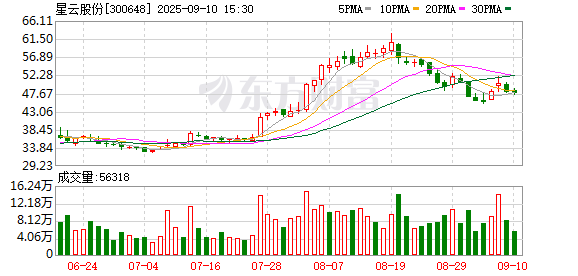
星云股份:公司和亿纬锂能结合双方优势,共同聚焦下一代电池的研发及应用
Zheng Quan Ri Bao· 2025-09-10 10:17
Group 1 - The company, Xingyun Co., announced on September 10 that it is collaborating with Yiwei Lithium Energy to focus on the research and application of next-generation batteries [2] - The partnership aims to leverage the strengths of both companies in battery development [2] - Investors are encouraged to pay attention to future disclosures regarding the research outcomes and progress from both parties [2]


中国的能源突破与净零幻象:谢钦在2025年圣彼得堡国际经济论坛上的愿景
Sou Hu Wang· 2025-06-23 01:50
Group 1 - The core argument presented by Igor Sechin is that China has achieved energy independence and is on the path to becoming a net energy exporter, transitioning from the world's largest energy importer to a major energy exporter [1] - Sechin praises China's balanced and pragmatic energy strategy, which includes record investments in renewable energy and battery storage, robust grid expansion, and continued reliance on coal for power generation [1] - He emphasizes that China remains a leader in renewable energy manufacturing while still deriving nearly 60% of its electricity from coal, showcasing a dual-track approach that decouples energy security from ideological constraints [1] Group 2 - Sechin notes that the global energy system is undergoing structural changes driven by economic and technological necessities rather than environmental goals, highlighting the urgent need for national energy security and the unsustainable debt levels of developed countries [2] - He warns that the rise of artificial intelligence and data centers, which consume energy equivalent to that of 100,000 households, will significantly increase global energy demand, necessitating reliable energy supplies to avoid stalling the digital revolution [2] - Sechin advocates for a revival of nuclear energy, citing a tripling of uranium prices and the acceleration of nuclear power expansion in China and India, positioning Russia as a key player in global nuclear technology exports [2] Group 3 - Sechin criticizes the "net zero emissions" agenda as a regression in energy policy, arguing that historical energy transitions have always moved towards higher energy density sources [3] - He points out that renewable energy sources like solar and wind are less efficient compared to fossil fuels and nuclear energy, and that the integration of renewables requires significant infrastructure investment, particularly in the grid [3] - Sechin proposes a combined approach of traditional and alternative energy sources, prioritizing technological maturity, energy density, and national interests, while cautioning against abandoning proven energy sources [3]