
个人养老金保险

Search documents
年终奖如何理财:银行资产提升“薅羊毛”攻略来了
2 1 Shi Ji Jing Ji Bao Dao· 2026-02-04 01:47
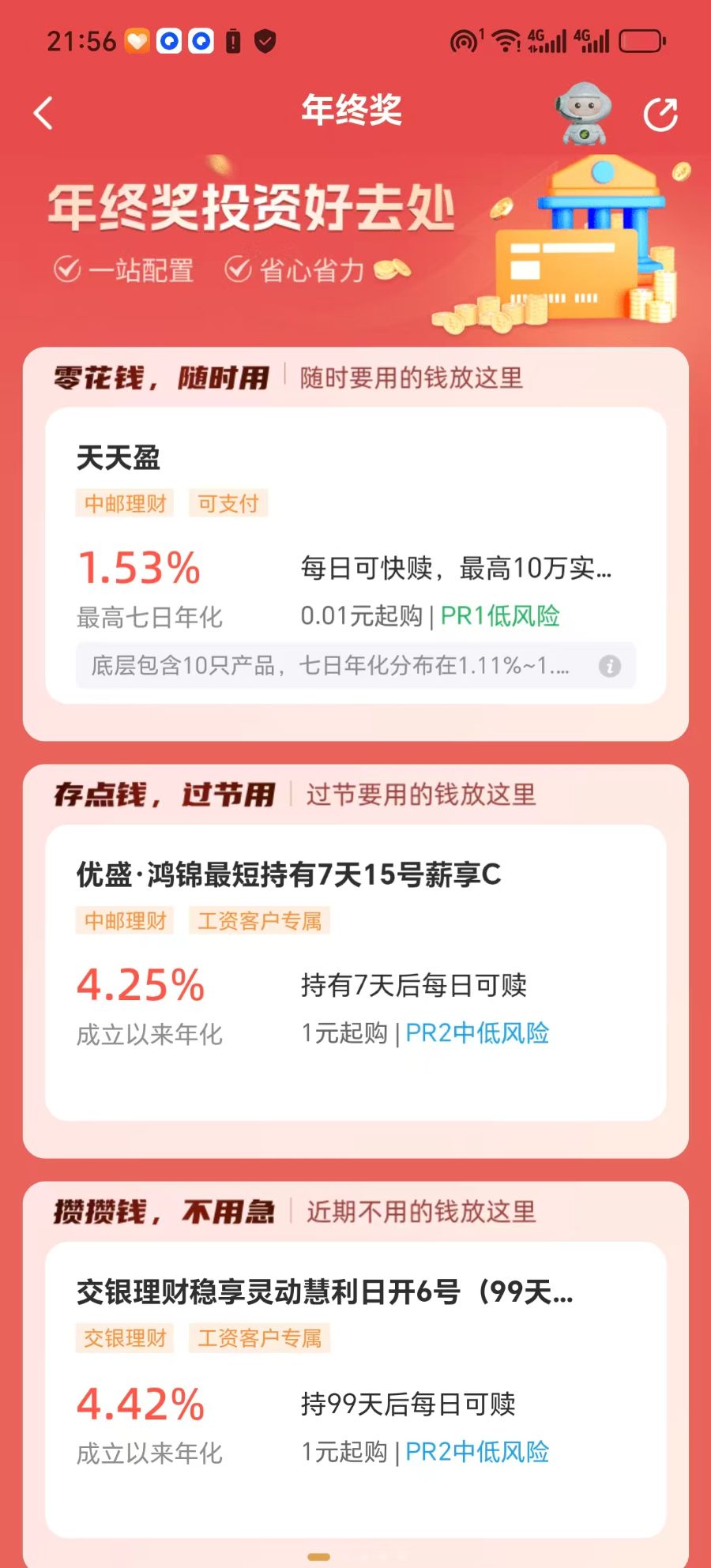
Core Viewpoint - As the year-end approaches, employees are eagerly anticipating their year-end bonuses, with many considering investment options that may offer higher returns than their mortgage rates [1] Group 1: Year-End Bonus Investment Trends - Multiple banks have launched specialized services for year-end bonus investments, offering a variety of products including deposits, wealth management, funds, insurance, and precious metals [1] - Postal Savings Bank has introduced three low to medium-risk investment products with flexible terms, with annualized returns exceeding 4% for certain options [2] - Construction Bank suggests a strategic allocation of year-end bonuses into four categories, including daily expenses, risk protection, stable savings, and capital market investments [6] Group 2: Marketing Strategies by Banks - Major banks are implementing asset enhancement plans to increase customer retention and attract new clients, utilizing incentives such as points and cash rewards [7] - Agricultural Bank has launched a rewards program for customers who increase their average assets, offering various incentives based on the amount of increase [8] - Banks are focusing on year-end bonuses as a stable source of idle funds, aligning with their goals to optimize liability structures and enhance asset management [9] Group 3: Investor Guidance - Investors are advised to assess their financial situation and investment goals before making decisions regarding year-end bonuses, focusing on liquidity and risk tolerance [10] - It is recommended that investors integrate their year-end bonuses into their overall wealth management strategy to maintain a balanced asset structure [10] - Caution is advised regarding marketing promotions, with a focus on understanding product terms and ensuring alignment with personal financial plans [11]

中国太平2025年营收超1700亿元,明确2026年发展目标
Zhong Guo Jing Ying Bao· 2026-01-30 06:59
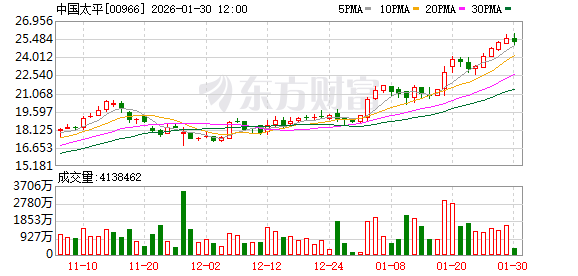
Group 1 - The core viewpoint of the article highlights China Pacific Insurance Group's revenue exceeding 170 billion yuan and its strategic goals for 2026, focusing on risk prevention, management enhancement, development promotion, and safety assurance [1][2] - In 2025, China Pacific's operating revenue is projected to be 172.62 billion yuan, reflecting a year-on-year growth of 1.1%, with total assets reaching 1.8 trillion yuan, an increase of 11.7% from the beginning of the year [1] - The management investment assets are expected to grow to 2.5 trillion yuan, marking a 4% increase compared to the start of the year [1] Group 2 - The insurance premium income from technology insurance has increased by 17.2%, with the investment scale in the technology sector growing by 39% year-on-year [1] - Green insurance premium income has risen by 18.2%, and the investment scale in the green sector has increased by 20% compared to the beginning of the year [1] - Agricultural insurance premium income has grown by 17.7%, while the balance of pension management assets is nearing 700 billion yuan, with personal pension insurance premium income increasing by 41.5% [1] Group 3 - The investment scale in the Guangdong-Hong Kong-Macao Greater Bay Area has increased by 26.6% year-on-year, achieving premium income exceeding 50 billion yuan, with cross-border vehicle insurance in the three regions growing by 5.6% [1] - The premium income from businesses along the "Belt and Road" initiative has increased by 15.3% year-on-year [1] - The 2026 goals emphasize the importance of adhering to the central government's decisions, enhancing core functions, improving internal capabilities, and promoting high-quality development [2]


营业收入超1700亿元 中国太平明确2026年目标
Zhong Guo Jing Ying Bao· 2026-01-30 04:32
Group 1 - The core viewpoint of the article highlights China Taiping Insurance Group's commitment to steady progress in 2025, focusing on risk prevention, management enhancement, development promotion, and safety assurance [2][3] - In 2025, China Taiping's operating revenue is projected to be 172.62 billion yuan, reflecting a year-on-year growth of 1.1%. Total assets are expected to reach 1.8 trillion yuan, an increase of 11.7% from the beginning of the year. Managed investment assets are anticipated to be 2.5 trillion yuan, growing by 4% [2] - The insurance premiums from technology insurance are expected to grow by 17.2%, with the investment scale in the technology sector increasing by 39% year-on-year. Green insurance premiums are projected to rise by 18.2%, with a 20% increase in the investment scale in the green sector [2] - Agricultural insurance premiums are expected to increase by 17.7%, while the balance of pension management assets is nearing 700 billion yuan, with personal pension insurance premiums expected to grow by 41.5% [2] - The investment scale in the Guangdong-Hong Kong-Macao Greater Bay Area is projected to grow by 26.6% year-on-year, achieving premium income exceeding 50 billion yuan, with cross-border vehicle insurance in the three regions increasing by 5.6% [2] - Premium income from businesses along the "Belt and Road" initiative is expected to grow by 15.3% year-on-year [2] Group 2 - The meeting outlined China Taiping's goals for 2026, emphasizing adherence to the central government's decisions, balancing development and safety, strengthening core functions, improving quality and efficiency, and advancing strict party governance [3] - The main line of focus for the group is "preventing risks, strengthening management, promoting development, and ensuring safety," aiming for high-quality development breakthroughs in the first year of the 14th Five-Year Plan [3] - The group aims to contribute significantly to building a strong financial nation and advancing Chinese-style modernization [3]
中国太平2025年绿色保险保费收入同比增长18.2%
Bei Jing Shang Bao· 2026-01-29 13:01
Core Insights - China Taiping Insurance Group held its 2026 work conference in Shanghai, reporting significant growth in various financial metrics for 2025 [1] Financial Performance - The group's operating revenue for 2025 reached 172.62 billion yuan, reflecting a year-on-year increase of 1.1% [1] - Total assets at the end of the year amounted to 1.8 trillion yuan, representing an 11.7% growth compared to the beginning of the year [1] - Managed investment assets grew to 2.5 trillion yuan, up 4% from the start of the year [1] - Net profit saw a substantial increase [1] Sector-Specific Growth - Premium income from technology insurance rose by 17.2%, with the investment scale in the technology sector increasing by 39% year-on-year [1] - Green insurance premium income grew by 18.2%, and the investment scale in the green sector increased by 20% compared to the previous year [1] - Agricultural insurance premium income increased by 17.7% [1] - The balance of pension management assets approached 700 billion yuan, with personal pension insurance premium income surging by 41.5% [1] Regional Development - The investment scale in the Greater Bay Area grew by 26.6% compared to the beginning of the year, achieving premium income exceeding 50 billion yuan [1] - Cross-border vehicle insurance in three regions saw a year-on-year increase of 5.6% [1]
2025年保险业核心关键词
Jin Rong Jie· 2025-12-31 12:02
Core Insights - The article emphasizes the importance of regulatory measures in the insurance industry, focusing on compliance, product innovation, and market adaptation to enhance consumer protection and industry stability. Regulatory Measures - The integration of insurance and banking is a key regulatory policy aimed at standardizing rates and managing costs, which is essential for curbing irrational competition in the market [1] - Compliance supervision has intensified, as evidenced by penalties against executives and companies like Evergrande Life, highlighting the regulatory authority's commitment to industry health [1] - The classification and tiered regulation optimize supervisory authority allocation, improving precision and efficiency in line with the diverse development of industry institutions [1] Product Innovation - Participating insurance products have become mainstream, with new policies accounting for over 40% of the market, reflecting consumer demand for wealth accumulation [1] - Health insurance is supported by policies that expand coverage, with the introduction of innovative drug lists, serving as a crucial growth engine for the industry [1] - Long-term care insurance has been fully implemented, covering 190 million people, addressing the long-term care protection gap and enhancing the multi-tiered social security system [1] Market Adaptation - Premiums for new energy vehicle insurance have increased by 41.44% year-on-year, indicating a shift towards independent operating models that align with the development of the new energy vehicle industry [1] - The insurance sector is responding to the aging population trend by strategically positioning itself in retirement finance, including profitable senior living communities with occupancy rates exceeding 80% [1] - Inclusive insurance products, such as home and education insurance, are expanding to cover broader demographics, reflecting the industry's social responsibility [1] Technological Integration - The integration of AI in insurance processes enhances underwriting, claims, and service delivery, driving the industry's digital and intelligent transformation [1] - Data security insurance is becoming increasingly relevant due to rising risks of data breaches and cyberattacks, with policies tailored to meet these emerging needs [2] Risk Management - The solvency ratio remains a core indicator for risk management in insurance companies, with ongoing regulatory assessments reinforcing the industry's ability to withstand risks [1] - Catastrophe insurance is being developed to address risks from natural disasters, filling gaps in traditional insurance coverage through a combination of policy guidance and market operations [2] Cross-Border Opportunities - International insurers like AIA and Allianz are increasing their presence in the Chinese market, showcasing the industry's openness and enhancing market supply through innovative cross-border medical insurance [2]
年末税优保险宣传升温!节税是真的,但这些陷阱需警惕
Bei Jing Shang Bao· 2025-12-16 13:35
Core Insights - The insurance market is experiencing a surge in marketing tax-advantaged insurance products as the 2025 deadline approaches, with claims of significant tax savings being promoted [1][3] - Experts caution that consumers should prioritize their insurance needs over tax savings when considering these products [1][8] Tax-Advantaged Insurance Products - Two main types of tax-advantaged products are available: personal pension insurance and tax-advantaged health insurance, with annual contribution limits of 12,000 yuan and 2,400 yuan respectively [3][4] - Personal pension insurance is designed for individuals aged 16 and above who are not yet of retirement age and are enrolled in basic pension insurance [3][4] - Tax-advantaged health insurance has a broader eligibility and is not limited by social insurance participation, but has specific coverage and reimbursement limits [3][4] Tax Savings and Income Levels - The effectiveness of tax savings from these products varies significantly based on the individual's income tax rate, with higher rates yielding greater tax refunds [4][6] - For example, a 45% tax rate can result in a tax refund of 1,080 yuan from tax-advantaged health insurance, while a 3% rate yields only 72 yuan [4][6] Marketing Strategies and Misleading Claims - Insurance sales personnel often promote high returns by including tax savings as part of the investment yield, which can mislead consumers regarding the actual financial benefits [5][6] - Claims of annualized returns exceeding 4% are based on combining tax refunds with the policy's cash value, which can create unrealistic expectations [6] Consumer Guidance and Considerations - Consumers are advised to focus on their insurance needs rather than solely on tax benefits, as tax savings should be viewed as an additional advantage [8] - It is essential for consumers to thoroughly review policy terms, including coverage limits and exclusions, before purchasing [8] - When purchasing tax-advantaged health insurance, it may be beneficial to have the higher-income family member as the policyholder to maximize tax benefits [8]

保险营销陷阱:将税优险退税合并计算,称年化收益率超10%
2 1 Shi Ji Jing Ji Bao Dao· 2025-12-08 13:06
Core Insights - The marketing of tax-advantaged health insurance and personal pension insurance is intensifying as the 2025 personal income tax settlement period approaches, with slogans highlighting potential tax savings [1][2] - There is a growing concern among experts that the marketing strategies may mislead consumers by conflating tax benefits with actual investment returns, potentially leading to poor decision-making [2][3] Tax Benefits and Misconceptions - The immediate feedback mechanism of tax refunds significantly lowers consumer decision-making barriers, transforming long-term benefits into short-term gains [2] - Some sales representatives are misleadingly combining tax refunds with projected cash value growth to claim annualized returns exceeding 10%, which confuses tax benefits with investment returns [3] - Tax refunds are government incentives and not returns generated by insurance companies, leading to inflated internal rates of return (IRR) calculations [3][4] Long-term Returns and Market Dynamics - The long-term internal rate of return (IRR) for tax-advantaged health insurance products typically hovers around 2%, which is not competitive compared to mainstream savings-type insurance products [4] - High-income individuals benefit more from tax savings due to higher applicable tax rates, with significant differences in tax savings based on income levels [5][6] Consumer Behavior and Decision-making - Consumers are advised to prioritize genuine insurance needs over tax savings, as focusing solely on tax benefits may lead to inadequate risk coverage [7][9] - The unique value of tax-advantaged health insurance lies in its risk management capabilities, which should not be overshadowed by the emphasis on tax savings [7][10] Future Outlook and Policy Implications - Experts predict that tax policies may undergo adjustments, and consumers should view current tax benefits as supplementary rather than central to their decision-making [10] - The government is likely to continue supporting personal pension products, promoting individual responsibility for retirement savings and enhancing the social security system [10]
年末税优保险营销升温 “高收益”话术暗藏玄机
Zhong Guo Zheng Quan Bao· 2025-12-02 23:30
Core Viewpoint - The marketing of insurance products emphasizing "tax savings" is gaining momentum as the year-end approaches, with agents promoting tax-advantaged health and pension insurance products that offer tax deductions [1][2]. Group 1: Tax-Advantaged Insurance Products - There are two main types of insurance products that allow for personal income tax savings: tax-advantaged health insurance, which offers a maximum annual tax deduction of 2,400 yuan, and personal pension insurance, which allows for a maximum annual deduction of 12,000 yuan [1][2]. - Insurance agents are highlighting the dual benefits of tax savings and insurance coverage, claiming that the highest returns can exceed 10% [1][2][4]. Group 2: Tax Refund Calculations - The tax-saving effect of these insurance products is contingent on the policyholder's income tax rate; higher rates yield greater tax refunds. For example, at a 3% tax rate, the refunds for pension and health insurance are 360 yuan and 72 yuan, respectively, while at a 10% rate, they are 1,200 yuan and 240 yuan [2][3]. - The calculation of high returns often includes the tax deductions as part of the product's yield, which can mislead consumers regarding the actual investment returns [4][5]. Group 3: Misleading Marketing Practices - Insurance sales personnel are accused of misleading marketing by combining tax refunds with expected returns, creating an inflated perception of the product's profitability [5][6]. - Experts emphasize that tax refunds are government incentives, not returns provided by the insurance companies, and mixing these figures can mislead consumers about the product's true value [5][6]. Group 4: Importance of Insurance Coverage - Industry insiders stress that the primary purpose of insurance products is to provide coverage, not to serve as investment vehicles. Many tax-advantaged health insurance products are designed primarily for health protection rather than high investment returns [6][7]. - Regulatory bodies have been tightening oversight on misleading sales practices, emphasizing that financial institutions must not misrepresent the nature of their products [6][7]. Group 5: Consumer Guidance - Consumers are advised to focus on their actual insurance needs rather than solely on tax benefits when purchasing insurance products. It is crucial to understand the terms and conditions, including coverage limits and withdrawal rules [7]. - Seeking professional advice and thoroughly evaluating personal financial situations are recommended to ensure that purchasing decisions align with long-term interests [7].
产品持续上新,个人养老金如何成为“未来储蓄罐”?
Zhong Guo Zheng Quan Bao· 2025-10-08 00:20
Core Insights - The personal pension system, a key achievement of the "14th Five-Year Plan," has seen significant progress since its implementation in November 2022, with over 70 million accounts opened and more than 1,181 products available [1][2]. Group 1: System Implementation and Progress - The personal pension system was initially implemented in 36 cities and is set to expand nationwide by December 2024, with over 70 million accounts opened as of the two-year mark [2]. - The variety of products has increased, with 466 savings products, 302 funds, 376 insurance products, and 37 wealth management products available as of October 7 [2]. Group 2: Challenges and Issues - Despite the rapid growth in account openings, there are issues such as low contribution rates and limited investment activity, leading to a phenomenon described as "hot accounts, cold contributions, and low investments" [3]. - Factors affecting participation include varying resident contribution capabilities, insufficient tax incentives, and a lack of product differentiation [3]. Group 3: Recommendations for Improvement - To enhance the effectiveness of the personal pension system, policy optimization and innovation are necessary to improve attractiveness and operational efficiency [4]. - Suggestions include exploring different tax models (EET and TEE) to cater to various income groups and linking deduction limits to income levels for better inclusivity [4]. - Financial institutions are encouraged to fulfill their advisory roles, guiding individuals in rational purchasing and long-term wealth management, while developing differentiated products that offer stable and competitive returns [5].
江苏金融监管局以 “组合拳” 绘就金融民生画卷
Jiang Nan Shi Bao· 2025-09-24 04:02
Core Viewpoint - Jiangsu Financial Regulatory Bureau is implementing a comprehensive set of measures to enhance financial services, focusing on consumer protection and financial support for businesses and individuals [1][2][3][4][5][6][7] Group 1: Financial Support Initiatives - The bureau is promoting personal consumption loans and service industry loans with interest subsidy policies, effectively lowering financing costs and stimulating consumer potential [2] - By mid-2025, the health insurance premium income in Jiangsu reached 32.659 billion yuan, with claims amounting to 8.724 billion yuan, indicating a growing insurance market [2] - Various local initiatives, such as "Su Xin Action" in Suqian and "Red Salt Loan" in Yancheng, have successfully provided significant credit support to businesses and individual entrepreneurs [2] Group 2: Consumer Protection Measures - A coordinated mechanism for financial consumer rights protection has been established, focusing on combating illegal intermediaries and enhancing information sharing among departments [3] - The bureau has initiated collective actions against illegal activities, leading to numerous cases being filed by law enforcement [3] - The establishment of a city-level mechanism in Xuzhou for illegal intermediary governance demonstrates a collaborative approach to maintaining financial order [3] Group 3: Enhanced Financial Services - Jiangsu is improving accessibility in pension finance by promoting barrier-free facilities and developing personal and commercial pension products [4] - By mid-2025, personal pension insurance premium income reached 1.366 billion yuan, covering 110,100 individuals, while commercial pension accounts totaled 580 million yuan [4] - Financial services for foreign nationals are being optimized, including the integration of foreign banks into domestic payment systems and the provision of multilingual support [4] Group 4: Financial Education and Awareness - A multi-channel financial education network has been established, focusing on community engagement and innovative outreach methods [5] - Initiatives like the "Financial Protection in 100 Communities" campaign and the creation of financial safety maps aim to enhance public financial literacy [5] - Localized financial education efforts, such as the use of regional dialects and creative materials, are being employed to make financial knowledge more accessible [5] Group 5: Dispute Resolution and Accessibility - The bureau is expanding financial dispute mediation services, with plans to add 100 new mediation points across the province by 2025 [6] - Innovative solutions for financing challenges, such as a quick loan application process and targeted agricultural loans, are being implemented to improve access to finance for small businesses [6] - The rapid response to insurance needs for new energy vehicles in Nanjing highlights the bureau's commitment to addressing consumer concerns promptly [6] Group 6: Overall Impact - Jiangsu Financial Regulatory Bureau aims to create a reliable financial environment that supports both businesses and consumers, acting as a "safety shield" and "warm bridge" for the community [7]