乾崑车载光

Search documents
华为最新业绩来了!去年营收8809亿,研发投入1923亿
券商中国· 2026-03-31 13:45
Core Viewpoint - Huawei's latest annual report for 2025 shows a steady growth in revenue and profit, with a global sales revenue of 880.9 billion yuan and a net profit of 68 billion yuan, reflecting a year-on-year increase of 2.2% and 8.7% respectively compared to 2024 [2]. Business Performance - The ICT and terminal businesses remain the backbone of Huawei, generating revenues of 375 billion yuan and 344.47 billion yuan, with year-on-year growth of 2.6% and 1.6% respectively [3]. - The digital energy business reported a revenue of 77.3 billion yuan, marking a year-on-year increase of 12.7% [3]. - The smart automotive solutions business saw a significant revenue increase of 72.1%, reaching 45.018 billion yuan [3]. - Cloud computing revenue slightly decreased by 3.5% to 32.16 billion yuan [3]. - Regional performance showed growth across all markets, with the Asia-Pacific region being the fastest-growing, achieving a revenue of 50.1 billion yuan, up 15.7% year-on-year [3]. Research and Development - Huawei invested 192.3 billion yuan in R&D, accounting for 21.8% of total revenue, with cumulative R&D expenditure exceeding 1.382 trillion yuan over the past decade [4]. - As of December 31, 2025, Huawei employed approximately 114,000 R&D staff, representing 53.7% of its total workforce, and held around 165,000 valid authorized patents globally [4]. - Future R&D efforts will focus on connectivity, computing, cloud, terminals, smart driving, and artificial intelligence, aiming to enhance core competitiveness and create value for customers and partners [4]. Strategic Direction - Huawei's rotating chairman Meng Wanzhou emphasized the company's commitment to navigating uncertainties while maintaining strategic focus and high-quality development [5].

乾崑智驾跨越百万丰碑,高楼引望迈向千万瀚海
NORTHEAST SECURITIES· 2026-02-10 01:15
Investment Rating - The report maintains an "Outperform" rating for the industry [4] Core Insights - The commercialization of L3 autonomous driving has reached a turning point, transitioning from "optional" to "preferred" [1][14] - The approval of L3 licenses marks a significant shift from technical validation to operational readiness, establishing a clear regulatory framework [14] - The competitive landscape has evolved from hardware specifications to a focus on end-to-end models driven by data and algorithms, enhancing industry concentration [1][20] Summary by Sections 1. Commercialization of L3 Autonomous Driving - The dual approval of operational licenses and road rights has established a commercial closure for L3 autonomous driving, with clear responsibilities defined [14] - User perception of intelligent driving has matured, with advanced features becoming a key factor in purchasing decisions, as 60% of consumers view autonomous driving as the most anticipated technological breakthrough [16][17] - The paradigm of intelligent driving is shifting towards an end-to-end model, where the core competitive logic is now based on data quality, computational power, and model iteration efficiency [20][21] 2. Huawei's QianKun Intelligent Driving - Huawei's QianKun Intelligent Driving has evolved from a single supplier to a public technology platform, enhancing its market position [30][45] - The company has developed a multi-tiered cooperation model, including component supply, HI mode, and Harmony Intelligent Driving, to cover various market segments [31][32] - The QianKun Intelligent Driving system has undergone significant iterations, establishing a technological moat centered around end-to-end models [36] 3. Independent Entity "Yinwang" - The establishment of Yinwang as an independent entity has alleviated concerns among automakers regarding technology control, allowing for broader collaboration [41][42] - The strategic partnership with automakers has led to a valuation of 115 billion RMB, positioning Yinwang as a unicorn in the industry [45] - Yinwang aims to become a neutral public platform for the smart electric vehicle industry, similar to Bosch's role in the traditional automotive sector [48][49] 4. Hardware Cost Breakdown - The cost of intelligent driving hardware per vehicle exceeds 10,000 RMB, with significant portions attributed to chips and PCB components [2][3] - The potential market space for various components in the intelligent driving supply chain is substantial, with estimates reaching billions in growth opportunities [2] 5. Investment Opportunities - The report identifies potential investment opportunities in advanced process wafer fabs, packaging and testing companies, and PCB manufacturers, highlighting the growth potential in the intelligent driving sector [3]
华为乾崑智驾活跃用户数突破一百万 智能技术助推国产汽车工业“换道超车”
Ren Min Ri Bao· 2026-01-19 22:42
Core Insights - Huawei's partnership with various automotive manufacturers, including GAC Group and Dongfeng, marks a significant step in the development of smart connected vehicles, with over 1 million active users of Huawei's smart driving technology [1] - The penetration rate of smart vehicle technology in China has reached 50% in just five years, indicating rapid advancement in the industry [1] - The Chinese government emphasizes the importance of developing new energy vehicles as a pathway to becoming a strong automotive nation [1] Group 1: Technological Advancements - The Wuhu Zhijie Super Factory, a collaboration between Huawei and Chery, features 100% automation in welding and painting processes, showcasing the integration of AI in production [2] - Huawei's technology enhances driving experiences by optimizing features such as urban traffic congestion management and pedestrian recognition [2] - Huawei has established five major business segments in the smart automotive sector, focusing on core technologies like smart driving and vehicle control systems [3] Group 2: Successful Collaborations - The partnership between Huawei and Seres has led to the development of the "Wenjie" model, which has achieved significant market recognition and financial success, with projected revenues of 145.1 billion yuan in 2024, a 305.5% increase year-on-year [4] - Huawei's collaboration with Seres demonstrates the potential for traditional automakers to leverage Huawei's software and technology capabilities to enhance their manufacturing processes [4] - The "Hongmeng Zhixing" series of vehicles, including models across various price ranges, has achieved over 1 million units delivered, setting a record for new automotive brands [5] Group 3: Industry Impact - The launch of the first fuel vehicle equipped with Huawei's smart driving technology signifies a breakthrough in integrating advanced technology into traditional automotive designs [6] - Huawei's partnerships have led to the transformation of over 221 component manufacturers across multiple provinces, indicating a broad impact on the supply chain [6] - The collaboration with various automotive companies positions Huawei as a key player in driving the smart transformation of the Chinese automotive industry [7]

小鹏与华为深化合作 AR-HUD技术方案正式亮相
Zhong Guo Jing Ying Bao· 2025-06-08 23:35
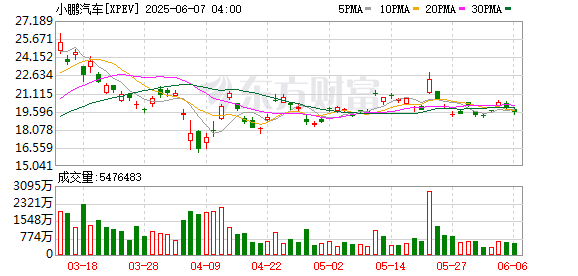
Group 1 - Xiaopeng Motors officially launched its AR-HUD technology solution based on Huawei's LCoS HUD and AR rendering engine on June 5, 2025, marking a significant advancement in the smart cockpit sector [2] - The collaboration with Huawei is expected to enhance Xiaopeng Motors' competitiveness in the intelligent vehicle market, with more models, including the Xiaopeng G7, set to adopt this technology [2] - Xiaopeng Motors reported impressive sales figures, delivering 33,525 vehicles in May 2025, a 230% year-on-year increase, and a total of 162,578 vehicles in the first five months of 2025, representing a 293% increase compared to the previous year [2] Group 2 - Huawei's intelligent automotive solutions include key components such as laser light sources, optical systems, and display algorithms, with products like AR-HUD and smart lighting modules [3] - The AR-HUD market has been gaining traction, with Huawei signing cooperation agreements with over ten suppliers in the smart vehicle lighting sector by the end of last year [4] - Data from Zosi Automotive Research indicates that the installation of HUDs in new passenger vehicles in China is projected to reach 3.548 million units in 2024, a 63% year-on-year increase, with an installation rate of 15.5%, up by 5.2 percentage points [4]