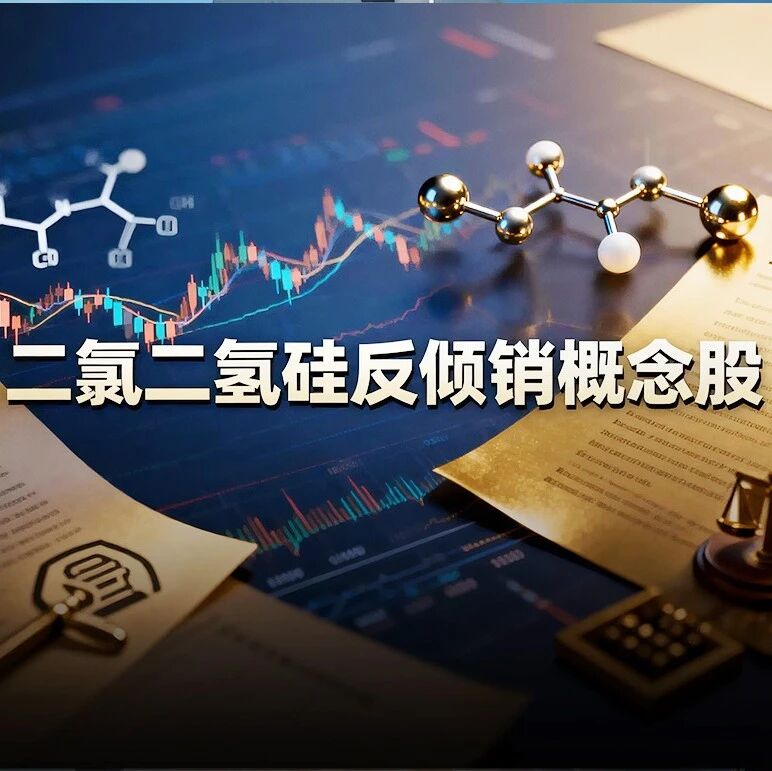
二氯二氢硅(DCS)

Search documents
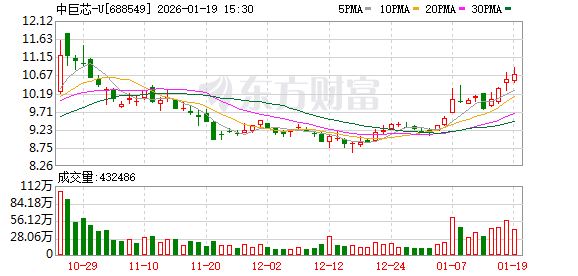
中巨芯:公司目前生产的产品中没有二氯二氢硅(DCS)
Mei Ri Jing Ji Xin Wen· 2026-01-19 11:44
Group 1 - The company currently does not produce any products containing dichlorodihydrosilane (DCS) [2]

春季行情火力全开!英伟达新架构+存储大幅涨价,半导体设备、材料等上游国产替代加速
Jin Rong Jie· 2026-01-12 02:48
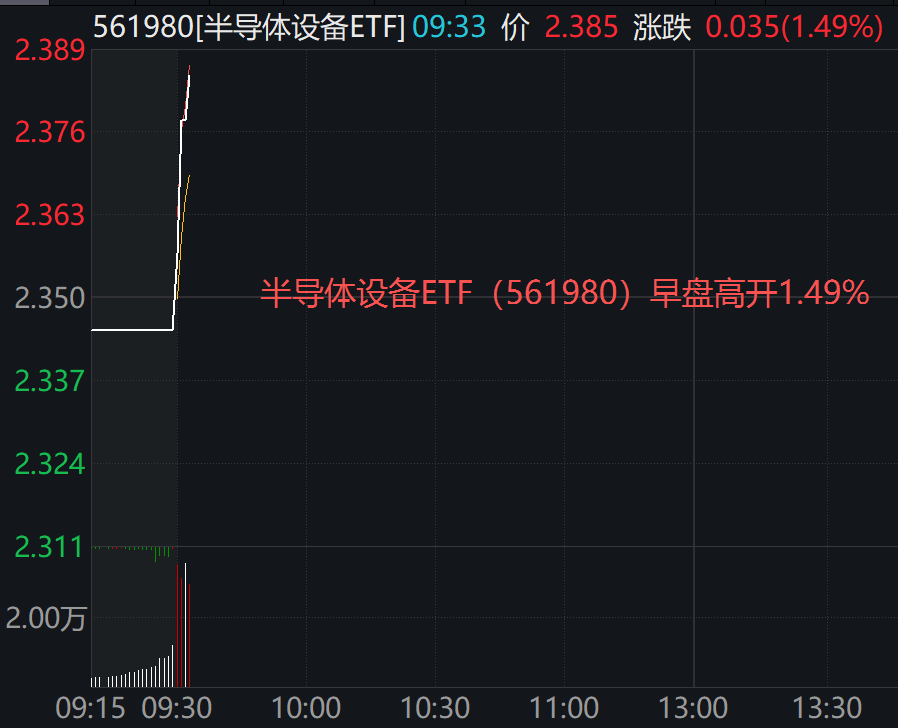
Core Viewpoint - The global semiconductor market is expected to strengthen in 2026, driven by AI demand and domestic substitution, with a notable increase in semiconductor equipment and materials [1] Group 1: Semiconductor Equipment and ETF Performance - The semiconductor equipment ETF (561980) opened up by 1.15% on January 12, with a net inflow of nearly 100 million yuan over the past two trading days [1] - The index tracked by the semiconductor equipment ETF has risen over 15% this year, outperforming mainstream semiconductor indices [3] - Key stocks such as Zhongwei Company and Cambrian have seen significant gains, with Zhongwei up nearly 4% and Jianghua Micro up over 5% [3] Group 2: Market Trends and Price Increases - A significant increase in trading volume in A-shares has initiated a spring market rally, with semiconductor equipment leading the upward trend [5] - International storage giants are expected to raise server DRAM prices by 60% to 70% in Q1 2026 compared to Q4 2025 [6] - SanDisk has proposed a unique supply contract requiring 100% cash prepayment from clients to secure storage chip allocations for 1 to 3 years [6] Group 3: Domestic Substitution and Material Demand - The domestic substitution process for semiconductor materials is advancing, with a recent anti-dumping investigation into dichlorodihydrosilane (DCS) from Japan, a key electronic chemical material [6] - The demand for semiconductor materials and electronic chemicals is expected to rise due to AI data centers and the urgent need for low-latency, high-bandwidth memory solutions [7] - The global semiconductor materials market is projected to reach approximately $70 billion by 2025, with a 6% year-on-year growth [7] Group 4: Industry Outlook and Key Players - The trend of "supply security + domestic substitution" for critical semiconductor materials is strengthening amid rising security concerns [8] - Companies with technological accumulation and capacity in high-end materials are likely to see market share and profit growth as advanced processes and domestic substitution trends continue [8] - The semiconductor equipment ETF focuses on leading companies in the sector, with over 90% of its holdings in the high-tech, high-value upstream and midstream areas of the semiconductor industry [8]

机构:存力+算力量价齐升,半导体设备进入主升阶段,半导体设备ETF(561980)高开上涨1.15%!
Sou Hu Cai Jing· 2026-01-12 02:33
Core Viewpoint - The global semiconductor industry is expected to strengthen in 2026, driven by AI demand and domestic substitution, with a notable increase in semiconductor equipment and materials [1] Group 1: Semiconductor Equipment and ETF Performance - The semiconductor equipment ETF (561980) opened up 1.15% on January 12, with a net inflow of nearly 100 million yuan over the past two trading days [1] - The index tracked by the semiconductor equipment ETF has risen over 15% this year, outperforming mainstream semiconductor indices [2] - Key stocks such as Zhongwei Company and Cambrian have seen significant gains, with Zhongwei up nearly 4% and Jianghua Micro up over 5% [2] Group 2: Market Trends and Pricing - A significant increase in trading volume in A-shares indicates the start of a spring market, with semiconductor equipment leading the upward trend [4] - NVIDIA's new AI chip architecture, Vera Rubin, showcases a fivefold increase in inference performance compared to the previous generation, indicating a surge in storage demand [5] - Major international storage companies plan to raise server DRAM prices by 60% to 70% in Q1 2026 compared to Q4 2025 [5] Group 3: Domestic Substitution and Material Demand - The domestic substitution process for semiconductor materials is advancing, with a recent anti-dumping investigation into dichlorodihydrosilane from Japan, a key material for chip manufacturing [5] - The demand for semiconductor materials and electronic chemicals is expected to rise due to the upgrade of storage driven by AI data centers [6] - The global semiconductor materials market is projected to reach approximately $70 billion by 2025, with a year-on-year growth of 6% [6] Group 4: Industry Outlook and Key Players - The trend of "supply security + domestic substitution" for key semiconductor materials is strengthening, driven by AI computing and data center demands [7] - Leading companies with technological accumulation and production capacity in high-end materials are expected to gain market share and profitability amid advanced process promotion and domestic substitution trends [7] - The semiconductor equipment ETF focuses on leading companies in the sector, with over 90% of its holdings in the upper and mid-stream areas of the semiconductor industry, which have the highest technical barriers and value concentration [7]



【基础化工】商务部陆续出台对日管制措施,半导体材料国产替代紧迫性提升——行业周报(20260105-20260109)(赵乃迪/蔡嘉豪/周家诺)
光大证券研究· 2026-01-11 23:03
Group 1 - The article highlights the urgency for domestic substitution of semiconductor materials due to recent export control measures imposed by the Ministry of Commerce on Japan, which includes a ban on dual-use items and an anti-dumping investigation on DCS, a key electronic chemical material for chip manufacturing [4] - The ongoing geopolitical tensions between China and Japan are likely to escalate, increasing the probability of Japan retaliating with further export controls, which would heighten uncertainties in the domestic semiconductor supply chain [4] Group 2 - Global semiconductor sales are projected to grow significantly in 2025, driven by demand from AI computing, data centers, and smart driving, with an expected sales figure of approximately $687.4 billion, representing a year-on-year increase of 22.7% [5] - The production capacity for 12-inch wafers is expected to reach 11.1 million pieces per month by 2028, with a compound annual growth rate (CAGR) of about 7% from 2024 to 2028, while advanced process capacity (7nm and below) is anticipated to grow from 850,000 to 1.4 million pieces per month, with a CAGR of 14% [5] Group 3 - The demand for high-bandwidth memory (HBM) is rapidly increasing due to the needs of data centers and AI processors, leading to a significant rise in semiconductor material consumption [6] - The global semiconductor materials market is expected to reach approximately $70 billion in 2025, with a year-on-year growth of 6%, and is projected to exceed $87 billion by 2029 [6] - In China, the market for key materials is forecasted to reach 174.1 billion yuan in 2025, reflecting a growth rate of 21.1% [6]

一图看懂 | 二氯二氢硅反倾销概念股
市值风云· 2026-01-07 10:25
Core Viewpoint - The Ministry of Commerce announced an anti-dumping investigation into imported dichlorodihydrosilane (DCS) from Japan, which is expected to directly benefit domestic DCS production companies and accelerate the domestic substitution in semiconductor manufacturing [3][4]. Group 1: Policy Impact on Industry Chain - The anti-dumping investigation period is set from July 1, 2024, to June 30, 2025, while the industry damage investigation period spans from January 1, 2022, to June 30, 2025 [3][4]. - This policy is anticipated to promote domestic DCS production and indirectly benefit upstream raw material suppliers [3][4]. Group 2: Beneficiary Classification - Key beneficiaries include midstream core DCS manufacturing companies, upstream raw material suppliers, and downstream application fields such as chip manufacturing and display panels [10]. - Specific companies identified as beneficiaries include: - Midstream: companies like Sanfu Co., and Hoshine Silicon Industry [10]. - Upstream: companies such as Dongyue Group and Jiangsu Huachang Chemical [10]. - Downstream: firms like SMIC and Changjiang Storage [10]. Group 3: Industry Overview - The upstream segment consists of essential raw materials like silicon powder, hydrogen chloride, and hydrogen, which are characterized by high technical barriers [11]. - A critical parameter for production is maintaining metal impurities below 0.1 ppb [11].