五氧化二钒

Search documents
【钒钛股份(000629.SZ)】钒电池加速放量,看好钒价触底回升带来的业绩修复——动态跟踪报告(王招华/方驭涛)
光大证券研究· 2026-03-28 00:03
Core Viewpoint - The domestic price of vanadium pentoxide has increased since 2026, reaching 82,500 yuan/ton as of March 23, 2026, marking a 9.3% rise compared to the end of 2025 [4]. Group 1: Company Performance - The company reported a loss in 2025, with an expected net loss of 80 to 110 million yuan, a significant decline from a net profit of 285 million yuan in 2024, primarily due to falling prices of vanadium and titanium products [5]. - The average price of domestic vanadium pentoxide in 2025 was 75,000 yuan/ton, a 7.1% decrease year-on-year, representing the lowest average price since 2017 [5]. Group 2: Business Development - The company is gradually extending its operations downstream to increase the added value of vanadium products, collaborating with Dalian Rongke to supply raw materials and jointly constructing a 2,000 cubic meters/year vanadium electrolyte production line, which has achieved stable production [6]. Group 3: Vanadium Battery Market - The total installed capacity of all-vanadium flow batteries in China was 954.5 MW and 4,027.0 MWh in 2025, with expectations for 2026 to reach 2-3 GW [7]. - The company signed a supply agreement to provide 20,000 tons of vanadium raw materials (equivalent to vanadium pentoxide) to Dalian Rongke in 2026, a 39% increase from the 14,348 tons supplied in 2025, indicating a robust market for vanadium battery energy storage [7]. Group 4: Vanadium Price Outlook - The demand for vanadium in the steel sector is expected to stabilize as the decline in demand slows down, particularly following the implementation of mandatory standards for ordinary hot-rolled rebar in September 2024 [8]. - With the consumption of vanadium pentoxide inventory, it is anticipated that vanadium prices will gradually rise [9].


钒涨价解读及后续行情展望
2026-03-06 02:02
Summary of Vanadium Market Conference Call Industry Overview - The vanadium market is experiencing a fluctuating upward trend in prices, with a core range between 70,000 to 95,000 CNY per ton in 2026. Short-term price increases are driven by U.S. strategic stockpiling and overseas replenishment, pushing prices near 85,000 CNY, but oversupply is limiting further increases [1][2][7]. Key Points Supply Dynamics - The supply side is highly concentrated, with the top nine companies, including Pangang and Chenggang, accounting for over 90% of the market. The cost of extracting vanadium from stone coal is approximately 90,000 CNY, leading to a halt in production at current average prices of 70,000 to 80,000 CNY. Steel slag extraction has become the dominant method, with costs around 68,000 CNY [1][3][4]. - A confirmed supply increase of about 10,000 tons is expected from the Qinhuangdao project, bringing total supply to approximately 170,000 tons in 2026. If prices exceed 90,000 CNY, flexible production capacities like stone coal extraction may be released, further limiting price increases [2][19]. Demand Trends - The demand structure is shifting, with a decline in construction steel demand and an increase in vanadium battery demand. It is projected that battery demand will reach 35,000 tons in 2026, up from 25,000 tons in 2025, and could grow to 70,000 tons by 2028 [1][12][20]. - The primary consumption sectors for vanadium are steel production and vanadium batteries, with the steel sector's demand declining due to weak real estate and infrastructure-related activities [11][20]. Price Mechanisms - The pricing mechanism is influenced by the concentration of supply, where leading suppliers establish a relatively consistent price range. However, when supply slightly exceeds demand, competitive transactions can lead to price declines. Conversely, when prices approach the cost line of major suppliers, production cuts may be implemented to support price recovery [4][5][11]. - The average cost of vanadium has been decreasing over the past three years, with 2023 averaging around 100,000 CNY, 2024 at 80,000 CNY, and 2025 at 74,000 CNY. A significant selling pressure is expected around the 80,000 CNY mark due to historical inventory costs [5][6][10]. Market Sentiment and Trading Characteristics - Recent price increases since late February 2026 are attributed to external factors, particularly U.S. strategic stockpiling plans, which have led to a rapid price rise in the U.S. market, significantly higher than domestic prices [7][8]. - The domestic market is characterized by a "cash upfront" trading model for raw materials, enhancing the bargaining power of suppliers in the supply chain [2][8]. Inventory and Trading Activity - Current social inventory is approximately 50,000 tons, primarily in the form of vanadium pentoxide and vanadium iron. The inventory has been accumulating since 2020, with significant quantities held by various trading entities [15][20]. - The trading activity is notably influenced by regional dynamics, with significant stocks located in Northeast China and other areas, where speculative trading behaviors are observed [15][20]. Future Outlook - The price trend for 2026 is expected to show two phases: an initial rise driven by market sentiment and capital, followed by a likely correction due to persistent supply exceeding demand. A second wave of demand-driven price increases is anticipated in the latter half of 2026 as battery demand ramps up [12][21]. - The potential for price increases is capped by the ongoing supply from various sources, including the anticipated production from the Qinhuangdao project and the possibility of increased stone coal extraction if prices rise significantly [13][19]. Profit Distribution in the Industry - Profit distribution within the vanadium industry is heavily skewed towards the raw material segment, which accounts for 50%-80% of total profits. Processing segments, such as vanadium nitrogen alloy production, have seen a significant reduction in the number of companies due to long-term losses, dropping from 50 to about 20 [26][27]. Conclusion - The vanadium market is poised for a complex interplay of supply and demand dynamics, with significant implications for pricing and investment opportunities. The ongoing shifts in demand towards vanadium batteries and the concentrated supply structure will be critical factors to monitor in the coming years.
AMG 2025Q4 锂精矿销售量环比增长 84%至2.5483 万吨,锂精矿平均成本环比上涨 16%至489美元/吨(CIF,中国)
HUAXI Securities· 2026-03-02 12:04
Investment Rating - The report recommends a "Buy" rating for the industry, indicating a positive outlook for investment opportunities [4]. Core Insights - AMG Lithium's Q4 2025 sales volume of lithium concentrate increased by 84% quarter-on-quarter to 28,326 tons, although it decreased by 15% year-on-year. The average selling price rose by 30% quarter-on-quarter to $689 per ton, while the average cost increased by 16% to $489 per ton [1][2]. - For the full year 2025, total sales of lithium concentrate were 69,180 tons, a decline of 22% from 2024, primarily due to equipment failure during expansion projects. The average selling price for the year was $632 per ton, with an average cost of $488 per ton, down 6.6% from 2024 [2]. - AMG Lithium's revenue for Q4 2025 was $61.39 million, a 16% increase year-on-year, but the full-year revenue decreased by 10% to $163.14 million due to lower lithium market prices and sales volume [12][22]. - AMG Vanadium's Q4 2025 revenue grew by 8% to $157 million, driven by increased sales of chromium and titanium alloys, although offset by a decline in vanadium sales [13]. - AMG Technologies experienced a 40% revenue increase in Q4 2025, reaching $228.63 million, attributed to higher antimony sales prices and strong engineering sales [15][23]. - The company anticipates a reduction in workforce to approximately 3,200 employees by 2026 due to the sale of AMG Graphite and the closure of AMG Silicon [18]. Summary by Sections Production and Operations - AMG Lithium's Q4 2025 production was impacted by lower ore grades, leading to a decrease in recovery rates and overall production [1]. - The Bitterfeld facility is enhancing its capacity to produce battery-grade lithium hydroxide and is progressing with customer certification [2]. Financial Performance - Q4 2025 total revenue was $439 million, a 24% increase year-on-year, but adjusted gross profit decreased by 33% [8][19]. - The net loss attributable to shareholders in Q4 2025 was $48.26 million, significantly affected by high tax expenses [9][20]. Future Outlook - The company expects capital expenditures of $70 million to $90 million in 2026, primarily driven by targeted growth investments in vanadium and lithium [18]. - The projected adjusted EBITDA for 2026 is estimated to range between $210 million and $240 million, supported by strong order backlogs and rising raw material prices [18][19].
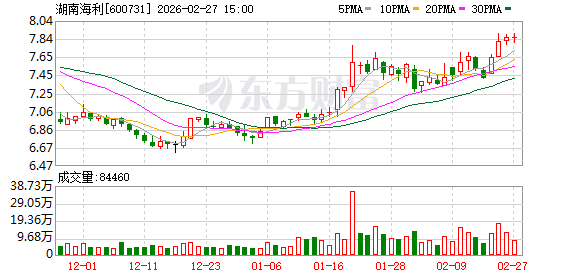
湖南海利:五氧化二钒项目属于公司控股股东海利集团的资产
Mei Ri Jing Ji Xin Wen· 2026-02-27 10:34
Group 1 - The investor inquired about the production status of the vanadium pentoxide project, noting the absence of related data in the Q3 operational report [2] - Hunan Haili (600731.SH) responded on the investor interaction platform, clarifying that the vanadium pentoxide project is an asset of its controlling shareholder, Haili Group, and is not included in the listed company's operational data [2]

1.73元低价!新业务将井喷,永泰能源布局全解析
Sou Hu Cai Jing· 2026-02-27 03:17
Core Viewpoint - Yongtai Energy's stock price is currently low at 1.73 yuan, but the company is on the verge of significant growth with three new business ventures in energy storage, coal mining, and rare metals, creating a stark contrast that confuses many investors [1][3]. Group 1: Stock Price and Market Sentiment - As of February 26, 2026, Yongtai Energy's closing price is 1.73 yuan, with a total market capitalization of 36.6 billion yuan, indicating a long-term trading range between 1-2 yuan, categorized as a "1 yuan stock" [3]. - The stock price's low performance is attributed to historical burdens, funding pressures, and market sentiment, rather than a deterioration in the company's fundamentals [3]. - The company's operating cash flow for the third quarter of 2025 is reported at 4.45 billion yuan, significantly exceeding its net profit, indicating a healthy financial position [3]. Group 2: New Business Ventures - Yongtai Energy's new business initiatives are supported by official announcements, with the core growth driver being the Haizetang coal mine, expected to begin trial production in July 2026 and reach an annual output of over 10 million tons by 2027, potentially adding 3-4.4 billion yuan in net profit annually [4]. - The company is also developing a vanadium flow battery storage business, aligning with national policies that project a new energy storage capacity exceeding 100 million kilowatts by 2030, indicating a clear growth trajectory [4]. - Additionally, the company is exploring rare metal resources, creating a comprehensive energy framework that integrates coal, electricity, storage, and new materials [4]. Group 3: Value Management and Long-term Strategy - In response to the low stock price, Yongtai Energy has implemented market value management strategies, including a 500 million yuan share buyback completed in 2025 and a further buyback plan of 300-500 million yuan at a maximum price of 2.5 yuan per share [5]. - The management and controlling shareholders have increased their holdings by over 86 million shares, demonstrating confidence in the company's future [5]. - The company's actions align with regulatory guidance encouraging buybacks and shareholding increases, reflecting a commitment to long-term value creation [5].

Energy Fuels (NYSEAM:UUUU) M&A announcement Transcript
2026-01-21 17:02
Summary of Energy Fuels (NYSEAM:UUUU) Conference Call on ASM Acquisition Company and Industry Overview - **Company**: Energy Fuels (NYSEAM:UUUU) - **Acquisition Target**: Australian Strategic Materials (ASM) - **Industry**: Rare Earth Metals and Alloys Key Points and Arguments Acquisition Announcement - Energy Fuels announced the acquisition of ASM to create a fully integrated mine-to-metal and alloy rare earth producer, enhancing its position in the rare earth sector [2][4] Strategic Rationale - The acquisition is a significant step in Energy Fuels' integration strategy, aiming to become the largest fully integrated rare earth metal and alloy producer outside of China [5][6] - ASM adds critical downstream capabilities in rare earth metals and alloys, addressing a weak link in the supply chain [6][25] - The acquisition is expected to be accretive on a Net Asset Value (NAV) basis and enhance vertical integration, capturing margins across the entire supply chain [6][27] Financial Details - The total offer price for ASM is AUD 1.60 per share, implying a value of AUD 447 million, representing over a 100% premium [9] - Payment terms include a combination of Energy Fuels shares and cash dividends for ASM shareholders [10] Project and Operational Synergies - The acquisition includes ASM's operating metal and alloy plant in South Korea and the Dubbo Project in Australia, which contains both light and heavy rare earths [4][12] - Energy Fuels plans to build and operate a metal and alloy plant in the U.S., leveraging ASM's capabilities [4][21] - The Dubbo Project is expected to provide a secure, low-cost source of feedstock, enhancing long-term prospects [7][80] Production Capacity and Expansion Plans - ASM's Korean Metals Plant has an installed capacity of 1,300 tonnes per annum, with plans to expand to 3,600 tonnes per annum [15][17] - Future plans include a phase three expansion to increase capacity to 5,600 tonnes per annum [19] - The U.S. American Metals Plant is intended to have an initial capacity of 2,000 tonnes per annum, with potential for expansion [21] Market Position and Competitive Advantage - The acquisition positions Energy Fuels to capture significant margins and insulate against commodity price exposure, with a projected gross margin uplift of around 20% [26] - Energy Fuels holds the only operating conventional uranium mill in the U.S., which enhances its operational capabilities [34][41] Future Outlook - The transaction is expected to close in the second quarter of 2026, pending various approvals [11][48] - Energy Fuels aims to leverage its existing relationships and infrastructure to expedite the development of the American Metals Plant [53] Additional Important Information - The acquisition is seen as a strategic move to fill a critical gap in the rare earth supply chain, particularly in the context of reducing reliance on Chinese sources [92] - The integration of ASM's capabilities is anticipated to enhance Energy Fuels' overall market position and operational efficiency [32][92] This summary captures the essential details and strategic implications of the acquisition discussed during the conference call, highlighting the potential benefits and future plans for Energy Fuels and ASM.

承德钒钛的市场驱动转型记
Xin Lang Cai Jing· 2026-01-20 22:57
Core Viewpoint - The article discusses the transformation of Chengde Vanadium Titanium New Materials Co., Ltd. from a "single champion" in the vanadium industry to a versatile player capable of meeting diverse market demands, driven by customer feedback and technological upgrades [1][2][3][4]. Group 1: Company Transformation - Chengde Vanadium Titanium has shifted its focus from traditional markets to high-end vanadium materials since 2013, achieving significant technological breakthroughs [1]. - The company was recognized as a "single champion" in the manufacturing sector in 2023, but faced new challenges from customers demanding higher purity levels in their products [2]. - A dedicated team was formed to address customer needs, leading to the successful production of high-purity vanadium products that meet specific requirements, resulting in a premium price of over 10,000 yuan per ton [2]. Group 2: Technological Advancements - The company has improved its production processes, increasing the daily output of vanadium pentoxide from 60 tons to over 70 tons, and annual production from 19,000 tons in 2024 to 23,400 tons [3]. - Key performance indicators have also improved, with vanadium content in tailings reduced to below 1% and vanadium oxide recovery rate increased to 85.77% [3]. - The market price for high-purity vanadium products has reached over 100,000 yuan per ton, significantly higher than ordinary steel prices [3]. Group 3: Market Strategy - Chengde Vanadium Titanium is expanding into non-steel markets, including vanadium aluminum alloys and energy storage solutions, transitioning from a sales-driven to a production-driven model [3]. - The company aims to increase vanadium production to 30,000 tons by 2026, with over 30% of its vanadium used in non-steel applications [4].
钒钛股份(000629) - 000629钒钛股份投资者关系管理信息20260116
2026-01-16 12:36
Group 1: Company Overview and Products - The company produces a range of vanadium products including vanadium pentoxide, high-vanadium iron, vanadium-nitrogen alloy, and vanadium-aluminum alloy, with an annual production capacity of 185,000 tons of titanium concentrate and 30,000 tons of vanadium products (measured as V2O5) [2][3] - Titanium products include titanium dioxide and titanium slag, with a comprehensive production capacity of 24,000 tons [2] Group 2: Key Projects and Innovations - The company has a 60,000-ton molten salt chlorination titanium dioxide production line, a key project in Sichuan, utilizing local titanium slag and achieving cost-effective resource utilization [4] - The all-vanadium redox flow battery offers advantages such as high power, large capacity, long lifespan, and safety, suitable for large-scale energy storage [4] Group 3: Strategic Partnerships - Since signing a strategic cooperation agreement with Dalian Rongke in September 2021, the company has established a joint venture for a 2,000 cubic meters/year vanadium electrolyte production line, which is operating effectively [4] - In 2024, the company plans to supply approximately 15,000 tons of vanadium products to Dalian Rongke, accounting for 28% of the total vanadium product sales for that year [4] Group 4: Market Response and Performance Improvement Measures - The company is actively sourcing social resources to maximize vanadium product line capacity and is pushing for timely production ramp-up of new titanium dioxide lines [5] - It conducts market research to adjust production based on demand, optimizing product mix to enhance overall profitability [5] - Cost control measures are implemented to reduce manufacturing costs of vanadium and titanium products, while maintaining and expanding sales channels to alleviate sales pressure [5]
钒钛股份(000629) - 000629钒钛股份投资者关系管理信息20260108
2026-01-08 09:48
Group 1: Company Products and Production Capacity - The company produces a range of vanadium products including vanadium pentoxide, ferrovanadium, vanadium-nitrogen alloy, vanadium-aluminum alloy, and vanadium electrolyte, with an annual production capacity of 44,200 tons of vanadium products (measured in V2O5) [2] - The titanium series products include titanium dioxide and titanium slag, with an annual production capacity of 300,000 tons of titanium dioxide and 240,000 tons of titanium slag [2] - The products are widely used in industries such as steel, energy storage, non-ferrous metals, and coatings [2] Group 2: Raw Material Supply and Pricing - The main raw materials, titanium concentrate and crude vanadium slag, are sourced from the controlling shareholder, Panzhihua Steel Group, ensuring stable supply [2] - The pricing for crude vanadium slag is based on a cost-plus reasonable profit model [2][3] Group 3: Vanadium Energy Storage Business - The company is expanding its applications in non-steel sectors, particularly vanadium energy storage, through a strategic partnership with Dalian Rongke, a leader in the domestic vanadium energy storage field [4] - A joint venture is established to build a 2,000 cubic meters/year vanadium electrolyte production line, with a cumulative supply of over 20,000 tons of vanadium products to Dalian Rongke from 2021 to 2024 [4] Group 4: Titanium Dioxide Production Line - The 60,000 tons molten salt chlorination production line is a key project in Sichuan, utilizing titanium slag produced from local titanium concentrate [5] - The company has developed proprietary technology for low-grade titanium slag processing, leading to stable production and decreasing costs since 2025 [5] Group 5: Dividend Policy - The company currently does not meet the conditions for dividend distribution due to existing unabsorbed losses, but aims to improve operations to restore dividend eligibility as soon as possible [6]
全球与中国催化转化器钒化学品行业运营动态及投资策略分析报告2025-2031年
Sou Hu Cai Jing· 2025-12-02 03:42
Group 1 - The report analyzes the global and Chinese vanadium chemical industry related to catalytic converters, focusing on operational dynamics and investment strategies from 2025 to 2031 [1] - It provides a comprehensive overview of the market, including definitions, statistical scope, and growth trends of various vanadium chemical products [3][4] - The report highlights the demand and supply dynamics in both global and Chinese markets, projecting future trends from 2019 to 2031 [1][5] Group 2 - Different types of vanadium chemicals are analyzed, including vanadium pentoxide, oxalic vanadium, and sodium vanadate, with growth trends compared between 2025 and 2031 [4][5] - The report discusses the applications of vanadium chemicals in various industries such as sulfuric acid production, maleic anhydride production, and others [5][6] - It compares the development status and future trends of the vanadium chemical industry in China and globally, emphasizing the differences in production capacity and consumption [1][6] Group 3 - The report includes a competitive analysis of major global and Chinese manufacturers of vanadium chemicals, detailing their production volumes, market shares, and revenue rankings [2][5] - It provides insights into the market size and growth rates of vanadium chemicals in key regions, including North America, Europe, and Asia [3][4] - The analysis covers the consumption outlook for vanadium chemicals in various regions, projecting growth rates from 2019 to 2031 [6][7] Group 4 - The report examines the supply chain of vanadium chemicals, including upstream raw material supply and downstream applications [7][9] - It discusses the import and export trends of vanadium chemicals in China, identifying major sources and destinations [9][10] - The report outlines the factors influencing supply and demand in the Chinese market, including technological advancements and economic conditions [10][11] Group 5 - Future trends in the vanadium chemical industry are explored, including market environment, product development, and consumer preferences [11][12] - The report suggests sales channel strategies for domestic and international markets, providing recommendations for effective marketing [12][13] - It concludes with a summary of research findings and implications for stakeholders in the vanadium chemical sector [13][14]