传祺GS4

Search documents
归乡记 | 我与生活和解的一年
Ge Long Hui· 2026-02-15 02:05
Group 1 - The article discusses the annual migration of billions of people returning home, emphasizing the significance of ordinary people's journeys and experiences [3][4] - It highlights the personal story of an individual who moved to Shenzhen for work, detailing the struggles and aspirations faced over the years [5][6] - The narrative reflects on the impact of rising living costs and the challenges of balancing family expenses, including housing and childcare [11][12] Group 2 - The individual faced unexpected job loss due to company downsizing, which was attributed to the economic downturn and the rise of AI in the video editing industry [14][18] - The article illustrates the difficulties of finding new employment in a saturated job market, leading to a shift towards driving for ride-sharing services as a means of income [22][24] - It discusses the emotional toll of financial instability on family dynamics and the importance of maintaining a facade of normalcy for the sake of elderly parents [28][30] Group 3 - The narrative emphasizes the importance of resilience and adaptability in the face of adversity, showcasing the transition from traditional employment to gig economy work [42][43] - It concludes with a message of hope and encouragement for those facing similar challenges, urging them to continue seeking better opportunities and not to give up [55][56]


2025年AI落地进行时:企业业务、组织与人才升级实战案例集-InfoQ
Sou Hu Cai Jing· 2025-12-23 18:45
Group 1 - The report focuses on the transformation and practical implementation of AI in enterprises, highlighting the experiences of benchmark companies like GAC, Alibaba Cloud, and China Resources Group [1] - Successful AI implementation requires overcoming three core pain points: insufficient cognitive alignment among employees, misalignment between technology and business, and ambiguous value measurement making ROI difficult to close [1][2] - Key success factors include the collaboration of strategy, organization, talent, and technology [1] Group 2 - Companies need to clearly define their AI positioning and path; for instance, GAC Group adopts a dual-core strategy of "All in AI" and "AI for All," focusing on high-frequency scenarios [1][2] - Organizational change is essential for implementation; GAC integrates IT resources to establish a "true matrix" organization, balancing control and agility [1][2] - Talent development should be tiered; China Resources Group builds a digital literacy system for all employees, while Alibaba Cloud emphasizes "technical taste" and general education [2][8] Group 3 - The report identifies four major trends in technology implementation: MCP protocol for unified system connection, GraphRAG for improved knowledge retrieval accuracy, AgentDevOps for controllable AI behavior, and RaaS model focusing on quantifiable results [2] - Companies must prioritize data governance and infrastructure construction to transform core business capabilities into controllable data assets, avoiding AI becoming a "negative asset" [2] - The core logic of AI implementation is "business-driven technology, technology reshaping business," requiring resolution of process integration and data standardization issues first [2] Group 4 - GAC Group's digital transformation is driven by a strategic decision from leadership, emphasizing the importance of high-level involvement in overcoming traditional enterprise path dependencies [18][20] - The transformation process involves a shift from a management-oriented headquarters to an operationally focused one, integrating IT resources and establishing a centralized digital department [24][28] - The report highlights the necessity of a systematic approach to digital transformation, including the establishment of a governance model that balances centralized control with business agility [49]


转型阵痛待解 广汽传祺11月销量暴跌超四成
Xi Niu Cai Jing· 2025-12-12 08:38
Core Viewpoint - GAC Group's sales report for November 2025 reveals a significant decline in sales for its brand GAC Trumpchi, with November sales dropping by 42.04% year-on-year, indicating substantial market pressure [2][4]. Sales Performance - GAC Trumpchi's November sales were 25,739 units, down from 44,406 units in the same month last year, marking a nearly halved performance [2][4]. - In contrast, GAC Honda's November sales reached 41,366 units, up 5.68% year-on-year, while GAC Toyota's sales were 73,500 units, showing a slight increase of 0.71% [2][3]. - GAC Aion, despite facing challenges, reported November sales of 38,326 units, a decline of 9.40%, which is significantly less than Trumpchi's drop [2][3]. Cumulative Sales Data - For the year-to-date period from January to November, GAC Trumpchi's cumulative sales totaled 294,887 units, down 17.29% from 356,535 units in the same period last year [2][3]. - GAC Honda's cumulative sales decreased by 22.97%, while GAC Toyota's cumulative sales increased by 3.98% [3]. Brand Challenges - GAC Trumpchi, once a leading brand with peak sales of 534,000 units in 2018, is now struggling due to a lack of market-disrupting models and declining sales of key models like the Trumpchi M8 and E8 [4]. - The brand's flagship model, the Trumpchi Yingbao, has seen a significant drop in monthly sales, indicating a loss of market appeal [4]. Pricing and Market Position - The pricing strategy for models like the Xiangwang S7, starting at 175,800 RMB, is seen as less competitive in a market focused on value, especially against established competitors [5]. - Quality issues, such as complaints about the GS4's transmission and stability of the vehicle's system, have also impacted brand perception [5]. Future Outlook - Despite challenges, GAC Trumpchi has achieved over 150,000 sales in its new energy vehicle segment and continues to lead in the medium MPV category with the E8 series [5]. - The company's future actions to boost sales remain to be observed, particularly in adapting to the evolving market demands for electric vehicles [5].

广汽IPD元年:一场从昊铂开始的革命与救赎
2 1 Shi Ji Jing Ji Bao Dao· 2025-10-14 14:28
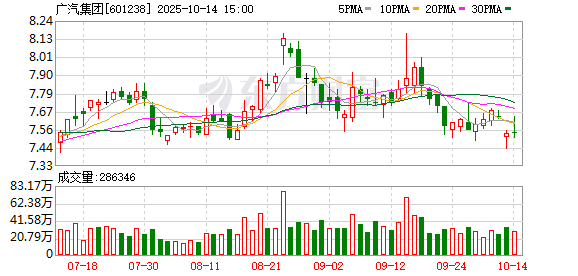
Core Viewpoint - GAC Group is facing significant challenges, with a notable decline in sales and a historic net loss, prompting a shift to a "wartime state" and a focus on three major battles for the future [2][4]. Sales Performance - GAC's cumulative sales from January to September 2025 reached 1.1837 million units, representing a year-on-year decline of 11.34% [2]. - The mid-year report for 2025 indicated a net loss of 2.538 billion yuan, marking the first half-year loss for GAC in nearly a decade [2]. Brand Development - GAC's high-end new energy brand, Aohai, has struggled with sales, selling only 2,095 units in September, compared to 19,600 units for a competing model from Xiaomi [2]. - Aohai was established as a standalone brand in January 2025, aiming to compete in the high-end market alongside GAC's other brands, Aion and Trumpchi [6][15]. Product Strategy - Aohai HL, the first model under the new strategy, features the "Xingyuan Range Extender Platform" and a new design language called "Shanhai Architecture" [4]. - The company is undergoing a significant transformation, with the establishment of a reform committee and the introduction of the Integrated Product Development (IPD) process [4][28]. Technological Innovation - GAC is focusing on developing range extender technology, with the Xingyuan Range Extender Technology being a key innovation [16][20]. - The new technology aims to improve energy efficiency, achieving an oil-electric conversion rate of 3.73 kWh/L, surpassing the industry average [25]. Market Positioning - Aohai is attempting to redefine its brand image and market positioning, moving away from its previous association with Aion to establish a distinct identity focused on "technology, luxury, and high quality" [14][33]. - The company is adopting a user-centric approach to product development, utilizing insights from Huawei's IPD methodology to better understand consumer needs [28][29]. Competitive Landscape - The high-end electric vehicle market is becoming increasingly competitive, with GAC's Aohai facing challenges from new entrants that have established strong brand identities [10][14]. - Aohai's initial models have not performed well in the market, highlighting the difficulties traditional automakers face in transitioning to high-end segments [9][11]. Future Outlook - GAC's leadership has set ambitious goals for the company's transformation, aiming for a significant increase in the share of self-owned brands in total sales by 2027 [43]. - The success of Aohai in proving its brand value through sales will be critical for GAC's overall reform efforts and future viability [44].
从吉利博越L看自主紧凑型SUV的生存与进阶
Jing Ji Guan Cha Wang· 2025-05-16 04:14
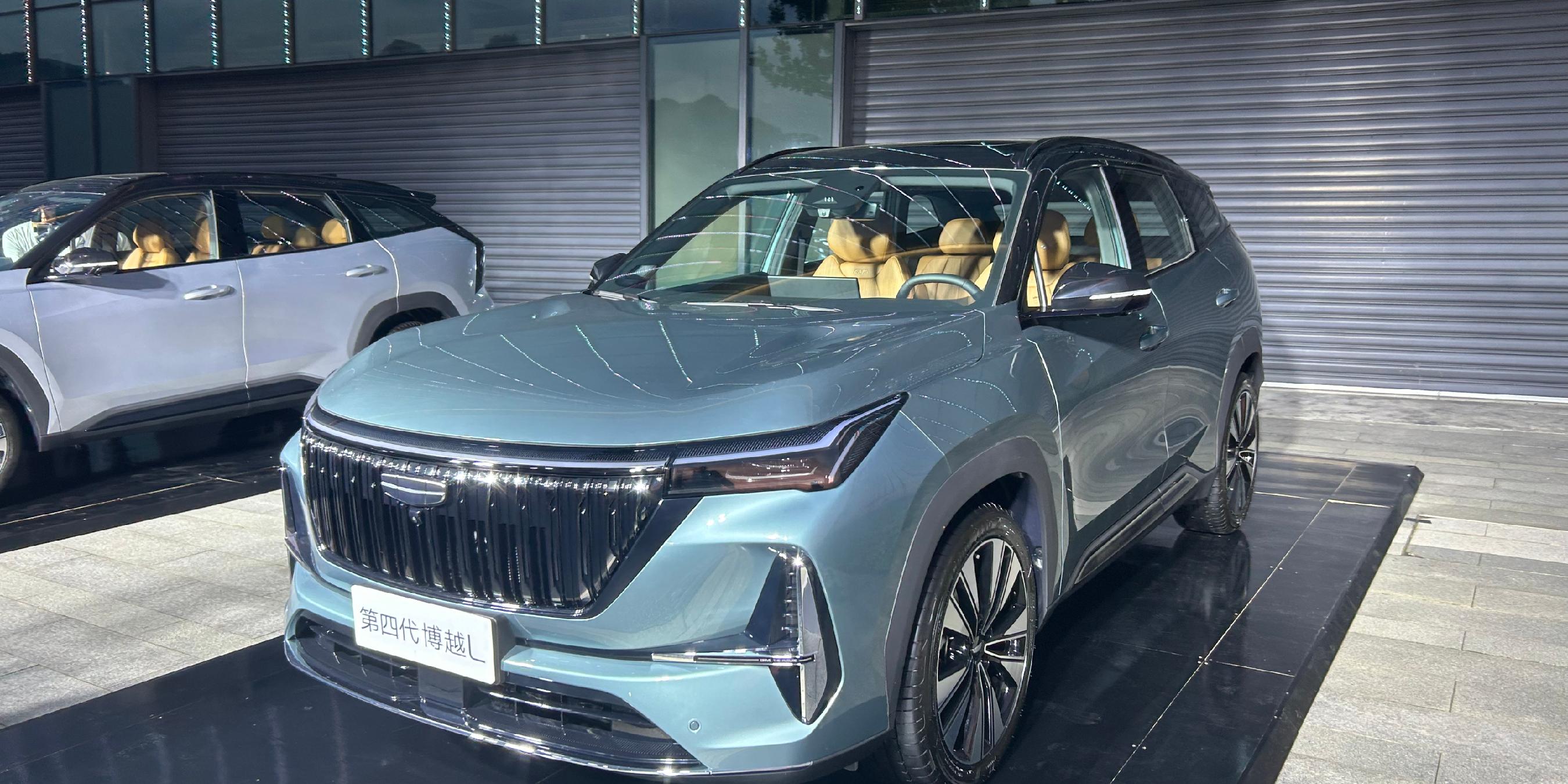
Group 1: Product Launch and Features - The fourth-generation Geely Boyue L was launched on May 13, with a starting price of 92,900 yuan, positioning it as a compact SUV [2] - It features the CMA global luxury architecture and offers two power combinations: 2.0TD+7DCT and 1.5TD+7DCT, achieving a 0-100 km/h acceleration in 7.4 seconds [2] - The vehicle incorporates GEEA 3.0 electronic architecture and Xingrui AI technology, enhancing its smart capabilities, including automatic adjustments based on user preferences and remote diagnostics for 99% of core components [2] Group 2: Market Trends and Historical Context - The rise of SUVs in China has allowed domestic brands to catch up with joint ventures, with the SUV market growing from 1.6 million units in 2011 to an expected 11.31 million units in 2024, increasing its market share from 8.6% to 49.2% [3][6] - The Haval H6, launched in 2011, significantly boosted family SUV demand, leading to a shift in consumer preference from sedans to SUVs [3] - By 2024, domestic brands occupy 12 out of the top 20 spots in SUV sales, a significant increase from 2011 when the top ten were dominated by foreign brands [6] Group 3: Technological Advancements and Industry Evolution - The development of proprietary technology platforms, such as Geely's CMA architecture and Great Wall's Lemon platform, has enabled Chinese automakers to break free from the "market for technology" model [6] - The average price of compact SUVs has decreased from 250,000 yuan in 2010 to 120,000 yuan currently, facilitating the rise of domestic brands [6] - The evolution of models like the Haval H6 and Geely Boyue demonstrates a shift from short product lifecycles to long-lasting classic models, with the Haval H6 now in its third generation after 14 years [6] Group 4: Global Expansion and Competitive Landscape - Domestic SUVs, including the Geely Boyue, are now exported to over 60 countries, with Chery's Tiggo 7 surpassing Tesla Model Y in export volume in 2023 [7] - The rise of compact SUVs has allowed domestic manufacturers to innovate and move towards higher-end markets, with new models entering the "light luxury" segment [8] - The fourth-generation Boyue L aims to meet high expectations for intelligence in fuel vehicles, positioning itself as a competitive option in its class [8] Group 5: Design Philosophy and Brand Identity - The first-generation Boyue introduced the "Chinese aesthetics" design concept, setting a benchmark for domestic SUVs and influencing competitors [9] - The evolution from imitation to defining market rules reflects the overall upward trajectory of domestic compact SUVs, which are crucial for the survival and competitiveness of companies in the industry [9]