全域AI 2.0

Search documents
印奇的智驾困局
3 6 Ke· 2026-01-30 09:40
Core Insights - The article discusses the challenges faced by Qianli Technology and its chairman, Yin Qi, as the company aims to establish itself in the competitive autonomous driving market in China, with a target of having over 1 million vehicles equipped with its Qianli Intelligent Driving system by 2026 [1][2][3]. Group 1: Company Strategy and Goals - Qianli Technology aims to become a leading player in the intelligent driving sector, with a specific goal of having over 1 million vehicles equipped with its system by 2026, a target that is ambitious given the current market dynamics [1][2]. - The company has undergone a transformation since Yin Qi's leadership began in 2024, focusing on an "AI + Car" strategy and establishing partnerships with major automotive players like Geely [5][6]. - Qianli's intelligent driving solution, Qianli Intelligent Driving 1.0, is designed to cater to various automotive manufacturers, indicating a shift towards becoming an independent supplier rather than solely relying on Geely [6][7]. Group 2: Market Challenges and Competition - The autonomous driving industry in China is maturing, with companies like Huawei and Momenta leading in vehicle deployment, which puts pressure on Qianli to establish a stable customer base quickly [2][8]. - Despite having competitive technology, Qianli has struggled to secure partnerships outside of Geely, which has created a perception of dependency on a single client [7][8]. - The financial performance of Qianli shows a significant increase in revenue but also highlights a net loss, indicating that while the company is growing, it is not yet profitable [12][13]. Group 3: Strategic Partnerships and Future Directions - Qianli Technology is deepening its collaboration with Step Star, a company that provides foundational models for intelligent driving, which is crucial for enhancing Qianli's capabilities [19][20]. - The partnership with Step Star allows Qianli to leverage advanced model upgrades at lower costs, focusing resources on critical areas that impact user experience [21][22]. - The strategy of using successful implementations within Geely's ecosystem to build credibility and attract new clients is seen as a pragmatic approach in the current market environment [22].

CES 2026,中国车来定义“AI+出行”丨品牌新事
吴晓波频道· 2026-01-09 00:30
Core Viewpoint - The article emphasizes that artificial intelligence (AI) is fundamentally reshaping the automotive industry, with Chinese automakers leading this transformation at the 2026 CES [4]. Group 1: AI's Impact on the Automotive Industry - AI is expected to influence the purchasing decisions of 40 to 50 million vehicles globally by 2030, with automakers that successfully implement AI at scale potentially increasing their sales by 20% [4]. - The transition from traditional automotive functions to AI-driven capabilities is likened to the shift from feature phones to smartphones, highlighting the need for vehicles to understand user states rather than just execute commands [9][10]. - Current AI applications in vehicles are often fragmented, lacking integration across systems like driving, cabin, and chassis, which leads to a disjointed user experience [11][12]. Group 2: Challenges in AI Integration - The automotive industry faces significant technical challenges, including the need for a cohesive ecosystem that integrates chips, software, cloud services, and mapping data [15]. - AI's evolution requires vast amounts of driving data and must be built on a foundation of safety [16]. - The gap between experimental AI technologies and their real-world application remains a major hurdle, compounded by the long development cycles of vehicles compared to the rapid pace of AI advancements [17]. Group 3: Geely's AI Strategy - Geely has made significant strides in AI integration, achieving a sales volume of 3.025 million vehicles in 2025, a 39% increase year-on-year, with 1.688 million being new energy vehicles, marking a 90% growth [21]. - The company introduced its "Full-Field AI 2.0" technology at CES 2026, which enhances the integration of AI across various vehicle domains, allowing for continuous evolution and improved decision-making capabilities [22][26]. - Geely's approach combines extensive R&D investment, a comprehensive AI ecosystem, and a large dataset from over 8.5 million assisted driving vehicles, which supports ongoing optimization of its AI systems [31]. Group 4: Competitive Landscape - The article notes that different global automakers are pursuing varied technological paths, with Chinese companies like Geely adopting a systematic approach that leverages a complete supply chain for rapid AI integration [35]. - The unique "Chinese speed" allows for quick iterations of AI algorithms and vehicle products, creating a feedback loop that enhances innovation and market responsiveness [35]. - As competition in the automotive industry shifts from isolated technological advancements to a comprehensive ecosystem approach, the advantages of Chinese automakers become increasingly apparent [36].


中国车企CES秀肌肉
Hua Er Jie Jian Wen· 2026-01-07 09:56
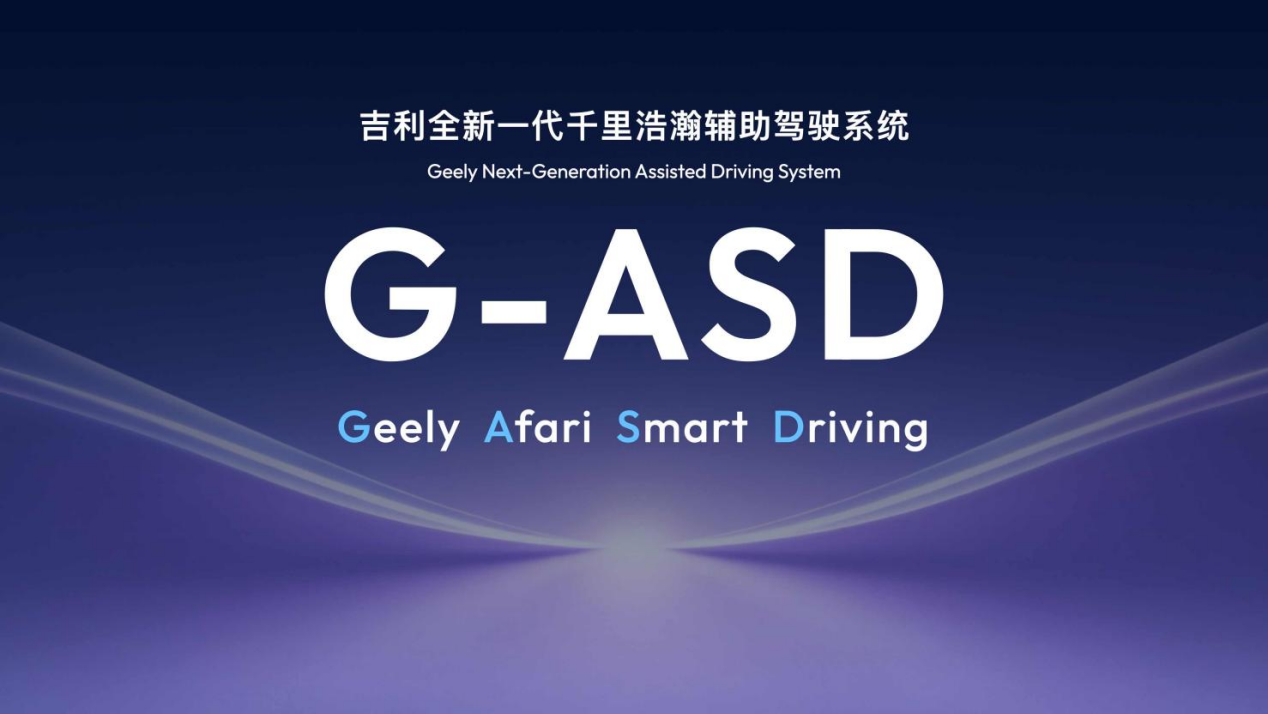
Core Insights - Chinese automakers are redefining the future of the automotive industry at CES, shifting focus from hardware to AI models and advanced driving architectures [1] - The competition is now centered around software capabilities and supply chain integration, marking a significant transition from manufacturing to standard-setting [1][11] Group 1: Technological Advancements - Geely introduced its "Universal AI 2.0" system, featuring the World Action Model (WAM), which enhances the vehicle's intelligence through a layered design [2] - WAM allows for a complete intelligent feedback loop, enabling continuous evolution in automotive intelligence [2] - Geely's strategy has led to a 20%-30% reduction in project numbers while enhancing quality, indicating a focus on efficiency [3] Group 2: Strategic Integration - Geely's brands, including Zeekr and Lynk & Co, have unified their driving software under the "G-ASD" system, promoting technology sharing across models [3] - This integration allows for rapid deployment of advanced technologies, such as the Thor-U chip, across different vehicle brands [3] - Great Wall Motors is pursuing a dual strategy of mechanical and intelligent advancements, showcasing its Hi4-Z hybrid architecture to address consumer concerns about range and energy consumption [4] Group 3: Supply Chain and Market Positioning - Chinese supply chain companies are demonstrating their production capabilities, with Leap Motor showcasing its aggressive electronic architecture strategy [5] - Black Sesame Intelligence presented its A2000 autonomous driving chip, targeting the L2+/L3 market, while other companies displayed advancements in lidar technology [6] - The automotive industry is expected to undergo significant changes, with a shift from funding and qualifications to AI model integration as the new entry barrier [7] Group 4: Future Industry Dynamics - The high costs associated with advanced driving technologies are leading to a consolidation trend, where only a few major players will dominate the market [9] - Companies unable to develop large models or afford high-performance chips may face significant challenges, leading to potential market exits [9] - The transition from "software-defined vehicles" to "AI-defined vehicles" will fundamentally alter the automotive business model, emphasizing AI capabilities over traditional hardware metrics [10][11]

全域AI 2.0发布 吉利产品智舱及智驾体验将全面升级
Yang Shi Wang· 2026-01-07 02:44
Core Insights - Geely Auto Group announced the evolution of its AI technology system to version 2.0, integrating AI across various vehicle domains and introducing the Eva hyper-personalized emotional intelligence agent and the G-ASD advanced driving assistance system [1][4][7] Group 1: AI Technology Advancements - The World Action Model (WAM) was unveiled at CES, establishing a unified "vehicle brain" with a layered design that utilizes a multi-modal model for macro task planning and integrates action experts and world models for detailed decision-making [3] - WAM enables two key breakthroughs: "agentification," allowing different domain agents to communicate and collaborate, and "engineification," which extracts foundational AI capabilities into public technology engines for efficient access [3] Group 2: Eva Intelligent Agent - The Eva agent is evolving into the central intelligence of the vehicle, featuring upgraded voice models and dynamic memory for high emotional intelligence and human-like dialogue capabilities [4] - Eva will possess autonomous decision-making abilities to understand and execute complex travel needs, completing the entire planning and execution chain [4] Group 3: G-ASD Advanced Driving Assistance System - The G-ASD system, developed in collaboration with Qianli Zhijia, represents a high-capacity intelligent driving solution, leveraging the WAM model and advanced AI architecture [7] - The system utilizes a cloud-based multi-modal model with parameters reaching hundreds of billions, enhancing environmental understanding and driving realism [7] - G-ASD is equipped with leading perception hardware, including Thor and Orin chips, and multiple lidar units, supporting L2 to L4 driving capabilities [9] Group 4: Sales and Future Plans - Geely aims to achieve over 3.02 million vehicle sales by 2025, with nearly 1.69 million being new energy vehicles, reflecting a 90% year-on-year growth [9] - In 2026, Geely plans to launch approximately 10 new models, targeting an annual sales goal of 3.45 million vehicles, supported by the full implementation of AI 2.0 [9]
新浪财经隔夜要闻大事汇总:2026年1月7日
Xin Lang Cai Jing· 2026-01-06 23:37
Market - The S&P 500 index reached a new all-time high, and the Dow Jones Industrial Average closed above 49,000 for the first time, driven by a resurgence in technology stocks, particularly Micron, which rose over 10% [3][4] - Major Chinese stocks showed mixed performance, with Pinduoduo up 2.97% and Alibaba down 3.43%, as the Nasdaq Golden Dragon China Index fell by 0.78% [4] - Oil prices declined due to concerns over global supply and uncertainty regarding Venezuela's oil production following the arrest of President Maduro, with Brent crude down 1.72% and WTI down 2.04% [4] - Precious metals and copper futures rose, with COMEX gold futures up 1.21% and silver futures up 6.00%, indicating a positive trend in the commodities market [5] Company - Elon Musk's xAI completed a $20 billion funding round, exceeding its $15 billion target, with investors including Nvidia, as the company plans to expand its data center capabilities [11] - Nvidia executives expressed optimism about the company's revenue forecasts, indicating that demand for AI models and data center chips is exceeding expectations, with a potential revenue of over $500 billion by 2026 [12] - Intel is developing a dedicated gaming platform based on its third-generation Core processor, targeting the portable gaming device market [18] - AMD's CEO stated that the rise of AI is changing hiring standards rather than replacing human jobs, as the company continues to recruit talent focused on AI technologies [19] - Geely announced the evolution of its AI technology to version 2.0, introducing advanced driving features and plans for Robotaxi operations [20] - Verge Motors launched the world's first mass-produced electric motorcycle with a solid-state battery, priced from $30,900, showcasing significant advancements in battery technology [21] - Hisense unveiled a new generation of RGB-Mini LED television technology at CES, aiming to enhance color accuracy and reduce energy consumption [22] - Morgan Stanley applied to issue cryptocurrency ETFs, marking its entry into the digital asset market as traditional financial institutions deepen their involvement in cryptocurrencies [24] - Federal Fusion Systems completed the installation of the first magnet for its fusion reactor, collaborating with Nvidia to develop a digital twin model for the reactor [25] - Microsoft partnered with a major Midwest power grid operator to modernize the electrical system, leveraging AI to improve efficiency and reliability [26]