
全脂奶粉

Search documents
宁夏石嘴山推动牛奶产业全链条精深加工
Zhong Guo Jing Ji Wang· 2025-12-30 02:50
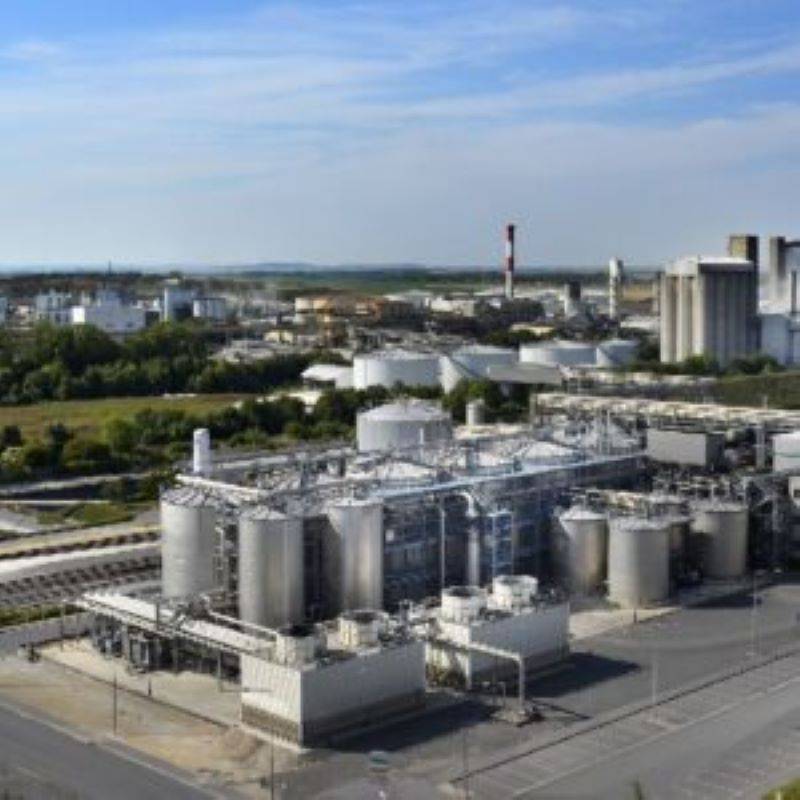
Core Viewpoint - The launch of the KunNing SenTai dairy production base in Shizuishan, Ningxia, marks a significant advancement in the local dairy industry, transitioning from quality milk supply to comprehensive deep processing [1] Group 1: Project Overview - The KunNing SenTai production base has a total investment of 300 million yuan and covers an area of 150 acres, with an annual production capacity of 200,000 tons of dairy products [1] - The facility includes two intelligent production workshops for milk powder and liquid milk, capable of producing 20,000 tons of whole milk powder and 600,000 tons of liquid milk annually [1] - Three production lines are dedicated to providing customized milk products for well-known brands [1] Group 2: Technological Advancements - The newly established KunNing SenTai Dairy Product Deep Processing Technology Key Laboratory will facilitate innovation across the entire chain, from lactoferrin extraction to cheese product development [1] Group 3: Industry Growth - Shizuishan has introduced five processing enterprises, including KunNing SenTai, and established multiple specialized production lines, achieving a total designed processing capacity of 140,000 tons [1] - The city has adopted advanced technologies such as 5G smart farming and sex-controlled breeding, achieving a 100% rate in both dairy cow breeding quality and mechanized milking [1] - The annual milk yield per core herd cow exceeds 10.2 tons, with dairy cow stock reaching 131,900 heads and milk production hitting 516,800 tons by the third quarter of 2025, representing year-on-year growth of 12.2% and 15.9% respectively [1] Group 4: Future Plans - The Shizuishan Agricultural and Rural Bureau plans to further optimize the industrial layout, enhance technological support, and promote coordinated development across feed planting, smart farming, and deep processing [1]
24小时已过,中方收费准时开始,卢拉通知欧盟:再不签协议就晚了
Sou Hu Cai Jing· 2025-12-26 06:15
Core Viewpoint - China has implemented a temporary anti-subsidy tax of up to 42.7% on dairy products from the EU, signaling a strong response to perceived unfair trade practices and agricultural subsidies that undermine local industries [6][10][30] Group 1: China's Response - Starting December 23, 2025, all dairy products from the EU, including whole milk powder, skim milk powder, whey protein, and cheese, will be subject to a temporary anti-subsidy tax guarantee [6][10] - This measure is a significant escalation compared to previous diplomatic protests and symbolic resistances, indicating a more robust approach to trade disputes [10][30] - The anti-subsidy tax is aimed at countering the EU's agricultural subsidies, which have historically allowed EU dairy products to be sold at lower prices in China, threatening local dairy producers [8][10] Group 2: EU Agricultural Policy Critique - The EU's Common Agricultural Policy has relied on substantial subsidies, amounting to hundreds of billions of euros annually, creating an unfair competitive advantage for EU farmers [8][10] - The subsidies lead to artificially low production costs, which, when exported, disrupt local markets in countries like China [8][10] - China's actions are framed as a challenge to the EU's narrative of "fair trade," exposing the hypocrisy of using subsidies while promoting high environmental standards [10][26] Group 3: Broader Implications for Global Trade - The coordinated actions of China and Brazil against the EU represent a collective awakening among Southern countries, challenging the existing trade order that has favored Western nations [4][19][21] - Brazil's President Lula has criticized the EU for delaying free trade negotiations under the guise of environmental concerns, reflecting a broader discontent among developing nations [14][19] - This situation highlights a shift in global trade dynamics, where emerging markets are asserting their rights and demanding a more equitable trading environment [21][30] Group 4: Future Trade Landscape - The recent actions by China and Brazil signal a move towards a new global trade order that prioritizes mutual respect and equality among nations [21][30] - There is a growing recognition that the rules of trade must evolve to include the voices of developing countries, rather than being dictated solely by Western powers [23][30] - The response from China and Brazil indicates a strategic adjustment in how Southern countries engage with global trade, moving away from passive acceptance of existing rules [30][31]

现货行情第45周|需求低迷国产全脂降价,爆品拉动无水奶油上涨
Xin Lang Cai Jing· 2025-11-09 06:47
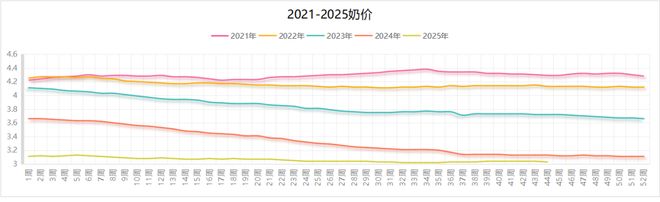
Group 1 - The average purchase price of fresh milk in major production areas such as Inner Mongolia and Hebei is 3.03 yuan per kilogram, down 0.3% month-on-month and 2.9% year-on-year [1] - The domestic market for whole milk powder is experiencing a decline in prices due to low demand, with major manufacturers facing slow sales and inventory issues [20] - The price of imported skim milk powder remains stable, supported by auction performance, while domestic skim milk powder is tentatively declining but overall supply is balanced [20] Group 2 - New Zealand's major manufacturers are facing pressure with lower-than-expected signing rates for whole milk powder, indicating potential supply challenges in the future [9] - The market for cream cheese is becoming saturated, leading to sporadic sell-offs as domestic production increases [20] - The demand for concentrated whey protein is strong, with New Zealand's signing rates high, suggesting limited short-term price reduction intentions [21] Group 3 - The average price of corn in China is 2.46 yuan per kilogram, down 0.8% week-on-week but up 2.5% year-on-year, indicating a mixed trend in agricultural commodity prices [19] - The international dairy market is experiencing a downturn, with all dairy futures in the US showing declines, reflecting broader market challenges [12] - The recent ceasefire in Gaza and ongoing geopolitical tensions are impacting global oil prices, which may indirectly affect agricultural and dairy commodity markets [13]


2025年前7月乌拉圭乳制品出口同比增长11%
Shang Wu Bu Wang Zhan· 2025-08-19 16:00
Core Insights - Uruguay's dairy product exports increased by 11% year-on-year in the first seven months of 2025, reaching $504.4 million [2] Summary by Category Export Performance - The main dairy products exported included whole milk powder, skim milk powder, butter, and cheese, with whole milk powder seeing a 16% increase to $333.2 million, skim milk powder increasing by 1% to $31.6 million, and butter rising by 21% to $41.9 million, while cheese experienced a decline of 22% to $5.08 million [2] - Whole milk powder remains the dominant export product, accounting for 75.8% of total export volume and 66.1% of export value [2] Major Markets - Brazil and Algeria were the primary export destinations, each representing 31% of the total export value [2]
中国飞鹤中报业绩预降 | 国产奶粉行业乍暖还寒
Xin Lang Cai Jing· 2025-07-21 01:22
Core Viewpoint - China Feihe's performance forecast reveals significant challenges in the domestic milk powder industry, with expected revenue and net profit declines indicating a broader industry crisis [5][6][8] Company Summary - China Feihe anticipates a revenue of approximately 9.1 to 9.3 billion yuan for the first half of the year, representing a year-on-year decline of 7.87% to 9.86% [5] - The company's net profit is projected to be around 1 to 1.2 billion yuan, down 37.17% to 47.64% year-on-year, marking the lowest performance in five years [5] - Following the announcement, Feihe's stock price dropped over 18% at one point, closing down 17.02%, resulting in a market value loss of nearly 8.8 billion HKD in a single day [5] - To restore market confidence, Feihe announced a share buyback plan of at least 1 billion yuan, aiming to repurchase up to 10% of its total shares [5][6] Industry Summary - The decline in Feihe's performance highlights a systemic issue within the domestic milk powder industry, exacerbated by low birth rates and intense competition [6][12] - The industry is grappling with a price war initiated by various companies offering substantial subsidies to consumers, which has led to revenue declines across the sector [8][10] - High inventory levels remain a significant challenge, with Feihe's inventory valued at 2.154 billion yuan and a turnover period of 114 days, indicating a broader issue of excess stock across the industry [10] - The milk powder market has seen a contraction, with industry scale declining by 5% and 10% in 2022 and 2023, respectively, as a result of falling birth rates [12][14] - Companies are shifting focus towards high-end products, with the high-end market segment holding a 56.4% share of the domestic infant formula market, despite overall market contraction [14][16] Competitive Landscape - The competition is evolving from quantity-based growth to value-based competition, with companies focusing on precise nutritional offerings and technological advancements [16][18] - Major players are investing in adult nutrition products and exploring international markets to mitigate the impact of declining birth rates domestically [18] - The future success of domestic milk powder companies hinges on their ability to innovate and differentiate their products beyond reliance on birth rate fluctuations [18]
全球及中国中老年营养奶粉行业项目规划及前景动态分析报告2025-2031年
Sou Hu Cai Jing· 2025-06-11 16:40
Core Insights - The report analyzes the global and Chinese market for senior nutritional milk powder, projecting trends and developments from 2025 to 2031 [1][3]. Market Overview - The senior nutritional milk powder industry is categorized into various product types, including whole milk powder and skim milk powder [4]. - The market is segmented by application, with significant growth expected in both online and offline sales channels [4]. Industry Development Status - The overall development of the senior nutritional milk powder industry is characterized by specific trends and influencing factors, including both favorable and unfavorable elements [4][8]. - Barriers to entry in the industry are also discussed, highlighting challenges for new entrants [4]. Supply and Demand Analysis - Global supply and demand dynamics for senior nutritional milk powder are forecasted from 2020 to 2031, including production capacity, output, and utilization rates [4][12]. - The report provides insights into the production and demand trends specifically for the Chinese market [4][12]. Revenue and Sales Trends - The report details revenue and sales volume trends for senior nutritional milk powder globally and in China from 2020 to 2031, with projections for future growth [4][12]. - Price trends for senior nutritional milk powder are also analyzed, indicating market pricing dynamics [4][12]. Regional Analysis - The report includes a comprehensive analysis of major regions, including North America, Europe, Asia-Pacific, Latin America, and the Middle East & Africa, focusing on sales volume and revenue [4][12]. - Specific data on production and consumption distribution within China is provided, highlighting key regions [12]. Competitive Landscape - The competitive landscape of the global market is examined, detailing market share and revenue of leading manufacturers [4][12]. - The report identifies major players in the industry, including Nestlé, Abbott, Danone, and others, along with their market positions and product offerings [4][12]. Product Type and Application Analysis - Different product types and their respective sales volumes and revenue are analyzed, with forecasts for future market shares [4][12]. - The report also discusses various applications of senior nutritional milk powder, providing insights into market segmentation [4][12].
天润乳业净利润陷历史新低,收购资产时机不佳
Xin Jing Bao· 2025-05-09 15:39
Core Viewpoint - Xinjiang Tianrun Dairy Industry Co., Ltd. has reported significant declines in net profit, with a 69.24% drop in 2024 and a loss of 73.30 million yuan in Q1 2025, marking the lowest performance in nearly a decade [1][3][2] Financial Performance - In Q1 2025, Tianrun Dairy's revenue was 625 million yuan, down 2.5% year-on-year, with a net profit loss of 73.30 million yuan, a staggering decline of 1713.36% [2] - For the full year 2024, the company reported revenue of 2.804 billion yuan, a 3.33% increase, but net profit fell to 43.66 million yuan, a 69.26% decrease [3] - The decline in net profit is attributed to increased culling of low-yield cows and inventory impairment provisions for milk powder [2][3] Market Conditions - The dairy and cattle farming industries are facing challenges, with a 3.5% year-on-year decrease in national cattle inventory and a 12.3% drop in fresh milk prices in major producing provinces [2] - The company is experiencing a phase of oversupply in milk sources and intensified market competition, prompting it to optimize its core herd and explore new sales channels [2][3] Acquisition Impact - The acquisition of Xinjiang New Agricultural Dairy Co., Ltd. has significantly impacted Tianrun Dairy's profits, with a reported loss of 95.35 million yuan attributed to this acquisition in 2023 [4][5] - New Agricultural Dairy's performance has been poor post-acquisition, with losses continuing into 2024, further straining Tianrun Dairy's financials [5][6] Strategic Focus - Despite challenges, Tianrun Dairy's revenue from markets outside Xinjiang has shown growth, with 2024 figures indicating a 9.25% increase in revenue from these markets [7][8] - The company aims to leverage its advantages in Xinjiang's milk sources to build a robust product matrix and industry system [10]
