火锅丸子

Search documents
中泰证券:餐饮细分精耕效率 餐供定制扩容可期
智通财经网· 2026-01-28 03:56
Group 1 - The report from Zhongtai Securities analyzes the restaurant industry chain, highlighting that the upstream raw material sector is fragmented with weak bargaining power, resulting in low added value and efficiency [1] - The downstream restaurant sector is experiencing high rates of openings and closures, leading to rapid industry reshuffling, while high labor costs and talent turnover are constraining chain expansion [1] - Midstream catering companies are focusing on independent research and development to provide one-stop solutions for downstream clients, enhancing their profit margins and promoting the development of restaurant brands, with trends in hot pot balls, frozen baking, and cold chain logistics showing concentration and demand expansion [1] Group 2 - Current consumer attitudes in China are shifting from consumption upgrades to a focus on cost-effectiveness, with a growing preference for local brands and a shift towards health-conscious eating [2] - The future development paths for China's restaurant industry may include high-quality affordable options, automation and smart technology in kitchens to mitigate talent shortages, and a focus on niche markets to cater to diverse consumer needs [2] - These trends are expected to benefit catering supply chain companies that provide kitchen equipment and standardized semi-finished products [2]

餐饮细分精耕效率,餐供定制扩容可期
ZHONGTAI SECURITIES· 2026-01-28 00:25
Investment Rating - The report maintains an "Overweight" rating for the industry [4] Core Insights - The restaurant industry is experiencing a slowdown in revenue growth, with a shift towards efficiency in operations and a focus on customized meal supply [6][32] - The report identifies three potential development paths for the restaurant industry: high-quality and affordable offerings, automation and smart technology, and a focus on niche markets to meet diverse consumer needs [32][33] Summary by Sections Macro Perspective on Restaurant Trends - China's residents primarily rely on wage income, leading to a lower consumption tendency compared to developed countries [9][13] - The overall consumption inclination is affected by significant income inequality, with the top 1% of the population holding a substantial share of wealth [13][15] - The restaurant industry's revenue growth is expected to slow down significantly by 2025, with a notable decline in average spending per customer [15][17] Population Dynamics - China's total population has entered a phase of negative growth, with a significant concentration of young people in economically vibrant cities [18][20] - The labor force participation rate is declining, while the dependency ratio is increasing, indicating demographic challenges for the industry [20][23] Opportunities in the Restaurant Sector - The report draws parallels with Japan's consumption evolution, suggesting that China's restaurant industry can learn from Japan's experiences [31] - The three identified paths for growth include offering high-quality products at lower prices, leveraging automation, and focusing on specific consumer segments such as single-person households and the elderly [32][33] Restaurant Supply Chain Insights - The restaurant supply chain is complex, involving multiple stages from raw material procurement to end-user sales [33] - The market for restaurant supply chains is projected to grow, with an expected market size of 2.6 trillion yuan in 2024, reflecting an 8.1% year-on-year increase [35][36] Market Structure and Competition - The restaurant market is characterized by high closure rates and a fragmented landscape, with many small-scale chains dominating the market [37][38] - The supply side is marked by a lack of concentration, leading to weak bargaining power for suppliers [38] Labor Market Challenges - The restaurant industry faces rising labor costs and high turnover rates, with significant implications for operational efficiency [43][46] - The introduction of smart devices and semi-finished products is seen as a strategy to mitigate labor challenges and enhance efficiency [46][48]





成都45分钟直达!这座藏着三星堆的宝藏小城,才是真正的“益州门户”
Sou Hu Cai Jing· 2026-01-10 04:32
Core Insights - The article emphasizes the hidden charm of Guanghan, a city near Chengdu, which is often overshadowed by the famous Sanxingdui archaeological site. It highlights the importance of exploring Guanghan beyond just visiting Sanxingdui to fully appreciate its cultural and historical significance [1][24]. Group 1: Understanding Guanghan - Guanghan is a county-level city in Sichuan Province, located 45 kilometers from Chengdu, and is known as the "open-air museum" of ancient Shu civilization. It has a rich history dating back to the Western Han Dynasty and has undergone various administrative changes [3][11]. - The city is characterized by its unique blend of cultural influences from both Chengdu and Deyang, resulting in a distinctive local culture and cuisine [3][11]. Group 2: Sanxingdui Insights - Sanxingdui is recognized as a world-class archaeological site, featuring remarkable artifacts such as the bronze trees and masks that challenge conventional understanding of ancient civilizations [6][8]. - Visitors are advised to explore the archaeological site before the museum to enhance their understanding of the ancient Shu civilization, as the site provides a contextual backdrop for the artifacts displayed in the museum [7][8]. Group 3: Additional Attractions in Guanghan - Guanghan is not limited to Sanxingdui; it also boasts historical sites like the ancient military stronghold of Luocheng, which played a significant role during the Three Kingdoms period [12][11]. - The city is recognized as a pioneer in rural reform in China, with historical significance tied to the implementation of the "household responsibility system" in the late 1970s [13][11]. - Guanghan is home to the Civil Aviation Flight University of China, known as the "Huangpu Military Academy" of civil aviation, which trains a significant number of China's pilots [15][11]. Group 4: Culinary Highlights - Guanghan is renowned as the "capital of hot pot ingredients" in China, with a thriving market for fresh and affordable hot pot supplies, making it a paradise for food lovers [16][11]. - Local delicacies such as Chansi Rabbit and Lianshan Twice-Cooked Pork are must-try dishes that reflect the region's culinary richness [16][11]. Group 5: Travel Recommendations - The article suggests tailored travel itineraries for different demographics, including families, couples, seniors, and young adults, ensuring that each group can enjoy a fulfilling experience in Guanghan [16][20][22]. - Visitors are encouraged to spend more time in Guanghan to explore its local culture, cuisine, and historical sites, rather than treating it merely as a stopover [24][26].

穿透锅圈食汇“增长神话”,品牌与加盟商的2025冷暖鸿沟
Xin Lang Cai Jing· 2025-12-30 02:47
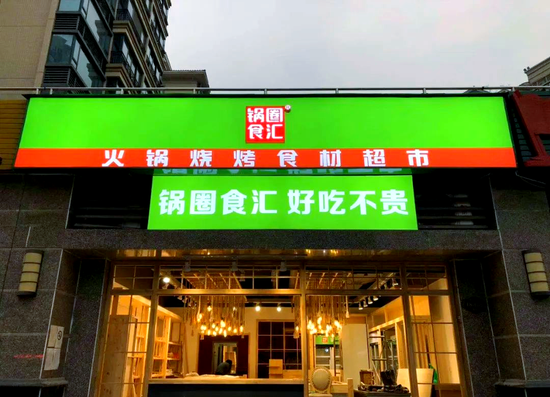
Core Viewpoint - The company must reconstruct a win-win model with franchisees, optimize the supply chain, control prices, and strengthen food safety measures to alleviate its current survival predicament in the context of a challenging hot pot industry landscape in 2025 [2][32]. Group 1: Industry Overview - The hot pot industry is experiencing a dual scenario of decline and growth, with a significant drop in new registrations of hot pot enterprises, only 22,000 in the first half of 2025 compared to 50,000-100,000 annually from 2021 to 2024 [33]. - Despite the industry's downturn, the company is projected to achieve revenue of 1.85-2.05 billion yuan in Q3 2025, representing a year-on-year growth of 13.6%-25.8% [33]. - The company's stock price has nearly doubled from 1.57 HKD per share in January 2025 to 4.44 HKD in November 2025, reflecting a 98.1% increase [33]. Group 2: Franchisee Challenges - Franchisees face three main challenges: significant regional differences in dietary preferences, food safety issues eroding consumer trust, and limitations in the hot pot category that hinder new business exploration [35]. - Many franchisees report a drastic decline in daily sales during peak seasons, with some stores earning only a few hundred yuan, leading to unsustainable losses due to high fixed costs [37][38]. - The competitive pricing of external hot pot restaurants has diminished the appeal of the company's at-home hot pot offerings, with consumers increasingly opting for cheaper alternatives [38]. Group 3: Market Dynamics - The average consumer spending on hot pot has decreased from over 80 yuan to around 70 yuan by the end of 2024, with leading brands also experiencing a drop in average transaction values [39]. - The company’s internal competition has intensified due to the rapid opening of new stores, leading to customer traffic dilution and unhealthy competition among franchisees [41]. - The target demographic of young consumers is increasingly absent from county and town markets, as many have migrated for education or work, leaving behind a primarily older demographic with different consumption habits [42]. Group 4: Strategic Responses - The company has implemented several strategies to address its challenges, including expanding its product offerings, enhancing online and offline marketing efforts, and investing in smart store technologies [45][46]. - Despite these efforts, franchisees report a decline in overall profit margins, with many experiencing a drop to 15%-20% due to high delivery platform fees and operational conflicts arising from diverse retail scenarios [46][47]. - The company’s reliance on frozen and pre-packaged foods is increasingly at odds with consumer preferences for fresh and made-to-order meals, further complicating its market position [48]. Group 5: Industry Pressures - The frozen food industry is facing a downturn, with many companies reporting declining revenues and profits, exacerbating competitive pressures on the company [54][55]. - The shift towards direct-to-consumer sales by frozen food manufacturers is undermining the company's traditional distribution model, making it harder to maintain price competitiveness [55]. - Franchisees are burdened by stringent performance metrics and penalties imposed by the company, which further complicates their operational challenges [27].
南农晨读丨静守畲风
Nan Fang Nong Cun Bao· 2025-10-26 11:32
Group 1 - The 2026 National Civil Service Examination in Guangdong has attracted nearly 330,000 applicants, with a total of 3310 positions available [4][5] - As of the deadline for registration, 289,616 candidates have passed the initial qualification review, while 39,971 are still pending [6] Group 2 - Guangdong Province has released 16 measures to support the high-quality development of the low-altitude economy, aiming to establish itself as a leading hub for this industry [9][10][11] Group 3 - The "Xinjiang Products Southward, Guangdong Products Northward" red date ordering event resulted in contracts for a total of 25,000 tons, marking a significant connection between local red date production and market demand [14][18] Group 4 - At the 138th Canton Fair, 76 quality enterprises from Xinjiang showcased their products, promoting the "Xinjiang Products Southward" initiative and expanding economic ties between Guangdong and Xinjiang [20][23] Group 5 - The 2025 Global High-end Food and Quality Agricultural Products Expo concluded successfully, with over 50 enterprises from Shanwei participating and achieving significant sales [26][28] Group 6 - The second spring sowing grain competition in Longchuan County recognized outstanding contributions, with awards for best yield and contributions to fallow land recovery [32][35][36] Group 7 - Longchuan County has implemented a "Media+" initiative with 12 measures to promote the high-quality development of its camellia oil industry [46][48] Group 8 - Shenzhen-based Yuanju Food Company has gained over 3 million online followers, successfully marketing its frozen food products across multiple provinces and major retail chains [50][52]

速冻米面失速,三全食品遭遇业绩“双降”危机,巨资海外建厂能否打破增长桎梏
Zheng Quan Zhi Xing· 2025-07-25 02:12
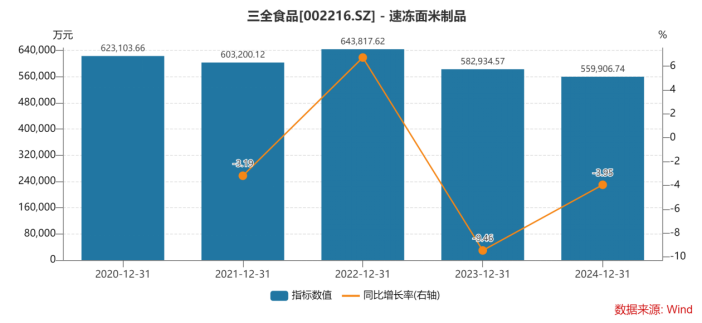
Core Viewpoint - The frozen food industry is facing significant challenges in 2024, with Sanquan Foods experiencing a decline in both revenue and net profit for the second consecutive year, marking a notable downturn since its IPO in 2008 [1] Group 1: Financial Performance - In 2024, Sanquan Foods' revenue decreased by 6% to 6.632 billion yuan, while net profit fell by 27.64% to 542 million yuan [1] - The company reported its worst first-quarter performance since 2021, continuing the trend of declining earnings [1] - The revenue from frozen staple foods, which has historically contributed over 80% to the company's income, has shown significant volatility from 2020 to 2024 [2][4] Group 2: Market Dynamics - The decline in revenue for frozen staple foods is attributed to weak consumer demand, a decline in supermarket channels, and intensified industry competition [1] - The sales volume of frozen staple foods saw a slight increase, but revenue fell nearly 4% year-on-year, indicating a strategy of price reduction to maintain market share [1] - The core products "tangyuan, dumplings, and zongzi" experienced revenue fluctuations, with declines of -8.07%, 3.92%, -15.74%, and -5.84% from 2021 to 2024 [4] Group 3: Product and Channel Strategy - Despite a 2.04% increase in sales volume for frozen staple foods, revenue decreased by 3.95%, highlighting a "volume increase but weak profit" scenario [5] - The company is attempting to diversify its product offerings and has launched new series of dumplings and tangyuan in 2024 [9] - Sanquan Foods is also focusing on e-commerce, which saw a revenue increase of 58.5% in 2024, although it still represents less than 6% of total revenue [5][9] Group 4: International Expansion - In response to domestic market pressures, Sanquan Foods plans to invest in a production base in Australia and expand into markets in Australia, New Zealand, and Southeast Asia [11] - The planned investment for the overseas production base is approximately 2.8 billion Australian dollars (about 1.32 billion yuan), which poses challenges related to consumer preferences, supply chain integration, and regulatory compliance [11]