
减肥茶

Search documents
减肥是个事儿
Xin Lang Cai Jing· 2026-02-07 06:20
Core Viewpoint - The article discusses the long-standing issue of weight gain among Beijing residents during festive seasons, particularly focusing on the evolution of weight management and dieting trends since the 1980s [1][16]. Historical Context - In the 1980s, the concept of weight management began to gain traction in Beijing, with citizens starting to recognize the importance of controlling their weight [13]. - By 1985, 31.9% of the population was classified as overweight or obese, indicating a growing concern about weight issues [13]. Emergence of Dieting Trends - The term "dieting fever" first appeared in 1987, marking the beginning of a widespread interest in weight loss solutions among the population [14]. - By 1991, there were over ten types of weight loss medications available in the market, reflecting the increasing demand for weight management products [14]. Public Health Initiatives - In 2009, Beijing launched a decade-long health promotion plan aimed at combating obesity, highlighting the government's commitment to addressing public health concerns related to weight [15]. Current Observations - Despite decades of efforts, the article questions how many individuals who started dieting in the 1980s have successfully managed their weight, suggesting that the struggle with obesity continues [16].


警惕“神奇功效”减肥茶的“速效陷阱”
Xin Lang Cai Jing· 2025-12-29 04:48
Core Viewpoint - The Hunan Provincial Market Supervision Administration has issued a consumer alert regarding the risks associated with functional foods claiming to "cleanse the intestines" and "aid in weight loss," highlighting the illegal addition of senna leaves in these products, which pose health risks to consumers [1][2]. Group 1: Risks of Illegal Additives - The high-risk product categories for illegal addition of senna leaves are primarily those claiming "laxative," "weight loss," and "detoxification," with the highest risk found in substitute teas and weight loss teas, where 90% of illegal addition cases are concentrated [2] - Other products such as enzyme plums and fiber gummies also present significant risks, targeting different consumer groups with misleading claims of "natural fermentation" and "zero-calorie snacks" [2] - Solid beverages, tablet candies, and functional drinks are also at risk, often misleading consumers with false advertising about "imported ingredients" and "no additives," while concealing illegal components like senna leaf extracts [2] Group 2: Consumer Awareness and Identification - Consumers can identify and prevent the purchase of products containing illegal additives by looking for key indicators, such as claims of "3-day laxative" or "7-day detox," which likely indicate illegal additions [2] - To verify product safety, consumers should check for the "blue hat" symbol and the "National Food Health Registration" number on health foods, as ordinary foods claiming health benefits are illegal [3] - It is recommended to purchase from reputable pharmacies, large supermarkets, or official online stores to ensure product traceability and after-sales support, while avoiding high-risk channels like personal purchases and unregulated online platforms [3]
AI换脸第一刀砍向明星,杨幂全红婵都中招
3 6 Ke· 2025-11-17 12:00
Core Viewpoint - The rise of AI-generated impersonations of celebrities has created a significant threat to both individual rights and the integrity of the digital ecosystem, leading to widespread scams and erosion of trust in online interactions [2][17][44] Group 1: AI Impersonation Incidents - Celebrity impersonations using AI technology have proliferated, targeting individuals with public recognition, including actors and athletes, resulting in a pyramid-like gray traffic ecosystem [2][17] - The case of actress Wen Zhengrong highlights the issue, as she was impersonated in multiple live streams simultaneously, leading to confusion among fans [12][25] - Other celebrities, such as Li Zimeng and Olympic champions, have also been victims of AI impersonation, with fake accounts promoting fraudulent products [13][16] Group 2: Impact on Trust and Consumer Behavior - The AI impersonation phenomenon has led to a significant breach of trust, as fans are misled into believing they are interacting with their idols, resulting in financial losses [18][20] - Many victims, particularly older individuals, are easily deceived by the realistic AI-generated content, leading to impulsive purchases of low-quality products [21][24] - The emotional manipulation employed by these AI impersonators exploits the trust fans place in their favorite celebrities, making it a highly effective scam strategy [19][20] Group 3: Regulatory and Platform Responses - Platforms like Douyin have initiated actions against impersonation, including the removal of thousands of fraudulent accounts and products, but challenges remain in effectively identifying and managing AI-generated content [28][43] - Despite existing regulations, enforcement is difficult due to the rapid evolution of AI technology and the complexity of the digital landscape [42][44] - The need for clearer legal frameworks and responsibilities among technology providers, content creators, and platforms is critical to combat the misuse of AI in impersonation and fraud [43][44] Group 4: The AI Impersonation Industry - A black market for AI impersonation services has emerged, offering tools for creating realistic fake identities at low costs, further complicating the issue [36][39] - The industry encompasses various stages, from data acquisition to content generation and application in scams, creating a closed-loop profit system [36][43] - The availability of AI tools and services for impersonation highlights the urgent need for consumer awareness and protective measures against such fraudulent activities [38][44]
中消协:第三季度共受理消费者投诉536761件
Zhong Guo Xin Wen Wang· 2025-11-07 06:56
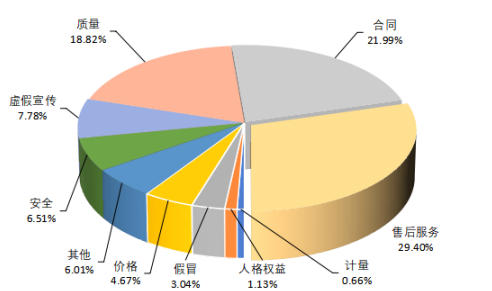
Core Points - The China Consumers Association reported a total of 536,761 consumer complaints in the third quarter of 2025, representing a year-on-year increase of 7.9% [1] - A total of 274,427 complaints were resolved, recovering economic losses of 236 million yuan for consumers [1] - The number of consumer visits and consultations reached 155,900 [1] Complaint Nature Analysis - After analyzing the nature of complaints, after-sales service issues were the most prominent, accounting for 29.4% of total complaints [2] - Compared to the third quarter of 2024, complaints regarding false advertising, safety, and contract issues increased, while complaints about after-sales service, quality, and measurement decreased [4] Complaint Classification by Issues - In the third quarter of 2025, complaints related to after-sales service totaled 157,786, representing 29.4% of total complaints, while contract-related complaints were 118,043 (21.99%) [5] - Quality complaints accounted for 101,001 (18.82%), and false advertising complaints were 41,739 (7.78%) [5] Product and Service Category Analysis - Product-related complaints totaled 283,263, making up 52.77% of total complaints, while service-related complaints were 231,542 (43.14%) [6] - The top five categories for product complaints included home electronics, daily goods, food, clothing, and transportation tools [6] - For service complaints, the leading categories were life and social services, internet services, education and training services, cultural and entertainment services, and sales services [6] Complaint Hotspots and Typical Cases - The rise of the trendy toy economy has led to significant complaints regarding product quality and after-sales service, particularly in blind box and figurine purchases [11] - Complaints about misleading advertising and safety issues in the weight loss product market have also surged, with many consumers reporting adverse health effects [15] - Pet consumption disputes have increased, with issues such as hidden health problems and misleading marketing practices being reported [19] - Complaints related to overseas travel services have highlighted shortcomings in information accuracy and service fulfillment by travel platforms [23] - The issue of automatic renewal services continues to rise, with complaints about hidden terms and lack of cancellation options [27] - Complaints regarding smart driving technology have emerged, focusing on performance limitations and lack of transparency in data sharing [31] - A significant increase in complaints about power banks has been noted, particularly concerning product recalls and safety concerns [37] - Insurance consumption complaints have risen, with issues related to misleading marketing and unauthorized automatic renewals being prevalent [38]
2025年中国体重管理食品行业概览:近80%执行难?科学营养配比,让体重管理事半功倍
Tou Bao Yan Jiu Yuan· 2025-09-25 12:37
Investment Rating - The report does not explicitly provide an investment rating for the industry Core Insights - The Chinese weight management food industry is transitioning from a rough development phase to a scientific and precise approach, driven by the increasing obesity rates and the need for effective health solutions [5][6][7] - The market is expected to grow significantly, with a projected increase from 18.03 billion yuan in 2020 to 98.96 billion yuan in 2024, reflecting a compound annual growth rate (CAGR) of 53.1% [37] - By 2029, the market size is anticipated to reach 386.37 billion yuan, with a CAGR of 26.1% [37] Summary by Sections Industry Overview - The weight management food industry in China focuses on controlling calorie intake and optimizing nutritional balance to cater to various weight loss needs [4] - The industry has evolved from simple weight loss products to comprehensive scientific solutions, supported by policies, standards, and technological innovations [4][5] Industry Chain Analysis - The industry operates on a three-tier structure: upstream suppliers provide raw materials, midstream manufacturers produce the food products, and downstream channels reach consumers [41][43] - Upstream suppliers include traditional herbal ingredients and modern nutritional components, while midstream manufacturers focus on product development and quality control [45][43] Competitive Landscape - The market exhibits a differentiated competition structure, with leading companies leveraging brand and R&D advantages, while traditional brands maintain steady growth through established channels [6][68] - The industry is shifting from homogeneous competition to value innovation, with a focus on functional segmentation and personalized services as new growth points [68][69] Development Trends - The industry is moving towards a comprehensive health solution model that integrates scientific formulations, personalized services, and digital ecosystems [71] - Future trends indicate a growing demand for personalized nutrition interventions and multi-target efficacy verification, alongside the establishment of a robust online and offline distribution system [37][71]
不可小觑的“瘦身经济”
Zheng Quan Shi Bao· 2025-07-10 18:33
Group 1: Obesity and Health Impact - The obesity rate among adults in China exceeds 50%, with over 400 million affected, making it the highest globally. If not controlled, the rate could reach 70.5% by 2030 for adults and 31.8% for children [1] - The financial burden of obesity-related health issues could reach 420 billion yuan annually by 2030, accounting for over a quarter of the national healthcare expenditure [1] Group 2: Market Opportunities in Weight Management - The demand for weight loss has led to a diverse industry, including meal replacement foods, weight loss teas, and functional health products. The fitness service sector is also thriving, with numerous gyms and weight loss centers emerging [2] - The market for weight loss and body shaping in China is projected to grow to 62 billion yuan by 2024, representing 28% of the overall medical beauty market [2] Group 3: Consumer Behavior and Economic Phenomena - Different consumer behaviors in weight loss illustrate economic principles, with some individuals spending significantly on fitness services and products without achieving desired results, highlighting a lucrative market for businesses targeting these consumers [3] - Psychological costs associated with weight loss efforts can lead to increased emotional distress, which may require medical attention, indicating a potential market for psychological support services related to weight management [4] Group 4: Broader Economic Context - The rise of artificial intelligence has led to job losses across various sectors, including technology and finance, which may influence consumer spending habits and contribute to lifestyle changes, including dietary choices [5] - The transformation of shopping centers into food-centric spaces reflects changing consumer preferences, with dining options dominating commercial areas, potentially exacerbating obesity trends [5]