
华为AI玩具

Search documents
2026年中国资本市场展望:A股怎么看?怎么配?|资本市场
清华金融评论· 2025-12-21 09:38
Core Viewpoint - The A-share market is expected to continue its bull market, driven by strong macroeconomic policies, industrial transformation, capital market reforms, and sustained inflow of funds, despite potential short-term fluctuations [10][15]. Group 1: A-share Market Performance - In 2025, the A-share market experienced a significant bull market, with the Shanghai Composite Index rising from approximately 3200 points at the beginning of the year to around 3900 points by year-end, reflecting a robust upward trend [7]. - The market saw an 8.5% increase in the first quarter, followed by a strong rebound after a brief panic due to a tariff war, with the index reaching 3350-3400 points [7]. - By the third quarter, the index surged from 3400 points to over 3900 points, marking a cumulative increase of 12.7% [7]. Group 2: Supporting Factors for the Bull Market - Macroeconomic policies are expected to remain supportive, with a focus on stabilizing the economy through proactive fiscal policies and moderately loose monetary policies [10]. - The ongoing industrial transformation is anticipated to release new growth momentum, with emerging sectors such as AI, renewable energy, and advanced manufacturing becoming increasingly prominent in the A-share market [11]. - Capital market reforms are deepening, enhancing resource allocation efficiency and improving investor returns through measures like regularized delisting and increased dividend payouts [12]. Group 3: Sector Opportunities - The technology growth sector, particularly AI, energy storage, and aerospace, is highlighted as a key investment focus, with AI expected to be the leading investment theme in 2026 [22]. - The energy storage sector is projected to experience significant growth, driven by increasing demand from AI data centers and improvements in supply chain dynamics [29]. - The commercial aerospace industry is entering a rapid development phase, supported by favorable policies and growing market demand for satellite internet and other applications [30]. Group 4: Metal Sector Insights - The performance of the non-ferrous metal sector is closely linked to metal prices, with significant price increases observed in copper, aluminum, and rare earth metals due to strong demand and supply constraints [33]. - Copper demand is expected to rise due to its critical role in AI infrastructure and energy transition, while supply remains constrained due to slow new capacity additions and geopolitical factors [34]. - The small metals sector, including rare earths and lithium, is anticipated to benefit from supply-demand tightness and increasing applications in various industries [36].


2026年中国资本市场展望:A股怎么看?怎么配?
Yuekai Securities· 2025-12-16 23:30
Market Overview - In 2025, A-shares experienced significant growth, with the total market capitalization exceeding 100 trillion yuan and the Shanghai Composite Index reaching a nearly ten-year high[1] - The ChiNext Index saw an annual increase of nearly 50%, with the technology sector surpassing the banking sector to become the largest industry by market capitalization[1] Economic Outlook for 2026 - The A-share market is expected to enter a "slow bull" phase in 2026, driven by macroeconomic policies, industrial transformation, and capital market reforms[2] - The core logic supporting the bull market remains solid, with expectations of continued inflows of capital and reduced overseas disturbances[2] Key Drivers of the Bull Market - Continuous macro policy support is anticipated to improve the economic fundamentals, with a focus on domestic demand and investment stabilization[3] - Rapid industrial transformation is expected to release new growth momentum, particularly in emerging sectors like renewable energy, aerospace, and biotechnology[3] - Deepening capital market reforms will enhance investor returns and improve market stability, with a focus on better resource allocation[3] Capital Inflows - Insurance funds are projected to increase their equity investments, with direct investments in stocks reaching 3.6 trillion yuan, accounting for 9.7% of their total assets[3] - There is a notable shift of household assets towards equity markets, with a significant reduction in new bank deposits and increased investments in ETFs and private equity[3] Sector Opportunities - The technology sector, particularly AI, is expected to be a primary investment focus in 2026, with significant growth in AI-related hardware and applications[3] - The energy storage sector is projected to grow substantially, with global demand for storage batteries expected to increase nearly 20 times from 15 GWh to over 300 GWh by 2030[3] - The commercial aerospace industry is entering a rapid development phase, supported by favorable policies and growing market demand for satellite internet and space tourism[3] Metal Sector Insights - The A-share metal sector has seen a 73.7% increase in 2025, with industrial metals like copper and aluminum expected to continue their upward trend due to supply-demand imbalances[3] - Copper demand is driven by AI infrastructure and energy transition, with a projected global shortage of 150,000 tons in 2026[3] - Precious metals like gold and silver have seen significant price increases, with silver prices rising 121.7% year-to-date, although future growth may slow[3]
这个板块“老树发新芽”,180亿资金闻风而动丨每日研选
Shang Hai Zheng Quan Bao· 2025-12-03 01:20
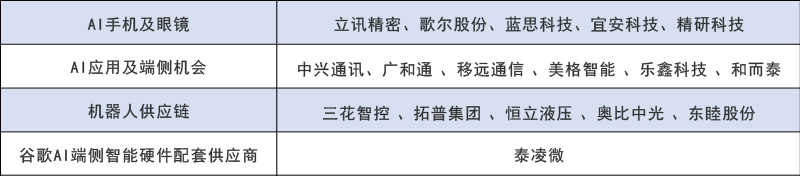
Core Insights - Apple is aggressively pursuing AI technology, competing with ByteDance, Google, and Alibaba, as the sector sees significant capital inflow, exceeding 18 billion yuan over six consecutive trading days [1] - The consumer electronics sector is experiencing a revival, driven by the integration of AI technology with smart hardware, leading to structural opportunities [1] - The global smartphone market is entering an AI-native era, with predictions of AI smartphone penetration rising from approximately 18% in 2024 to nearly 60% by 2029 [1] Group 1: AI Smartphone and Market Trends - The smartphone market is transitioning to an AI-native phase, with major brands like Apple and Huawei leveraging generative AI as a core selling point to shorten upgrade cycles [1] - AI smartphone shipment penetration is expected to increase significantly, indicating a robust growth trajectory for the sector [1] Group 2: AI Smart Glasses - AI smart glasses are emerging as a key platform for AI applications, with products like Ray-Ban Meta gaining market acceptance [2] - The decline in hardware costs and the maturation of the supply chain are expected to position AI glasses as the next major wearable product after TWS earbuds [2] Group 3: Robotics and Supply Chain Opportunities - Traditional consumer electronics component manufacturers are actively entering the robotics sector, driven by the high demand for precision components in humanoid robots [2] - Companies like Lens Technology are leveraging their manufacturing expertise to tap into the robotics supply chain, anticipating a significant increase in humanoid robot shipments [2] Group 4: Expanding AI Ecosystem - The AI ecosystem is continuously expanding, with Apple's Siri evolving towards an AI Agent model, potentially driving a wave of smartphone upgrades and AR glasses adoption [2] - Collaboration between terminal manufacturers and AI companies is enhancing ecosystem development, facilitating deeper integration of computing power, hardware, and application scenarios [2] Group 5: Investment Recommendations - Focus on AI smartphones and AR glasses penetration opportunities, recommending companies like Luxshare Precision, GoerTek, Lens Technology, Yian Technology, and Jien Technology [3] - Highlight AI applications and edge opportunities, with recommendations for ZTE, Guanghetong, and others [3] - Emphasize the robotics supply chain, identifying key suppliers like Sanhua Intelligent Controls and Top Group as potential beneficiaries [3] - Pay attention to Google AI edge hardware suppliers like Tailin Microelectronics, which are integrated into major platforms [3][4]

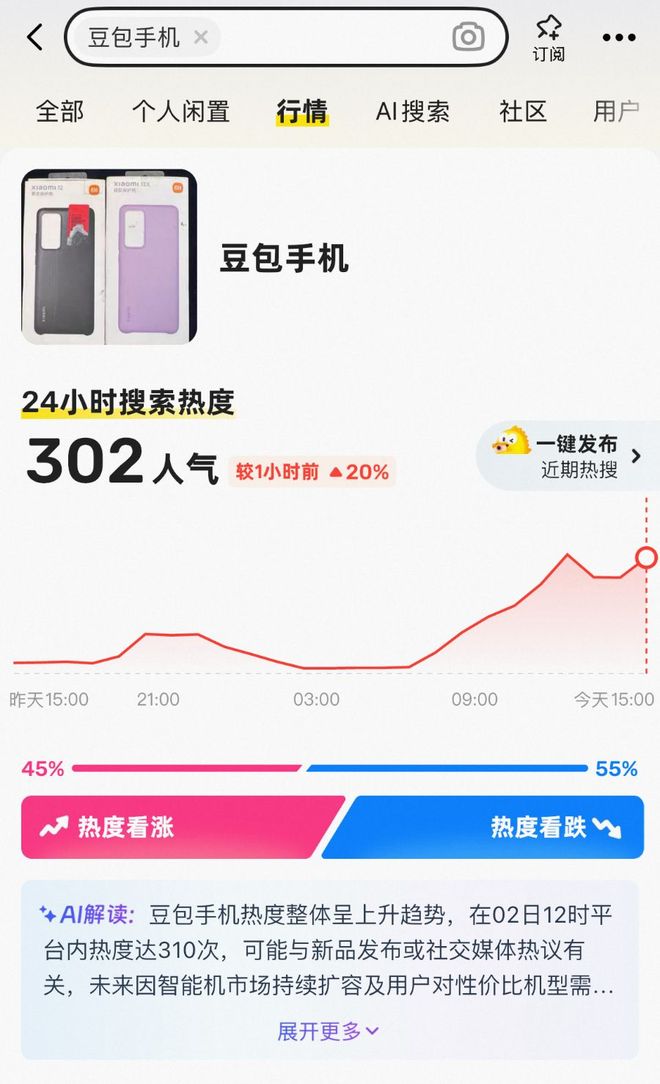
首款豆包AI手机售罄,有二手卖家标价超万元,租一天要价600元
21世纪经济报道· 2025-12-02 11:55
Core Insights - The "Doubao Assistant" phone, developed in collaboration with ZTE and ByteDance's AI model, has seen high demand, with prices on the second-hand market significantly exceeding the official retail price [1][3] - The phone features a unique AI integration that allows it to perform tasks like ordering food autonomously, showcasing advanced user interaction capabilities [3] - The limited availability of the phone has led to a secondary market for F-codes, which are necessary for purchase, further driving up demand and prices [3][4] Group 1: Product Overview - The "Doubao Assistant" phone is based on the Nubia M153 model and comes with a configuration of "16GB + 512GB" [3] - It has system-level operational capabilities, enabling it to understand user needs and perform actions like clicking and swiping on apps [3] - The phone is not widely available for direct purchase; interested buyers must apply for an F-code through a specific WeChat channel [3] Group 2: Market Dynamics - The secondary market for the F-code has emerged, with prices reaching around 80 to 300 yuan, indicating high demand for the phone [3][4] - Other smartphone manufacturers are also exploring partnerships with Doubao, although they currently have their own voice assistants [4] - The AI smartphone concept has gained traction, with the AI smartphone index rising over 8% in the past week, reflecting growing investor interest [4] Group 3: Industry Implications - The introduction of the Doubao Assistant phone, along with other AI products, is expected to reshape AI interaction models and accelerate AI application adoption [4] - Companies like ZTE and Guanghetong are seen as potential beneficiaries in the AI-driven market landscape [4] - Several stocks in the AI smartphone sector have doubled in value this year, indicating a robust market response to AI innovations [4]


3499元的“豆包助手”手机售罄,有二手平台卖家标价超万元
2 1 Shi Ji Jing Ji Bao Dao· 2025-12-02 10:45
Core Insights - The "Doubao Assistant" phone by ZTE has sold out, with second-hand prices on platforms like Xianyu ranging from 3,699 to 7,999 yuan, indicating a significant markup over the official price of 3,499 yuan [1][4] - The phone integrates ByteDance's "Doubao" AI model, allowing it to perform tasks like ordering food through app automation, showcasing advanced AI capabilities [4] - The purchase process for the "Doubao Assistant" phone involves obtaining a limited "F code," which is currently being resold on Xianyu for around 80 to 300 yuan due to its scarcity [4] Company and Industry Summary - ZTE's "Doubao Assistant" phone is the first collaboration with ByteDance, featuring a single configuration of 16GB RAM and 512GB storage, and is designed to enhance user interaction through AI [4] - Other smartphone manufacturers are also exploring partnerships with Doubao, although they have established their own voice assistants, indicating a competitive landscape in AI integration within mobile devices [5] - The recent launch of AI products, including the Doubao phone and other AI devices, is expected to reshape AI interaction models and drive demand for AI applications, positively impacting companies like ZTE and Guanghetong [5]
两融余额较上一日增加107.33亿元 电子行业获融资净买入额居首
Sou Hu Cai Jing· 2025-12-02 02:16
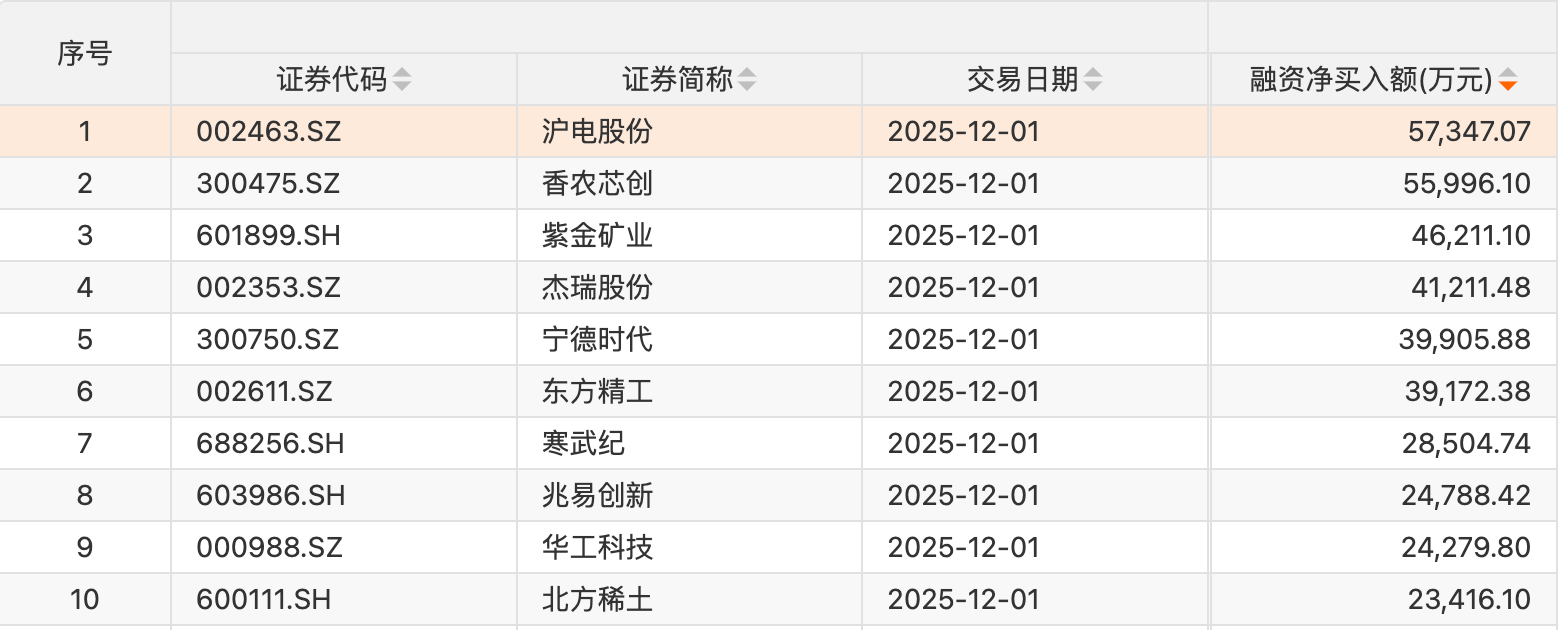
Group 1 - As of December 1, the margin trading balance in A-shares reached 24,843.11 billion yuan, an increase of 10.733 billion yuan from the previous trading day, accounting for 2.57% of the A-share circulating market value [1] - The trading volume of margin financing on the same day was 1,925.07 billion yuan, up by 347.62 billion yuan from the previous trading day, representing 10.18% of the total A-share trading volume [1] - Among the 31 primary industries in the Shenwan index, 21 industries experienced net financing inflows, with the electronics industry leading at a net inflow of 4.265 billion yuan [1] Group 2 - A total of 43 individual stocks had net financing inflows exceeding 100 million yuan, with Huadian Co., Ltd. receiving the highest net inflow of 573 million yuan [1] - Other notable stocks with significant net financing inflows included Xiangnan Xinchuan, Zijin Mining, Jereh Group, CATL, Dongfang Precision, Cambrian, Zhaoyi Innovation, Huagong Technology, and Northern Rare Earth [1] - On December 1, ByteDance released a technical preview version of the Doubao mobile assistant and sold a limited number of AI engineering prototypes, which may reshape edge AI interaction models and boost AI application deployment [2]






资金风向标 | 两融余额较上一日增加107.33亿元 电子行业获融资净买入额居首
Sou Hu Cai Jing· 2025-12-02 02:12
Group 1 - As of December 1, the margin trading balance of A-shares reached 24,843.11 billion yuan, an increase of 107.33 billion yuan from the previous trading day, accounting for 2.57% of the A-share circulating market value [1] - The margin trading turnover on the same day was 1,925.07 billion yuan, up by 347.62 billion yuan from the previous trading day, representing 10.18% of the total A-share trading volume [1] - Among the 31 primary industries, 21 experienced net financing inflows, with the electronics sector leading at a net inflow of 4.265 billion yuan [1] Group 2 - A total of 43 stocks had net financing inflows exceeding 100 million yuan, with Huadian Co., Ltd. receiving the highest net inflow of 573 million yuan [1] - Other notable stocks with significant net financing inflows include Xiangnan Xinchuan, Zijin Mining, Jereh Co., Ltd., Ningde Times, Dongfang Precision, Cambrian, Zhaoyi Innovation, Huagong Technology, and Northern Rare Earth [1][2]
当前时点如何看物联网板块?
2025-12-01 16:03
Summary of IoT Sector Conference Call Industry Overview - The conference call primarily discusses the **Internet of Things (IoT)** sector, focusing on the impact of **Huawei's AI toy** release on the industry and specific companies within the sector [1][2]. Key Points and Arguments - **Huawei AI Toy Launch**: Huawei launched an AI toy priced at **399 RMB**, which sold out in **10 seconds** and is now trading at over **600 RMB** in the secondary market, indicating strong market demand [2]. - **Impact on AI Supply Chain**: The release of the Huawei AI toy positively affects the **edge AI supply chain**, benefiting companies like **Guanghetong**, which provides communication module technology support [1][5]. - **Current Challenges in IoT Industry**: Since Q3 2025, the IoT industry has faced significant pressure, particularly in the upstream module segment due to rising costs and competition from self-developed modules by automotive companies. This situation is expected to persist until Q1 2026 [1][6]. - **Long-term Investment Opportunities**: Despite short-term challenges, the industry may present buying opportunities for long-term investors as conditions are expected to improve post-Q1 2026 [1][6]. Company-Specific Insights - **Guanghetong**: Transitioning from a traditional module manufacturer to a software and hardware integrator, with plans to expand into robotics. The company has raised funds through its Hong Kong listing, which may facilitate further business expansion [1][7]. - **Performance in Smart Module Sector**: Guanghetong leads in smart module market share and is uniquely positioned as the only company fully embracing Qualcomm technology, which could enhance its partnership potential with Qualcomm in AI chip advancements [3][8]. - **Boshi Jie**: Focused on edge applications with self-developed modules, aiming to increase high-margin overseas business and maintain profitability in low-margin domestic markets. The company is expected to grow rapidly in sectors like smart sleep terminals and commercial vehicles [10]. - **Hospital Communication**: Projected revenue for 2025 is **1 billion RMB**, with an increase to **1.2 to 1.3 billion RMB** in 2026. The company is noted for its low valuation, making it an attractive investment target [9]. Challenges and Opportunities - **Module Segment Pressures**: The module segment faces cost increases and limited price transmission capabilities, leading to short-term pressures. However, stock prices have adjusted to reflect these challenges, suggesting that negative information is largely priced in [11]. - **Future Growth Potential**: The edge segment is expected to outperform upstream modules due to the trend towards hardware AI integration and better cost transmission capabilities. Predictions indicate a rebound in the IoT sector by Q1 2026 [12][11]. Conclusion - The IoT sector is currently navigating through challenges but is poised for recovery, particularly in the edge segment. Companies like Guanghetong and Boshi Jie are highlighted as potential leaders in this evolving landscape, with specific attention to their strategic initiatives and market positioning [12][13].