华为Mate XTs

Search documents
华为折叠屏国内份额超70%,坐等苹果入局
Guan Cha Zhe Wang· 2026-01-22 09:16
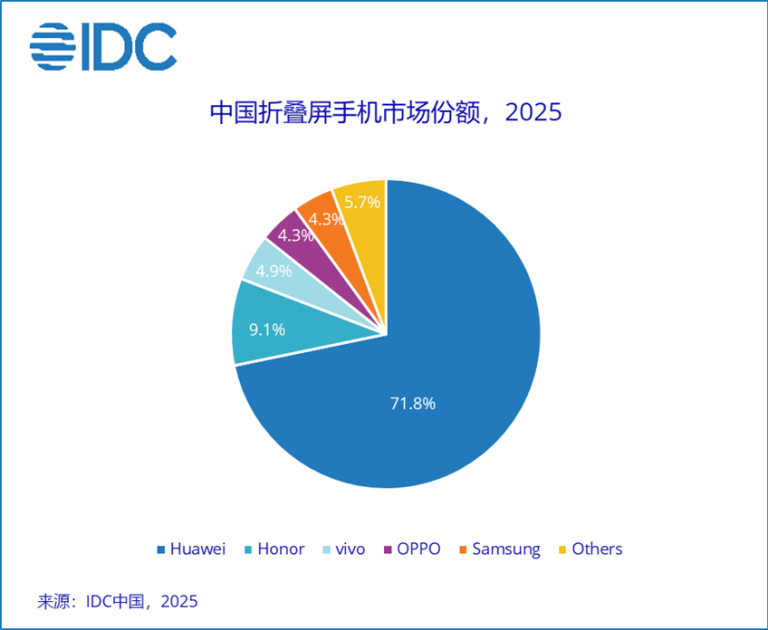
Core Insights - The Chinese foldable smartphone market is projected to see a shipment of approximately 10.01 million units in 2025, reflecting a year-on-year growth of 9.2%, contrasting with a slight decline of 0.6% in the overall smartphone market [1] - Huawei leads the market with a significant share of 71.8%, while other brands like Honor, Vivo, and OPPO have much smaller shares, indicating Huawei's dominant position [1][3] - Despite the emergence of competitive products from other manufacturers, Huawei's comprehensive product lineup and brand strength have solidified its market leadership [4][6] Market Dynamics - The foldable smartphone segment has reached a bottleneck since 2019, with manufacturers struggling to drive sales through hardware improvements alone, leading to a decline in the overall market in Q4 of the previous year [3][4] - Brand strength is increasingly influencing consumer preferences in the high-end market, with Huawei's focus on balanced capabilities and innovative designs contributing to its market share growth of over 20 percentage points in 2025 [4] - The foldable smartphone market still represents only 3.5% of total smartphone shipments in China, prompting some manufacturers to reconsider their strategies in this niche segment [4][6] Technological Innovations - Manufacturers are exploring soft-hard collaboration as a breakthrough direction, with Huawei's MateX7 focusing on AI integration rather than just hardware enhancements [6] - Other brands like OPPO and Vivo are also attempting to bridge compatibility with Apple ecosystems, indicating a trend towards cross-platform functionality [6] Future Outlook - The anticipated entry of Apple's foldable smartphone, expected to be released in the fall of 2026, is generating significant market interest, particularly regarding its potential to enhance hardware and software integration [7][8] - The overall smartphone market in China may face challenges in 2026 due to rising storage costs, which could lead to a noticeable decline in shipments [8]


华为折叠屏国内份额超70%,苹果今年能带来惊喜吗?
Guan Cha Zhe Wang· 2026-01-22 09:12
Core Insights - The Chinese foldable smartphone market is projected to see a shipment of approximately 10.01 million units in 2025, marking a year-on-year growth of 9.2%, contrasting with a slight decline of 0.6% in the overall smartphone market [1] - Huawei leads the market with a significant share of 71.8%, while other brands like Honor, Vivo, and OPPO have much smaller shares, with Xiaomi dropping out of the top five [1][3] - The foldable smartphone segment is experiencing a bottleneck phase, with hardware improvements no longer sufficient to drive significant sales growth, leading to a decline in market performance [3][4] Market Dynamics - Huawei's dominance is attributed to its comprehensive product lineup, including various foldable designs and a focus on balanced capabilities rather than just lightweight models [4] - Other manufacturers have introduced innovative products, such as OPPO's Find N5 and Vivo's lightweight foldable, but these have not significantly challenged Huawei's market position [3][4] - The foldable smartphone market only accounts for 3.5% of total smartphone shipments in China, leading some companies like Xiaomi to reconsider their strategies in this niche [4][6] Technological Innovations - Manufacturers are focusing on soft-hard collaboration to enhance user experience, with Huawei's MateX7 introducing AI capabilities to improve functionality [6] - Competitors like OPPO and Vivo are also exploring compatibility with Apple ecosystems to attract users [6] - The anticipated entry of Apple's foldable phone, expected in 2026, is generating significant market interest, with expectations for superior hardware and software integration [7][9] Future Outlook - The smartphone market is expected to face cost pressures due to rising storage prices, potentially leading to a noticeable decline in shipments in 2026 [9] - The success of Apple's foldable device and its impact on the market remains a key point of interest for industry stakeholders [9]
折叠屏战争进入“三折时代”,三星却已输掉中国市场
Feng Huang Wang Cai Jing· 2025-12-05 13:50
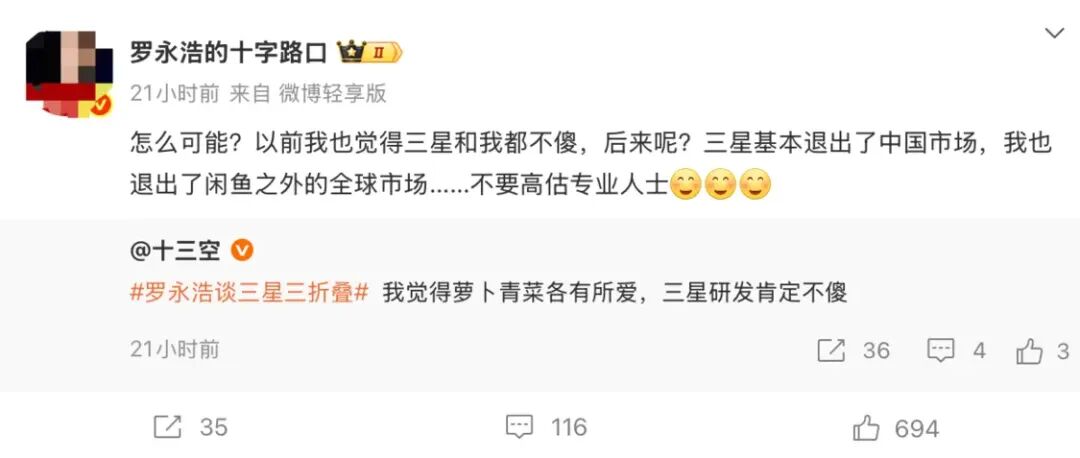
Core Viewpoint - Samsung's new Galaxy Z TriFold smartphone faces significant market scrutiny and criticism, particularly from tech influencer Luo Yonghao, as it attempts to compete in the high-end market against Huawei's offerings. The shift in market share dynamics highlights Samsung's declining presence in China, which has become the largest market for foldable smartphones globally [1][3]. Group 1: Product Overview - The Galaxy Z TriFold features a dual-hinge design that allows it to unfold into a tablet-sized device, with a launch price of approximately 3.59 million KRW (around 17,302 RMB or 2,450 USD) set for December 12 in South Korea [1]. - The device boasts a thickness of only 3.9 mm when unfolded and includes a 5600 mAh battery, marking the largest battery capacity for Samsung's foldable phones to date [2]. Group 2: Market Position and Strategy - Samsung's market strategy contrasts with Huawei's localized approach, focusing on global product line standardization and scale innovation, which has led to concerns about product-market fit in China [3]. - As of Q3 2025, Samsung is absent from the top five smartphone manufacturers in China, a stark contrast to its 20% market share in 2013 [4][6]. Group 3: Historical Context and Challenges - Samsung's decline in China began around 2016, exacerbated by the Note 7 battery incident and the rise of local brands like Huawei and Xiaomi, leading to a market share drop to below 1% by 2022 [5]. - Despite regaining the top position globally with a 20.8% market share in 2023, Samsung's struggles in the Chinese market are attributed to intense competition and a lack of localized strategies [6][9]. Group 4: Future Outlook - The success of the Galaxy Z TriFold in China remains uncertain, as Samsung's internal challenges and market dynamics pose significant hurdles [10].
折叠屏战争进入“三折时代”,三星却已输掉中国市场
凤凰网财经· 2025-12-05 12:35
Core Viewpoint - Samsung's new Galaxy Z TriFold smartphone faces significant market scrutiny and competition, particularly from Huawei, as it attempts to re-establish its presence in the high-end foldable smartphone market in China [2][9]. Group 1: Product Overview - The Galaxy Z TriFold features a dual-hinge design that allows it to unfold into a tablet-sized device, with a price set at approximately 17,302 RMB (around 2,450 USD) [3][4]. - The device boasts a thickness of only 3.9 mm when unfolded and includes a 5,600 mAh battery, marking the largest battery capacity for Samsung's foldable phones [7]. Group 2: Market Position and Competition - In 2013, Samsung held a 20% market share in China's smartphone market, but by 2023, it has virtually disappeared from the top five rankings, with local brands like Huawei and Xiaomi dominating [2][12][13]. - Despite Samsung's global smartphone market share reaching 20.8% in 2023, its presence in the Chinese market remains weak, with a share of less than 1% by 2022 [14][17]. Group 3: Strategic Challenges - Analysts express concerns about a "product-market mismatch" for the TriFold, as Samsung lacks a significant presence in the Chinese foldable market, which is crucial for the product's success [9]. - Samsung's decision to use an older Snapdragon chip in the TriFold has been interpreted as a cost-control measure, raising questions about the product's competitiveness [9]. Group 4: Internal Dynamics and Future Outlook - Samsung's leadership has acknowledged the company's critical situation, with internal restructuring and a call for management to adopt a "survive to thrive" mentality [16][20]. - The company is facing challenges in adapting to the AI era and is experiencing a decline in traditional smartphone business profits, which may further squeeze future profit margins [19].

三星「三折叠」上手:折起是手机,展开竟然是电脑?
36氪· 2025-12-03 11:08
Core Viewpoint - Samsung has officially launched its tri-fold smartphone, the Galaxy Z TriFold, marking a significant entry into the tri-fold market previously dominated by Huawei's Mate XTs [5][6]. Group 1: Product Specifications - The Galaxy Z TriFold features a 10-inch inner display and a 6.5-inch outer display, with a weight of 309g and dimensions of 159.2 x 75.0 x 12.9mm when folded [7]. - The device is equipped with a 200MP main camera, a 12MP ultra-wide camera, and a 10MP telephoto camera, alongside a 5600mAh battery with 45W fast charging capabilities [7][20]. - It offers configurations of 16GB RAM with either 512GB or 1TB storage options, and is available in a single color, Crafted Black [7][22]. Group 2: Design and Build - The Galaxy Z TriFold utilizes a unique G-type hinge design, allowing the device to fold in a manner similar to stacking blankets, which differs from the Z Fold series [5][9]. - The device features an Armor FlexHinge with a dual-rail structure for smooth and stable opening and closing, accommodating the varying thickness of the device [13][14]. - The outer screen is protected by Corning Gorilla Glass Ceramic 2.0, enhancing durability against cracks, although it is prone to fingerprints due to its glossy finish [16]. Group 3: Software and Features - The Galaxy Z TriFold introduces a new DeX mode that allows users to activate a desktop-like experience on the inner screen without needing an external monitor, enhancing productivity [25][27]. - It supports virtual desktops, enabling users to switch between application groups seamlessly, leveraging its 16GB RAM [29]. - The device lacks support for a stylus, which may limit some functionalities compared to competitors like Huawei's Mate XTs [29][31]. Group 4: Market Position and Pricing - The Galaxy Z TriFold is set to be released on December 12, with pre-orders starting on December 9, and is expected to be priced around 2400 USD (approximately 17000 RMB) [33][35]. - The device will initially launch in South Korea, with plans to expand to markets like China, Singapore, and the UAE, while the US release is scheduled for Q1 2026 [34][35]. - As one of the two major players in the tri-fold smartphone market, Samsung's entry is anticipated to drive competition and innovation in this segment [6][35].

剑指华为Mate XTs,三星首款三折叠来了
Guo Ji Jin Rong Bao· 2025-12-02 09:09
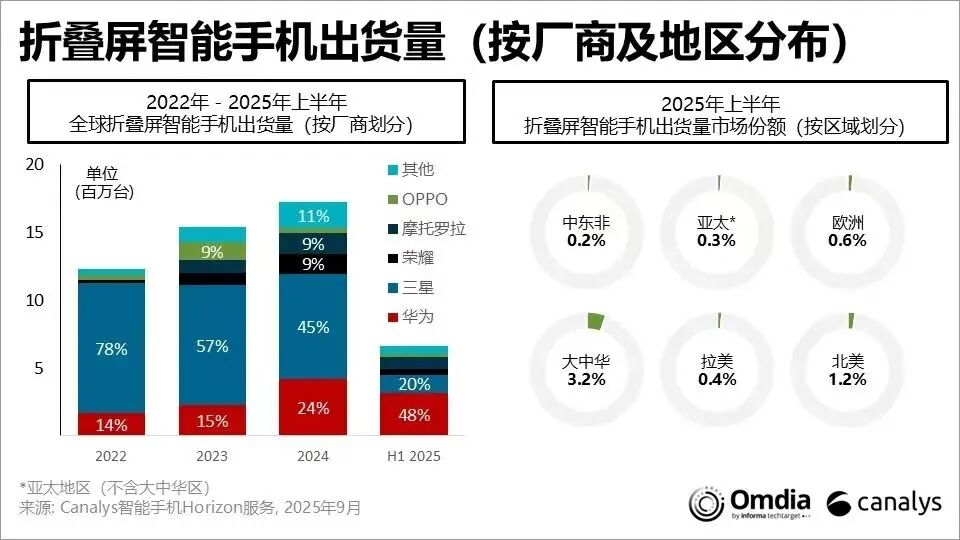
Core Viewpoint - The competition in the foldable smartphone market is intensifying, with Huawei and Samsung as the primary players, particularly following Samsung's recent launch of the Galaxy Z TriFold, which marks the second commercial three-fold smartphone after Huawei's Mate XTs [1][3][4]. Group 1: Product Launches - Huawei launched the world's first three-fold smartphone, Mate XT, in September 2024, with an initial price of 19,999 yuan, followed by the upgraded Mate XTs at 17,999 yuan [1]. - Samsung has introduced its first three-fold smartphone, Galaxy Z TriFold, which will be available for online reservation on December 9 and officially launched on December 12 [1][2]. Group 2: Technical Specifications - The Galaxy Z TriFold features a unique "G-shaped" inward folding design, a 6.5-inch outer screen, and a 10-inch main screen when fully unfolded, with a thickness of only 3.9 mm and a weight of 309 grams [1]. - It is powered by a customized Qualcomm Snapdragon 8 Elite for Galaxy chip, has a 5600mAh battery with 45W fast charging, and includes a camera system led by a 200-megapixel main camera [2]. Group 3: Market Dynamics - According to Canalys, Huawei led the global foldable smartphone market with a 48% share in the first half of 2025, while Samsung held 20% [4]. - The market share dynamics between Huawei and Samsung have shifted significantly, with Huawei increasing its share from 14% in 2022 to 48% in 2025, while Samsung's share decreased from 78% to 20% over the same period [4]. Group 4: Future Outlook - Apple is expected to launch its first foldable device in the fall of 2026, which could reshape the competitive landscape in the high-end foldable smartphone market [6]. - Despite the anticipated growth in the foldable smartphone segment, it remains a niche market, projected to account for only 1.0% to 1.5% of global smartphone shipments by 2026 [7]. Group 5: Strategic Importance - Foldable smartphones are seen as a strategic lever for manufacturers to drive premium branding and long-term profitability, with significant revenue contributions despite their limited market size [8].
首展首店云集、文旅乐活加持,这个十一,天津远洋乐堤港“妖”你来耍
Xin Lang Zheng Quan· 2025-09-29 07:53
Core Insights - The upcoming National Day and Mid-Autumn Festival will see Tianjin Yuanyang Letipark celebrating its anniversary with a theme of "Playful Heart, Trendy New Life," integrating local culture and offering various attractions for tourists and consumers [1] Group 1: Event Highlights - The introduction of the national IP "Wangwang Mountain Little Monster" pop-up store marks its first exhibition in Tianjin, featuring a 100 square meter immersive themed space that resonates emotionally with urban consumers [2] - The pop-up store includes over 400 customized cultural and creative products, enhancing holiday shopping experiences with humor and emotional engagement [2] - Industry data suggests that such high-resonance IP activities can boost surrounding consumption by 30% and extend customer dwell time by approximately 45 minutes [2] Group 2: Experience and Engagement - The commercial operation team has implemented a "first store + event" model, creating enjoyable experiences for all visitors, including a Huawei Mate XTs folding party and various engaging activities for children and pets [4] - These diverse activities not only strengthen brand synergy but also create consumption scenarios that cater to all customer demographics [4] Group 3: Local Tourism and Dining - To meet holiday visitor demands, Letipark has crafted a "Tianjin Travel Guide" and a "Local Food Map," showcasing its role as a "city cultural tourism living room" [7] - The dining area features a "Delicious Group Purchase" event, collaborating with over 20 popular restaurants to offer discounts, making local cuisine accessible at an average cost of 50 yuan per person [7] - Membership benefits include redeemable points for physical gifts, dining trial vouchers, and experiences related to family and pets [7] Group 4: Operational Strategy - The core competitiveness of commercial complexes has shifted from location and hardware to content creation and scene operation in the experience economy [9] - Letipark's holiday activities aim to activate space through "content power," transforming traditional consumption venues into cultural and emotional connection hubs [9] - The ongoing operational strategy of "New Revitalization" focuses on innovative scene planning and professional operational services, enhancing the commercial capacity of Tianjin [10]

折叠之界,破于鸿蒙
虎嗅APP· 2025-09-05 11:27
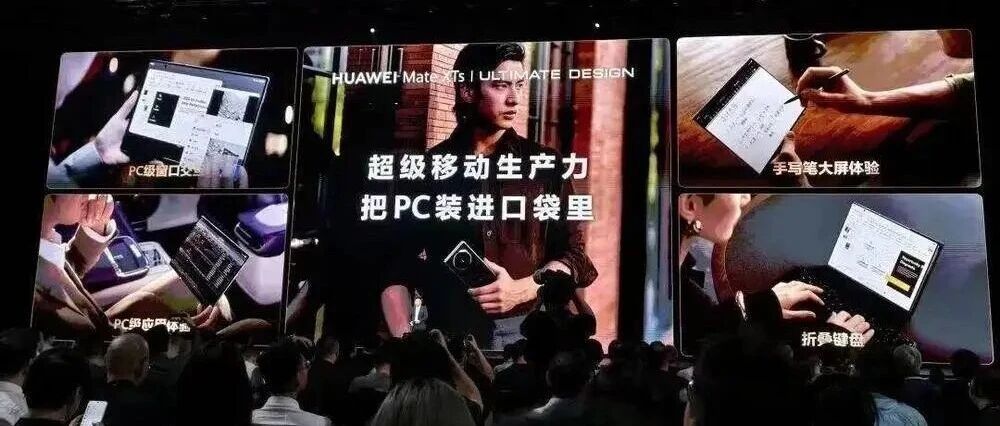
Core Viewpoint - The article discusses the evolution of mobile technology, highlighting Huawei's introduction of the HarmonyOS and the Mate XTs, which aim to break down device barriers and enhance user experience by integrating PC-level applications into mobile devices [2][3][12]. Group 1: Industry Context - The smartphone industry has evolved from the limitations of early devices, such as the iPhone, which initially restricted user applications, leading to the creation of a more open ecosystem with the introduction of the App Store [2][6]. - The current mobile technology landscape is characterized by a reliance on multiple devices (smartphones, tablets, laptops) for productivity, which creates inefficiencies due to the lack of seamless integration between different operating systems [6][10]. Group 2: Huawei's Strategy - Huawei initiated the development of its own operating system, HarmonyOS, in response to the need for a more integrated and versatile ecosystem that connects various devices, including smartphones, tablets, and IoT devices [13][14]. - The launch of HarmonyOS 5 and the Mate XTs represents a significant step towards achieving a multi-device ecosystem, allowing users to switch between mobile, tablet, and PC modes seamlessly [17][18]. Group 3: Technological Advancements - HarmonyOS 5 introduces distributed technology that enables automatic adaptation of applications and interfaces across different device forms, enhancing user experience and productivity [18][20]. - The integration of PC-level applications into mobile devices, such as the Mate XTs, allows for a more powerful mobile productivity experience, breaking the traditional limitations of mobile applications [24][27]. Group 4: Market Trends - The trend towards breaking device boundaries is not unique to Huawei; other tech giants like Apple and Samsung are also moving towards unified ecosystems that allow for seamless transitions between devices [30][32]. - The demand for efficient multi-device collaboration is growing, indicating a shift in the industry towards a more integrated approach to technology that prioritizes user experience and productivity [32].
【立方早知道】A股指数即将上新/央行万亿资金将注入市场/美国重要数据不及预期
Sou Hu Cai Jing· 2025-09-05 01:38
Focus Events - China Securities Index Company will officially release four indices on September 11, 2025, including the CSI A500 Relative Growth Index and the CSI A500 Pure Value Index, providing diversified investment targets for the market [1] Important Data - The U.S. ADP employment data for August showed an increase of 54,000 jobs, which is below the market expectation of 65,000 and significantly lower than the revised 106,000 from the previous month, indicating a slowdown [2] - The probability of the Federal Reserve cutting interest rates in September has increased, with expectations of a total cut of 50 basis points within the year, which is seen as a supporting factor for rising gold prices in the fourth quarter [2] Macro News - The People's Bank of China announced a 1 trillion yuan reverse repurchase operation to maintain ample liquidity in the banking system, with expectations of a potential reserve requirement ratio cut in the fourth quarter [3] Industry Dynamics - The State Council issued a document aiming to release the potential of sports consumption, targeting a total scale of over 7 trillion yuan for the sports industry by 2030, with six key measures proposed [4] - The Ministry of Industry and Information Technology released a growth stabilization plan for the electronic information manufacturing industry for 2025-2026, proposing 16 specific measures to promote industry upgrades and innovation [6] Company Focus - Huawei launched its second-generation foldable smartphone Mate XTs with a starting price of 17,999 yuan, which is 2,000 yuan lower than the previous generation [9] - Hangzhou High-tech announced that all members of its board of directors have resigned due to a change in control [11] - Sino Medical was ordered to rectify due to information disclosure violations, with regulatory talks held with its chairman and others [14] - BYD reportedly lowered its 2025 sales target by 16% from 5.5 million to 4.6 million vehicles, a cautious decision ahead of the peak sales season [16] - China Pingmei Shenma Group signed a strategic cooperation framework agreement with LONGi Green Energy to collaborate in photovoltaic power generation and green hydrogen [17][18] - Junsheng Electronics reported collaborations with leading clients in the humanoid robot sector, including customized supply of control boards and battery systems [20] - Beijing Lier signed a strategic cooperation agreement with SenseTime and Xiwang Technology to explore AI computing power collaboration [22] - Kebo Da announced a plan to acquire 60% of Kebo Da Intelligent Technology for 345 million yuan, aiming to enter the automotive intelligence sector [24] - China Shipbuilding announced that China Heavy Industry's A-shares will be delisted on September 5, following a share swap merger [28] - Yutong Bus reported an 16.78% year-on-year increase in sales for August, with total sales for the year up 4.51% [29] - Ningbo Construction announced winning construction projects worth a total of 1.117 billion yuan [31]





一部手机,即是PC;一次折叠,即是Wind
Wind万得· 2025-09-04 12:27
Core Viewpoint - The article highlights the innovative capabilities of Huawei's Mate XTs, a foldable smartphone that integrates financial technology, enabling a seamless workflow for finance professionals, transforming how they access and analyze data [1][7]. Group 1: Use Cases - Scenario 1: Traders can receive timely updates, such as Federal Reserve meeting minutes, with the device automatically organizing relevant stock information [2]. - Scenario 2: Analysts can conduct live earnings calls with real-time data analysis and automatic report generation, significantly reducing the time required for report preparation [4]. - Scenario 3: Fund managers can quickly generate and backtest investment strategies using the device, enhancing individual research efficiency [5]. - Scenario 4: Investment directors can conduct instant reviews of market performance and generate comprehensive reports without prior preparation [6]. Group 2: Technological Integration - The Huawei Mate XTs merges the functionalities of a smartphone and a PC, allowing finance professionals to manage their entire workflow on a single device [7]. - The Wind financial terminal app enhances the user experience by providing real-time data visualization and performance attribution, streamlining the decision-making process [7]. Group 3: Efficiency and Productivity - The integration of the Wind financial terminal with Huawei's device allows for unprecedented efficiency in financial analysis and reporting, enabling professionals to focus on strategic decision-making rather than data gathering [7]. - The article emphasizes that the combination of hardware and software solutions leads to a significant reduction in time spent on routine tasks, thereby increasing overall productivity for finance teams [4][7].