喷墨打印机

Search documents
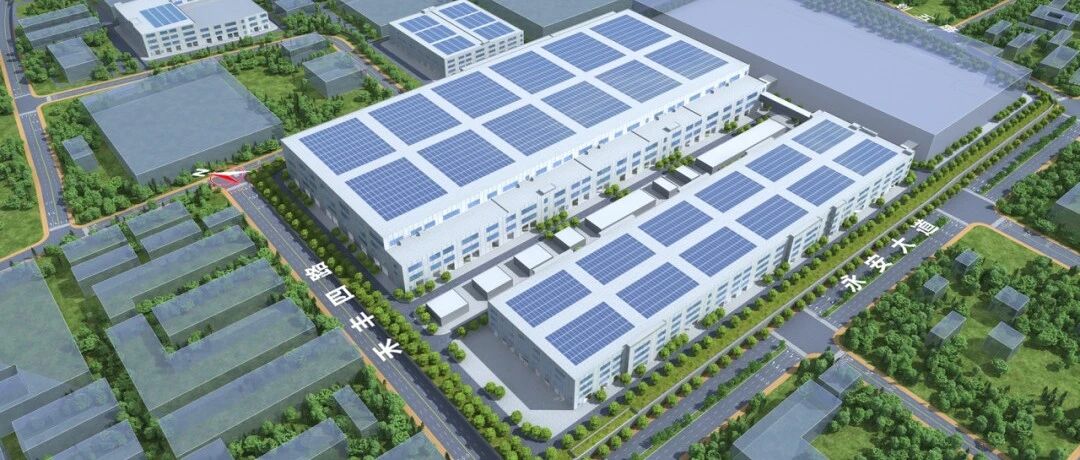
TCL华星广州第8.6代OLED产线开启设备招标
WitsView睿智显示· 2026-02-11 09:49
Core Viewpoint - TCL Huaxing Optoelectronics is actively expanding its OLED production capabilities through international equipment tenders, indicating a strategic move to enhance its manufacturing capacity and technology in the OLED sector [1][2][3]. Group 1: Equipment Tenders - On February 6, TCL Huaxing Optoelectronics announced 17 equipment tenders, including 4 inkjet printers, 1 deposition machine, 8 sputtering machines, 17 plasma-enhanced chemical vapor deposition (PECVD) machines, 12 dry etching machines, and 2 ion implanters [1]. - The tenders are part of the international bidding process, with a deadline set for February 27, 2026, for various equipment including scanning electron microscopes and focused ion beams, all located in Guangdong Province [2]. Group 2: Production Plans and Market Position - Compared to the investment plan announced in November 2025, the tender timeline has been slightly delayed, but the roadmap for mass production by the fourth quarter of 2027 remains intact [3]. - TCL Huaxing Optoelectronics plans to build an inkjet printing OLED production line in Guangzhou, based on 8.6-generation glass substrates (2290 mm × 2620 mm), with a monthly capacity of 22,500 sheets and a total investment of 29.5 billion RMB, expected to be completed by October 2027 [3]. - With this move, TCL Huaxing becomes the fourth player in the 8.6-generation OLED market, following Samsung Display, BOE, and Visionox [5].


谢明:以“大科创”体系赋能产业科技互促双强
Nan Fang Du Shi Bao· 2026-01-19 23:30
Core Viewpoint - Guangzhou is focusing on building a globally influential technology innovation city during the "15th Five-Year Plan" period, emphasizing the integration of technology and industry to drive high-quality urban development [2][3]. Group 1: Economic and Social Development Goals - The 2026 Guangzhou government work report outlines ten key areas for economic and social development, including tapping into domestic and foreign demand, accelerating the construction of a modern industrial system, and deepening reforms in key sectors [1]. - By 2025, Guangzhou aims to achieve significant advancements in technology innovation, ranking sixth globally in the "Nature Index" for research cities and first in the "Guangzhou-Shenzhen-Hong Kong" technology cluster innovation index [1]. Group 2: Major Technology Infrastructure - Guangzhou has established several national-level strategic technology platforms, including national laboratories and major technology innovation centers, to enhance its role as a core hub for international technology innovation [4]. - The city has successfully developed key innovations, such as the first domestic ocean drilling vessel and a new drug for H1N1 influenza, while also initiating major technology infrastructure projects [4][5]. Group 3: Technology Transfer and Innovation - The establishment of regional technology transfer centers aims to facilitate the conversion of scientific research outcomes into marketable products, particularly in fields like biomedicine and high-end scientific instruments [6]. - Guangzhou is implementing a comprehensive system for technology transfer that includes strategic technology sources, enterprise innovation, and multi-capital support [7]. Group 4: Financial Support for Innovation - During the "14th Five-Year Plan," Guangzhou has introduced various initiatives in technology finance, creating a supportive ecosystem for innovation that covers the entire lifecycle of enterprises [11]. - The city has successfully mobilized social capital through government funds, with the Guangzhou Technology Innovation Fund attracting over 254 billion yuan in investments [11][12].
国产打印机用近二十年突破垄断
Di Yi Cai Jing· 2025-12-15 10:09
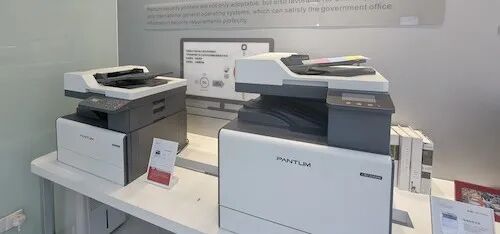
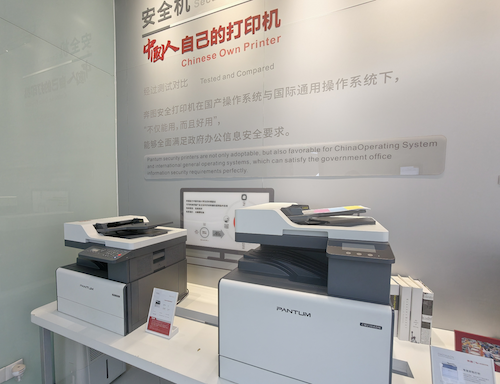
Core Insights - Canon's decision to close its printer factory in Zhongshan, China by the end of 2025 marks a significant shift in the global laser printer market, dominated for decades by Japanese and American brands like Canon and HP [2] - The market landscape is changing, with domestic brands increasing their market share from approximately 10% in 2010 to over 40% today, while foreign brands have seen their share drop below 60% [2][10] - Canon's market share has decreased from 7.7% in 2018 to 3.9% in the first three quarters of 2025, while domestic brand BenQ has captured significant market shares of 23.5%, 25.8%, and 21.3% in the same period [2] Domestic Brand Growth - BenQ's entry into the printer market was driven by long-term commercial prospects and national strategic needs, particularly concerning supply chain and information security risks [3] - The company initially focused on consumables but soon recognized the limitations and shifted towards printer manufacturing, launching its first A4 monochrome laser printer in 2010 [4] - Despite facing aggressive pricing strategies from competitors, BenQ managed to grow its output from 53,000 units in May 2011 to over one million units by 2019, achieving an average annual growth rate of about 50% [4] Technological Advancements - BenQ has made significant strides in developing core components such as the laser scanning unit (LSU) and main control SoC chips, achieving independent research and development of these critical modules by 2018 [6][7] - The company has accumulated over 6,000 patents, establishing a technological moat that supports its competitive position in the market [7] - Lenovo has also transitioned from imitation to independent innovation, increasing its self-developed printer revenue share from less than 10% to 50% [7] Market Dynamics - The printer industry's business model relies on a "razor-and-blades" strategy, where original consumables generate ongoing revenue, with hardware sales often only breaking even [8] - Despite a decline in overall printer sales from 10 million units in 2000 to about 7 million units recently, domestic brands have continued to expand their market presence [9] - The shift in the global industrial landscape is evident as foreign brands relocate some production capacity, allowing domestic brands to take the lead in the supply chain [10] Competitive Landscape - Domestic brands are gaining market share due to lower prices (20%-30% cheaper than foreign brands) and features tailored to local needs, such as remote printing and Bluetooth/NFC connectivity [12] - The penetration rate of home printers in China is only about 10%, indicating significant growth potential as demand for home and small business printing continues to rise [14] - The competitive environment is intensifying, with profit margins shrinking and companies investing heavily in research and development to innovate and meet market demands [14] Future Outlook - Domestic brands are expected to focus on high-end products, AI ecosystems, and international expansion, particularly in Southeast Asia [13] - The industry is entering a phase of stock or even declining competition, with foreign giants like HP and Canon facing challenges [15] - The rise of Chinese printer brands is attributed to continuous innovation in core technologies, establishing independent intellectual property, and enhancing supply chain security [15]

国产打印机用近二十年突破垄断
第一财经· 2025-12-15 09:45
Core Viewpoint - The closure of Canon's printer factory in Zhongshan, China, symbolizes a significant shift in the global laser printer market, where domestic brands are rapidly gaining market share at the expense of foreign brands like Canon and HP [3][12]. Market Dynamics - Canon's market share in China has decreased from 7.7% in 2018 to 3.9% in the first three quarters of 2025, while domestic brand BenQ's market share has increased to 23.5% [3][12]. - The share of domestic brands in the Chinese laser printer market has risen from approximately 10% in 2010 to over 40% currently, while foreign brands' share has fallen below 60% [3][12]. Competitive Landscape - BenQ's entry into the printer market was driven by long-term commercial prospects and national strategic needs, particularly concerning supply chain and information security risks [4][12]. - The company faced significant challenges from foreign competitors who quickly reduced prices in response to BenQ's market entry, leading to initial losses [5][12]. Technological Advancements - BenQ has developed over 6,000 patents, establishing a technological moat, and has successfully localized critical components such as the laser scanning unit and main control SoC chip [7][8]. - Lenovo has also transitioned from imitation to independent innovation, increasing the revenue share of self-developed printers from less than 10% to 50% [8][9]. Cost and Pricing Strategy - The "razor-and-blades" business model in the printer industry relies on original consumables for sustained revenue, with domestic brands offering lower-priced alternatives to foreign brands [9][10]. - The cost of consumables has significantly decreased, with Lenovo's toner cartridges priced around 100 yuan compared to over 300 yuan for foreign brands, reducing the cost per A4 page from 0.2-0.3 yuan to 0.07-0.08 yuan [9][10]. Market Growth and Trends - Despite a decline in overall printer sales from 10 million units in 2000 to 7 million units recently, domestic brands have continued to expand their market presence [10][12]. - The penetration rate of home printers in China is only about 10%, indicating significant growth potential as demand for educational and office printing increases [15][16]. Future Outlook - Domestic brands are expected to move towards high-end markets, build AI ecosystems, and accelerate international expansion, particularly in Southeast Asia [14][16]. - The competitive landscape is becoming increasingly challenging, with profit margins under pressure and the industry entering a low-profit era [15][16].

打印机十年攻防战:奔图联想突破垄断,佳能惠普退守
Di Yi Cai Jing· 2025-12-15 07:07
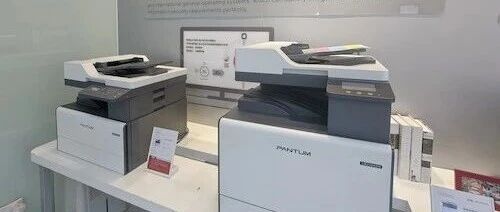
Core Insights - The rise of Chinese printer brands is not merely a result of low pricing or market exchange for technology, but rather a complex evolution involving core technology innovation and the establishment of independent intellectual property rights [16] Market Dynamics - Canon's decision to close its printer factory in Zhongshan, China by the end of 2025 symbolizes a significant shift in the global laser printer market, which has been historically dominated by Japanese and American brands like Canon and HP [2] - According to IDC, the market share of domestic brands in China's laser printer market has increased from approximately 10% in 2010 to over 40% today, while foreign brands' share has decreased to below 60% [2] - Canon's market share has declined from 7.7% in 2018 to 3.9% in the first three quarters of 2025, while domestic brand BenQ's market share has fluctuated between 21.3% and 25.8% during the same period [2] Competitive Landscape - The competition in the printer market has intensified, with domestic brands like BenQ and Lenovo gaining ground by focusing on supply chain security and addressing information security risks associated with networked printers [4][9] - BenQ has developed over 6,000 patents, creating a technological moat that supports its competitive position [8] Innovation and Development - BenQ's entry into the printer market in 2007 was driven by the long-term commercial prospects of printers and national strategic needs, leading to significant investments in R&D and supply chain development [4][5] - The company achieved a breakthrough in core components like the laser scanning unit (LSU) and SoC chips, enabling it to produce competitive products domestically [7] Pricing and Cost Structure - The pricing strategy of domestic brands is significantly lower than that of foreign brands, with original consumables from US brands priced around 300 RMB, while similar products from Lenovo are priced at approximately 100 RMB [10] - The cost of printing has decreased from 0.2-0.3 RMB per A4 page to 0.07-0.08 RMB due to the integration of supply chain and technological innovations [10] Future Outlook - The domestic printer market is expected to continue growing, with a current household penetration rate of only 10%, compared to 30%-40% in Western countries [15] - Domestic brands are focusing on high-end markets, AI ecosystems, and international expansion, particularly in Southeast Asia, to navigate patent barriers and enhance their market presence [13][16]

“垃圾围城”局面彻底扭转!一文读懂广州“十四五”成绩单
Nan Fang Du Shi Bao· 2025-12-08 11:19
Economic Growth and Development - Guangzhou's GDP increment is expected to reach 700 billion yuan during the 14th Five-Year Plan period, with retail sales and foreign trade maintaining a "double trillion, double growth" trend [1] - Industrial investment is projected to grow from 103 billion yuan in 2020 to 171 billion yuan by 2024, marking a 66% increase [1] - The city aims to establish a modern industrial system termed "12218," with six advanced manufacturing clusters exceeding 100 billion yuan in output [1][9] Technological Innovation and Research - Guangzhou ranks 6th globally in the "Nature Index - Research Cities," reflecting its growing status in the global technology innovation landscape [8] - The city has established 46 national-level strategic technology platforms, including national laboratories and innovation centers, to enhance its research capabilities [8] - Significant advancements in the fields of new displays and biomedicine are noted, with a complete innovation ecosystem being developed [11] Infrastructure and Urban Development - Baiyun Airport has entered a new operational phase with five runways and three terminals, while Guangzhou Port ranks 5th and 6th globally in cargo and container throughput, respectively [3] - The city has made progress in urban village renovations, with 52 projects included in the national plan [3] - Public transportation infrastructure has expanded, with metro operations reaching 768 kilometers [3] Social and Cultural Initiatives - Guangzhou has implemented the "Hundred Million Thousand Project," leading to the highest number of national-level modern agricultural parks and rural income surpassing 40,000 yuan per capita [3] - The city has built new cultural landmarks and successfully hosted the National Games, enhancing its cultural profile [3] Safety and Governance - The city has established over 30,000 emergency units and has not experienced major accidents for 13 consecutive years, achieving a continuous decline in crime rates [4] - Guangzhou has been recognized as a model city for social security and legal governance [4] Regional Cooperation and Economic Integration - Guangzhou has invested 25.6 billion yuan in cooperation with 8 cities and 34 counties outside the province, aiding over 400,000 people in employment [5] - The Nansha area has attracted over 3,500 Hong Kong and Macau enterprises, contributing to a GDP of 230 billion yuan [6] Transportation and Mobility - The city is leading in the application of electric vehicles, with all new public buses and taxis being electric, and a significant portion of ride-hailing vehicles also being electric [12] - Guangzhou is expanding low-altitude transportation for logistics, including medical supplies and cross-border goods [13]

又一滴“时代的眼泪”?中山佳能打印机工厂停产
第一财经· 2025-11-30 06:29
Core Viewpoint - The Canon printer factory in Zhongshan has ceased operations due to intensified competition in the Chinese printer market, the rise of domestic brands, the trend towards paperless offices, and strategic adjustments by Canon [3][8][10]. Group 1: Factory Closure Details - The Zhongshan Canon printer factory officially stopped production on November 21, 2023, with employees temporarily on leave until November 28 [3][12]. - The factory is in the process of settling accounts with employees and suppliers, and a compensation plan for employees is expected to be announced soon [3][12]. - The factory has seen a significant reduction in employee numbers, from 3,372 in 2022 to approximately 1,400 by September 2025 [11]. Group 2: Market Conditions - The A4 laser printer shipment volume in China decreased by 5% year-on-year in the first half of 2025, while A3 laser printer shipments fell by 10% [10]. - Domestic brands have significantly increased their market share in the A4 laser printer segment, rising from 16% in 2010 to 42% in 2024 [10]. - Canon's market share in the global laser printer market is 22.9%, but it only holds 6.4% in the Chinese market [10]. Group 3: Competitive Landscape - The competitive pressure in the laser printer market has intensified, particularly in the low-end market where brands like Pantum and Lenovo are gaining ground [14]. - Canon's strategic focus has shifted towards higher-margin businesses such as medical imaging and semiconductor equipment, leading to a reduction in printer production [14][16]. - The trend towards paperless offices, driven by the adoption of digital communication tools, is contributing to the decline in printer demand [16].

中山佳能打印机工厂停产 中国打印机市场竞争加剧
Di Yi Cai Jing· 2025-11-29 04:17
Core Viewpoint - Canon's printer factory in Zhongshan has ceased operations as of November 21 due to intensified market competition, the rise of domestic brands, the trend towards paperless offices, and strategic adjustments by Canon [1][2][5] Company Summary - Canon (Zhongshan) Office Equipment Co., Ltd. was established in June 2001 and is a major producer of laser printers, having produced a cumulative total of 110 million units by April 2022, with an industrial output value of nearly 3.2 billion yuan in 2022 [3] - The factory's workforce has been declining, with employee numbers dropping from 3,372 in 2022 to approximately 1,400 by September 2025, indicating ongoing operational challenges [3] - Canon's 2024 financial outlook suggests a continued slowdown in the Chinese and European markets, with expectations of slight sales contractions in both inkjet and laser printer segments [3] Industry Summary - The laser printer market in China is experiencing significant changes, particularly in the low-end segment where domestic brands like Bentu and Lenovo are gaining market share, with domestic A4 laser printer market share rising from 16% in 2010 to 42% in 2024 [2][5] - IDC forecasts a decline in shipments of A4 laser printing devices by 5% and A3 devices by 10% in the first half of 2025, reflecting the shrinking market [2] - The shift towards paperless offices, driven by the adoption of digital platforms like WeChat Work and DingTalk, is contributing to the decline in printing demand, posing challenges for traditional printer manufacturers [6][7]
中山佳能打印机工厂停产,中国打印机市场竞争加剧
Di Yi Cai Jing· 2025-11-29 03:29
Core Viewpoint - The Canon printer factory in Zhongshan has ceased operations due to intensified competition in the Chinese printer market, the rise of domestic brands, the trend towards paperless offices, and strategic adjustments by Canon [2][4][7]. Group 1: Factory Closure Details - The Zhongshan Canon printer factory officially stopped production on November 21, with employees temporarily on leave until November 28 [3][6]. - The factory is currently settling accounts with employees and suppliers, and a compensation plan for employees is expected to be announced soon [3][6]. - The factory has been facing operational difficulties due to a shrinking market for laser printers and increased competition from domestic brands [4][5]. Group 2: Market Dynamics - According to IDC, the shipment volume of A4 laser printing devices in China is projected to decline by 5% year-on-year in the first half of 2025, while A3 laser printing devices are expected to drop by 10% [4]. - The market share of domestic brands in A4 laser printers has surged from 16% in 2010 to 42% in 2024, while Canon's market share in China is only 6.4% despite holding 22.9% globally [4][7]. - The competitive pressure in the laser printer market has increased significantly, particularly in the low-end segment, where Canon faces stiff competition from brands like Pantum and Lenovo [7][8]. Group 3: Strategic Shifts - Canon has been shifting its strategic focus towards higher-margin businesses such as medical imaging and semiconductor equipment, leading to a reduction in its printer production capacity in China [7][8]. - The company has already begun transferring some of its printer production capacity to its factories in Vietnam [7][8]. - The trend towards paperless offices, driven by the adoption of various digital platforms, is contributing to the decline in demand for printers [8][9].

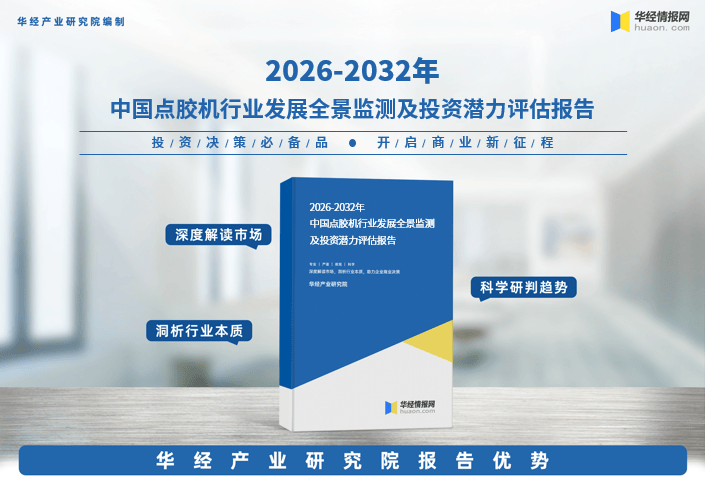
2026年中国点胶机行业发展现状、竞争格局及趋势预测
Sou Hu Cai Jing· 2025-11-25 14:11
Core Viewpoint - The dispensing machine industry is experiencing significant growth driven by the rapid development of China's electronic manufacturing sector, with local companies increasingly penetrating the mid-range market previously dominated by international brands [1][8]. Industry Overview - Dispensing machines, also known as glue dispensing machines, are essential for applying various viscous materials precisely to surfaces or interiors of workpieces, primarily for bonding, sealing, and potting processes [1][4]. - The industry chain consists of three segments: upstream (components supply), midstream (machine manufacturing), and downstream (application in sectors like medical devices, electronics, and automotive) [5][6]. Market Size and Growth - The market size of China's consumer electronics industry is approximately 1,920.1 billion yuan in 2023, with the dispensing machine market projected to reach about 45.979 billion yuan in 2024 [1][8]. - The demand for dispensing machines is continuously growing due to their increasing application in electronic component assembly and semiconductor packaging [8]. Competitive Landscape - Historically, the high-end dispensing machine market has been monopolized by international brands, but local enterprises are now enhancing product performance and quality through increased R&D investment, leveraging cost advantages to capture market share [8]. - The report by Huajing Industry Research Institute employs various analytical models to assess the market environment, industry policies, competitive landscape, and technological innovations within the dispensing machine sector [2][17]. Key Enterprises - Guangdong Anda Intelligent Equipment Co., Ltd. is a notable player in the industry, focusing on product R&D, manufacturing, and providing intelligent production solutions, with a reported total revenue of 343 million yuan in the first half of 2025 [10][11].