大众Polo

Search documents
小型车市场火热,星愿年销46.58万辆霸榜
3 6 Ke· 2026-01-16 11:20
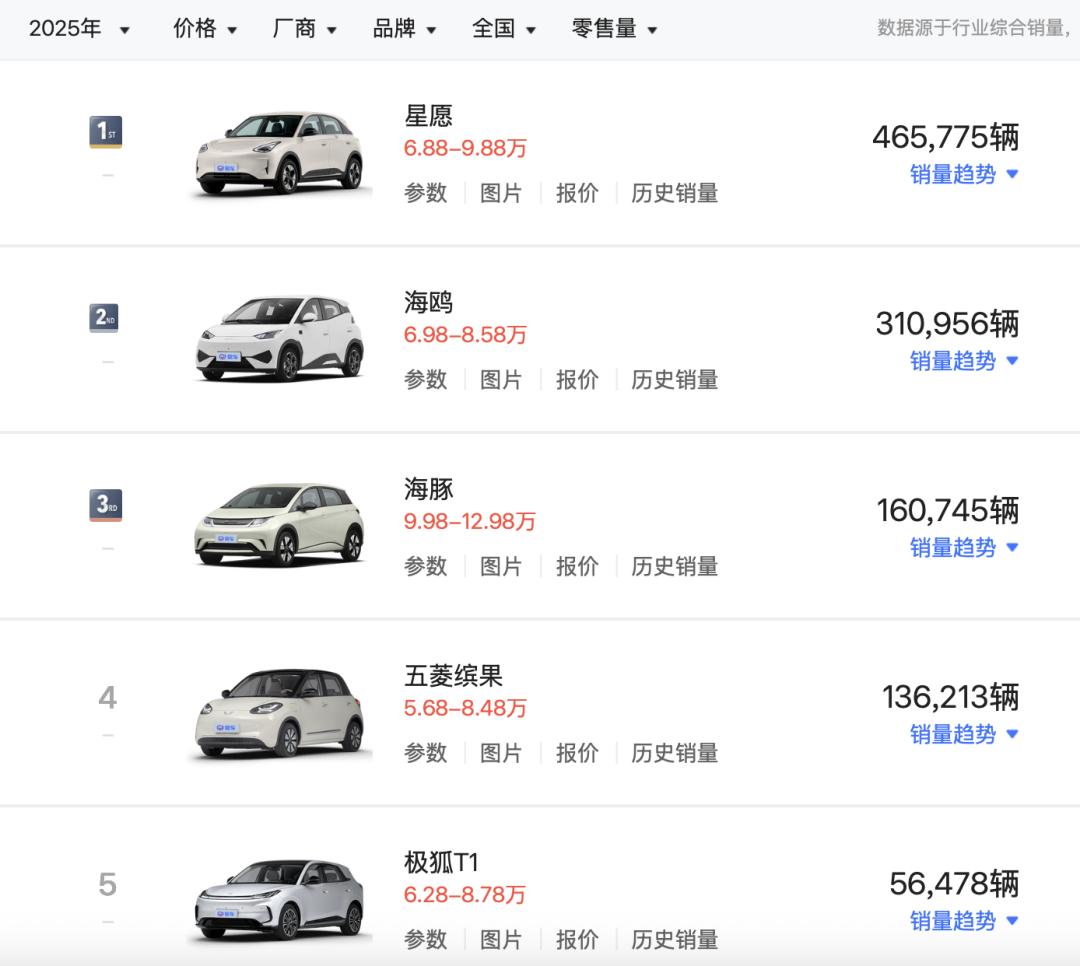
Group 1 - GAC Honda has officially launched the new model of the Fit at a price of 66,800 yuan, with a limited production of 3,000 units. The new model features upgrades in color, headlights, bumpers, and an addition of a smart screen in the interior [1][9] - The Fit was once regarded as a "legendary car" in the fuel vehicle era, achieving annual sales of over 100,000 units from 2015 to 2019 due to its competitive pricing and fuel efficiency. However, its sales have declined significantly in recent years due to the rise of electric vehicles [1][2] - In the A0 segment, the market has seen a shift towards electric vehicles, with brands like BYD and Geely capturing significant market share. By 2025, the top-selling small cars will be electric models, with the Fit and Polo projected to sell only 2,695 and 1,069 units, respectively [1][3][5] Group 2 - The A0 sedan market is experiencing significant growth, with wholesale numbers reaching 1.6564 million units in 2025, a year-on-year increase of 57%. Retail sales also saw a 59% increase, totaling 1.13 million units [2][3] - The trend towards full electrification in the A0 sedan market is evident, with a lack of strong fuel vehicle products, highlighting the advantages of pure electric offerings from domestic brands [3][8] - The competitive landscape in the small car market is intensifying, with new electric models being introduced frequently. The price sensitivity of A0 users is leading to fierce competition among manufacturers [5][10]



二手车市场这么火爆,为什么你的车还是卖不出好价?
Xin Lang Cai Jing· 2026-01-07 06:56
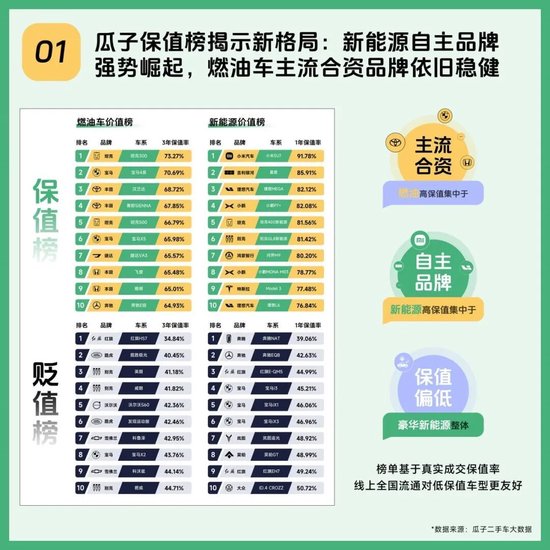
Core Insights - The article discusses the current state of the used car market in China, highlighting the disparity between reported car value retention rates and actual selling experiences for individual sellers [20][24]. - It emphasizes the role of platforms like Guazi in bridging the gap between buyers and sellers, enhancing transaction efficiency and trust [27][29]. Group 1: Used Car Value Retention - The 2025 used car value retention report indicates that traditional fuel vehicles, particularly from brands like Toyota and Honda, maintain strong value, with three-year retention rates above 65% [18][19]. - In contrast, electric vehicles (EVs) like the Xiaomi SU7 show a one-year retention rate of 91.78%, while some luxury brands struggle, with models like BMW i3 retaining only about 45% [18][19]. Group 2: Market Dynamics - The used car market is experiencing high activity, with over 11.2 million vehicles exchanged through trade-in programs from January to November 2025, and a peak used car transfer rate of 33.1% in October 2025 [19][20]. - The disparity in selling experiences arises from the complex transaction structure, where 84% of used cars do not sell directly to individual buyers but go through intermediaries like dealerships [24][25]. Group 3: Challenges in Selling - Individual sellers often face challenges due to a lack of trust and transparency in personal-to-person transactions, leading to lower offers from dealers compared to expected market values [26][25]. - The article notes that selling directly to individuals can be inefficient due to limited exposure and geographical constraints, making it difficult for sellers to reach potential buyers willing to pay higher prices [26][27]. Group 4: Role of Guazi - Guazi plays a crucial role in eliminating geographical limitations, allowing sellers to reach a broader audience, with over 100 million users engaging on the platform daily [27][29]. - The platform enhances trust through comprehensive vehicle inspections and transparent pricing based on real transaction data, enabling competitive bidding between individual buyers and professional dealers [29][30]. Group 5: Underestimated Vehicles - Certain categories of used cars, such as EVs, high-end luxury vehicles, older cars, and niche models, are often undervalued in traditional markets but can achieve fair market prices through Guazi's platform [30][31]. - The article provides examples of individual sellers who successfully sold their vehicles at higher prices than local dealers offered, thanks to Guazi's nationwide reach and intelligent pricing systems [33][34]. Group 6: Future Outlook - As the trend of vehicle trade-ins continues, the pricing capabilities and efficiency of platforms like Guazi will significantly impact how sellers maximize their vehicle values [35].
大数据洞察中国二手车消费新方向
Zhong Guo Qi Che Bao Wang· 2025-12-25 08:59
Core Insights - The central theme of the articles highlights the ongoing support for automotive consumption in China, particularly through the "trade-in" policy, which is expected to maintain high demand in 2026, especially for used cars [1] - The rise of new energy vehicles (NEVs) is contrasted with the stability of traditional fuel vehicles, showcasing the varying depreciation rates and market dynamics between these segments [2][4] Group 1: Automotive Consumption Trends - The "trade-in" policy will continue to be a key initiative in promoting automotive consumption, with a focus on used car exchanges [1] - In 2025, over 11.2 million cars were traded in under the "trade-in" program, indicating a strong demand for vehicle replacement [1] - The high transfer rate of used cars, reaching 33.1% in October 2025, suggests a breaking down of regional barriers, facilitating smoother transactions [1] Group 2: Depreciation Rates and Vehicle Value - Fuel vehicles experience significant depreciation, with a first-year value retention of approximately 66%, while the third-year depreciation approaches 50% [4] - New energy vehicles see a sharper depreciation curve, with values nearly halving within two years, suggesting a need for timely trade-ins to maximize value [4] - The best time to sell fuel vehicles is within three years, while new energy vehicles should ideally be traded within two years to avoid rapid value loss [4] Group 3: Market Performance of Vehicle Brands - Traditional fuel brands like Toyota and Honda maintain strong resale values, with models like the Highlander and Accord retaining over 65% of their value after three years [2][3] - In contrast, some luxury brands, such as Land Rover and Volvo, show declining resale values, with rates around 40% [2][3] - Among new energy vehicles, Xiaomi's SU7 leads with a one-year retention rate exceeding 90%, while traditional luxury brands struggle to compete in this segment [2][3] Group 4: Regional Market Dynamics - The second-hand car market shows significant regional preferences, with Beijing having the highest average transaction price exceeding 100,000 yuan, while provinces like Gansu and Inner Mongolia show more tolerance for older vehicles [9] - The penetration rate of second-hand new energy vehicles has increased from 3.6% at the end of 2022 to 11.2% by October 2025, with southern regions showing stronger demand compared to northern areas [11] - Cross-regional transactions are becoming commonplace, with platforms like Guazi facilitating a significant volume of sales across provinces, enhancing market accessibility [8]

大众宣布不再推出新款小型燃油车,该细分市场的未来是电动化
Jin Rong Jie· 2025-12-24 22:42
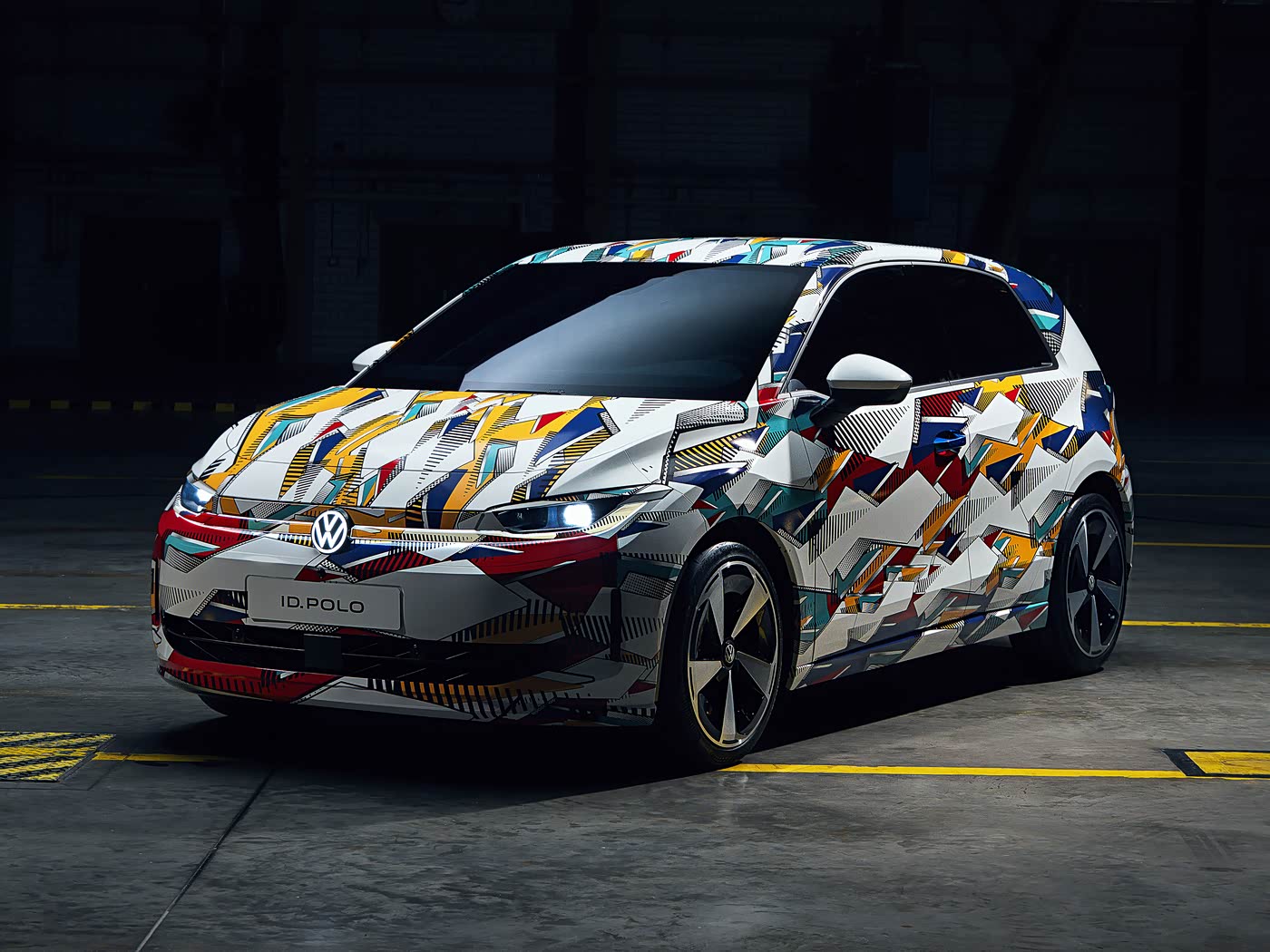
Core Viewpoint - Volkswagen is set to launch a new line of affordable electric vehicles, discontinuing the production of new small combustion engine cars, as the future of this segment is deemed to belong to electrification [1][3]. Group 1: Electric Vehicle Strategy - Volkswagen plans to introduce a new series of fully electric models for the mass market by 2026, with the ID.Polo being the first model to be released in spring 2026 [1][3]. - The starting price for the electric Polo is approximately €25,000 (around 207,000 RMB) [3]. - A smaller and cheaper model, ID.1, is scheduled for launch in 2027 to replace the "e-UP!" [3]. Group 2: Market Trends and Sales Data - The decision to abandon small combustion engine cars is supported by market data, particularly from China, where all top ten small car sales in November were electric models [3]. - In the small fuel vehicle segment, Volkswagen Polo sold only 12 units, while competitors like Geely and BYD dominated the market with sales of 42,038 and 21,807 units respectively [3]. - The small car market is expected to be the first to achieve full electrification [3].
月销仅34辆 大众Polo成“时代的眼泪”?
Xi Niu Cai Jing· 2025-12-08 06:19
Core Insights - The Volkswagen Polo, celebrating its 50th anniversary in May 2025, has sold over 20 million units globally since its launch in 1975, but is now facing a survival crisis due to the rise of electric vehicles [2] - In China, Polo's sales have drastically declined, with only 34 units sold in October 2025, and a total of 1,057 units in the first ten months of the year, contrasting sharply with its peak sales of over 10,000 units per month [2] Group 1: Market Position and Historical Success - The Polo's success in the fuel vehicle era was attributed to its precise market positioning as a "first car" for young people, characterized by its compact size, economical commuting capabilities, and low maintenance costs [2] - The Polo's fuel consumption is reported to be stable at 5.5-6.5 liters per 100 kilometers, with basic maintenance costs around 300-400 yuan, and a three-year resale value maintaining above 65%, outperforming competitors [2] Group 2: Impact of Electric Vehicles - The advent of electric vehicles has disrupted the traditional market, with electric cars offering significant advantages in cost, space utilization, and driving quality [3] - For instance, the cost per kilometer for electric vehicles is as low as 0.03 yuan when charged at home, while the Polo's cost remains at 0.4-0.5 yuan per kilometer, making electric options more appealing [3] - Electric vehicles also provide better interior space due to simplified engine layouts, addressing the space limitations of traditional fuel cars [3] Group 3: Volkswagen's Response and Challenges - Volkswagen has attempted to revitalize the Polo brand with the Polo Plus, which features an extended wheelbase, but this effort has not succeeded in the face of the electric vehicle wave [4] - Despite significant discounts of up to 30,000 yuan in some regions, sales continued to decline, negatively impacting the brand's resale value [4] - The ID.3, intended as an electric alternative, has not effectively captured Polo's customer base due to its higher pricing and differing design [4] Group 4: Industry Transformation and Future Outlook - The transformation of the automotive ecosystem, including the proliferation of charging infrastructure and supportive government policies, is squeezing the market for traditional fuel vehicles [4] - By 2025, the number of charging stations in China is expected to exceed 10 million, with over 80% community coverage, alleviating range anxiety for electric vehicle users [4] - The decline of the Polo reflects broader challenges faced by traditional fuel small cars, with a complete transition to electric vehicles in the microcar market appearing inevitable [4] - Although Volkswagen has introduced the ID.Polo electric version, it is currently only available overseas and not in China, leaving the future of the Polo in the Chinese market uncertain [4]
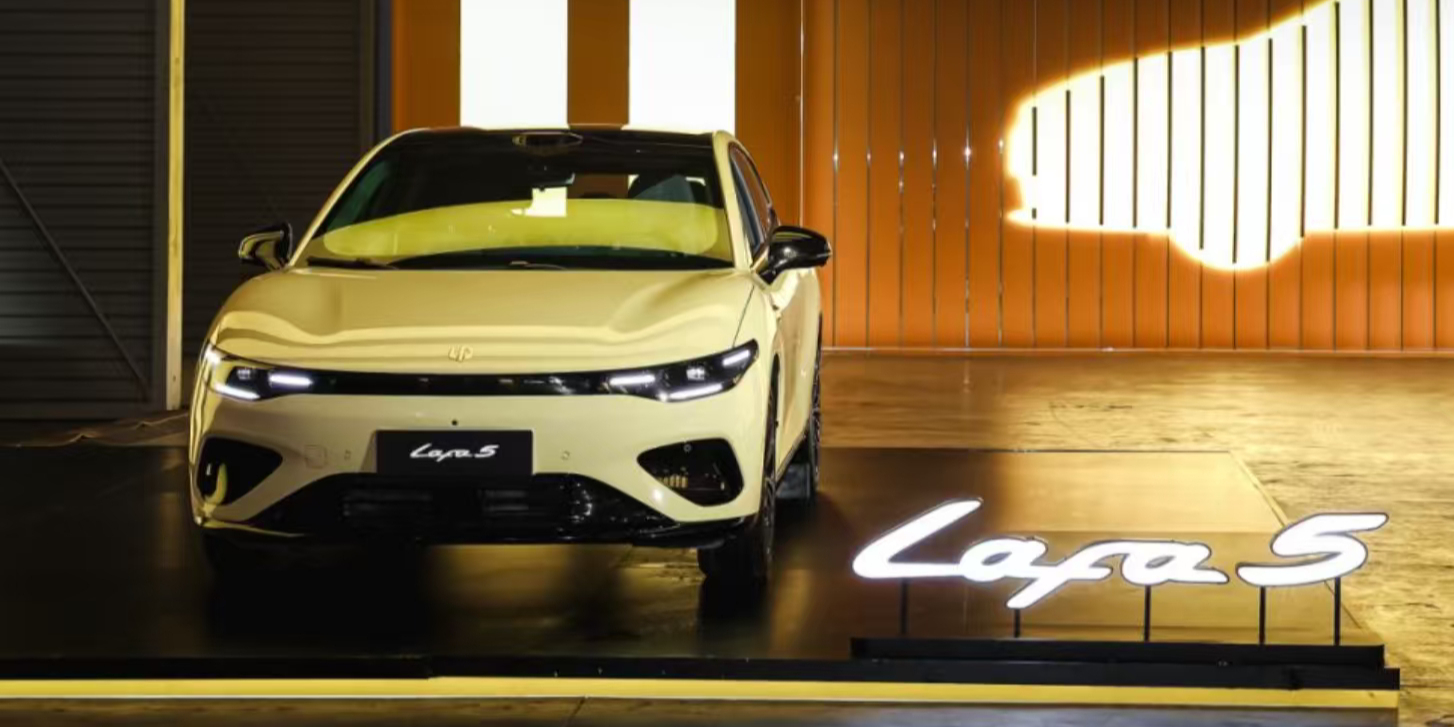
零跑推出纯电两厢车 Lafa5发力中欧双市场
Jing Ji Guan Cha Wang· 2025-11-29 03:25
Core Insights - Leap Motor has launched its new two-door electric sedan, Lafa5, targeting the personalized market priced between 92,800 to 116,800 yuan, with plans to enter the global market by 2026 [2] - The two-door car market is developing differently in China and Europe, with electric two-door cars rapidly replacing fuel models in China, while Europe still favors fuel cars [2][3] - The shift in consumer attitudes in China, particularly among younger buyers, is leading to increased acceptance of two-door cars due to their practicality and economic advantages [2][3] Market Dynamics - The current popular electric two-door cars in China are priced between 50,000 to 100,000 yuan, with a range of 200 to 400 kilometers, suitable for urban activities [3] - By October 2025, sales of two-door cars in China reached 415,000 units, with the top five models being electric, while traditional fuel models have seen a significant decline in sales [3] - Leap Motor's Lafa5 must find a competitive edge in a concentrated market where the top ten electric two-door cars hold over 40% market share, primarily in the 50,000 to 100,000 yuan price range [3] European Market Challenges - In Europe, two-door cars are popular due to their compact size, which suits narrow streets and limited parking [4] - However, the European electric vehicle market faces challenges such as declining demand, policy uncertainties, and inadequate charging infrastructure [4] - The rise of SUVs in Europe is expected to reduce the market share of two-door cars, with projections indicating that SUV sales will reach 58% in Western Europe by the end of 2025 [4] Strategic Considerations - Leap Motor's entry into the European market with Lafa5 will test its ability to adapt to local consumer preferences and market conditions [4] - The future of two-door cars will depend on balancing electric vehicle adoption with practical usability across different markets [4]