
大成高鑫A

Search documents
【干货】一图看懂2025年4季报,投顾组合基金背后的投资秘诀
银行螺丝钉· 2026-01-29 14:04
Core Viewpoint - The article provides an overview of the updated active fund manager pool information for the 2025 Q4 reports, highlighting key metrics such as investment style, stock ratio, industry preference, turnover rate, valuation of major holdings, concentration of holdings, and fund size [1][2][3]. Summary by Sections Fund Manager Information - The article includes a comprehensive list of fund managers categorized by investment style, such as deep value, growth, and balanced strategies, along with their respective fund names and codes [4][5][10][11]. Investment Style - Investment styles are crucial as they reflect the types of stocks held by the funds. The article notes that different styles have their strong and weak phases, with historical data showing a rotation between value and growth styles over the years [36][40]. Industry Preference - Fund managers typically focus on specific industries where they have expertise. The article emphasizes the importance of understanding these preferences to gauge potential performance [48][50]. Stock Ratio - The article discusses the stock ratio, indicating that active funds usually maintain a stock ratio around 85% to 90%, which affects the fund's volatility [45][46]. Concentration of Holdings - The concentration of holdings, defined as the proportion of the top ten stocks in the fund's net assets, is highlighted as a significant factor influencing fund volatility [53]. Valuation of Major Holdings - The article mentions that the valuation of major holdings is assessed based on the top ten stocks disclosed in the fund's reports, which may not always reflect real-time adjustments made by fund managers [56][58]. Turnover Rate - The turnover rate, which indicates how frequently stocks are bought and sold within the fund, is discussed. A turnover rate below 200% is considered low for active funds [59][60]. Fund Size - The size of the fund is noted as a critical factor, with larger funds potentially facing challenges in achieving excess returns due to management complexities [62][64]. Fund Manager's Perspective - The article emphasizes the importance of the fund manager's insights, which can provide valuable context regarding past performance and future market outlooks [70][74].


适合长拿的TOP10基金榜,你持有哪只?
Sou Hu Cai Jing· 2026-01-28 14:35
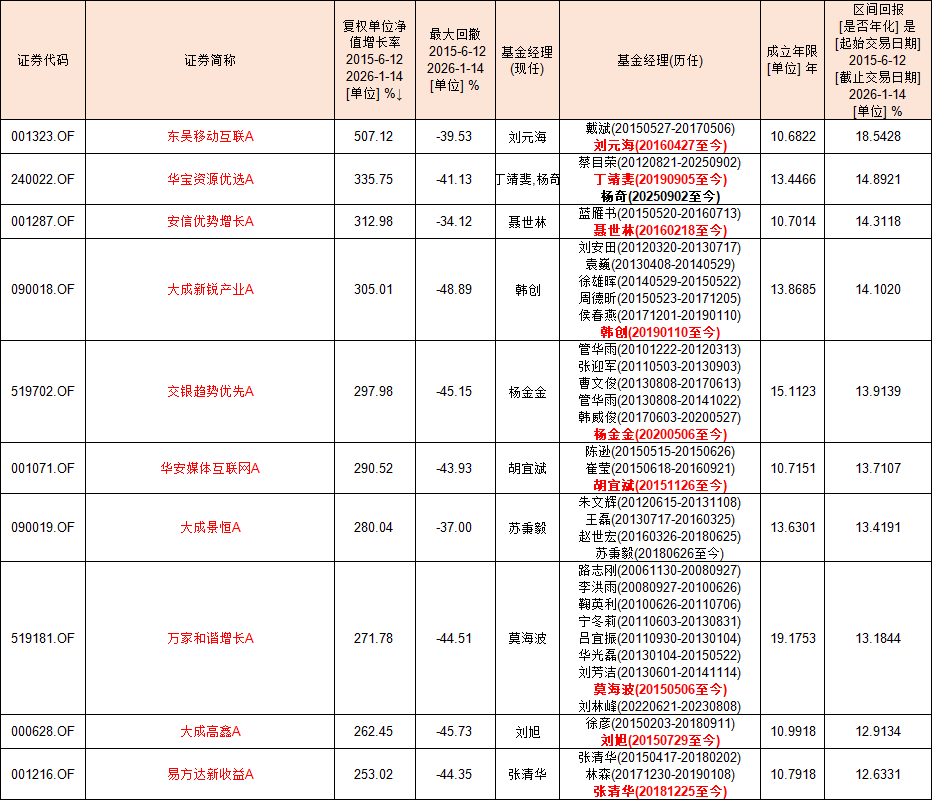
Core Insights - The article reviews the top-performing mutual funds over the past decade, highlighting those that have reached historical highs from June 12, 2015, to January 14, 2026, during which the Shanghai Composite Index fell from 5178 to 4190 [1][4]. Group 1: Top Active Equity Funds - The top ten active equity funds are led by Dongwu Mobile Internet A, which achieved a return of 507.12% [1][5]. - Other notable funds include Huabao Resource Preferred A (335.75%), Anxin Advantage Growth A (312.98%), and Dachen New Industry A (305.01%) [1][3]. - The funds were selected based on the current fund managers having over five years of management experience [1]. Group 2: Overall Market Performance - The overall market's top ten funds include Huashang Advantage Industry A, Guotai Nasdaq 100, and Dongwu Mobile Internet A, with the latter being the only active equity fund with significant management experience [4][5]. - The analysis indicates that six of the top ten funds are Nasdaq 100 funds, suggesting a strong performance in the U.S. tech sector [6]. - The article emphasizes the importance of holding onto high-performing funds and trusting the fund managers to maximize returns [6].
业绩与规模双杀,大成基金为何读不懂2025?
Xin Lang Cai Jing· 2025-12-15 06:32
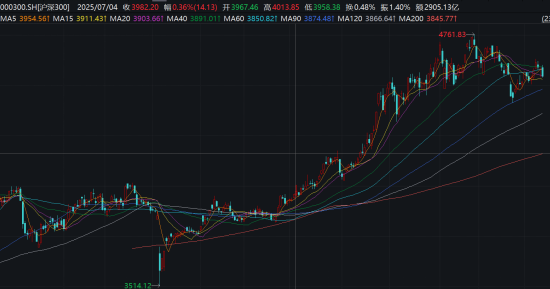
Core Viewpoint - In 2025, while the A-share market thrives, with the CSI 300 index rising by 14.82% and the Shanghai Composite Index surpassing 4000 points, Da Cheng Fund's equity products significantly lag behind, leading to a decline in scale and contrasting sharply with overall market performance [1][3][36]. Group 1: Market Performance - The total share of stock funds in the market increased from 199.208 billion to 223.348 billion, a growth of 12.1% [3][36]. - Da Cheng Fund's stock fund share decreased from 243.8 billion to 200.9 billion, a decline of 17.6% [3][36]. - Da Cheng Gao Xin A, a flagship product, achieved a return of only 15.76%, ranking 723 out of 969 in its category [5][39]. Group 2: Investment Style and Performance - Da Cheng Fund relies heavily on a "deep value" investment style, with only 21% of its equity allocation in growth stocks, significantly lower than the industry average of over 30% [7][40]. - The fund's managers, Xu Yan and Liu Xu, have maintained returns around 14%, focusing on long-term holdings rather than chasing market trends [7][40]. - Da Cheng Gao Xin A's stock selection ability was only 0.85%, below the average of 1.06%, and its timing ability was -2.26, compared to the average of -0.78 [10][43]. Group 3: Fund Management and Challenges - Da Cheng Fund, established in 1999, is one of China's first ten fund companies, but its non-monetary scale is now only 288.458 billion, ranking 21st [26][58]. - The company has primarily launched fixed-income products this year, with the largest issuance being a medium to long-term pure bond fund exceeding 8 billion [28][60]. - The new fund, Da Cheng Xing Yuan Qi Hang A, faced criticism for not building positions until September, reflecting challenges in adapting to the current market environment [21][56]. Group 4: Long-term Strategy and Market Adaptation - Da Cheng Fund's CEO emphasized a commitment to "long-termism" and stable investment styles, acknowledging the mismatch between their deep value approach and the prevailing growth market in 2025 [34][65]. - The company's strategy may face scrutiny regarding its ability to deliver sustainable returns over longer periods, as it navigates the challenges of market adaptability and investment style diversification [34][66].
基金经理,不能“旱涝保收”了
3 6 Ke· 2025-12-15 04:03
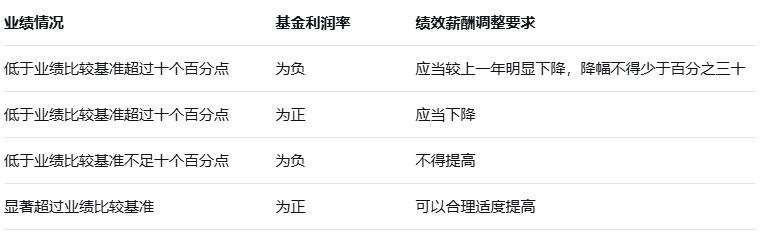
Core Viewpoint - The recent draft guidelines from the China Securities Regulatory Commission (CSRC) propose a performance evaluation mechanism for fund managers, emphasizing a tiered adjustment of performance compensation based on the past three years' performance against benchmarks and fund profitability [1][2]. Performance Evaluation Mechanism - Fund managers' performance compensation can be adjusted in four scenarios: a decrease of no less than 30% if performance is more than 10% below the benchmark with negative profitability, a decrease if performance is more than 10% below the benchmark with positive profitability, no increase if performance is less than 10% below the benchmark with negative profitability, and a reasonable increase if performance significantly exceeds the benchmark with positive profitability [1][2]. Current Fund Performance - Among 20 actively managed billion-level equity funds, 8 funds outperformed their benchmarks by over 10%, while 6 funds underperformed by over 10% as of December 9 [2]. Notable Fund Performances - The top-performing fund, Galaxy Innovation Growth A, managed by Zheng Weishan, achieved an excess return of 49.38% over three years, with a total return of 243% and an annualized return of 20.58% since its management began in May 2019 [4][5]. - Other notable funds include Dachen High Growth A, managed by Liu Xu, with a total return of 417.29% and an annualized return of 17.16% over 10 years, and Xingquan Business Model Preferred A, managed by Qiao Qian, with a total return of 203.42% and an annualized return of 16.11% over 7 years [5][7][8]. Investment Strategies - Zheng Weishan's strategy focuses on heavily investing in technology stocks, maintaining a high concentration in top holdings, while Liu Xu adopts a diversified approach across various sectors, balancing between well-known blue-chip stocks and smaller companies [5][7][9]. - Qiao Qian employs a flexible trading strategy with shorter holding periods and a diversified sector allocation, aiming to balance long-term investment judgments with short-term market fluctuations [9][10]. Implications of New Guidelines - The proposed guidelines aim to address the issue of fund managers' compensation being disconnected from performance, encouraging a stronger link between fund performance and manager remuneration [1][2][10].
业绩与规模双杀,大成基金为何读不懂2025?|基金观察
Sou Hu Cai Jing· 2025-12-15 02:09
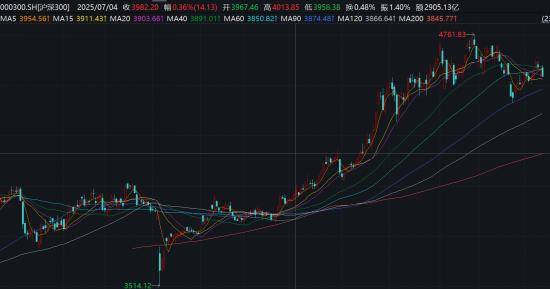
Core Viewpoint - In 2025, while the A-share market thrives led by technology growth, Dacheng Fund's equity products significantly lag behind, resulting in a decline in scale and contrasting sharply with overall market performance [1]. Group 1: Market Performance - The stock market is experiencing a robust year, with the CSI 300 index rising by 14.82% as of December 10, 2025, and the Shanghai Composite Index briefly surpassing 4000 points [2]. - The total share of equity funds in the market increased from 199.208 billion shares at the beginning of the year to 223.348 billion shares, marking a growth of 12.1% [4]. Group 2: Dacheng Fund's Performance - Dacheng Fund's equity fund share decreased from 24.38 billion shares at the beginning of the year to 20.09 billion shares, a decline of 17.6% [4]. - The flagship product, Dacheng Gaoxin A, achieved a return of only 15.76% this year, ranking 723 out of 969 in its category [6][7]. - Dacheng Gaoxin A's year-to-date performance is below its benchmark of 18.09% and the CSI 300's 16.69% [7]. Group 3: Investment Style and Strategy - Dacheng Fund has a significant reliance on a "deep value" investment style, with over 70% of its actively managed equity products concentrated among three key fund managers [8]. - The overall allocation to growth style investments at Dacheng Fund is only 21%, which is below the industry average of over 30% [8]. - The fund manager Xu Yan's products have maintained around a 14% return this year, focusing on independent research rather than chasing market trends [8]. Group 4: Challenges and Future Outlook - Dacheng Fund's performance in 2025 reflects a mismatch between its deep value investment style and the prevailing market growth style, highlighting challenges in investment style diversification and market adaptability [29]. - The company emphasizes a "long-termism" philosophy, suggesting that the evaluation of its strategies should consider long-term returns rather than short-term market movements [29].
sortino指标选出的牛基2-大成高鑫(刘旭) 如何定义基金经理的好
Sou Hu Cai Jing· 2025-12-04 20:25
Core Insights - The article discusses the significance of the Sortino ratio in evaluating mutual funds, highlighting its ability to identify high-performing funds while mitigating the risk of "net value traps" [5][24]. Fund Performance Analysis - The article lists several mutual funds with high Sortino ratios, indicating their strong performance over three years, including funds like 创金合信文娱媒体 and 大成高鑫, which have shown impressive returns [3]. - 大成高鑫 A has achieved a cumulative return of 420% over a 10-year period, with an annualized return of 17.27%, ranking first among its peers [9]. - 刘旭, the fund manager of 大成高鑫, has consistently outperformed the market during challenging years, including 2018, 2022, and 2023, where he achieved positive returns despite significant market downturns [6][9]. Investment Strategy and Risk Management - The article emphasizes the importance of a fund manager's defensive capabilities in a volatile market like A-shares, where strong downside protection is crucial [8]. - It highlights that a fund manager's ability to generate returns is not solely based on high returns but also on the actual profits delivered to investors, as illustrated by the concept of "net value traps" [11][13]. - The article warns against funds that may show high returns but ultimately lead to losses for investors due to aggressive investment strategies and market timing [14][18]. Investor Behavior and Market Dynamics - The article discusses the cyclical nature of investor behavior, where high-profile funds attract significant capital, but subsequent market corrections can lead to substantial losses for late investors [21][22]. - It points out that many investors tend to redeem their investments as soon as they break even, which can exacerbate losses during market downturns [19][20]. Conclusion - The article concludes that focusing on funds with high Sortino ratios can significantly increase the likelihood of generating profits for investors, thereby enhancing the overall investment experience [24][26].
sortino指标选出的牛基2--大成高鑫(刘旭),如何定义基金经理的“好”?
Xin Lang Cai Jing· 2025-12-04 11:27
Core Insights - The article emphasizes the importance of the Sortino ratio in evaluating fund managers and their investment strategies, highlighting the performance of several funds over a three-year period [3][22]. Fund Performance - The top-performing funds based on the Sortino ratio include: - 创金合信文娱媒体 (15.40% return, Sortino ratio 1.4724) - 大成高鑫 (66.75% return, Sortino ratio 1.427) - 鹏华优选价值 (11.11% return, Sortino ratio 1.5127) - 富国文体健康 (8.71% return, Sortino ratio 1.2868) - 诺安先进制造 (not specified) [3][22]. Manager Performance - 刘旭, the manager of 大成高鑫, has demonstrated consistent performance, achieving a cumulative return of 420.67% over ten years, with an annualized return of 17.27%, ranking first among peers [6][8]. - In challenging years, such as 2018, 2022, and 2023, 刘旭's funds outperformed the market, with a positive return in 2023 despite a significant drop in the 沪深300 index [6][24]. Investment Strategy - The article discusses the significance of a strong defensive capability in high-volatility markets like A-shares, suggesting that a fund's ability to protect capital during downturns is crucial [7][25]. - It also highlights the potential pitfalls of "net value traps," where funds may show high returns but fail to deliver actual profits to investors due to poor management of inflows and outflows [12][14]. Conclusion - The focus on the Sortino ratio and the performance of specific funds and managers illustrates the importance of risk-adjusted returns in investment decision-making [3][19].
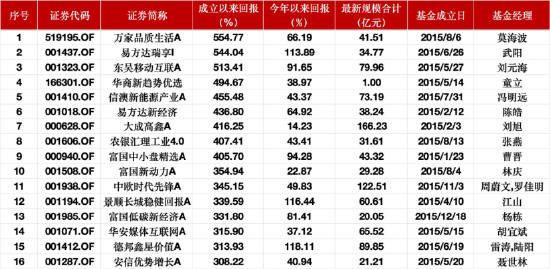
主动权益基金十年考:仅2只破百亿!大成高鑫A规模166亿十年涨416%,中欧时代先锋A规模123亿涨345.15%
Xin Lang Ji Jin· 2025-10-28 08:57
Core Insights - The report highlights the significant performance differentiation among 419 actively managed equity funds established in 2015, with a focus on long-term returns and strategic adjustments in holdings [1] Fund Performance - Only 2 funds have surpassed 10 billion yuan in size, namely Dachen Gaoxin A (16.623 billion yuan) and Zhongou Shidai Xianfeng A (12.251 billion yuan) [2] - Dachen Gaoxin A has achieved a cumulative return of 416.25% since its inception, with an annualized return of 16.51%, growing from 176 million yuan to 16.623 billion yuan, a nearly 95-fold increase [2][6] - Zhongou Shidai Xianfeng A has a total return of 345.15% over 10 years, with an annualized return of 16.12%, ranking 5th among 136 similar funds [6] Portfolio Composition - The funds have invested heavily in leading companies across various sectors, including China Mobile, Midea Group, Haomai Technology, and Tencent, reflecting a balanced approach between stable blue-chip stocks and high-growth companies [4] - Significant adjustments were made in the third quarter, with major reductions in cyclical and overseas assets, including a 43.91% reduction in China National Offshore Oil Corporation and a 22.07% reduction in Fuyao Glass [6][7] Investment Strategy - The fund managers emphasize a long-term investment philosophy focused on stock selection and understanding business fundamentals, contrasting with short-term trading behaviors [6][10] - In the AI sector, the funds are investing in areas such as humanoid robots, autonomous driving, and AI smart terminals, driven by positive industry trends and commercial viability [10] Market Trends - The report indicates a trend of increasing investment in cyclical and high-end manufacturing sectors, with notable increases in holdings of Wanhuachina and Sany Heavy Industry by 20.75% and 19.10%, respectively [9] - The balance between fund performance and size is highlighted as a critical consideration for fund managers and investors, with larger funds potentially facing flexibility issues and smaller funds at risk of liquidation [10]
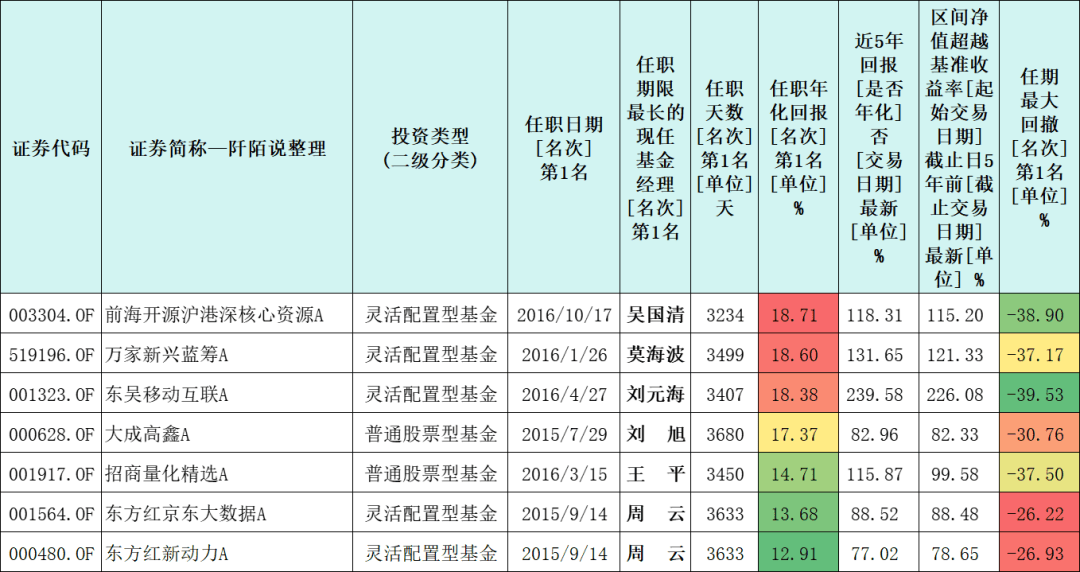
清华博士基金经理周云:九年八胜沪深300,行业配置均衡赢在稳健
Sou Hu Cai Jing· 2025-08-30 12:02
Core Insights - A selection of outstanding fund managers has been identified, with only six meeting strict criteria for performance and risk management [1] - The selected funds are primarily equity mixed, ordinary stock, and flexible allocation types, with annualized returns exceeding 10% and maximum drawdowns below -40% [1] Fund Manager Performance - The top fund managers include Wu Guoqing, Mo Haibo, Liu Yuanhai, Liu Xu, Wang Ping, and Zhou Yun, with Zhou Yun managing two funds that made the list [1][2] - Wu Guoqing's fund focuses on the non-ferrous metals industry, while Mo Haibo and Liu Yuanhai's funds emphasize technology and communication sectors [2][3] Zhou Yun's Investment Strategy - Zhou Yun has demonstrated a maximum drawdown of only -26.93% over a tenure of more than nine years, showcasing strong risk management [3] - His investment style is centered on value investing, with a diversified industry allocation and low turnover rates [3] Market Outlook and Fund Recommendations - Zhou Yun maintains an optimistic long-term outlook for the Chinese economy and markets, advocating for a balanced portfolio of stable assets and growth stocks [4] - Investors interested in Zhou Yun's strategies may consider his new fund, Oriental Red Core Value Mixed, which encourages long-term holding through a floating fee structure [4]
坚毅笃行 勇立潮头 投资老将长期主义启示录
Zhong Guo Zheng Quan Bao· 2025-08-24 22:15
Core Insights - The article emphasizes the importance of "long-termism" in the public fund industry, highlighting the need for fund managers to adhere to this principle to attract long-term capital and improve performance [1][10] - A small percentage of fund managers have maintained the same active equity fund for over 10 years, indicating a rarity of experienced managers in a rapidly changing industry [2][9] Group 1: Long-term Fund Managers - As of August 24, only about 120 fund managers, or 5% of those managing stock and mixed funds, have managed the same active equity fund for over 10 years [2][3] - Among those managing funds for over 14 years, only 14 managers exist, representing approximately 0.6% of the total [2][3] - The long-term performance of these managers is notable, with those managing for over 14 years achieving an average annualized return of 10.05% [2][3] Group 2: Performance of Notable Managers - Specific fund managers who have managed their funds for over 14 years include Zhu Shaoxing, Du Meng, and Yang Gu, with annualized returns exceeding 10% [3][4] - Zhu Shaoxing's fund has achieved a remarkable annualized return of 15.32% since its inception in November 2005 [3][6] - Du Meng's fund has an annualized return of 14.9%, benefiting from a focus on emerging industries and technological advancements [6][7] Group 3: Investment Strategies - Long-term managers exhibit unique qualities that enable them to navigate market cycles successfully, including a deep understanding of market changes and a commitment to continuous learning [9][10] - These managers often have mature investment philosophies and adhere to strict buy and sell criteria to avoid emotional trading [10] - The success of these managers is supported by robust research platforms and resources, allowing them to make informed investment decisions [10][11] Group 4: Industry Trends - The public fund industry is undergoing significant reforms influenced by policy changes and market dynamics, emphasizing the need for long-term investment strategies [10][11] - Fund companies are increasingly looking to international markets for inspiration, adopting a "long-distance running" investment culture [11]