
天鲲号

Search documents
科技领航现代化海洋产业体系构建
Zhong Guo Zi Ran Zi Yuan Bao· 2026-01-19 07:31
Core Viewpoint - The article emphasizes the importance of advancing China's marine economy through high-quality development and technological innovation, highlighting the country's achievements in marine science and technology as a foundation for building a modern marine industry system [2][4]. Group 1: Technological Innovation in Marine Industry - Technological innovation is identified as the core driving force for upgrading the marine industry, with breakthroughs in deep-sea exploration, marine equipment manufacturing, marine renewable energy, and marine biomedicine [4]. - Significant advancements include the successful trials of deep-sea equipment like "Jiaolong" and "Fendouzhe," and the development of intelligent systems for deep-sea resource extraction [4]. - The establishment of a comprehensive marine observation network utilizing satellites, drones, and underwater gliders enhances marine monitoring capabilities [4]. Group 2: Growth and Structure of Marine Economy - China's marine economy continues to grow, with the marine production value expected to exceed 10 trillion RMB in 2024, and the added value of emerging marine industries increasing by 7.2% year-on-year [7]. - Traditional marine industries are transitioning towards high-end development, with modern facilities like deep-sea cages and intelligent fishing vessels reducing environmental pressure [7]. - The marine transportation sector maintains a global leadership position, with major ports like Shanghai and Ningbo-Zhoushan consistently ranking among the world's top ports [7]. Group 3: Emerging Marine Industries - New marine industries are becoming significant growth points, with the oil and gas sector advancing into deep-sea exploration, exemplified by the successful production of the "Deep Sea No. 1" gas field [8]. - The marine engineering equipment manufacturing sector has achieved a 60% global market share, with significant advancements in the design and construction of deep-water drilling platforms [8]. - The desalination industry is expanding, with increasing self-sufficiency in technology and equipment [9]. Group 4: Policy and Ecosystem Support - Strong policy support at both national and local levels, including the "14th Five-Year Plan for Marine Economic Development," provides strategic guidance for technological research and development [5]. - Collaborative ecosystems involving academicians, platforms, and technologies are being established in regions like Shandong and Guangdong to foster innovation [5]. Group 5: Challenges and Future Directions - Despite progress, challenges remain, including reliance on foreign technology in key areas and the need for improved coordination within the marine industry [11]. - Future strategies should focus on enhancing core technologies, promoting the integration of innovation, industry, and finance, and fostering international cooperation in marine science and sustainable development [12][13].
下个万亿 看海洋——南通构筑海洋经济发展新高地
Shang Hai Zheng Quan Bao· 2025-12-14 22:12
Core Viewpoint - Nantong is positioning itself as a new highland for marine economic development, aiming for a marine production value of 260.6 billion yuan in 2024, which will account for over a quarter of Jiangsu Province's total [1]. Group 1: Marine Economic Development - Nantong's marine production value is projected to reach 260.6 billion yuan in 2024, representing more than 25% of Jiangsu's total [1]. - The city is accelerating the construction of a modern marine industry system characterized by "3+2+2+X" to transition from "river-based growth" to "river-sea integrated growth" [1]. Group 2: Shipbuilding and Marine Engineering - The shipbuilding and marine engineering industry is a key component of Nantong's marine economic landscape, with major companies like COSCO Shipping Heavy Industry and Zhenhua Heavy Industries leading the sector [2]. - By early 2025, Nantong's shipbuilding and marine equipment manufacturing will account for 10% and 25% of the national totals, respectively, establishing itself as the second-largest base for these industries in China [2]. - Nantong is focusing on high-end, intelligent, green, and international development directions to enhance the quality of the shipbuilding and marine engineering industry [2]. Group 3: Strategic Collaborations and Infrastructure - A strategic cooperation agreement was signed between the Nantong Municipal Government and Jiangsu Coastal Development Group to promote high-quality development in the marine industry [3]. - Nantong aims to create three major marine industry landmarks: a marine equipment hub, an advanced materials sector, and a new energy green island [3]. - The city is also enhancing its transportation infrastructure, having invested 120 billion yuan in transportation construction during the 14th Five-Year Plan, which is 1.5 times that of the previous plan [6]. Group 4: Innovation and Technology - Nantong plans to implement a special plan for innovative development in the marine industry, aiming to add 100 new high-tech marine enterprises and establish over 10 marine characteristic parks [4]. - The city is collaborating with universities and research institutions to build high-performance computing centers and deep-sea operation environment simulation laboratories [4]. Group 5: Regional Integration and Economic Synergy - Nantong is leveraging its geographical advantages as part of the Shanghai "1+8" metropolitan area, fostering industrial collaboration with Shanghai and southern Jiangsu [6]. - More than 50% of Nantong's enterprises have established stable partnerships with companies in Shanghai and southern Jiangsu, attracting over 450 large-scale manufacturing enterprises from these regions in the past three years [6]. - The city is enhancing its multi-modal transport capabilities, including the launch of its first ocean route and the establishment of an automated container terminal [7].
下个万亿,看海洋——南通构筑海洋经济发展新高地
Shang Hai Zheng Quan Bao· 2025-12-14 19:43
Core Viewpoint - Nantong is positioning itself as a new highland for marine economic development, aiming to achieve a marine production value of 260.6 billion yuan in 2024, which accounts for over a quarter of Jiangsu Province's total [2] Group 1: Marine Industry Development - The shipbuilding and marine engineering industry is a key component of Nantong's marine economic landscape, with major companies like COSCO Shipping Heavy Industry and Zhenhua Heavy Industries leading the sector [2] - Nantong's shipbuilding and marine equipment manufacturing are projected to account for 10% and 25% of the national totals, respectively, by early 2025, establishing it as the second-largest base for these industries in China [2] - The city is focusing on high-end, intelligent, green, and international development directions to enhance the quality of the shipbuilding and marine engineering industry [3] Group 2: Modern Marine Industry System - Nantong is accelerating the construction of a "3+2+2+X" modern marine industry system, which includes three major marine industry landmarks and two supporting industries [5] - The city aims to achieve a scale of over 1 trillion yuan in marine-related industries this year [5] - Key projects include the establishment of marine equipment, advanced materials, and new energy sectors, along with the development of marine fisheries and tourism [5][6] Group 3: Regional Collaboration and Infrastructure - Nantong is leveraging its geographical advantages as part of the Shanghai "1+8" metropolitan area to enhance industrial collaboration with Shanghai and southern Jiangsu [7] - Over 50% of Nantong's enterprises have established stable partnerships with companies in Shanghai and southern Jiangsu, attracting over 450 large-scale manufacturing enterprises from these regions in the past three years [7] - Significant investments in transportation infrastructure, totaling 120 billion yuan during the 14th Five-Year Plan, are supporting the development of the marine economy [8] Group 4: Future Prospects - Nantong is committed to building a modern marine industry system and enhancing regional cooperation to contribute to Jiangsu's goal of becoming a strong marine province [9] - The city is focused on multi-modal transport development and has launched its first ocean route, marking a breakthrough in sea-rail intermodal transport [8] - Nantong aims to achieve a container throughput of over 3.5 million TEUs at its ports during the 15th Five-Year Plan [9]

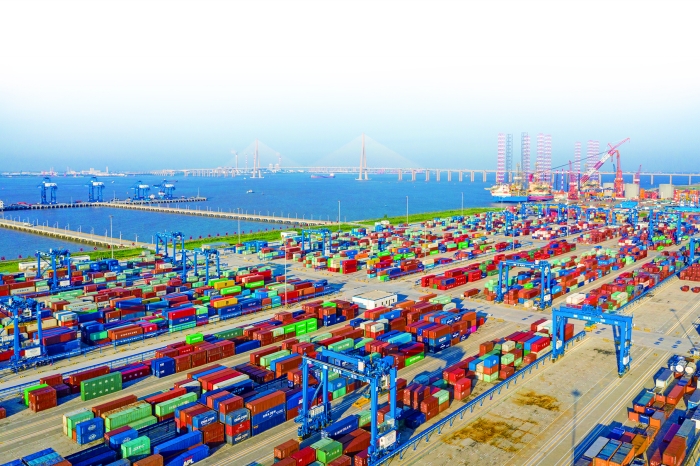
又一“国之重器”要来了!
Xin Hua She· 2025-11-26 05:16
Core Insights - The successful sea trial of the "Tongjun" dredger marks a significant advancement in China's capabilities, filling a gap in the market for dredgers with a capacity of over 35,000 cubic meters, with the "Tongjun" having a maximum capacity of 38,168 cubic meters, making it the largest in Asia and the second largest in the world [1][2] Group 1 - The "Tongjun" dredger is China's first self-designed and built ultra-large dredger with a capacity of 35,000 cubic meters, which is a national key project [1] - The sea trial lasted five days, starting on November 21, and included rigorous testing of 30 major items and 91 sub-items, demonstrating the dredger's strong performance in various operational scenarios [1] - The dredger's capabilities include dredging waterways and river silt, as well as sand filling for land reclamation, showcasing its versatility [1] Group 2 - The sea trial validated the "Tongjun" dredger's advanced features, including its intelligence, efficiency, versatility, and environmental friendliness, with all key performance indicators meeting or exceeding design standards [2] - Key tests focused on navigation speed, maneuverability, and stability in adverse sea conditions, confirming the vessel's excellent sailing stability and maneuverability [2] - The main propulsion system and generator set successfully completed long-duration tests, proving the reliability of the dredger's power systems, which enhances its applicability in various dredging and construction scenarios [2]
我国自主研发超大型耙吸挖泥船“通浚”轮海试成功
Xin Hua Wang· 2025-11-25 09:54
Core Viewpoint - The successful sea trial of the "Tongjun" dredger marks a significant advancement in China's capabilities in constructing large-scale dredging vessels, filling a gap in the market for vessels with a capacity exceeding 35,000 cubic meters [1][2] Group 1: Vessel Specifications and Achievements - The "Tongjun" dredger is China's first self-designed and built ultra-large dredger with a capacity of 38,168 cubic meters, ranking first in Asia and second in the world [1] - The vessel is designed for dredging waterways and river silt, with capabilities for sand blowing and land reclamation [1] - The sea trial lasted five days, during which 30 major tests and 91 sub-tests were conducted, demonstrating the vessel's core performance [1] Group 2: Performance and Testing - The dredger's two 9,000 kW internal mud pumps showcased strong performance, capable of achieving a 12 km long-distance operation, with a single dredging operation able to fill a standard football field to a height of 5 meters [1] - The vessel's advanced features of "intelligent, efficient, versatile, and environmentally friendly" were validated under complex sea conditions, with all key indicators meeting or exceeding design standards [2] - Key equipment such as the main propulsion system and generator set successfully completed long-duration tests, confirming the vessel's reliability and suitability for various dredging and construction scenarios [2]
因地制宜发展新质生产力,9城15.9万亿GDP如何“破圈”创新
Di Yi Cai Jing Zi Xun· 2025-10-29 08:42
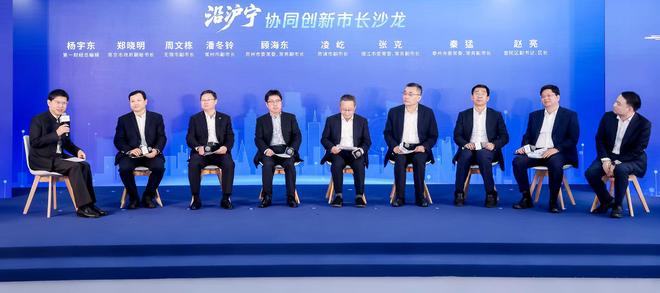
Core Insights - The article discusses the transformation of the Yangtze River Delta's industrial innovation corridor, emphasizing collaboration among nine cities along the Shanghai-Nanjing industrial innovation belt to enhance regional economic integration and innovation [1][11]. Economic Overview - The nine cities along the Shanghai-Nanjing corridor include Shanghai, Nanjing, Wuxi, Changzhou, Suzhou, Nantong, Yangzhou, Zhenjiang, and Taizhou, contributing a GDP of 15.9 trillion yuan in 2024, accounting for 11.8% of the national economy and 48% of the Yangtze River Delta's economy [3][4]. City-Specific Developments - Nanjing is developing a "4+6" industrial system focusing on AI, robotics, biomedicine, and new-generation information communication, with significant growth in software and information services expected [3][4]. - Wuxi has established itself as a leader in integrated circuits and the Internet of Things, with a strong emphasis on collaboration with Shanghai [5][6]. - Changzhou's manufacturing sector is robust, with an industrial revenue of 2.2 trillion yuan, focusing on advanced manufacturing clusters and future industries like AI and new energy [6][7]. - Suzhou boasts a comprehensive manufacturing industry, with a focus on modern service industry transformation and significant advancements in low-altitude economy and robotics [7][8]. - Nantong's industrial clusters include shipbuilding, electronics, and high-end textiles, with a goal to develop these sectors into 300 billion yuan industries [8][9]. - Zhenjiang is focusing on high-end equipment manufacturing and digital economy, integrating into the regional industrial collaboration [9][10]. - Taizhou is developing a health industry and advanced manufacturing sectors, with a modern industrial system aimed at 400 billion yuan [10][11]. Collaborative Strategies - The cities aim to break down administrative barriers and enhance cross-regional collaboration to create a synergistic innovation ecosystem [1][11]. - Suggestions for collaboration include focusing on shared strengths in AI, biomedicine, and smart manufacturing, emphasizing the importance of integrating resources and capabilities [11][12]. - The need for systematic planning and operational synergy among cities is highlighted to maximize the benefits of the innovation corridor [12][13]. Future Directions - The article emphasizes the importance of leveraging local resources and aligning them with regional industrial needs to foster innovation and economic growth [14][15]. - The establishment of a three-year action initiative for collaborative innovation among the cities aims to extend the pathways for cooperation and industrial synergy [15].
链博会上,我们看到了什么(市场漫步)
Ren Min Ri Bao· 2025-07-29 21:58
Group 1: Core Insights - The Chain Expo showcased significant innovations, featuring advanced products and technologies across various fields such as information technology, artificial intelligence, genetic engineering, and healthcare [1] - The event highlighted the efficiency of collaborative innovation, exemplified by the partnership between Luoyang Bearing and GE Healthcare, which achieved breakthroughs in high-performance CT spindle bearings [1] Group 2: Opportunities in China - Nvidia's CEO emphasized China's world-class supply chain system, noting its scale, complexity, and diversity, which are unmatched globally [2] - Major companies like Apple and McDonald's are deepening their investments in China, recognizing it as a key market for rapid iteration and innovation [2] - China's complete supply chain and strong production capabilities position it as an ideal environment for the new technological revolution and industrial transformation [2] Group 3: Future Collaboration - The Chain Expo presented a proposal advocating for true multilateralism and stronger global development amidst geopolitical tensions and protectionism [2] - China aims to build bridges in the supply chain while other nations focus on isolationist policies, promoting rules and standards as new public goods [2][3]
参展商满意度达95%!链博会持续筑牢韧性供应链生态
Zhong Guo Jing Ji Wang· 2025-07-21 04:52
Core Insights - The China International Supply Chain Promotion Expo (Chain Expo) is the world's first national-level exhibition focused on supply chains, showcasing various industries and emphasizing the core value of "linking the world and co-creating the future" [1] Group 1: Industry Collaboration and Innovation - The Chain Expo serves as a high-end platform for global enterprises to collaborate, aiming to create a more open, efficient, and sustainable supply chain ecosystem [2] - YTO Express's chairman highlighted the Expo's role in enhancing connectivity among upstream and downstream enterprises, promoting a "win-win chain" [2] - Sinopec showcased its commitment to clean energy supply chains, focusing on natural gas, hydrogen, and other sustainable energy sources, and signed cooperation agreements with nearly 50 companies in the hydrogen sector [3] Group 2: Technological Advancements - Numerous companies presented cutting-edge technologies and smart solutions at the Expo, demonstrating innovation in the supply chain sector [3] - Ninebot showcased 10 models of short-distance transportation and service robots, emphasizing its full industry chain layout in smart mobility [3] - Inner Mongolia Jishuo Technology introduced a leading "rumen capsule" technology for real-time livestock health monitoring, breaking foreign monopolies and enhancing domestic livestock farming [3] Group 3: Infrastructure and Equipment - China Communications Construction Group displayed major infrastructure projects, including Asia's largest self-propelled dredging vessel, enhancing global industrial chain collaboration [4] Group 4: Cross-Industry Synergy - CITIC Group presented its comprehensive service capabilities across various sectors, aiming to be a "bridge linking the world" [5] - China Resources Group showcased its strategic layout in health, green agriculture, and clean energy, with over 270,000 supply chain enterprises participating in its procurement activities [5] Group 5: Global Supply Chain Dynamics - Tsingtao Brewery emphasized the importance of global supply chain connectivity, leveraging smart cold chain logistics for product freshness [6] - APP (Asia Pulp & Paper) highlighted its role in cross-border industrial chains and ecological innovation, aiming to deepen international cooperation in the supply chain [6] Group 6: Future Outlook - The Chain Expo has evolved into a significant platform for global industrial chain cooperation, promoting a shift from product competition to collaborative ecosystem building [7] - Participating companies believe the Expo enhances technological matchmaking and market expansion, contributing to the resilience and sustainability of global supply chains [7]
跨越山海的心灵交响——中阿关系"亲实广深"的时代侧记
人民网-国际频道 原创稿· 2025-07-18 09:01
Core Points - The article highlights the growing cultural and educational ties between China and the UAE, particularly through the Hamdan School's Chinese language program, which has become a flagship initiative for Chinese education in the region [1][2][3] - The strategic vision of UAE leadership, particularly Sheikh Mohammed, has led to the establishment of Chinese language courses in public schools, fostering a new generation of students proficient in Chinese [3][4] - The successful integration of Chinese culture and language into the UAE's education system is seen as a bridge for future cooperation between the two nations [2][4] Group 1: Cultural Exchange - The Hamdan School has been pivotal in promoting Chinese language education, with students starting from kindergarten and achieving fluency by graduation [2][3] - Graduates from the school have received admission offers from top Chinese universities, indicating a successful educational exchange [2] - The presence of Chinese language and culture in the UAE is fostering a deeper understanding and connection between the two countries [1][2] Group 2: Strategic Initiatives - The establishment of the Hamdan School in 2006 marked a significant step in the UAE's educational strategy to look eastward for talent development [3] - The initiative has expanded to 171 schools, with over 71,000 students now learning Chinese, showcasing the rapid growth of this educational program [3] - The correspondence between students in the UAE and President Xi Jinping reflects the high-level support for cultural and educational exchanges [3] Group 3: Economic Cooperation - The article discusses the financial collaboration between China and the UAE, highlighted by the successful issuance of a $5.6 billion green bond, symbolizing deepening strategic trust [7][8] - The establishment of the Belt and Road Bank Cooperation Mechanism has expanded from 49 to 185 member institutions, indicating a robust framework for financial cooperation [7][8] - The focus on green finance and sustainable projects is reshaping the financial landscape and cooperation between the two nations [7][8] Group 4: Artistic Collaboration - A concert featuring Chinese classical music in Dubai represents a cultural exchange that transcends borders, showcasing the integration of Chinese art into the UAE's cultural scene [6] - The performance of traditional Chinese pieces in a prominent venue highlights the growing appreciation for Chinese culture in the UAE [6] - The ongoing series of concerts aims to further promote Chinese art and culture, enhancing bilateral cultural relations [6]
