存储器芯片

Search documents
2026年注定是一个半导体行业的大年!十年一遇!!
是说芯语· 2026-03-15 12:43
Core Viewpoint - The global semiconductor market is expected to experience significant growth in 2026, driven primarily by AI-related demand, with projections indicating a market size exceeding $1 trillion, representing a year-on-year increase of over 32% [9]. Group 1: Market Trends - The semiconductor device market is showing strong growth, particularly in North America, Asia-Pacific, and mainland China, with mainland China's growth rate recently improving [5]. - The current market trajectory has surpassed previous models, indicating a growth trend that exceeds the theoretical volatility limits established since 2016 [7]. - The last time the year-on-year growth rate exceeded 30% was in 2010, following the financial crisis, highlighting the uniqueness of the current growth phase [8]. Group 2: Regional Insights - The mainland China semiconductor market is projected to exceed $285 billion, with a year-on-year growth of 35%, slightly above the global average [10]. - North America is expected to see even higher growth, approaching 36%, with a market size of approximately $338 billion [11]. Group 3: Equipment and Capacity Expansion - The shipment area of large silicon wafers is estimated to grow by about 15%, reaching a historical high since 2011, translating to a market value of approximately $13.5 billion, with a year-on-year increase of nearly 18% [13][14]. - The global semiconductor equipment market for Q4 2025 is projected to be around $37.3 billion, with both year-on-year and quarter-on-quarter increases of approximately 11% [16]. - The overall semiconductor market in 2026 is anticipated to be a year of unprecedented growth, primarily driven by AI computing chips and associated memory chips, while other consumer electronics may face growth challenges due to memory shortages [18].


AI热潮推动韩国股市市值超越法国 跃升至全球第九
Ge Long Hui· 2026-02-25 03:06
Core Viewpoint - The surge in South Korean tech stocks is driven by the global AI boom, leading to a significant increase in market capitalization and positioning South Korea as a key player in the global AI supply chain [1] Group 1: Market Performance - As of February 25, South Korea's total market capitalization reached $3.76 trillion, an increase of approximately $2.23 trillion since the beginning of 2025 [1] - The KOSPI index has surged about 44% this year, making it the best-performing stock market globally, while France's CAC 40 index has only risen about 4% [1] Group 2: Investment Trends - There is a notable influx of capital into AI-related sectors, particularly in memory chips and leading robotics companies, reflecting a rapid re-evaluation of the South Korean market by investors [1] - The increase in market value is attributed to shareholder-friendly reforms and South Korea's growing importance in the global AI supply chain [1]
盈新发展(000620) - 000620盈新发展投资者关系管理信息20260202
2026-02-02 08:48
Group 1: Company Overview and Strategic Direction - The company, formerly known as Xinhua Lian Cultural Tourism, completed judicial reorganization at the end of 2023 and was renamed Beijing Tongguan Yingxin Cultural Tourism Development Co., Ltd. in 2025 [2] - The company is transitioning to a "cultural + technology" integrated production model, focusing on real estate stability, strengthening cultural tourism, and expanding technology [2] - A cash acquisition of Guangdong Changxing Semiconductor Technology Co., Ltd. for 520 million CNY to gain control was approved, with the aim of integrating semiconductor technology into the company's operations [2][4] Group 2: Acquisition Details and Rationale - The acquisition of Changxing Semiconductor is expected to enhance the company's capabilities in the semiconductor industry, which is experiencing a new growth cycle [5] - The decision for a cash acquisition was made to maximize transaction efficiency and certainty, with a structured payment plan including a 120 million CNY performance guarantee [5] - The acquisition is projected to create a second growth curve for the company, establishing a stable revenue source beyond cultural tourism [6] Group 3: Synergies and Market Position - The semiconductor business will provide mutual benefits to the real estate and cultural tourism sectors, as the demand for storage products increases with the growth of smart buildings and digital tourism experiences [4] - Changxing Semiconductor is recognized as a national high-tech enterprise, specializing in memory chip packaging and testing, with established partnerships with major suppliers like Samsung and SK Hynix [3] Group 4: Future Plans and Talent Strategy - The company plans to implement talent incentive programs, including stock options, to attract and retain key personnel in both cultural tourism and semiconductor sectors [7] - In real estate, the company will focus on a "stable de-stocking" strategy, ensuring timely project delivery and exploring high-margin urban renewal projects [8] - The cultural tourism sector will leverage a light asset operation model, enhancing existing attractions and forming strategic partnerships to drive regional economic growth [8] Group 5: Financing and Capital Structure - The company aims to optimize its capital structure through various financing tools, including equity and debt, to support its strategic initiatives [8] - Following the acquisition, the company will actively seek financing channels for the technology sector, including policy support and industry fund collaborations [8]

跨界并购开年升温
2 1 Shi Ji Jing Ji Bao Dao· 2026-01-28 23:12
Core Viewpoint - The A-share merger and acquisition (M&A) market remains active in early 2026, with over 297 disclosed M&A transactions, including 12 major asset restructurings, highlighting a focus on strategic emerging industries like semiconductors and artificial intelligence [1] Group 1: M&A Activity - In January 2026, several companies, including Yingxin Development, Kangxin New Materials, and Dinglong Co., announced plans for cross-industry mergers, particularly transitioning from traditional manufacturing to sectors like semiconductors and high-end equipment [1] - Notably, there have been at least eight disclosed cross-industry M&A cases this year, with four involving semiconductor assets [4] - Companies like Kangxin New Materials and Mingyang Smart Energy are actively pursuing acquisitions in the semiconductor sector, indicating a trend of traditional firms seeking new growth avenues through M&A [5][6] Group 2: Regulatory Scrutiny - Regulatory bodies have heightened scrutiny over cross-industry mergers, focusing on the authenticity of disclosures and the reasonableness of valuations, particularly for transactions that appear speculative or high-risk [1][7] - The Shanghai Stock Exchange has issued inquiries regarding the feasibility of performance commitments and the rationale behind significant valuation increases in recent M&A proposals [8][9] - Cases such as Kangxin New Materials' acquisition of Wuxi Yubang Semiconductor have drawn immediate regulatory attention due to concerns over inflated performance promises compared to historical performance [8][10] Group 3: Market Dynamics - The recent regulatory framework encourages well-structured cross-industry mergers that align with business logic and support industry transformation, aiming to revitalize previously stagnant cross-industry M&A activities [3] - Traditional companies facing stagnant core business performance are increasingly turning to cross-industry M&A as a means to rejuvenate growth and avoid potential delisting, despite the inherent risks involved [6][11] - The market is witnessing a shift where companies with weak main business operations are seeking new development momentum through strategic acquisitions, which could enhance the overall quality of listed companies [6]
A股跨界并购扎堆半导体,监管紧盯并购真实性
2 1 Shi Ji Jing Ji Bao Dao· 2026-01-28 12:15
Core Viewpoint - The A-share merger and acquisition (M&A) market remains active in early 2026, with over 297 disclosed M&A cases, including 12 major asset restructurings, highlighting a focus on strategic emerging industries like semiconductors and artificial intelligence [1] Group 1: M&A Activity - In January 2026, several companies, including Yingxin Development, Kangxin New Materials, and Mingyang Smart Energy, planned cross-industry mergers, particularly transitioning from traditional manufacturing to sectors like semiconductors and high-end equipment [1][4] - Notably, four out of eight disclosed cross-industry M&A cases involved semiconductor assets, indicating a strong interest in this sector [4] - Companies like Yingxin Development and Kangxin New Materials are pursuing acquisitions to enhance their business capabilities amid challenges in their core operations [6][7] Group 2: Regulatory Scrutiny - Regulatory bodies have heightened scrutiny over cross-industry mergers, focusing on the authenticity of disclosures and the reasonableness of valuations, particularly for cases involving Kangxin New Materials and others [2][8] - The Shanghai Stock Exchange issued inquiries regarding the feasibility of performance commitments and the rationale behind significant valuation increases in recent M&A cases [9][10] - There is a clear distinction in regulatory attitudes, supporting beneficial cross-industry mergers while strictly monitoring those perceived as speculative or high-risk [2][8] Group 3: Financial Performance and Challenges - Many companies engaging in cross-industry M&A have faced declining core business performance, with some reporting net profits below 30 million yuan in recent years [6][7] - For instance, Kangxin New Materials and Windfan Co. are expected to incur losses in 2025, raising concerns about the sustainability of their M&A strategies [6][10] - The need for traditional companies to pursue cross-industry mergers is driven by the risk of stagnation or "zombie" status if they fail to adapt and innovate [7]
新思科技CEO预计存储器芯片短缺将持续到2027年
Ge Long Hui· 2026-01-27 02:41
Core Viewpoint - The CEO of Synopsys, Sassine Ghazi, stated that the price increase and shortage of memory chips will persist until 2027, primarily due to high demand from AI infrastructure and limited production capacity [1] Group 1: Memory Chip Market - The majority of memory produced by top manufacturers is directly used for AI infrastructure, leading to shortages in other markets that also require memory [1] - Ghazi indicated that while chip companies are working to expand production, it will take at least two years to achieve significant capacity increases, contributing to ongoing supply constraints [1]

AI需求助推韩国综指冲破5000点新高,分析师:“这仅仅是个开始”
Sou Hu Cai Jing· 2026-01-22 02:51
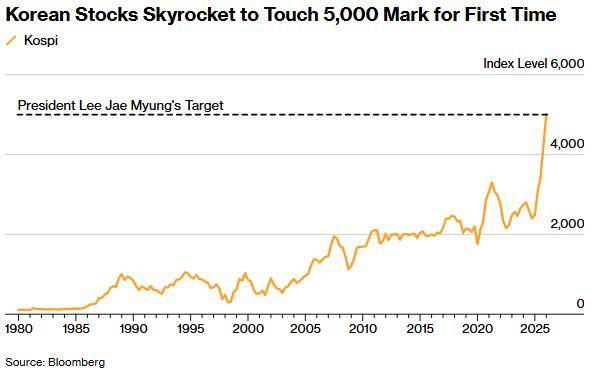
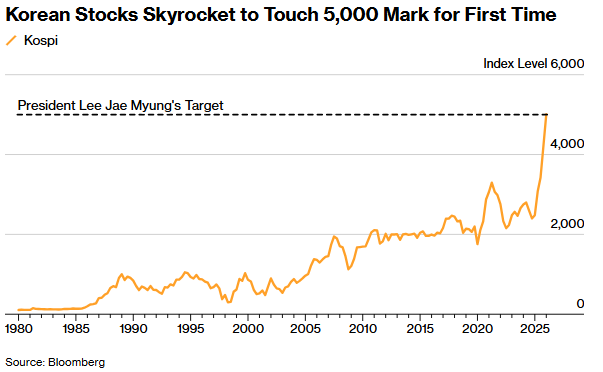
Core Viewpoint - The South Korean stock market, driven by AI demand and easing volatility from geopolitical tensions, has surpassed the 5000-point target set by President Yoon Suk-yeol, with the KOSPI index rising over 95% in the past year, making it the best-performing benchmark globally [1][4]. Group 1: Market Performance - The KOSPI index reached 5019.54 points, up 2.2%, with major contributors including Samsung Electronics, SK Hynix, and Hyundai Motor [1]. - The KOSPI index has shown consistent growth, with all but one trading day in January recording gains, despite external pressures such as U.S. tariff threats [4]. - Analysts predict the KOSPI could reach 6000 points within two months, indicating that the current level is not overly high [4][5]. Group 2: Economic Factors - The surge in the KOSPI reflects South Korea's transition from a cyclical export market to a key beneficiary of the global AI boom, particularly due to its dominance in data center memory chips [1]. - The global shortage of memory chips, driven by increased AI server demand, has significantly boosted profits for companies like Samsung Electronics, which reported a more than twofold increase in quarterly profits [6]. Group 3: Valuation and Governance - Despite reaching record highs, the KOSPI still lags behind regional peers in key valuation metrics, with a price-to-book ratio of approximately 1.6, lower than the MSCI Emerging Markets Index and Taiwan Weighted Index [4]. - The concept of "Korea Discount," referring to the long-standing valuation discount due to weak corporate governance, is expected to diminish, providing further room for market growth [4][9]. - Legislative reforms aimed at enhancing corporate governance and shareholder returns are underway, including amendments to the Commercial Act to strengthen board accountability [8]. Group 4: Market Sentiment and Future Outlook - Market sentiment remains cautious, with retail investors showing restraint compared to previous market peaks, leading to a disconnect between domestic stocks and the Korean won [8]. - Optimism persists regarding structural improvements in the stock market, supported by government-led initiatives to enhance shareholder returns and increase liquidity [8]. - Analysts from Goldman Sachs forecast a 23% return for Korean stocks in USD terms this year, bolstered by a favorable macro environment and expected earnings growth of 53% [5].
AI需求助推韩国综指冲破5000点新高 分析师:“这仅仅是个开始”
智通财经网· 2026-01-22 02:40
Group 1 - The South Korean stock market, driven by demand for artificial intelligence and easing volatility from geopolitical tensions, has surpassed the 5000-point target set by President Yoon Suk-yeol, with the KOSPI index rising 2.2% to 5019.54 points, marking a 95% increase over the past 12 months, making it the best-performing benchmark globally [1] - Major contributors to this surge include leading stocks such as Samsung Electronics, SK Hynix, and Hyundai Motor, with rising memory prices translating into profit growth for these companies [1] - The KOSPI's rise signifies a political milestone, reinforcing the government's commitment to addressing long-standing corporate governance issues that have hindered valuations [1] Group 2 - The Chief Investment Officer of Life Asset Management predicts that the KOSPI could reach 6000 points within two months, suggesting that the current level is not overly high and that the market is normalizing [2] - Despite geopolitical tensions, the KOSPI has shown resilience, with a notable increase in January, and is part of a regional relief rally following a framework agreement between the U.S. and NATO regarding Greenland [2] - President Yoon emphasized that he is not artificially inflating stock prices but rather aiming for market normalization, indicating a responsible investment approach [2] Group 3 - The concept of "Korea Discount," which refers to the valuation discount due to weak corporate governance, is expected to diminish, allowing for further upward movement in the KOSPI [3] - The KOSPI's price-to-book ratio is approximately 1.6 times, lower than the MSCI Emerging Markets Index and Taiwan's weighted stock index, indicating potential for valuation improvement [3] - Market observers remain optimistic, with Goldman Sachs forecasting a 23% return for Korean stocks in USD terms this year, supported by a 53% earnings growth and favorable macro conditions [3] Group 4 - A global shortage of memory chips is a significant tailwind, with AI server demand driving memory prices up, resulting in Samsung Electronics' quarterly profits more than doubling to a record high [5] - The supply-demand dynamics for memory chips are expected to remain "imbalanced" until 2027 due to cautious capital expenditure and new capacity from manufacturers, suggesting further upside potential [5] Group 5 - There are concerns about profit-taking pressure that could lead to sudden sell-offs, as the recent surge has been driven by a limited number of buyers, primarily local institutional investors [8] - Retail investor sentiment is more restrained compared to the post-pandemic market peak in 2021, with many retail investors shifting funds to U.S. stocks, contributing to the weakening of the Korean won and a disconnect from the domestic market [8] - Despite these concerns, there is a prevailing optimism regarding structural improvements in the stock market, supported by government-led initiatives aimed at enhancing shareholder returns and increasing liquidity [8] Group 6 - The South Korean market has historically traded at a significant discount, and ongoing reform progress, coupled with effective execution, may support further valuation re-rating [9]
晚间利空!超过十家上市公司发布减持、4家超过2.2%!
Sou Hu Cai Jing· 2026-01-17 05:40
Group 1 - Multiple listed companies announced shareholder reduction plans, with notable reductions including Ruimaite at 4.98%, Youyan Silicon at 3%, Chengdu Xian Dao at 2.51%, and Zhen Shitong at 2.24% [1] - Other companies such as Lianchuang Optoelectronics and Xiongdi Technology announced reductions of 2%, while several others planned reductions of 1% [3] - The reasons given for these reductions were primarily "personal funding needs," which may be interpreted negatively in a sensitive market environment [3] Group 2 - Some stocks, like Zhizhi New Materials, experienced significant price increases but later clarified that their business does not involve popular market concepts such as AI or quantum technology, which led to a denial of the narrative supporting their stock price surge [4] - Liou Co. faced a trading suspension due to a 96.77% price increase over ten trading days, with the company indicating that its AI-related revenue is minimal [4] Group 3 - Several companies, including Kunlun Wanwei and Shanghai Hanhua, forecasted significant losses for 2025, with Kunlun Wanwei expecting a loss between 1.9 billion to 2.4 billion [6][7] - The list of companies predicting profit declines or losses is growing, with Weiyuan Co. expecting a more than 2000% drop in net profit [8] Group 4 - On January 16, 2026, institutional investors showed mixed sentiments, with Meinian Health receiving a net buy of 579.4 million and Sanan Optoelectronics 552.4 million, while Jin Feng Technology faced a net sell of 1.097 billion [9][12] - The divergence in fund flows indicates a split in market sentiment among institutional investors [12] Group 5 - Industry-wide pressures are emerging, with a report indicating that the smartphone market will face tight supply and rising prices for memory chips starting in the second half of 2025, which may lead to decreased consumer demand [14] - The automotive sector also reported declines, with major brands like BMW, Mercedes-Benz, and Audi showing significant drops in sales in China [14] Group 6 - Global commodity price fluctuations, such as a 4.56% drop in NY crude oil prices, are impacting the profitability of energy and raw material companies in the A-share market [16] - Despite negative news, market activity continues with notable trading in stocks like Tongyu Communications and Hongxiang Shares, indicating ongoing volatility [16] Group 7 - The evening of January 16, 2026, presented a mixed market landscape with ongoing shareholder reductions, risk warnings from popular stocks, and a blend of positive and negative earnings forecasts [17]
紫光国芯开启IPO辅导,AI引爆存储芯片IPO潮
2 1 Shi Ji Jing Ji Bao Dao· 2026-01-08 05:07
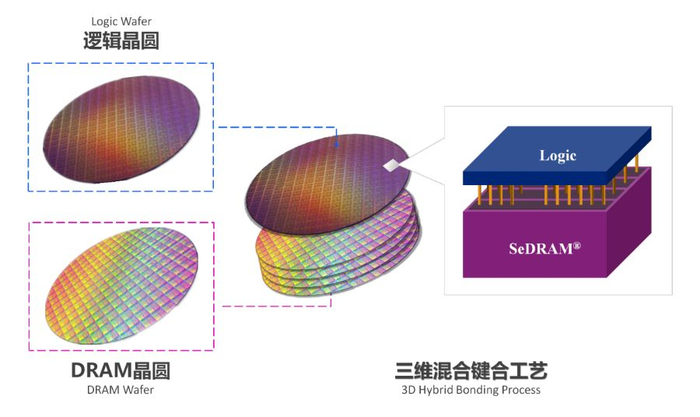
Core Viewpoint - The investment focus in the semiconductor industry is shifting from GPUs to storage chips, leading to a new wave of IPO activities in the sector. Group 1: Company Developments - Unigroup Guoxin has entered the counseling period for its public offering on the Beijing Stock Exchange, with the application accepted by the Shaanxi Securities Regulatory Bureau [1] - Changxin Technology, the largest DRAM manufacturer in China, has had its IPO application accepted for the Sci-Tech Innovation Board [1] - Several other leading companies in niche segments are also in the process of going public or have queued for listings [1] Group 2: Product Offerings - Unigroup Guoxin's memory chip products include various standards such as SDR, DDR, and LPDDR, with over twenty products achieving global mass production and sales [2] - The company has developed 3D stacked DRAM (SeDRAM) technology, offering innovative storage solutions for near-memory computing, AI, and high-performance computing [2] Group 3: Financial Performance - In the first half of 2025, Unigroup Guoxin achieved revenue of 750 million yuan, a year-on-year increase of 38.64%, and a net profit of 5.683 million yuan, marking a 139.54% increase and a return to profitability [4] Group 4: Market Trends - The DRAM market is experiencing a price and volume increase, with significant competition from international giants like Samsung, SK Hynix, and Micron, which together hold over 90% of the global market share [8] - The demand for storage chips is rapidly growing in sectors such as automotive electronics, smart driving, and IoT devices, particularly for automotive-grade DRAM [8] - The rise of AI servers is driving demand for high-bandwidth, large-capacity DRAM, leading to a shift towards high-performance, low-power, and low-latency storage solutions [9] Group 5: Technological Innovations - Domestic manufacturers are exploring new technologies to close the gap with international leaders, with potential for breakthroughs in product and technology innovation [10]