
张量处理单元(TPU)

Search documents
携手谷歌开发AI芯片,联发科两日暴涨19%创历史新高
智通财经网· 2026-01-26 10:22
Core Viewpoint - Media reports indicate that MediaTek's stock price surged due to positive news regarding its collaboration with Google on AI chip development, leading to a 19% increase over two days and reaching a historical high [1] Group 1: Stock Performance - MediaTek's stock rose by 8.6% on Monday, contributing to a cumulative increase of 19% over two trading days, marking a historical high [1] - The surge in stock price is attributed to growing market awareness of MediaTek's involvement in Google's development of Tensor Processing Units (TPUs) for AI applications [1] Group 2: Market Dynamics - Some fund managers are shifting investments from TSMC to MediaTek and other AI-related stocks due to TSMC's stock holding limits, creating new investment opportunities [1] - MediaTek's strategic shift from core smartphone chip business to high-margin customized AI solutions has positioned it as a significant alternative in the market [1] Group 3: Analyst Insights - Morgan Stanley analyst Charlie Chan noted the "huge potential" of MediaTek's AI-specific integrated circuits, suggesting that the company may gain more growth as it reallocates resources towards AI-related chips [1] - Morningstar analyst Phelix Lee commented that MediaTek's latest earnings guidance appears conservative, reflecting only the outlook up to October and orders from Google, indicating that the market may expect the company to exceed its targets [2]

史上最大收购竟秘而不宣,英伟达如何借“授权协议”收割技术和人才?
Feng Huang Wang· 2025-12-27 01:32
Core Viewpoint - Nvidia has acquired key assets from AI chip startup Groq for $20 billion, utilizing a non-exclusive licensing agreement to circumvent traditional acquisition methods and potential antitrust scrutiny [1][3][4]. Group 1: Acquisition Details - Nvidia's acquisition of Groq marks the largest merger in its 32-year history, surpassing the previous record of nearly $7 billion for Mellanox in 2019 [3]. - The deal includes Groq's CEO Jonathan Ross and other top executives, who will join Nvidia to enhance the application of licensed technology while Groq continues to operate independently under CFO Simon Edwards [2][3]. Group 2: Strategic Implications - This acquisition strategy reflects a trend among tech giants like Meta, Google, Microsoft, and Amazon, who have similarly invested billions to attract top AI talent and secure critical technologies through licensing agreements [3]. - Analysts suggest that this move not only prevents Groq's technology from falling into competitors' hands but also strengthens Nvidia's position in the AI market, enhancing its competitive moat [7]. Group 3: Financial Context - Nvidia's stock rose approximately 1% to $190.53 following the announcement, with a year-to-date increase of 42%, and a staggering 13-fold increase since the launch of ChatGPT in late 2022 [5]. - The company has significantly increased its cash reserves, totaling $60.6 billion as of October, up from $13.3 billion at the beginning of 2023, allowing for aggressive investments in the AI ecosystem [5]. Group 4: Future Considerations - Key questions remain regarding the ownership of Groq's language processing unit (LPU) intellectual property and its potential licensing to Nvidia's competitors, as well as the impact of Groq's nascent cloud business on Nvidia's services [8].


花旗看好AI超级周期延续至2026年:模拟芯片有望最亮眼 首选微芯科技(MCHP.US)
美股IPO· 2025-12-24 00:07
Core Viewpoint - Citi believes that the AI supercycle will continue until 2026, but warns that the risk-reward balance is becoming less favorable [1][2] Group 1: AI Supercycle and Market Dynamics - The costs associated with OpenAI are expected to become apparent in the second half of 2026, leading to increased market volatility due to rising concerns over debt financing for AI development [2] - Citi remains optimistic about companies in the AI ecosystem, particularly Nvidia (NVDA.US), Broadcom (AVGO.US), and Micron Technology (MU.US) [2] Group 2: Semiconductor Sector Insights - The biggest positive surprise is anticipated from the analog chip sector, which is expected to improve in 2026 due to low inventory levels, slow supply growth, and depressed profit margins [2] - Microchip Technology (MCHP.US) is highlighted as a preferred stock, with significant potential for upward revisions in sales and profit margins [2] - Other stocks rated as "buy" include Broadcom, Micron Technology, Texas Instruments (TXN.US), NXP Semiconductors (NXPI.US), and Analog Devices (ADI.US) [2] Group 3: Earnings Projections - Citi projects that Microchip Technology's earnings per share (EPS) will increase more than fourfold, from $0.24 in Q3 2025 to an expected $1.33 in Q4 2027 [3] - Texas Instruments' EPS is expected to grow by 77%, from $1.20 in Q1 2026 to an anticipated $2.12 in Q3 2027 [4] Group 4: Competitive Analysis - Citi expresses a preference for Synopsys (SNPS.US) over Cadence Design Systems (CDNS.US), citing Synopsys' stronger potential for operating margin expansion due to cost-cutting measures and a higher proportion of software business [4]


人类AI算力竞争离开地球表面进入太空,美银报告:巨头都在跟进,极具挑战性
Zhi Tong Cai Jing· 2025-12-18 07:33
Core Viewpoint - The competition for AI computing power is expanding into space, with companies like SpaceX and Blue Origin exploring space-based computing platforms as the next phase of capacity expansion [2][3]. Group 1: Space-Based Computing Platforms - The demand for data centers supporting AI is driving tech and space companies to consider space-based computing platforms for capacity expansion [3]. - Companies such as SpaceX and Blue Origin are actively pursuing opportunities in space to enhance their AI business [3]. - Startups like Starcoud, supported by NVIDIA, are deploying GPUs on satellites to train AI models in orbit, while Google plans to test its hardware and AI models in space by 2027 [3]. Group 2: Technical Challenges - The space environment poses significant technical challenges for the large-scale deployment of high-performance computing payloads [5]. - While sun-synchronous orbits provide strong solar energy, radiation in these environments can damage unshielded electronic devices, necessitating radiation-hardened computing equipment, which increases costs and payload weight [5]. - The thermal management of sensitive chips in the vacuum of space is particularly challenging, with a 1 GW orbital data center potentially requiring heat dissipation 15,000 times greater than that of the International Space Station [5]. Group 3: Launch Demand Growth - The deployment of space-based data centers is expected to increase launch demand, benefiting providers like SpaceX, Blue Origin, and Rocket Lab [6]. - The development of heavy-lift rockets, such as the Starship and New Glenn, may require hundreds of flights to fully deploy a large-scale space data center, creating ongoing launch opportunities [7]. - Even small initial deployments are likely to sustain launch demand exceeding supply, presenting opportunities for major launch providers [7]. Group 4: Impact on Space Infrastructure - The widespread deployment of space-based data centers will generate comprehensive demand for space infrastructure, including satellites, payloads, space stations, and orbital platforms [6][8]. - High-bandwidth secure data transmission required for AI applications will increase the demand for laser communication, with providers like SpaceX and Myani involved in this space [8]. - The deployment of large space assets will create opportunities for developers like Voyager Technologies and Axiom, which plans to deploy orbital data center infrastructure nodes to the International Space Station by 2027 [8].

需求远超供应!法巴银行:半导体业集体看多2026,电力与ASIC风险被高估
智通财经网· 2025-12-15 01:13
Core Viewpoint - The semiconductor industry remains optimistic about supply and demand dynamics leading into 2026, with demand expected to significantly outpace supply [1][2] Group 1: Industry Outlook - Numerous semiconductor companies, including AMD and NVIDIA, express a positive outlook for market performance and capacity ramp-up through 2026, despite concerns regarding power supply and ASIC competition [1] - The recent Silicon Valley bus tour organized by BNP Paribas involved meetings with executives from major companies such as Intel, Applied Materials, and Seagate Technology, highlighting a collective confidence in future demand [1] Group 2: Power Supply Concerns - Power supply is identified as a major bottleneck in the artificial intelligence arms race, with AMD and NVIDIA acknowledging tightening electricity availability across the U.S. [2] - Both companies believe that the U.S. government is taking steps to alleviate power constraints, viewing the issue as a short-term challenge rather than a long-term barrier [2] Group 3: ASIC Competition - The introduction of custom chips, particularly Google's Tensor Processing Units (TPUs), has raised concerns about ASIC competition in the market [2] - Analysts note that TPUs are optimized for specific cloud service providers and workloads, suggesting that their market share growth should not be extrapolated to other vendors outside of current TPU adopters [2]

3年7倍!博通的崛起与铁腕CEO陈福阳
华尔街见闻· 2025-12-07 12:44
Core Viewpoint - The article discusses Broadcom's CEO, Hock Tan, highlighting his pragmatic management style, cost-cutting measures, and focus on profitability, which have positioned Broadcom as a significant challenger to Nvidia in the AI chip market [1][3]. Group 1: Management Philosophy and Cost-Cutting - Hock Tan is known for his ruthless efficiency, exemplified by significant layoffs and the removal of office perks after acquiring VMware for $84 billion [2][3]. - Following the acquisition, approximately half of VMware's 38,000 employees were laid off, and the number of office buildings was reduced from 18 to 5, contributing to substantial revenue growth for Broadcom [3]. - Broadcom's sales exceeded $50 billion last year, growing over 50% in two years, with expectations to surpass $60 billion this year [3]. Group 2: Acquisition Strategy - Tan has acquired at least 11 companies in the past 15 years, applying a strict methodology to identify "diamonds" and "garbage" in potential acquisitions [4]. - After acquiring VMware, he reduced the product lineup from 8,000 to just 4, focusing on the most valuable offerings for data center clients [4][5]. Group 3: Custom Chip Business - Broadcom has revitalized its chip business by focusing on custom chips, specifically application-specific integrated circuits (ASICs), which are more efficient and cost-effective than Nvidia's general-purpose chips [6][7]. - Major clients include Google, OpenAI, and Meta, with significant contracts signed in recent years, indicating a strong market position [7][8]. - Tan predicts that AI could generate $60 billion to $90 billion in new revenue for Broadcom by 2027, with potential earnings from the partnership with OpenAI reaching up to $300 billion [8]. Group 4: Leadership and Succession - At 74, Tan plans to remain CEO at least until 2030, but there are indications that Broadcom is considering succession planning [12][14]. - Charlie Kawwas, the president of Broadcom's semiconductor solutions group, is increasingly visible in investor communications, suggesting he may be a potential successor [12][13].

每卖50万块,每股收益提升3%!大摩:谷歌(GOOGL.US)外销TPU将为销售及盈利带来适度提升
智通财经网· 2025-11-27 02:09
Group 1 - Google is reportedly in discussions with Meta to sell its Tensor Processing Units (TPUs), which could moderately enhance its sales and profitability according to Morgan Stanley [1] - Morgan Stanley's sensitivity analysis indicates that selling approximately 500,000 TPUs could add $13 billion (about 11%) to Google's cloud revenue forecast for 2027 and approximately 3% ($0.37) to its earnings per share for the same year [1] - The potential acceleration of Google's cloud business growth and expansion in the semiconductor market may support a higher valuation multiple for the company [1] Group 2 - The impact of Google's push to sell TPUs on other semiconductor companies is significant, with Broadcom expected to benefit, while the effects on Nvidia and AMD are minimal [2] - Google has spent around $20 billion on Nvidia products compared to only a few billion on TPUs, indicating a shift in spending may occur, but the competition in the AI model space will remain intense [2] - The ongoing competition in large language models (LLMs) is expected to continue, with no clear "winner takes all" scenario anticipated, as scaling laws remain effective [2]
大模型“赶超”OpenAI、芯片威胁英伟达,谷歌为何能突然搅动AI战局?
Feng Huang Wang· 2025-11-26 02:12
Core Insights - Google has made a remarkable turnaround in the AI and self-developed chip sectors, becoming a market favorite and putting pressure on competitors like OpenAI and NVIDIA [1] Group 1: AI Model Performance - Google's latest AI model, Gemini 3, has received widespread acclaim for outperforming previous models in coding, design, and analysis, surpassing competitors like ChatGPT in benchmark tests [2] - Since the release of Gemini 3 on November 18, Alphabet's stock has increased by over 12% [2] Group 2: Chip Development - Google has spent over a decade developing its Tensor Processing Units (TPUs) for internal use, which are now being used to train the Gemini models [3] - The company is pushing for more sales of TPUs through its cloud business, which poses a long-term threat to NVIDIA's business [3] - Google is reportedly in talks with Meta for a significant deal worth billions, potentially allowing Meta to deploy Google's chips in its data centers, negatively impacting stocks of AMD and NVIDIA [3] Group 3: Antitrust Developments - In September, a U.S. federal judge ruled on an antitrust lawsuit against Google's search business, allowing the company to continue paying default search fees to partners like Apple without exclusive agreements [4] - Despite being found to have monopolistic behavior, Google emerged from the situation with minimal damage to its operations [4] Group 4: Investment Backing - Berkshire Hathaway, led by Warren Buffett, established a $4.3 billion stake in Alphabet, indicating strong confidence in the company [5] - Buffett's investment is notable as he typically avoids high-growth tech stocks, suggesting a significant belief in Google's potential [6] Group 5: Search Business Resilience - Google's core revenue from search advertising remains strong, with a 15% growth in search revenue in Q3, despite concerns about AI's impact on website traffic [7] - The company claims that generative AI has increased search frequency, and it is testing an AI-mode search advertising model that is moving beyond the experimental phase [7]

谷歌芯片威胁引发担忧,英伟达市值蒸发8000亿、带跌一票公司
Sou Hu Cai Jing· 2025-11-25 23:55
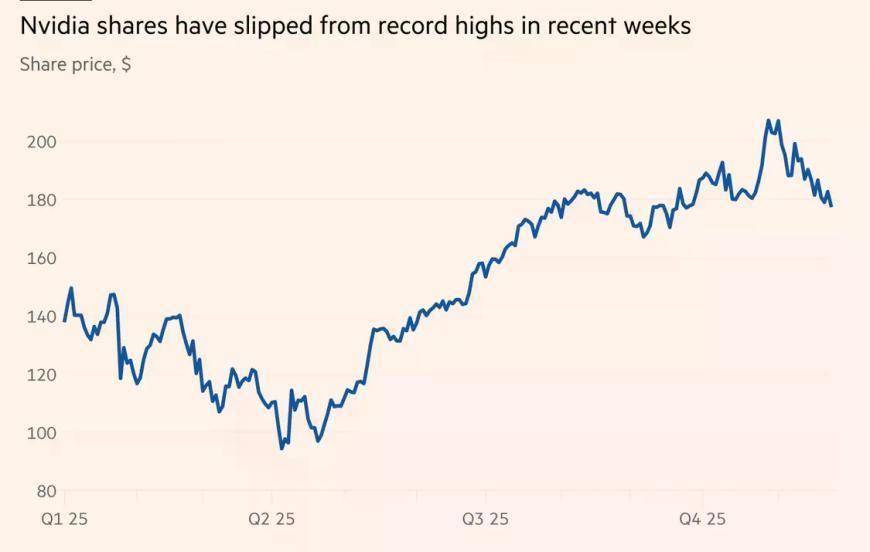
Group 1 - Nvidia's stock price dropped significantly, losing $115 billion in market value due to concerns over Google's dominance in the AI sector [1] - Nvidia's shares fell over 7% at one point, ultimately closing down 2.6%, impacting related companies such as Super Micro Computer and Oracle [2] - Since reaching a peak market value of $5 trillion less than a month ago, Nvidia has seen a decline of over $700 billion in market value [2] Group 2 - Google's parent company, Alphabet, saw its stock rise by 1.6%, approaching a $4 trillion market value milestone [5] - The market's reaction is attributed to the excitement surrounding Google's AI-specific chip, the Tensor Processing Unit (TPU), and the release of its new language model, Gemini 3, which is perceived to surpass OpenAI's ChatGPT [6] - Analysts suggest that the release of Gemini 3 may significantly alter the AI landscape, with some comparing its impact to that of the DeepSeek model released earlier this year [6]
谷歌芯片威胁引发担忧 英伟达市值蒸发8000亿、带跌一票公司
Feng Huang Wang· 2025-11-25 23:31
Group 1 - Nvidia's stock price fell significantly, resulting in a market value loss of $115 billion (approximately 814.7 billion RMB) due to concerns over Google's dominance in the AI sector [1] - Nvidia's stock dropped over 7% at one point during trading, ultimately closing down 2.6%, affecting several related companies [1] - Since reaching a market cap peak of $5 trillion less than a month ago, Nvidia's market value has decreased by over $700 billion [1] Group 2 - Alphabet, Google's parent company, saw its stock rise by 1.6%, approaching a $4 trillion market cap, driven by investor interest in its AI developments [2] - The release of Google's latest large language model, Gemini 3, is perceived as a significant advancement, potentially surpassing OpenAI's ChatGPT, and is trained using Google's TPU chips instead of Nvidia's [2] - Analysts suggest that the impact of Gemini 3 could be as significant as the earlier DeepSeek model release, indicating a shift in market perception towards Google as a leading AI player [2] Group 3 - Google is reportedly promoting its TPU chips to potential clients like Meta as an alternative to Nvidia's chips for their data centers [3]