微型驱动系统

Search documents
因地制宜发展新质生产力丨“链”就未来:深圳机器人产业集群百舸争流
Xin Hua She· 2026-02-13 14:47
Core Insights - Shenzhen has transformed into a global hub for robotics innovation, supported by over 74,000 related enterprises, leveraging its historical strengths in electronic information manufacturing and a vibrant innovation ecosystem [1][2] Industry Overview - The robotics industry in Shenzhen has a complete supply chain covering upstream core components, midstream manufacturing, and downstream application scenarios, showcasing a robust industrial ecosystem [4] - Key players in the upstream include companies like Zhaowei Electromechanical and SUTENG, while midstream manufacturers include UBTECH and others, with applications spanning various sectors [4] Market Performance - The added value of Shenzhen's robotics industry reached 5.559 billion yuan in the first three quarters of 2025, reflecting a year-on-year growth of 31.4%, indicating strong development momentum [5] Innovation and Development - Shenzhen is fostering an environment for innovation by establishing the first AI (robotics) bureau in Longgang District to streamline industry management and support [7] - The city has implemented a policy framework to lower innovation barriers, including financial support for AI model training and data procurement [8] Collaborative Ecosystem - The "robotics valley" in Nanshan District is emerging as a center for innovation, with collaboration among universities, research institutes, and enterprises, creating a "15-minute innovation circle" [10] - The integration of automotive and robotics industries is becoming a trend, with local automotive companies exploring cross-industry applications of robotics technology [10] Future Goals - The "Shenzhen Action Plan for Embodied Intelligent Robotics Technology Innovation and Industry Development (2025-2027)" aims for the related industry scale to exceed 100 billion yuan by 2027, focusing on key technology areas [12]


因地制宜发展新质生产力丨深圳机器人产业集群百舸争流
Xin Lang Cai Jing· 2026-02-13 14:18
Core Insights - Shenzhen has over 74,000 companies in the robotics industry chain, transforming into a global innovation hub for robotics and embodied intelligence [1][2] - The city has developed a comprehensive industrial system covering upstream core components, midstream manufacturing, and downstream application scenarios, enhancing its competitive edge [4][5] - Shenzhen's robotics industry achieved a value-added of 5.559 billion yuan in the first three quarters of 2025, reflecting a year-on-year growth of 31.4% [5] Industry Development - Shenzhen's "Robot Valley" is emerging as a national and global center for robotics technology innovation and application demonstration, supported by leading companies like UBTECH and Yujian Technology [2] - The city has established a full-chain industrial system, with key players in core components such as micro-drive systems and laser radar, and leading manufacturers in the midstream sector [4][5] - The integration of various sectors, including automotive and robotics, is driving innovation and creating new market opportunities [9] Policy and Innovation - Shenzhen has implemented a policy framework to lower innovation barriers, including a unique support system for AI model training and data procurement [8] - The establishment of the first AI (robotics) bureau in Longgang District aims to streamline industry management and enhance service responsiveness [7] - The city is focusing on key technology areas such as high-energy density micro-motors and multi-modal sensors, with a goal to reach an industry scale of over 100 billion yuan by 2027 [10]
因地制宜发展新质生产力|“链”就未来:深圳机器人产业集群百舸争流
Xin Hua She· 2026-02-13 10:50
Core Insights - Shenzhen has over 74,000 companies related to the robotics industry, creating a vibrant ecosystem that integrates new information technology with advanced manufacturing [1] - The city is transforming from an electronics manufacturing hub to a global center for robotics innovation, supported by a comprehensive industrial system that spans from core components to application scenarios [2][3] Industry Overview - Shenzhen's robotics industry includes leading companies such as UBTECH, Yujian Technology, and others, with a full supply chain covering upstream components, midstream manufacturing, and downstream applications [2] - The industry has shown strong growth, with a reported increase in value added to the robotics sector reaching 5.559 billion yuan, a year-on-year growth of 31.4% in the first three quarters of 2025 [3] Government Initiatives - The establishment of the first AI (robotics) bureau in Longgang District aims to break down departmental barriers and streamline support for the robotics industry [4] - Shenzhen has implemented a policy framework that includes financial support for AI model training and data procurement, addressing high R&D costs and encouraging innovation [4] Ecosystem Development - The "Robot Valley" in Nanshan District is emerging as a key area for robotics innovation, supported by a strong network of universities and research institutions [2][5] - The integration of various sectors, including automotive and robotics, is being promoted to enhance innovation and application in the industry [5][6] Future Goals - Shenzhen aims to achieve an industry scale of over 100 billion yuan by 2027, focusing on key technology areas such as high-energy-density micro motors and multi-modal sensors [6] - The city is positioned as a model for industrial transformation and innovation, providing insights for broader industry development [6]
兆威机电(003021):微型传动系统龙头,人形机器人、XR、汽车电子打开成长空间
ZHESHANG SECURITIES· 2025-12-22 07:50
Investment Rating - The report gives a "Buy" rating for the company, marking its first coverage [6] Core Insights - The company is a leader in micro drive systems, with a customized business model that creates brand value barriers. From 2017 to 2024, revenue grew from 550 million to 1.53 billion yuan, with a compound annual growth rate (CAGR) of 15.7%, and net profit increased from 49 million to 225 million yuan, with a CAGR of 24.3% [1][5] - The humanoid robot market is expected to see significant growth, with demand projected to reach 1.772 million units by 2030, creating a market space of 56.8 billion yuan for dexterous hands, of which the hollow cup motors and gear sets will account for about half, corresponding to a market space of 28.4 billion yuan [2][50] - The XR (Extended Reality) sector is anticipated to become a next-generation consumer electronics phenomenon, with shipments of XR headsets expected to reach 124 million units by 2028. The company's micro drive systems are core components in XR headsets, positioning it to benefit from this growth [3][25] - In the automotive electronics sector, the company has established long-term partnerships with major clients like Bosch and BYD, with revenue in this area growing from 192 million to 633 million yuan from 2019 to 2023, achieving a CAGR of 34.75% [4][33] Summary by Sections Micro Drive Systems - The company has been deeply engaged in micro drive systems for over 20 years, expanding its downstream market applications. It transitioned from producing precision injection parts to integrated products and customized solutions, now serving various industries including automotive electronics, communication devices, and robotics [15][20] - The micro drive systems are essential components in various industries, characterized by their miniaturization, high precision, and reliability, with a broad market demand [20][22] Humanoid Robots - The company focuses on dexterous hands, positioning itself in the core components like motors and gearboxes. It has launched self-developed dexterous hand products, aiming to provide comprehensive solutions in the humanoid robot market [2][39] - AI advancements are accelerating the humanoid robot industry, with significant opportunities for domestic manufacturers to participate in this growing field [39][42] XR (Extended Reality) - The XR industry is entering a rapid development phase, with major manufacturers entering the market. The company's micro drive systems are widely used in XR headsets, enhancing its growth potential in this sector [3][25] Automotive Electronics - The automotive electronics sector is undergoing a technological revolution, with increasing penetration rates and vehicle value. The company has capitalized on the growth of smart vehicles and established long-term relationships with key automotive clients [4][33] - Revenue from automotive electronics has significantly increased, with a notable 66% growth in 2022, and it now accounts for 52.5% of total revenue [4][33] Financial Forecast and Investment Recommendations - The company is projected to achieve revenues of 1.899 billion, 2.409 billion, and 3.137 billion yuan from 2025 to 2027, with net profits of 284 million, 404 million, and 529 million yuan respectively. The current stock price corresponds to a price-to-earnings (P/E) ratio of 87, 61, and 46 for the respective years [5][9]
10万亿!超越京沪,中国“第一城”易主了
首席商业评论· 2025-12-19 03:44
Core Viewpoint - Shenzhen has officially become China's "first city" for specialized and innovative "little giant" enterprises, surpassing Beijing and Shanghai in both quantity and quality of these companies, marking a significant milestone in its economic development [7][24]. Group 1: Achievements of Shenzhen - By the end of 2025, Shenzhen will have 1,333 "little giant" enterprises, leading the nation, with Beijing at 1,210 and Shanghai at 1,032 [7]. - The total market value of these enterprises is estimated to be close to 10 trillion yuan, showcasing their substantial economic impact [7]. - Shenzhen's "little giant" enterprises are concentrated in key areas of national focus, such as "manufacturing power" and "strengthening supply chains," with high entry barriers [7]. Group 2: Growth and Innovation - Shenzhen's "little giant" enterprises exhibit remarkable growth, with an average establishment time of 13 years to reach national recognition, which is 1.71 years faster than the national average [11]. - These companies have a high average R&D intensity of 7.63%, with annual R&D expenditures averaging 33.39 million yuan, significantly above the national average [11]. - The average number of patents filed by these enterprises is 152, with nearly 30% involved in setting international or national standards [11]. Group 3: Strategic Initiatives - Shenzhen's "20+8" industrial cluster strategy serves as a core engine for nurturing "little giant" enterprises, providing a clear industrial direction and reducing strategic ambiguity for startups [13][18]. - The government facilitates collaboration between large and small enterprises through mechanisms like "chain leader" and "chain master" systems, enhancing overall industry competitiveness [16]. - A robust market support system combines effective market access with proactive government involvement, enabling local products to be tested and iterated within the local market before global expansion [18]. Group 4: Financial Support - Shenzhen has pioneered a "bold capital" approach, allowing for long-term investments in innovative projects, particularly in high-tech sectors, to help companies navigate critical growth phases [19]. - The city has established four major equity investment platforms to support the development of innovative enterprises, with significant investments made in national-level "little giant" companies [19]. Group 5: Future Prospects - Achieving the title of "first city" is seen as a new starting point for Shenzhen, indicating a stronger industrial foundation and a pathway for future economic growth [24]. - The success of these "little giants" is expected to lead to the emergence of world-class enterprises, contributing to Shenzhen's sustained high-quality economic development [24]. - Shenzhen's model of nurturing innovation and industry collaboration is viewed as a replicable framework for other regions in China to build modern industrial systems [24].
深圳登顶全国“专精特新第一城”
2 1 Shi Ji Jing Ji Bao Dao· 2025-12-15 09:05
Group 1 - Shenzhen leads China with a total of 1,333 "specialized, refined, distinctive, and innovative" (专精特新) "little giant" enterprises, surpassing Beijing (1,210) and Shanghai (1,032) [2][3] - The growth of "little giant" enterprises in Shenzhen reflects a focus on key segments of the industrial chain, mastery of core technologies, and high market share, indicating a high level of development in China's manufacturing sector [3] - Shenzhen's proportion of newly added "little giants" has increased from 6.3% in 2022 to 8.4% in 2023, and is projected to reach 9.8% in 2024 and 9.9% in 2025, maintaining the top position in the country for three consecutive years [4] Group 2 - Notable "little giants" include Jieput's MOPA pulsed fiber laser, which holds over 70% of the domestic market and ranks first globally, and Guangyue Technology, which has developed world-leading high-power transmission cable series [4] - Shenzhen's "little giants" exhibit an average R&D intensity of 7.63%, with annual R&D expenditure averaging 33.39 million yuan, surpassing the national average for similar enterprises [4] - The city has established a comprehensive nurturing system for enterprises, with plans to support "gazelle" and "unicorn" companies through a structured service system aimed at fostering innovation and collaboration within the electronic manufacturing ecosystem [5]

10万亿!超越京沪,中国“第一城”易主了
Qian Zhan Wang· 2025-12-12 04:33
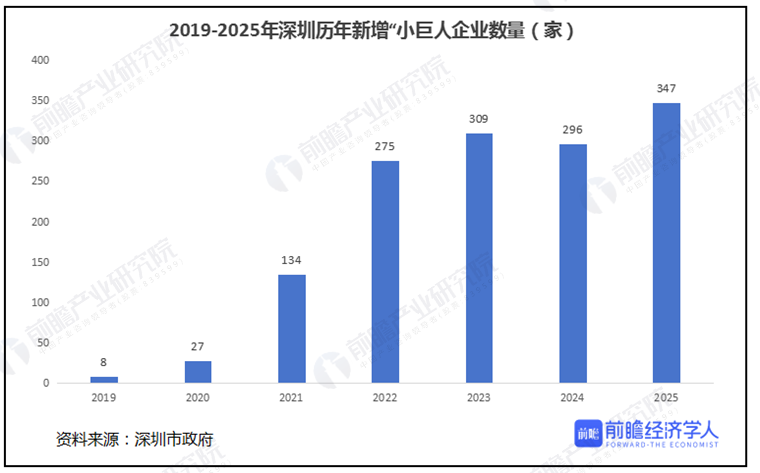
Core Viewpoint - Shenzhen has officially become China's "first city" for specialized and innovative "little giant" enterprises, surpassing Beijing and Shanghai in quantity and economic value [2][3][19]. Group 1: Overview of "Little Giants" - By the end of 2025, Shenzhen will have 1,333 "little giant" enterprises, leading the nation with 347 new additions, compared to Beijing's 1,210 and Shanghai's 1,032 [2][3]. - The total market value of these enterprises is estimated to be close to 10 trillion yuan, based on an average market value of 71 million yuan per listed "little giant" [3][8]. - These enterprises are concentrated in key areas of national focus, such as "manufacturing power" and "strengthening supply chains," with high entry barriers requiring domestic leadership in niche sectors and significant R&D investment [3][8]. Group 2: Growth and Innovation - Shenzhen's "little giants" exhibit remarkable growth, with an average time of 13 years from establishment to becoming a national-level "little giant," which is 1.71 years faster than the national average [8]. - The average R&D intensity of these enterprises is 7.63%, with annual R&D expenditure averaging 33.39 million yuan, significantly higher than the national average [8][19]. - These companies are also active in patent applications, averaging 152 patents per enterprise, with nearly 30% involved in setting international or national standards [8][19]. Group 3: Ecosystem and Support - Shenzhen's "20+8" industrial cluster strategy serves as a core engine for nurturing "little giant" enterprises, providing a structured ecosystem for growth and collaboration [9][10]. - The government facilitates connections between large and small enterprises through mechanisms like "chain leader" and "chain master" systems, resulting in over 500 technical cooperation agreements in 2024 alone [12][14]. - The city combines effective market strategies with government support, creating a comprehensive market support system that includes local validation and global expansion initiatives [14][15]. Group 4: Financial Support - Shenzhen has developed a "bold capital" approach to support innovative enterprises, allowing for long-term investments in high-tech sectors despite initial project risks [16][19]. - The city has established four major equity investment platforms to back innovative enterprises, with significant investments in numerous "little giants" [16][19]. Group 5: Future Implications - Achieving the title of "first city" for specialized and innovative enterprises marks a new starting point for Shenzhen, strengthening its industrial foundation and enhancing its resilience against global market fluctuations [19][20]. - The pathway from "little giants" to potential global leaders indicates a clear trajectory for future economic growth, with these enterprises expected to contribute significantly to Shenzhen's high-quality development [19][20].


兆威机电拟1亿美元投建泰国基地
Ju Chao Zi Xun· 2025-08-16 01:56
Group 1 - The company Zhaowei Electric announced plans to invest up to $100 million in building a new production base in Thailand, marking a significant step in its overseas strategic layout [3] - The new production base aims to enhance the company's global production network and establish a localized product service supply system to better meet overseas customer demands and improve international competitiveness [3] - Zhaowei Electric specializes in micro drive systems and micro actuation systems, with applications in automotive electronics, smart home devices, medical equipment, and industrial automation [3] Group 2 - This is not Zhaowei Electric's first foray into overseas markets, as the company has previously established subsidiaries in the United States and Germany to continuously enhance its global business network [4] - In August, the company submitted its listing application to the Hong Kong Stock Exchange, accelerating its internationalization strategy [4] - Zhaowei Electric emphasizes a development strategy of "rooting in the domestic market while expanding overseas," aiming to enhance its international brand influence and diversify its financing channels through the H-share listing [4]
兆威机电(003021) - 2025年5月20日投资者关系活动记录
2025-05-20 10:54
Group 1: Company Overview and Strategic Direction - The company has established a dedicated division for automotive electronics, focusing on enhancing customer collaboration and expanding market share [1][2]. - The company is actively pursuing a global strategy, with plans to issue H shares and list in Hong Kong to support long-term growth and enhance international brand recognition [5][6]. Group 2: Product Development and Market Expansion - The company is committed to the development of logistics automation, with its drum motor drive system designed for high efficiency and modularity, receiving positive customer feedback [3]. - The company has formed a specialized robotics team and established a subsidiary to focus on the development of robotic products, emphasizing continuous innovation and product upgrades [4]. Group 3: Platform Products and Technological Integration - The company has launched several platform products, including dexterous hands and drum motors, leveraging a "1+1+1" innovation system to integrate core technologies and enhance product stability [6]. - The platform products are designed to provide independent solutions, ensuring stable market demand and reducing vulnerability to market fluctuations [6].
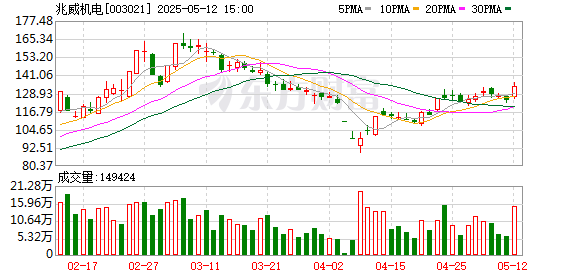
320亿市值机器人概念股:股东计划减持
Mei Ri Jing Ji Xin Wen· 2025-05-12 14:02
Group 1 - The core point of the news is that Zhaowei Electromechanical plans to issue H-shares and list on the Hong Kong Stock Exchange to enhance governance and competitiveness while also announcing a share reduction plan by a major shareholder [4][7]. - Zhaowei Electromechanical announced that a shareholder plans to reduce their stake by up to 3.6 million shares, which is 1.50% of the total share capital, within three months after a 15 trading day period from the announcement [2]. - The company was established in 2001 and specializes in micro-drive system solutions, headquartered in Shenzhen, Guangdong, with a registered capital of over 230 million yuan [2]. Group 2 - The company held board and supervisory meetings on April 3, where it approved the proposal for issuing H-shares and listing on the Hong Kong Stock Exchange [7]. - Zhaowei Electromechanical will consider the interests of existing shareholders and market conditions when determining the timing for the issuance and listing, with a decision to be made within 24 months of the board's approval [7]. - The company has appointed Ernst & Young as the auditing firm for the H-share issuance and listing process, although specific details regarding the issuance are yet to be finalized [7].