换电重卡

Search documents
远程月榜摘冠,徐工累销第一!前2月换电重卡销增17% TA们竟暴涨 | 头条
第一商用车网· 2026-03-28 13:06
Core Viewpoint - In February 2026, the sales of new energy heavy trucks experienced a year-on-year decline for the first time since February 2023, interrupting the previous growth trend, with the battery-swapping heavy truck market also showing a decline [1][25]. Sales Performance - In February 2026, a total of 7,435 new energy heavy trucks were sold in China, representing a month-on-month decrease of 54% and a year-on-year decrease of 9% [3]. - The sales of battery-swapping heavy trucks reached 1,845 units in February, marking a month-on-month decline of 58% and a year-on-year decline of 29%, with the year-on-year growth rate dropping from +61% in the previous month [3][11]. - The proportion of battery-swapping heavy trucks in the total sales of pure electric heavy trucks was 25.06% in February, down from 27.67% in January [5]. Market Trends - The monthly sales of battery-swapping heavy trucks in the first two months of 2026 were below the average monthly sales of the previous year, indicating a cooling market [7]. - The sales of battery-swapping heavy trucks were primarily composed of tractor trucks and dump trucks, accounting for 87.40% and 7.77% of sales, respectively [9]. Company Performance - In February 2026, only six companies sold over 100 units of battery-swapping heavy trucks, with no company exceeding 1,000 units. The top three companies were YuanCheng, Xugong, and Foton, with sales of 472, 398, and 350 units, respectively [11]. - In the first two months of 2026, the cumulative sales of battery-swapping heavy trucks reached 6,238 units, a year-on-year increase of 17%, with five companies showing growth and five showing decline [14]. Market Share - In the first two months of 2026, three companies had market shares exceeding 10%, with Xugong and YuanCheng both exceeding 20% [17]. - The market share of Xugong was 26.3%, YuanCheng was 25.0%, and Foton was 13.5%, all showing significant year-on-year increases [17]. Segment Analysis - The cumulative sales of battery-swapping tractor trucks in the first two months of 2026 reached 5,452 units, with a year-on-year growth of 27%, while the sales of battery-swapping dump trucks fell by 49% [18][23]. - The top three companies in the battery-swapping tractor truck segment were Xugong, YuanCheng, and Foton, with market shares of 27.3%, 23.8%, and 12.9%, respectively [21].



换电重卡破局交通碳达峰 技术与模式待攻坚
Zhong Guo Qi Che Bao Wang· 2026-02-26 07:25
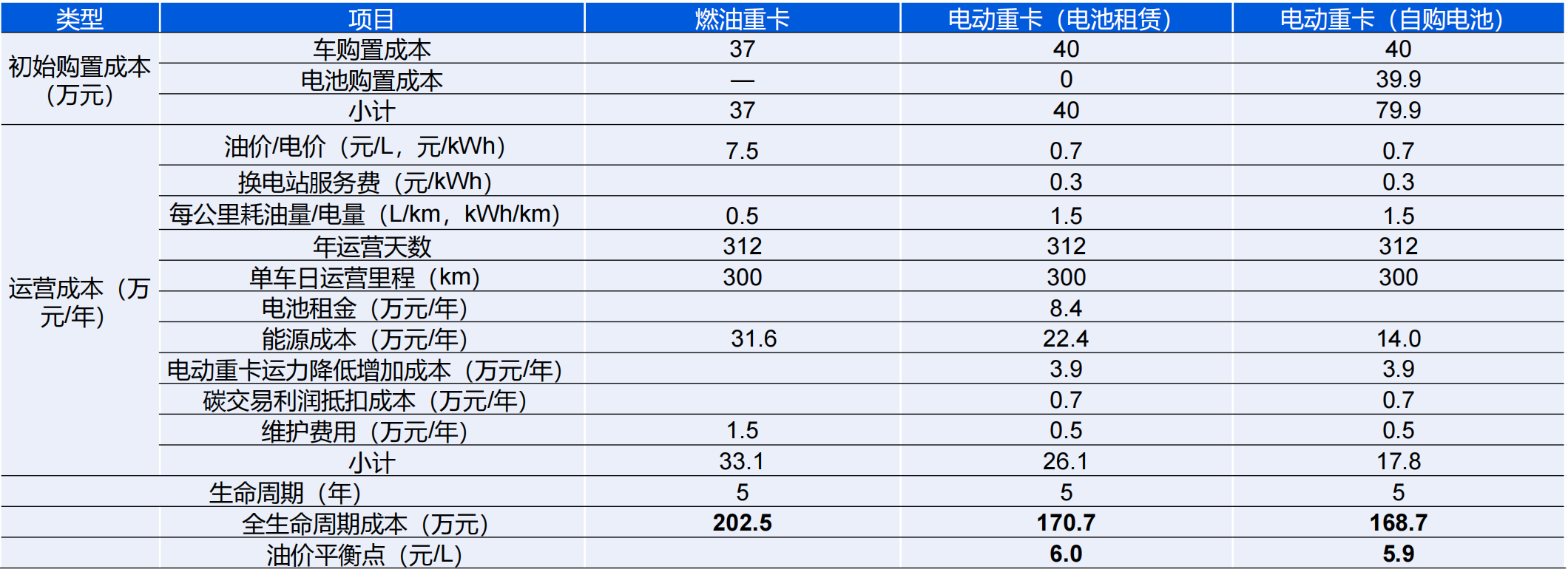
Group 1 - NIO has achieved quarterly profitability, validating the commercial viability of the battery swapping model in the passenger vehicle sector, which raises questions about its replication in the heavy-duty truck segment as a key exploration direction for carbon peak progress in transportation [1] - Heavy-duty trucks, despite their low ownership rate, are a major source of vehicle pollution, making the large-scale promotion of battery-swapped heavy trucks a crucial strategy for addressing carbon peak challenges in the transportation sector [2][3] Group 2 - Heavy-duty fuel (gas) vehicles account for only 2% of the total vehicle ownership but contribute 75% of the annual NOₓ emissions, highlighting their significant role in air pollution [3] - The market for battery-swapped heavy trucks is expected to grow significantly, with sales projected to reach 29,000 units in 2024, a year-on-year increase of 95.4%, representing 37.7% of total new energy heavy truck sales [3] Group 3 - The economic advantages of battery-swapped heavy trucks are driving market expansion, with their market share increasing from approximately 5.2% in 2019 to 49.5% in 2022, and expected to exceed 80% by 2030 [4] - Battery-swapped heavy trucks reduce initial purchase costs by about 40% through a "vehicle-battery separation" model, making them competitive with traditional diesel trucks [5] Group 4 - The lack of unified technical standards is a major barrier to the industry, as differences in battery size, interface specifications, and voltage parameters hinder cross-brand compatibility and widespread adoption of battery-swapped heavy trucks [8] - Infrastructure development is lagging, with a significant shortage of battery swap stations, particularly in long-haul transport scenarios, leading to a mismatch between supply and market demand [8][9] Group 5 - The profitability of battery swap station operations is challenged by high initial investments and long payback periods, compounded by unstable transport capacity and a lack of long-term cooperation mechanisms between service providers and carriers [9] - The gradual reduction of policy incentives for the new energy vehicle industry poses additional pressures on the development of battery-swapped heavy trucks, which have not yet established a mature commercial model [9]
新能源重卡月度渗透率突破50% 创下行业新纪录
Zheng Quan Ri Bao· 2026-02-01 16:12
Group 1 - The core viewpoint of the articles highlights the accelerated transition of China's heavy truck market towards electrification, driven by the "dual carbon" goals and green transformation of road freight by 2025 [1][2]. - In 2025, cumulative sales of new energy heavy trucks in China are projected to reach 231,100 units, representing a year-on-year growth of 182% [1]. - By December 2025, the terminal sales of new energy heavy trucks are expected to surge to 45,300 units, with a monthly penetration rate exceeding 50%, reaching 53.89%, setting a new industry record [1]. Group 2 - The development of new energy heavy trucks in China can be divided into two phases: the initial phase from 2021 to 2023, with penetration rates of 0.7%, 4.7%, and 5%, and a rapid development phase starting in 2024, with projected penetration rates of 12.9% and 28.9% [2]. - The market share structure of power types is undergoing a fundamental shift, with fuel heavy trucks' share dropping from 91% in 2020 to 46% by 2025, while new energy heavy trucks' share rises from nearly zero to 29% [2]. - By 2025, the gas heavy truck market share is expected to reach 25%, indicating that both new energy and gas heavy trucks will collectively account for a significant portion of the market [2]. Group 3 - Companies in the industry are accelerating their layout to seize opportunities in the electrification of heavy trucks, as evidenced by the strategic cooperation agreement between Kandi Technologies Group and CATL to focus on the mass production of heavy truck battery swap stations [3]. - The heavy truck industry is currently in a high-growth phase driven by both policy support and technological innovation, with companies aiming to enhance product competitiveness and market responsiveness [3]. - The unique ecological development path of the new energy heavy truck market involves interlinked elements of "people-vehicle-cargo-money-energy," with battery companies playing a crucial role beyond being mere component suppliers [4].



福田1.3万辆夺冠!徐工第二 解放/远程拼前三 换电重卡2025销6.8万辆增1.3倍 | 头条
第一商用车网· 2026-01-24 13:28
Core Insights - The new energy heavy truck market experienced a significant year-on-year increase of 198% in December 2025, with total sales reaching a record high of 45,300 units, including nearly 30,000 charging heavy trucks [1][2] - The performance of battery-swapping heavy trucks, which had previously lagged behind, showed notable changes in 2025, with a total sales volume of 67,600 units, reflecting a year-on-year growth of 136% [30] Market Performance - In December 2025, the sales of pure electric heavy trucks (including both battery-swapping and charging types) reached 40,800 units, accounting for 90.09% of total sales, despite a slight decrease from the previous month [2] - Battery-swapping heavy trucks sold 11,500 units in December, marking a month-on-month increase of 56% and a year-on-year increase of 106%, although this growth rate was lower than the overall market [2][4] Market Share and Competition - The market share of battery-swapping heavy trucks was 30.39% in 2025, down nearly 7 percentage points from 2024 [5] - The top three manufacturers in the battery-swapping heavy truck market in December 2025 were Foton, with 2,305 units sold, followed by Yuanmeng and Shaanxi Automobile with 2,070 and 1,994 units, respectively [12][14] - In 2025, six companies achieved a market share exceeding 10%, with Foton leading at 19.7%, followed by Xugong, Jiefang, Yuanmeng, Shaanxi Automobile, and Heavy Truck [20] Segment Analysis - The battery-swapping heavy truck segment was dominated by tractor trucks and dump trucks, which accounted for 88.55% and 9.11% of sales, respectively [21] - The sales of battery-swapping tractor trucks reached 59,900 units in 2025, reflecting a year-on-year growth of 172%, significantly outpacing the overall growth of battery-swapping heavy trucks [21][24] - The battery-swapping dump truck segment, however, saw a lower growth rate of 22%, indicating a decline in its performance relative to the overall market [26][28] Conclusion - The battery-swapping heavy truck market, while achieving substantial growth, still fell short of the overall new energy heavy truck market's growth rate, raising questions about its future performance in 2026 [30]




宁德时代骐骥换电一年建成305站!重卡换电,“小众赛道”还是“大势所趋” | 头条
第一商用车网· 2026-01-09 07:04
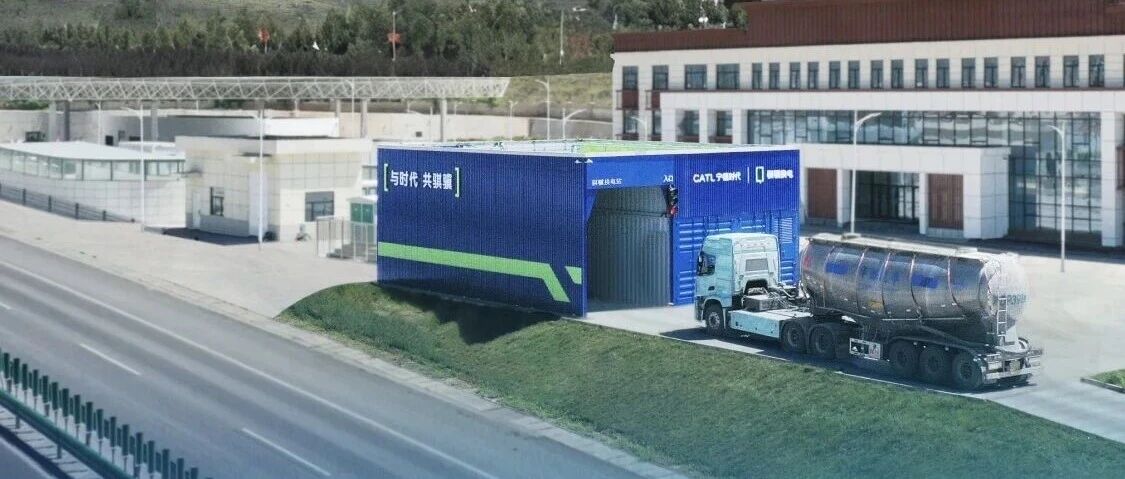
Core Viewpoint - The rapid development of battery swapping stations for heavy-duty electric trucks, exemplified by CATL's Qiji Battery Swapping, indicates a significant shift towards electric logistics, challenging the notion that it is a niche market [1][2][25] Policy Support - National policies are increasingly focused on promoting green and low-carbon transportation, with a clear consensus from central to local governments [4][5] - The "dual carbon" goals serve as a long-term strategic guide, emphasizing the need for clean energy alternatives in transportation [5][7] - Local initiatives, such as subsidies for replacing diesel trucks with electric ones, are providing direct incentives for the adoption of electric heavy-duty trucks [7][8] Ecosystem Transformation - The construction of battery swapping stations is evolving from isolated efforts by individual companies to a collaborative ecosystem involving government guidance and multi-party cooperation [9][10] - Qiji Battery Swapping's partnerships with major truck manufacturers and logistics companies demonstrate a shift towards a robust collaborative network [10][12] Standardization and Technical Development - The establishment of industry standards is crucial for the scalability of battery swapping, with Qiji Battery Swapping making significant strides in this area [13][15] - Strategic collaborations with research institutions aim to develop technical standards and facilitate the nationwide deployment of battery swapping infrastructure [13][17] Economic Viability - The "vehicle-battery separation" model significantly lowers the initial investment for users, making electric heavy-duty trucks more economically attractive compared to traditional fuel trucks [16][20] - The extensive network layout enables long-distance operations, countering previous perceptions that battery swapping was limited to short routes [18][20] Future Vision - Qiji Battery Swapping aims to expand its network to cover 18,000 kilometers by 2030, enhancing the efficiency and cost-effectiveness of logistics operations across China [24][25] - The integration of a nationwide battery swapping network with the logistics system is expected to drive down costs and promote a green transition in the transportation sector [25]
福田/解放/徐工争冠!远程暴涨683% 贵州重卡杀进前十!11月换电重卡大增147% | 头条
第一商用车网· 2025-12-24 02:04
Core Viewpoint - The new energy heavy truck market experienced significant growth in November 2025, with sales reaching a record high of 28,000 units, marking a year-on-year increase of 178% [1][3]. Market Performance - In November 2025, the domestic new energy heavy truck market sold a total of 28,000 units, representing a month-on-month increase of 39% and a year-on-year increase of 178% [3]. - Pure electric heavy trucks accounted for 97.46% of total sales, with 27,200 units sold, slightly down from 98.14% in the previous month [3]. - The sales of battery-swapping heavy trucks reached 7,354 units, showing a month-on-month growth of 29% and a year-on-year growth of 147% [4][12]. Battery-Swapping Heavy Truck Analysis - The market share of battery-swapping heavy trucks in pure electric heavy truck sales was 26.99% in November, down from 28.86% the previous month [5]. - The cumulative sales of battery-swapping heavy trucks from January to November 2025 reached 56,100 units, a year-on-year increase of 143% [17][19]. - The top three brands in battery-swapping heavy truck sales for November were Foton, Jiefang, and Xugong, with sales of 1,441, 1,314, and 1,251 units respectively [12][15]. Competitive Landscape - Foton has maintained its lead in the battery-swapping heavy truck market for eight consecutive months, with a market share of 19.61% [19][21]. - The competition among battery-swapping heavy truck manufacturers is intense, with six companies achieving cumulative sales exceeding 5,000 units [25]. - The market share of Foton, Jiefang, and Xugong has increased significantly compared to the previous year, with Foton's share rising by 14.18 percentage points [21]. Segment Performance - Battery-swapping tractor trucks accounted for 88.08% of total battery-swapping heavy truck sales, while battery-swapping dump trucks made up 9.75% [23]. - The sales of battery-swapping dump trucks were lower than the overall growth rate of battery-swapping heavy trucks, with a year-on-year increase of only 20% [27]. - The market for battery-swapping dump trucks had 21 companies participating, with Xugong leading in sales and holding a market share of 36.77% [29]. Future Outlook - The battery-swapping heavy truck market has seen continuous growth for ten months, but its year-on-year growth rate remains below that of the overall new energy heavy truck market [31]. - The final month of 2025 will be crucial to see if battery-swapping heavy trucks can outperform the market and if any new players will enter the field [31].

福田“7连冠” 远程前三 领程空降前十 10月换电重卡销量继续翻倍涨!| 头条
第一商用车网· 2025-11-20 06:34
Core Viewpoint - The new energy heavy truck market experienced significant growth in October 2025, with a year-on-year increase of 144%, surpassing 20,000 units in total sales, driven primarily by charging heavy trucks [1][3]. Market Performance - In October 2025, the domestic new energy heavy truck market sold 20,100 units, a month-on-month decrease of 17% but a year-on-year increase of 144% [3]. - Pure electric heavy trucks accounted for 98.14% of total sales, with charging heavy trucks maintaining a high level of performance [3]. - The sales of battery swap heavy trucks reached 5,691 units, showing a year-on-year growth of 112%, although this growth rate has slowed compared to previous months [3][6]. Sales Trends - The monthly sales of battery swap heavy trucks have shown fluctuations, with October 2025 marking the second-highest sales month in history, following a record set in September 2025 [5]. - The proportion of battery swap heavy trucks in the pure electric heavy truck sales decreased to 28.86% in October, down from 32.54% in September [6]. Segment Analysis - From January to October 2025, battery swap heavy trucks primarily consisted of tractor and dump trucks, with sales of 42,800 units and 4,995 units, respectively [8]. - Battery swap heavy trucks have been registered in 30 out of 31 provincial-level administrative regions in China, with 282 cities having registered these vehicles [8]. Brand Performance - Foton led the sales chart for battery swap heavy trucks in October 2025, selling 1,165 units, marking its seventh consecutive month at the top [11]. - The top ten brands in battery swap heavy truck sales saw significant year-on-year growth, with Foton and Yuan Cheng experiencing increases of 1,020% and 1,018%, respectively [13]. Market Share - As of October 2025, the market share of battery swap heavy trucks was dominated by six companies, with Foton holding 19.62%, followed by Xugong and Jiefang [20]. - The cumulative sales of battery swap heavy trucks from January to October 2025 reached 48,800 units, reflecting a year-on-year growth of 142% [15][21]. Future Outlook - The battery swap heavy truck segment has seen continuous growth for nine months, but its year-on-year growth rate remains lower than that of the overall new energy heavy truck market [30].

方大特钢:目前公司物流车队暂未应用宁德时代换电重卡
Zheng Quan Ri Bao Zhi Sheng· 2025-10-30 10:25
Core Viewpoint - Fangda Special Steel has not yet applied CATL's battery-swapping heavy trucks in its logistics fleet, but both parties will continue to monitor the application testing of R&D products to lay the foundation for large-scale application and technological iteration [1] Group 1 - Fangda Special Steel responded to investor inquiries on October 30 regarding its logistics fleet [1] - The company is currently not utilizing CATL's battery-swapping heavy trucks [1] - Ongoing collaboration with CATL aims to support future large-scale applications and technology improvements [1]

福田近1500辆 解放/徐工激战前二 陕汽连跳!9月换电重卡有何变化?| 头条
第一商用车网· 2025-10-22 07:22
Core Viewpoint - The new energy heavy truck market experienced significant growth in September 2025, with a year-on-year increase of 206%, surpassing 24,000 units sold, indicating a strong demand for electric heavy trucks, particularly charging models [1][4][5]. Market Performance - In September 2025, the total sales of new energy heavy trucks reached 24,100 units, marking a 36% increase from August and a 206% increase year-on-year [4]. - Pure electric heavy trucks accounted for 97.33% of total sales, with charging models maintaining a high sales volume [4]. - The sales of battery-swapping heavy trucks reached 7,641 units in September, reflecting a 39% month-on-month increase and a 192% year-on-year increase [5][14]. Segment Analysis - The market share of battery-swapping heavy trucks in pure electric heavy truck sales was 32.54% in September, showing a slight increase from the previous month but a decrease compared to the same period last year [7]. - From January to September 2025, battery-swapping heavy trucks sold a total of 43,100 units, representing a 147% year-on-year growth [18][20]. - The main types of battery-swapping heavy trucks sold were tractor trucks and dump trucks, accounting for 87.70% and 10.39% of sales, respectively [24]. Brand Performance - Foton led the sales of battery-swapping heavy trucks in September with 1,493 units sold, followed by Jiefang, Xugong, and Yuancheng, all exceeding 1,000 units [14][16]. - The top ten brands in the battery-swapping heavy truck market saw significant growth, with Foton, Beiben, and Jiefang experiencing year-on-year increases of 2,566%, 667%, and 518%, respectively [16]. - The competitive landscape for battery-swapping tractor trucks is intense, with Foton, Xugong, and Jiefang leading the market [26]. Future Outlook - The battery-swapping heavy truck sector has seen continuous growth for eight months, but its year-on-year growth rate remains lower than that of the overall new energy heavy truck market [33]. - The industry will continue to monitor whether battery-swapping heavy trucks can outperform the market in the remaining months of 2025 and which company can break Foton's dominance [33].


换电重卡8月大增1.5倍!福田暴涨33倍狂揽“5连冠” 金龙涨36倍排第几?| 头条
第一商用车网· 2025-09-20 13:42
Core Viewpoint - The new energy heavy truck market in August 2025 saw a significant year-on-year increase of 182%, with total sales approaching 17,800 units, indicating strong growth momentum in the sector [1][2]. Market Performance - In August 2025, the domestic new energy heavy truck market sold a total of 17,800 units, representing a month-on-month increase of 7% and a year-on-year increase of 182% [2]. - Pure electric heavy trucks accounted for 98.66% of total sales, with sales of 17,500 units, a slight increase from 98.07% in the previous month [2]. - The sales of battery-swapping heavy trucks reached 5,500 units, marking an 11% increase month-on-month and a 149% increase year-on-year, although this growth rate lagged behind the overall new energy heavy truck market [2][4]. Segment Analysis - The market share of battery-swapping heavy trucks in pure electric heavy truck sales was 31.39%, an increase from the previous month but a decrease of 7.5 percentage points compared to the same period last year [5]. - From January to August 2025, battery-swapping heavy trucks sold a total of 35,400 units, reflecting a year-on-year growth of 139% [16][18]. - The main types of battery-swapping heavy trucks sold were tractor trucks and dump trucks, accounting for 87.67% and 10.77% of sales, respectively [22]. Company Performance - In August 2025, Foton led the sales of battery-swapping heavy trucks with 1,288 units, achieving a remarkable year-on-year growth of 3,289% [12][14]. - Other notable performers included FAW Liberation, Xugong, and YuanCheng, with sales of 841, 766, and 740 units, respectively [12]. - The top ten companies in the battery-swapping heavy truck market all experienced growth compared to the previous year, with six companies achieving over 100% growth [14]. Competitive Landscape - The competition in the battery-swapping tractor truck segment is intense, with six companies selling over 3,000 units each [24]. - Foton, Xugong, and FAW Liberation are the top three companies in this segment, with market shares of 21.77%, 14.93%, and 14.04%, respectively [24]. - In the battery-swapping dump truck market, Xugong leads with a market share of 38.80%, followed by China National Heavy Duty Truck and Shaanxi Automobile, both exceeding 10% market share [26]. Future Outlook - The battery-swapping heavy truck market has shown consistent growth, with a year-on-year increase in sales for the first eight months of 2025, although the growth rate has been lower than that of the overall new energy heavy truck market [29].