
探空火箭

Search documents
求是网评论员:“手搓经济”为何爆火?
Xin Lang Cai Jing· 2026-02-11 13:36
Core Insights - The rise of the "handmade economy" is characterized by individuals or small teams creating products without relying on large-scale production lines or significant capital investment, utilizing modern technologies like AI and open-source tools to transform personal creativity into tangible products [1][2][3] Group 1: Technological Empowerment - The emergence of generative AI has significantly lowered the barriers to entry in software and hardware development, allowing individuals without programming skills to create lightweight applications quickly [2] - 3D printing and modular platforms have reduced prototyping costs to a few hundred yuan, enabling more people to bring their ideas to life [2] - The democratization of digital technology has made innovation accessible to a broader audience, removing critical technical obstacles for the "handmade economy" [2] Group 2: Market Demand - The shift in consumer preferences, particularly among Generation Z, has moved from standardized mass consumption to a focus on personalized and niche products [2] - The "handmade economy" effectively captures long-tail demands that are often overlooked by traditional large manufacturers, allowing for rapid market acceptance and popularity of "handmade" products [2] Group 3: Policy and Ecosystem Support - Recent government initiatives in China have aimed to stimulate innovation and entrepreneurship, creating a supportive environment for small and micro-entrepreneurs [3] - Local measures, such as innovation communities and AI entrepreneurship platforms, provide comprehensive support for individual innovators from idea incubation to market transformation [3] - The improvement of flexible supply chains and social media platforms facilitates small-batch production and offers convenient channels for showcasing and monetizing "handmade" products [3]


业界对谈:中国商业航天,“小步快跑”向苍穹
Guan Cha Zhe Wang· 2026-01-28 08:00
Core Insights - The article highlights the rapid development of China's commercial aerospace sector, marking a significant shift from theoretical aspirations to practical achievements in space exploration and satellite technology [1][3]. Group 1: Industry Development - The launch of the "Jilin-1" satellite constellation ten years ago initiated the growth of China's commercial remote sensing satellite industry, which now boasts 144 operational satellites, making it the largest sub-meter commercial remote sensing satellite constellation globally [1]. - The industry is experiencing a vibrant phase, with various companies emerging and contributing to the growth of commercial space endeavors [3][12]. Group 2: Challenges and Growth - Early challenges faced by companies included high employee turnover and funding issues, with significant losses due to management and technical failures [5][9]. - Despite initial setbacks, companies like Changguang Satellite have successfully navigated through difficulties, achieving significant milestones such as the successful launch of high-resolution satellites and substantial funding rounds [10][36]. Group 3: Future Prospects - The current environment is seen as a favorable window for commercial aerospace development, with increasing recognition from both policy and capital markets [12][14]. - Companies are optimistic about the future, with expectations of deploying low-orbit satellite internet services and enhancing satellite communication capabilities to meet growing market demands [40][41]. Group 4: Support and Collaboration - The need for supportive policies and collaboration between private companies and state institutions is emphasized, particularly in areas like funding, resource sharing, and regulatory processes [39][44]. - Companies express a desire for more patience from investors and a more streamlined approval process for launches, which is currently a significant hurdle for startups in the aerospace sector [39][45]. Group 5: Technological Advancements - The focus on developing laser communication terminals and other advanced technologies is highlighted as a key area for growth, with companies like Blue Star Guangyu leading in this niche [15][26]. - The article discusses the importance of iterative development and rapid prototyping in achieving technological advancements, particularly in the context of rocket and satellite development [28][31]. Group 6: Market Opportunities - There is a significant untapped market for commercial aerospace applications, particularly in consumer-facing services, which could drive future growth [40][44]. - The potential for satellite communication to provide services in remote areas and during emergencies is noted as a critical area for expansion [41][42].
北京商业航天和低空经济产投基金入股凌空天行
Zheng Quan Shi Bao Wang· 2026-01-19 01:52
Core Viewpoint - Beijing Lingkong Tianxing Technology Co., Ltd. has undergone a business change, adding new shareholders and increasing its registered capital to 37.6561 million yuan, indicating growth and potential investment interest in the aerospace sector [1] Company Summary - The company was established in 2012 and is engaged in the development of technologies related to launch vehicles, sounding rockets, and reusable spaceflight systems [1] - Lingkong Tianxing is identified as a commercial aerospace enterprise focusing on hypersonic flight technology and application services [1] Industry Summary - The addition of new investment funds, such as Beijing New Materials Industry Investment Fund and Beijing Commercial Aerospace and Low-altitude Economy Industry Investment Fund, suggests a growing interest in the commercial aerospace sector [1] - The increase in registered capital reflects the company's expansion and potential for future projects in the aerospace industry [1]
看,这就是高职学子的“造星梦”
Xin Lang Cai Jing· 2026-01-17 22:51
Core Viewpoint - The play "The Brightest Star in the Night Sky" highlights the journey of vocational education students and teachers at Nanjing Vocational Technical College, showcasing their involvement in the development of the "Nanjing" satellite, which is China's first science satellite primarily developed by vocational college students and teachers [2][3]. Group 1: Artistic Representation of Vocational Education - The play is based on real events, focusing on the successful launch of the "Nanjing" satellite on January 17, 2024, which was developed by the college [2]. - The playwright, Wang Yanbin, aimed to bring the "star-making dream" of the college's students to the stage, emphasizing the importance of vocational education [2][3]. - The production involved a strong creative team, including award-winning directors and designers, ensuring high-quality theatrical representation [2]. Group 2: Audience Engagement and Impact - The play resonated with audiences, evoking strong emotional responses and applause, particularly through its portrayal of perseverance and the aspirations of vocational students [3]. - Students involved in the production expressed their desire to raise awareness about vocational education and its significance in shaping future talents [3][6]. - The narrative emphasizes that vocational education is a starting point for future "great country craftsmen," challenging traditional perceptions of educational pathways [7]. Group 3: Educational Developments and Future Aspirations - Nanjing Vocational Technical College is actively working on new projects, including the establishment of a small sounding rocket team, indicating a commitment to advancing aerospace education [6][7]. - The college's satellite communication and navigation technology program has seen a significant increase in employment rates, from 50% to 76% among graduates, reflecting the growing demand for skilled professionals in the commercial aerospace sector [7]. - The ongoing reforms in vocational education in China aim to enhance quality and provide diverse pathways for students, with Jiangsu province leading initiatives to integrate vocational and academic education [7][8].
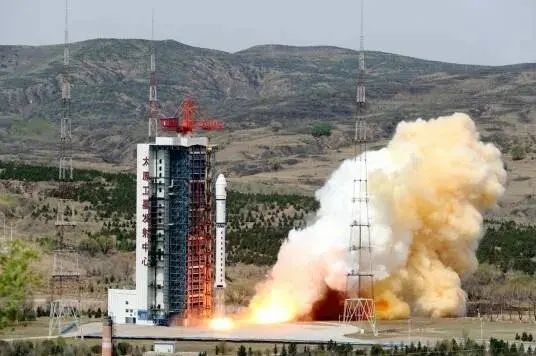
高超音速导弹制造商凌空天行公开多个火箭设计专利
Qi Cha Cha· 2025-12-01 02:13
Core Insights - Beijing Lingkong Tianxing Technology Co., Ltd. has recently disclosed multiple rocket design patents, indicating advancements in hypersonic missile technology [1] Company Overview - Beijing Lingkong Tianxing Technology Co., Ltd. is a manufacturer of hypersonic missiles, established in 2012 with a registered capital of approximately 35.34 million yuan [1] - The company is backed by over 40 shareholders, including the National Development Manufacturing Transformation and Upgrade Fund and the Shanghai Military-Civilian Integration Industry Equity Investment Fund [1] Patent Details - The disclosed patents include methods for rapid aerodynamic shape design based on diffusion models, a flow control method and system for rockets using deep reinforcement learning, and real-time reconstruction of rocket outflow based on multi-source aerodynamic data fusion [1] Future Developments - The company is constructing its national headquarters and a research and production base for hypersonic vehicles in Chengdu Future Technology City [1]
中天火箭的前世今生:2025年三季度营收4.44亿低于行业平均,净利润亏损行业垫底
Xin Lang Zheng Quan· 2025-10-31 04:58
Core Viewpoint - Zhongtian Rocket, established in 2002 and listed in 2020, is a leading player in the small solid rocket sector in China, backed by the Aerospace Science and Technology Corporation, indicating its long-term growth potential and unique market position [1] Group 1: Business Performance - In Q3 2025, Zhongtian Rocket reported revenue of 444 million yuan, ranking 4th in the industry, while the net profit was -29.38 million yuan, placing it 8th [2] - The industry leader, Aerospace Electronics, achieved revenue of 8.835 billion yuan, while the average revenue in the sector was 1.899 billion yuan [2] Group 2: Financial Ratios - As of Q3 2025, Zhongtian Rocket's debt-to-asset ratio was 46.51%, higher than the industry average of 31.57% [3] - The gross profit margin for Q3 2025 was 19.00%, below the industry average of 27.92% [3] Group 3: Executive Compensation - The chairman, Cheng Haoxin, received a salary of 795,300 yuan in 2024, a decrease of 46,100 yuan from 2023 [4] - The general manager, Li Huainian, had a salary of 960,200 yuan in 2024, an increase of 136,500 yuan from the previous year [4] Group 4: Shareholder Information - As of September 30, 2025, the number of A-share shareholders decreased by 3.50% to 27,900, while the average number of shares held per shareholder increased by 3.63% to 5,568.3 [5] - The company faced performance pressure in Q3 2025, but its core business in small solid rocket technology maintained a leading market share [5] Group 5: Market Outlook - Zhongtian Rocket is recognized as a leader in the small solid rocket sector, with growth expected from both civilian and military applications, including micro UAVs and rain enhancement rockets [6] - Forecasted net profits for 2025 to 2027 are 16 million yuan, 69 million yuan, and 140 million yuan, respectively [5][6]


中天火箭(003009) - 003009中天火箭投资者关系管理信息20250714
2025-07-14 13:40
Group 1: Business Operations - The company offers two commercial models for its UAV shadow business: equipment sales with pilot training and pay-per-use operational services to meet diverse needs [2] - The current state of the photovoltaic business is competitive, with product prices remaining low; however, the clean energy trend is expected to grow under the national "dual carbon" strategy [2] - The company has completed multiple vehicle bench tests and customer trials for its carbon-ceramic brake disc business, with production lines optimized to reduce unit costs [3] Group 2: Product Development and Market Position - The company is focusing on the development of small guided rockets, aiming for a series of products tailored to customer needs, with plans to enhance market expansion [3] - The annual production capacity for rain enhancement and hail suppression rockets is over 10,000 units, holding a market share exceeding 50%, maintaining the industry leader position [3] - The military products include sounding rockets, small guided rockets, target missiles, and solid rocket engine components, with a pricing model based on negotiation [3] Group 3: Future Outlook and Strategy - The company adopts a multi-segment development strategy to effectively respond to market challenges and enhance competitiveness [3] - There is confidence in the ability to adapt to future market changes and seize development opportunities [3]
揭秘涨停丨固态电池新龙头,7连板!
Zheng Quan Shi Bao Wang· 2025-06-25 10:50
Market Overview - The Shanghai Composite Index closed at 3455.97 points, up 1.03%, while the Shenzhen Component Index closed at 10393.72 points, up 1.72% [1] - Among the tradable A-shares, 79 stocks hit the daily limit up, and 7 stocks hit the limit down, with an overall limit-up rate of 71.82% [1] Stock Performance - In the涨停战场, 64 stocks on the main board, 3 on the Beijing Stock Exchange, 11 on the ChiNext, and 1 on the Sci-Tech Innovation Board closed at the daily limit [2] - Notably, Nord Shares achieved 7 consecutive limit-ups, although its revenue from solid-state battery applications is less than 1% of total revenue [2] - The stocks with the highest limit-up amounts included New Tonglian, Tianfeng Securities, and Guosheng Jinkong, with amounts of 605 million, 374 million, and 277 million respectively [2] Financial Sector - The financial sector saw significant gains, with brokerage stocks like Guosheng Jinkong, Tianfeng Securities, and Xiangcai Securities performing well [3][4] - Guosheng Jinkong benefits from strong capital and business resources due to its state-owned parent company [3] - Tianfeng Securities has advantages in shareholder support and funding after its parent company changed to a provincial state-owned enterprise [3] Military Trade Concept - Stocks in the military trade sector, such as Zhongtian Rocket, Great Wall Military Industry, and Construction Industry, also saw limit-ups [5] - Zhongtian Rocket operates in both civilian and military sectors, focusing on solid rocket technology [5] - Great Wall Military Industry has a comprehensive industrial layout with several key military subsidiaries [5] - Construction Industry is a leading manufacturer of light weapons and is part of the China Weaponry Equipment Group [5] Institutional Investment - Taiji Co. topped the net buying list on the Dragon and Tiger list with a net purchase of 235 million [6][7] - Institutional investors showed strong interest in stocks like Zhinanzhen, Dazhihui, and Huijin Shares, with net purchases of 131 million, 66 million, and 57 million respectively [8]
中国航天科技集团产品亮相第55届巴黎航展
Zhong Guo Xin Wen Wang· 2025-06-17 12:18
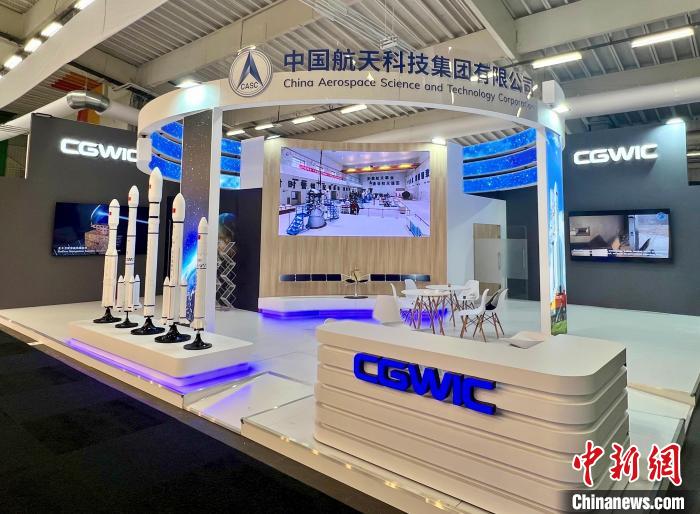
Group 1 - The 55th Paris Air Show opened on June 16, showcasing China's aerospace technology capabilities, including the debut of the Long March 6A and Long March 12 rocket models [1][3] - China Aerospace Science and Technology Corporation displayed various rocket models, including Long March 2D, Long March 3B, Long March 6A, Long March 8, and Long March 12, along with the Dongfanghong 3E all-electric small communication satellite [1] - The exhibition included multimedia presentations on sounding rockets, communication satellites, remote sensing satellites, and China's advancements in Beidou navigation, manned spaceflight, lunar exploration, deep space exploration, and international cooperation [1] Group 2 - The Long March 6A is a new generation of non-toxic, pollution-free rocket designed to meet the diverse and dense launch demands of future satellites, while the Long March 12 is a new medium-sized liquid rocket that enhances capabilities for sun-synchronous orbit and low Earth orbit constellation networking [3] - The Long March 12 rocket features a simple and reliable single-core series configuration, improving the payload capacity and large fairing envelope, contributing to the high-quality development of China's space transportation system [3] Group 3 - China Great Wall Industry Corporation, authorized by the government, focuses on commercial launches, satellite system delivery, and space technology cooperation, aiming to promote the globalization of China's commercial aerospace products [5] - Since the 1990s, the Great Wall Company has completed 101 commercial launches, delivering 74 international commercial satellites and 261 domestic commercial satellites, along with providing 52 rideshare launch services [5] - As China's aerospace products gain competitiveness, the Great Wall Company serves as an international platform, integrating various resources to offer more competitive and advanced products and services to the global market [5]

中天火箭(003009) - 003009中天火箭投资者关系管理信息20250613
2025-06-13 08:22
Group 1: Company Overview - The company operates in a military-civilian integration model, with military products accounting for approximately 30% of revenue and civilian products for about 70% in 2024 [2] - Key military products include small guided rockets, sounding rockets, and military thermal protection components [2] Group 2: Business Growth - The military business is expected to grow by over 50% year-on-year in 2024 [2] - The company is focusing on product series development and multi-platform expansion for guided rockets, with some models already completed and launched [2] Group 3: New Product Development - Recent developments in new materials include carbon-ceramic brake discs and hydrogen evolution electrodes [3] - The company is enhancing new product research and development to explore new application areas [3] Group 4: Market Response Strategies - The company is implementing cost reduction and efficiency improvement measures through new process technologies [3] - Strengthening market development efforts to mitigate the impact of intensified market competition [3]