数字人民币跨境支付

Search documents
楚天龙(003040.SZ):预计2025年净利润同比下降62.89%
Ge Long Hui A P P· 2026-01-30 16:35
Core Viewpoint - Chutianlong (003040.SZ) forecasts a significant decline in its 2025 annual performance, with net profit attributable to shareholders expected to be 8 million yuan, a year-on-year decrease of 62.89% [1]. Financial Performance - The net profit after deducting non-recurring gains and losses is projected to be 1.2 million yuan, reflecting a year-on-year decline of 93.38% [1]. - Basic earnings per share are estimated at 0.02 yuan per share [1]. Business Challenges - The decline in performance is primarily attributed to fluctuations in market demand and intensified industry competition, leading to a decrease in the gross margin of some products [1]. Strategic Initiatives - In response to the operational losses experienced in the first three quarters of 2025, the company is committed to upgrading and transforming its business [1]. - Key initiatives include promoting cross-border payment solutions using digital RMB, developing smart contract scenarios, and implementing intelligent hardware solutions integrated with large model technology [1]. - The company is also focused on expanding orders, enhancing accounts receivable collection, improving operational efficiency, and strengthening cost control measures [1]. Recovery Efforts - These strategic efforts have yielded positive results, enabling the company to achieve a turnaround in the fourth quarter, resulting in profitability for the year overall [1].
多项重磅报告发布 “深圳金融高质量发展新路径”研讨会圆满落幕
Zheng Quan Shi Bao Wang· 2025-12-26 13:37
Core Insights - The seminar on "New Pathways for High-Quality Financial Development in Shenzhen" was successfully held, focusing on the strategic layout of Shenzhen's financial sector during the 14th Five-Year Plan period, aiming to support the construction of a globally influential financial center [1][4] - Two reports were released: the "Shenzhen Technology Financial Innovation Report (2025)" and the "Shenzhen Financial Technology Competitiveness Report (2025)", which provide theoretical and practical insights for the digital transformation of the financial industry [2][4] Group 1: Reports and Findings - The "Shenzhen Technology Financial Innovation Report (2025)" indicates that Shenzhen ranks third nationally in the comprehensive index of technology finance, benefiting from flexible systems, solid industrial foundations, and substantial innovation investment, but highlights areas for improvement in digital empowerment and financing for small and startup enterprises [2][3] - The report emphasizes the need for financial and policy collaboration to address the financing challenges in transforming technological achievements, advocating for a comprehensive financial support system throughout the lifecycle of technology [2][3] - The "Shenzhen Financial Technology Competitiveness Report (2025)" reveals that Shenzhen has developed a diverse industrial ecosystem led by Tencent and Ping An, with notable performance in digital payment penetration and 5G infrastructure, yet faces shortcomings in R&D investment ratio and talent density [3] Group 2: Expert Opinions and Future Directions - Experts suggested optimizing the evaluation index system for technology finance by incorporating industry practices, establishing a credible data system for assessing enterprise innovation capabilities, and enhancing cross-regional coordination to avoid resource waste [3][4] - The seminar highlighted the need for a balanced approach to financial digitalization, focusing on value creation while managing data security risks, and emphasized the importance of integrating technology finance and financial technology for sustainable development [4] - Shenzhen aims to leverage its position in the Guangdong-Hong Kong-Macao Greater Bay Area to overcome institutional barriers and development shortcomings, steadily progressing towards becoming a global financial technology hub [4]



陆磊:金融高水平双向开放应抓住陆海新通道建设契机
Sou Hu Cai Jing· 2025-12-26 02:38
Core Viewpoint - The Chinese government is focusing on enhancing financial support for the construction of the Western Land-Sea New Corridor, which is a key component of the Belt and Road Initiative, by expanding financial cooperation and creating a structured financial network with relevant countries [2][3]. Financial Support for the Western Land-Sea New Corridor - The People's Bank of China (PBOC) and several government departments have issued guidelines to accelerate the development of the Western Land-Sea New Corridor, which connects 12 provinces in western China and reaches over 580 ports in 127 countries [2]. - The corridor serves as a crucial node in the Belt and Road Initiative, linking southern China to Southeast Asia and the Indian Ocean, and connecting western China to Central Asia and Europe [3]. Key Measures in the Guidelines - The guidelines propose 21 key measures across six areas, including improving financial organization collaboration, building a high-quality financial system, and enhancing cross-border financial supervision [5]. - Specific measures include expanding the use of the Renminbi (RMB) in cross-border transactions and exploring international cooperation in digital finance, particularly through the use of digital RMB [5][6]. Digital Currency Initiatives - The PBOC has made progress in establishing new pathways for cross-border payments using digital RMB, aiming for faster settlement times for businesses [6]. - The guidelines emphasize the importance of expanding the geographical scope of digital RMB applications and supporting cross-border payment projects with countries like Thailand and Singapore [5][6]. Highlights of the Guidelines - The guidelines focus on regional collaborative development, addressing the common needs of various provinces while allowing for tailored financial services [8]. - They also emphasize institutional innovation to provide efficient financing and settlement services for enterprises [8]. - The integration of data flows and financial services is highlighted, aiming to enhance the effectiveness of financial services through digitalization [8]. - The guidelines reflect China's commitment to increasing openness in the financial sector, particularly in the context of international cooperation in digital and green finance [8].

中国人民银行举行新闻发布会:协同发力 赋能西部陆海新通道高质量发展
Jin Rong Shi Bao· 2025-12-26 02:37
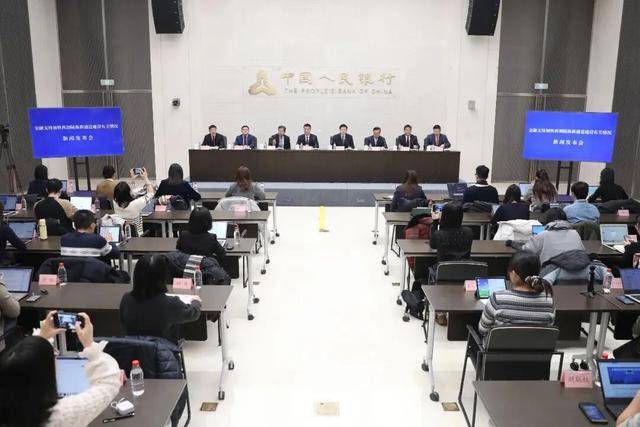
Core Viewpoint - The People's Bank of China and several government departments have jointly issued guidelines to financially support the construction of the Western Land-Sea New Corridor, which is crucial for the Belt and Road Initiative, aiming to enhance financial cooperation and resource allocation between China and related countries [1][2]. Group 1: Financial Support and Policy Implementation - The issuance of the guidelines represents a significant step in promoting high-level opening-up in inland regions, including Chongqing, by providing robust financial support for the development of the Western Land-Sea New Corridor [2]. - The guidelines outline six main tasks, including improving financial organization collaboration, constructing a high-quality financial resource allocation system, and promoting institutional reforms to facilitate cross-border trade and investment [4][5]. - The guidelines emphasize the importance of regional collaborative development and institutional innovation to provide efficient settlement and financing services for enterprises [5]. Group 2: Achievements and Future Directions - The People's Bank of China has reported several achievements in supporting the corridor's construction, including the establishment of a financial service center and the development of over 30 innovative financial products, with financing balances exceeding 730 billion yuan [3]. - Future efforts will focus on creating more landmark financial achievements and enhancing the financial service ecosystem for the corridor [3]. Group 3: Capital Market Support - The China Securities Regulatory Commission is committed to strengthening multi-level capital market construction, supporting various financing channels such as stock issuance, corporate bonds, and asset-backed securities to aid the corridor's development [7]. - As of November, over 650 A-share listed companies are located along the corridor, with significant fundraising activities reported, including nearly 7 billion yuan from bond issuances [7]. Group 4: Cross-Border Financial Services - The guidelines propose measures to enhance cross-border trade settlement and investment facilitation, including encouraging enterprises to participate in high-level cross-border trade pilot programs and simplifying foreign investment processes [8][9]. - The establishment of a cross-border financial service platform is highlighted as a key initiative to support the corridor's high-quality development, with successful applications already reported in several provinces [9]. Group 5: Inter-Departmental Collaboration - The People's Bank of China plans to establish a collaborative mechanism among various departments and regions to ensure the effective implementation of the guidelines, focusing on policy sharing and financial service coordination [10][11]. - Emphasis is placed on enhancing cooperation between financial institutions and local governments to mobilize resources effectively and support key areas of development within the corridor [11].
场景创新破解金融痛点,上海、北京跻身“全球顶尖金融科技中心”
Huan Qiu Wang· 2025-12-02 01:51
Group 1 - The People's Bank of China and the Ministry of Science and Technology held a meeting to promote a coordinated mechanism for technology finance, emphasizing the importance of technology innovation and the construction of a high-quality bond market "technology board" [1] - The meeting aims to enhance private equity and venture capital cycles, strengthen the development of technology insurance, and improve mechanisms for financing, information sharing, and intellectual property conversion [1] - The Global Fintech Center Development Index (2025) ranks New York, Shanghai, Beijing, and San Francisco as the top four global fintech centers, with Shanghai leading in areas such as AI wealth management and digital credit for small businesses [1] Group 2 - Financial technology is now considered a "basic infrastructure" within the mainstream financial system, shifting the competition from product-based to ecosystem-based [2] - The relationship among banks, tech companies, startups, and regulatory bodies is becoming more complex, with a focus on balancing security and innovation [2] - The Shanghai Fintech Industry Alliance projects the financial technology industry in Shanghai to reach approximately 440.5 billion yuan by 2024, driven by advancements in digital currency and AI applications [5]

上海位列全球金融科技中心第二 产业规模达4405亿元人民币
2 1 Shi Ji Jing Ji Bao Dao· 2025-12-01 05:15
Core Insights - The article discusses the transition of Chinese cities from a policy and capital-driven phase to an application and industrial output phase in the financial technology sector, emphasizing the importance of converting investments into outputs and creating a feedback loop for continuous growth [1] Group 1: Financial Technology Development - The Shanghai Financial Technology Industry Alliance released the "Global Financial Technology Center Development Index (2025)" and the "Shanghai Financial Technology Development White Paper (2025)," which optimize financial technology development indicators and explore the construction of sub-indices for measuring AI financial development [3][4] - The index reveals a tiered structure of global financial technology centers, with New York, Shanghai, Beijing, and San Francisco ranking as the top four, indicating a strong coupling of finance and technology as a core competitive advantage [4] Group 2: Shanghai's Position and Trends - Shanghai has achieved global leadership in areas such as AI wealth management, digital credit for small enterprises, and cross-border digital currency payments, marking it as a benchmark for the transformation of traditional financial centers into technology-driven hubs [4] - The financial technology industry in Shanghai is projected to reach approximately 440.5 billion RMB by 2024, with significant trends showing a decline in financing amounts and numbers from 2022 to 2024, reflecting a broader adjustment in the global tech industry [6][7] Group 3: Future Predictions - The focus of competition in financial technology, particularly in AI, is expected to shift from model and scale to application efficiency, with AI penetration in finance projected to increase from 25% to 45% by 2029 [7][8] - A four-tiered competitive structure is anticipated to emerge in China, with Beijing as a regulatory technology hub, Shanghai as the main application battlefield, Shenzhen as a hardware and industrial base, and Hangzhou as a fintech AI hub [8] - The timing of the dual-circulation flywheel's activation will be crucial for future competition, with the U.S. expected to start in 2024-2025 and China in 2026-2028, making the period from 2025 to 2027 a critical window for determining competitive advantage [8]
金融科技中心排名上海位列全球第二 产业规模超四千四百亿元
Jie Fang Ri Bao· 2025-11-30 02:25
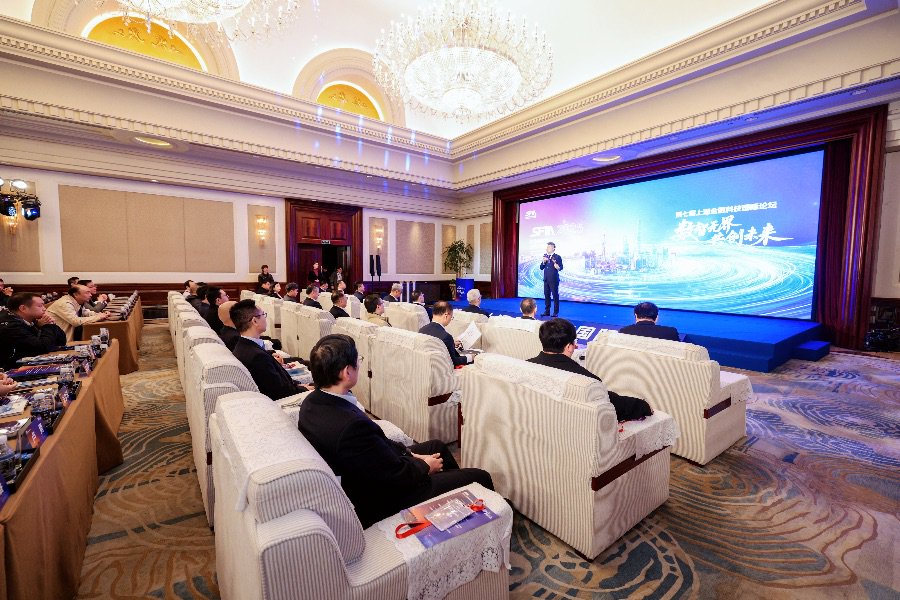
Core Insights - Shanghai has risen to the second position in the global fintech center ranking, with New York at the top, followed by Beijing and San Francisco in third and fourth places respectively, while London has dropped to fifth [1] - The rise in Shanghai's ranking is attributed to its advantages as an international financial center, a complete financial market system, and large-scale application scenarios, particularly in the integration of AI and finance [1] - The introduction of the global AI financial center sub-index in the evaluation system highlights Shanghai's strong performance in AI capabilities, including policy support, computing power reserves, and data integration [2] Industry Trends - The Shanghai fintech industry is projected to reach approximately 440.5 billion RMB in 2024, with significant R&D investment and steady growth in various sectors, including banking, securities, and insurance [3] - The number of regulatory innovation projects in Shanghai's fintech sector is also among the highest in the country, indicating a robust regulatory environment [3] - Future integration of technological innovation, scenario empowerment, ecological collaboration, and innovative regulation is expected to position Shanghai as a leading global fintech center, supporting the construction of a strong financial nation [3]
宏观金融数据日报-20250619
Guo Mao Qi Huo· 2025-06-19 08:01
Report Summary 1. Report Industry Investment Rating - Not provided in the given content 2. Core Viewpoints - The central bank uses medium - and short - term liquidity management tools to maintain sufficient liquidity in the banking system. The transformation of the monetary policy framework is a gradual process and will be continuously evaluated and improved [4] - The LuJiaZui Forum focuses on the long - term development of the financial market, with limited short - term boost to the capital market. Domestic factors have weak driving force on stock indices, and overseas uncertainties remain. Stock indices are expected to oscillate weakly in the short term [6] 3. Summary According to Related Content 3.1 Macro - financial Data - **Interest Rates**: DRO01 closed at 1.37 with a - 0.06bp change, DR007 at 1.53 with a 0.40bp change, GC001 at 1.63 with a - 7.00bp change, GC007 at 1.64 with a 2.00bp change, SHBOR 3M at 1.63 with a - 0.40bp change, LPR 5 - year at 3.50 with a - 10.00bp change, 1 - year treasury at 1.36 with a - 1.00bp change, 5 - year treasury at 1.47 with a 0.25bp change, 10 - year treasury at 1.64 with a 0.50bp change, and 10 - year US treasury at 0.00 with a - 7.00bp change [3] - **Central Bank Operations**: The central bank conducted 1563 billion yuan of 7 - day reverse repurchase operations at an interest rate of 1.40% yesterday. With 1640 billion yuan of reverse repurchases maturing, the net withdrawal was 77 billion yuan. This week, 8582 billion yuan of reverse repurchases are due, with 1193 billion and 2025 billion maturing on Thursday and Friday respectively [3][4] 3.2 Stock Index Data - **Index Performance**: The CSI 300 rose 0.12% to 3875, the SSE 50 fell 0.15% to 2680, the CSI 500 fell 0.09% to 5746, and the CSI 1000 fell 0.10% to 6135. The trading volume of the Shanghai and Shenzhen stock markets was 11911 billion yuan, a decrease of 161 billion yuan from the previous day. Industry sectors had more decliners than gainers [5] - **Futures Contracts**: IF volume increased 10.5% to 105667, and its open interest increased 0.2% to 238264; IH volume decreased 4.4% to 48430, and its open interest decreased 1.5% to 81317; IC volume increased 3.0% to 88945, and its open interest increased 0.4% to 219162; IM volume increased 4.6% to 188199, and its open interest decreased 2.4% to 321988 [5] - **Premium and Discount**: IF premium and discount rates were 13.05% for the current - month contract, 13.74% for the next - month contract, 7.43% for the current - quarter contract, and 5.22% for the next - quarter contract; similar data were provided for IH, IC, and IM contracts [7] 3.3 LuJiaZui Forum - The 2025 LuJiaZui Forum focused on promoting financial opening and enhancing the financial market's support for industries. It had limited short - term impact on the capital market, and expectations for further monetary policy easing and equity market rescue tools were not met [6]
帮主郑重解盘:6月19日A股怎么走?五大维度看透市场脉搏
Sou Hu Cai Jing· 2025-06-19 00:50
Group 1: Market Overview - The Federal Reserve has maintained interest rates between 4.25% and 4.5% for the fourth consecutive time since January, with potential rate cuts expected later this year, which is seen as a slight positive for global markets [3] - U.S. stock indices showed mixed reactions, with the Nasdaq slightly up while the Dow and S&P 500 experienced minor declines, impacting the sentiment of Chinese concept stocks, which mostly fell, including JD.com and iQIYI, both down over 2% [3] - Geopolitical tensions in the Middle East, particularly between Israel and Iran, have led to rising international oil prices, with WTI crude reaching $74.84 and Brent crude at $76.70, presenting opportunities for A-share oil and gas sectors [3] Group 2: Policy and Technical Analysis - The Lujiazui Forum has indicated favorable signals for financial technology and brokerage sectors through discussions on digital RMB cross-border payments and optimization of the Sci-Tech Innovation Board, although market reactions have been muted as investors await concrete policy implementations [3] - The Shanghai Composite Index is currently fluctuating between 3378 and 3403 points, with a critical level at 3393 points; a significant increase in trading volume could lead to a breakout above 3400 points [4] - Recent trading volume has been weak, with a net outflow of 3.8 billion from northbound funds and 22.45 billion from domestic institutional investors, indicating a cautious market sentiment [4] Group 3: Investment Strategy - The market is expected to continue in a volatile state on June 19, with a breakthrough above 3400 points reliant on both policy support and increased trading volume [5] - It is suggested to maintain a 30% position to capitalize on structural opportunities, focusing on technology and energy sectors, while adjusting positions based on the Federal Reserve's future decisions [5]
《沪港国际金融中心协同发展行动方案》重磅发布!有哪些亮点?
Di Yi Cai Jing· 2025-06-18 02:42
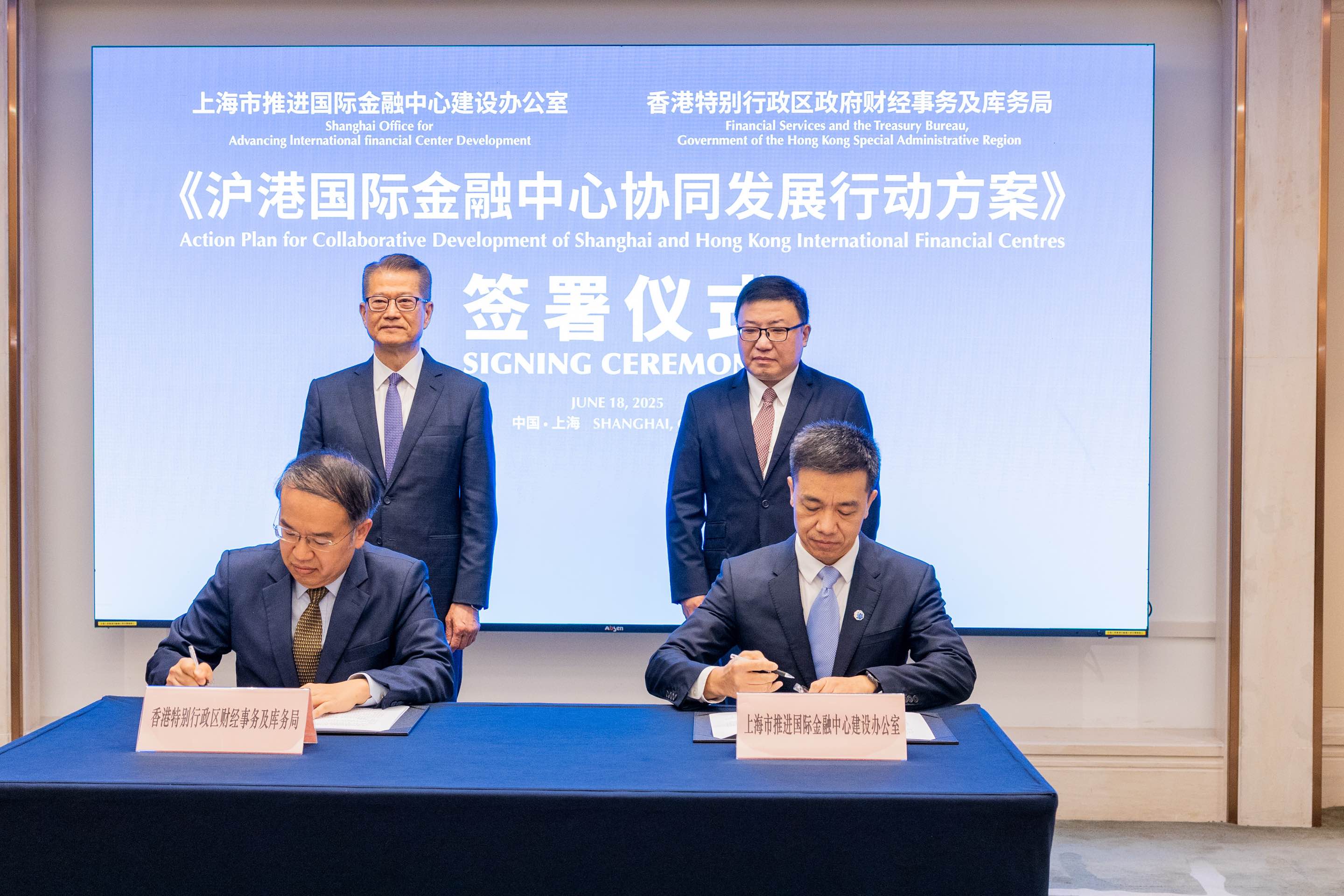
Core Viewpoint - The signing of the "Shanghai-Hong Kong International Financial Center Collaborative Development Action Plan" aims to enhance Shanghai's competitiveness as an international financial center and consolidate Hong Kong's position, deepening cooperation between the two regions to support the national financial power strategy [1][4]. Group 1: Financial Cooperation Mechanisms - The action plan focuses on optimizing mechanisms such as "Bond Connect" and "Swap Connect" to create a global center for RMB asset allocation and risk management, supporting high-quality development of the Belt and Road Initiative and facilitating enterprises' international expansion [4]. - The plan emphasizes the importance of financial market connectivity and cross-border financial service innovation, including new initiatives for cross-border clearing cooperation and the application of digital RMB in cross-border payments [6][8]. Group 2: Innovation and Development - The action plan promotes innovation in financial services, particularly in green finance, digital finance, and technology finance, to support key national strategic areas and the real economy [5][7]. - It encourages the application of technologies such as AI and blockchain in asset management, insurance, and settlement, while also supporting financial policies that benefit technology innovation enterprises [7]. Group 3: Regulatory and Institutional Framework - The plan outlines the need for regular communication among financial regulatory bodies, cooperation among financial institutions, information sharing, standard alignment, and talent mobility to create a market-oriented, rule-of-law, and international business environment [6]. - It includes measures to enhance the financial infrastructure and service systems between Shanghai and Hong Kong, such as facilitating the establishment of non-resident accounts and promoting the use of RMB for trade settlements [8]. Group 4: Future Directions - The next steps involve leveraging the action plan as a new starting point to promote the complementary development of the Shanghai and Hong Kong financial centers, enhancing China's influence and voice in the global financial system [8].