星链计划

Search documents
商业航天-SpaceX复盘-技术与商业的极致平衡
2026-02-24 14:16
Summary of SpaceX Conference Call Industry Overview - The conference call focuses on the commercial space industry, specifically highlighting SpaceX's role in breaking the market monopoly previously held by the United Launch Alliance (ULA) through legal reforms and competitive practices initiated by the U.S. government [1][3]. Key Points and Arguments - **Legal and Market Environment**: The U.S. government revised laws to establish a legal framework for commercial space activities, promoting competition and breaking ULA's monopoly, which was heavily reliant on Boeing and Lockheed Martin [1][3]. - **Initial Funding and Support**: SpaceX benefited from NASA's funding and project support, alongside Elon Musk's personal investment of nearly $100 million, which facilitated the development of the Falcon 1 rocket and subsequent contracts [1][4]. - **Innovative Business Model**: SpaceX adopted a unique approach by focusing on rapid iteration of a single rocket model, aiming for the lowest average cost across the series rather than minimizing marginal costs for individual launches [1][5]. - **Cost Reduction through Reusability**: The company achieved significant cost reductions by mastering reusable rocket technology, which allowed it to secure over 80% of global commercial launch contracts [1][6]. - **Expansion of Market Demand**: SpaceX created new market demand by extending satellite communication services to end consumers, thus increasing launch frequency and leveraging low-cost access to space for scaling operations [1][7][8]. - **Performance Improvement of Falcon 9**: The Falcon 9 rocket improved its capabilities by approximately 30%-40% through high-frequency launches and rapid iterations, effectively controlling costs and enhancing performance [1][9]. - **Next-Generation Starship Innovations**: The Starship system incorporates several core improvements aimed at cost reduction, including full reusability, the use of liquid methane fuel, and advanced manufacturing techniques like 3D printing [1][10]. Additional Important Insights - **External Support for Development**: SpaceX's growth was significantly supported by U.S. policies, funding, and a robust aerospace industrial system, which domestic companies should emulate by seeking similar support and adopting rapid iteration strategies [1][11]. - **Current State of Domestic Commercial Space Industry**: The domestic commercial space industry is primarily focused on mid-to-upstream infrastructure development, with expectations of achieving a good commercial cycle by around 2030, aligning with government targets for satellite communication users [1][12].
SpaceX-从-变革-中崛起的-星际先行者
2026-02-05 02:21
Summary of SpaceX Conference Call Company Overview - **Company**: SpaceX - **Industry**: Commercial Space Industry Key Points and Arguments Starlink Program - The Starlink program is expected to generate revenues of $22-24 billion by 2026, significantly impacting the global communication market, especially among maritime vessels and B2B clients, demonstrating high customer retention [1][2][3] - SpaceX currently has 9,513 satellites in orbit, while China has only 1,467, indicating a dominant market position [2] Launch Cost Reduction - SpaceX has reduced launch costs to less than one-tenth of traditional rockets through the Falcon series, with Falcon 9's launch cost estimated at $1,000 to $2,000 per kilogram [1][5] - In 2025, SpaceX plans to complete 167 launches, accounting for the majority of U.S. launches [5][14] Starship Rocket Innovations - The Starship rocket is the only fully reusable two-stage rocket globally, utilizing low-cost stainless steel and optimized Raptor engines, reducing engine costs to below $500,000 [1][9][10] - The use of stainless steel allows for multiple reuses and stability in extreme temperatures, further lowering transportation costs [9] Future Goals and Market Position - Elon Musk aims to make space the most cost-effective data center within five years, addressing power and cooling challenges faced by terrestrial data centers [1][15] - SpaceX plans to dominate global orbital payloads, projecting to carry over 98% by 2027 [11] Challenges in Space Computing - Space computing centers face significant technical challenges, including heat dissipation, deployment costs, and rapid hardware iteration [19][20] - The operational cost of space data centers could be as low as 5% of terrestrial centers over ten years, presenting a compelling economic advantage [18] Lunar and Mars Exploration - NASA and SpaceX have detailed plans for lunar and Mars exploration, with NASA focusing on asset claims in space and Musk planning unmanned Mars tests by 2026 [22] - The potential value of lunar resources, such as Helium-3 and rare earth materials, is significant, with SpaceX controlling the only transport route to these resources [23] Technical and Operational Bottlenecks - Key challenges for space computing include high deployment costs, maintenance difficulties, rapid hardware obsolescence, and low data interaction rates with Earth [20][21] - The need for high-frequency orbital resupply and energy logistics is critical for successful Mars missions [24] Additional Important Insights - SpaceX's competitive advantage over domestic commercial space companies is highlighted by its mature business model, including its own satellites and rockets, and significantly lower launch costs [14] - The strategic implications of lunar resource development and Mars exploration could reshape global political dynamics, giving the U.S. a strategic edge [22][23]
和众汇富研究手记:SpaceX酝酿史上最大IPO
Cai Fu Zai Xian· 2026-02-02 00:03
Core Viewpoint - SpaceX is planning to launch its initial public offering (IPO) around mid-June 2024, targeting a valuation of approximately $1.5 trillion and aiming to raise up to $50 billion, which could make it one of the largest IPOs in history [1][4]. Group 1: Business Developments - SpaceX has solidified its leading position in the commercial space sector through the large-scale launch of reusable rockets, significantly reducing launch costs [3]. - The Starlink project is expanding globally, deploying a low Earth orbit satellite network, which is driving rapid growth in commercial revenue [3]. - Ongoing advancements in deep space exploration and manned spaceflight projects provide long-term growth potential and a compelling narrative for the company [3]. Group 2: IPO Timing and Symbolism - The choice of mid-June for the IPO is notable as it coincides with a rare planetary alignment and Elon Musk's birthday, enhancing the symbolic significance of the event [3]. - This timing is expected to attract global investor attention even before the official roadshow begins, leveraging Musk's ability to blend technology, personal branding, and public narrative [3]. Group 3: Valuation and Market Impact - The targeted valuation of $1.5 trillion exceeds historical ranges for traditional aerospace and most tech companies, reflecting not just current financials but also future potential in global communications and deep space exploration [4]. - The IPO is seen as a complex undertaking, requiring rapid completion of regulatory filings, financial disclosures, and global roadshows, all while managing investor expectations amid market volatility [4]. Group 4: Broader Industry Implications - A successful IPO would provide global investors with a systematic opportunity to participate in the growth of the space industry, potentially transforming the financing structure of the sector [5]. - The listing could also lead to a revaluation of related upstream and downstream companies in the capital markets, as commercial space, satellite internet, and AI/communication industries become increasingly intertwined [5]. Group 5: Challenges Ahead - Despite its technological leadership, SpaceX faces challenges such as high capital expenditures, long project cycles, and regulatory scrutiny post-IPO [6]. - The transition to a public company will impose higher demands for information disclosure, performance stability, and investor communication, contrasting with its previous operational flexibility as a private entity [6]. - The IPO is viewed as a structural turning point in SpaceX's development path, with future performance dependent on balancing commercialization capabilities and long-term strategy [6].

星链彻底成功那天,地球人要被美国拿捏了?马斯克的星链计划要是真能彻底成功,别被所谓 “全球通信革新” 的噱头骗了,这根本不是全人类的福利,而是藏着獠牙的科技威胁。是美国在太空搞霸权霸凌的赤裸裸表现,其他国家要是没拿出靠谱的反制手段,往后在太空领域只会处处被动,后果真的没法想象。...
Sou Hu Cai Jing· 2026-01-13 02:31
Core Viewpoint - The success of SpaceX's Starlink program may not be a global benefit but rather a manifestation of U.S. technological dominance, posing significant risks to other nations' sovereignty and security [1][2]. Group 1: Technological Implications - Starlink's network, consisting of over 40,000 terminals, allows for direct communication without traditional ground infrastructure, enabling effective military operations in conflict zones like Ukraine [2]. - The introduction of the "Starshield" program, which plans to launch 15,000 satellites, indicates a shift from civilian to military applications, raising concerns about the potential for coercive control over nations reliant on this technology [2][3]. Group 2: Geopolitical Risks - The limited physical space in low Earth orbit and the scarcity of radio frequencies create a competitive environment where the first to occupy these resources can exert control over others, likening it to monopolizing a vital road [3][4]. - The aggressive deployment of Starlink satellites has previously posed collision risks to international space stations, highlighting the potential for geopolitical tensions and operational hazards in space [4][6]. Group 3: Security Concerns - The proliferation of Starlink technology could inadvertently facilitate global terrorism, as the widespread availability of such systems may fall into the wrong hands, complicating security measures [5]. - Without developing independent satellite systems, nations risk becoming overly dependent on foreign technology, which could lead to vulnerabilities in national defense and communication infrastructures [5].
星链计划2026年降低卫星轨道高度,提升太空运行安全性
Xin Lang Cai Jing· 2026-01-01 23:52
Core Viewpoint - SpaceX's Starlink program is set to adjust the orbital altitude of its satellites from 550 kilometers to 480 kilometers in order to enhance space operational safety [1] Group 1: Company Developments - Michael Nichols, Vice President of SpaceX's Starlink program, announced the upcoming global satellite constellation orbital adjustment via social media [1] - Currently, there are over 9,300 Starlink satellites in orbit, with projections to exceed 10,000 by March 2026, indicating a significant scale that necessitates high demands for orbital safety [1]
群殴 “马保国”
债券笔记· 2025-12-26 14:41
Group 1: Equity Market - The U.S. follows a "private sector-led, government-assisted" approach, where the government acts as an "angel investor" and major customer, while companies drive their own growth [8] - SpaceX is highlighted as a leading player, with its Falcon 9 rocket achieving high recovery rates and the Starlink project amassing over 8 million users, showcasing its strong revenue potential [8][9] Group 2: Commercial Space Race - In the U.S., private companies like Blue Origin and Rocket Lab are competing in the commercial space sector, with Blue Origin focusing on space tourism and Rocket Lab targeting the small satellite market [10] - In China, state-owned enterprises lead the way in commercial space, with China Aerospace Science and Technology Corporation (CASC) and China Aerospace Science and Industry Corporation (CASIC) playing pivotal roles in various space missions and innovations [11] - The private sector in China is also emerging, with companies like Blue Arrow Aerospace and Tianbing Technology developing reusable rockets and innovative propulsion systems [12][13] Group 3: Market Dynamics and Challenges - Key areas of focus include reusable rockets, satellite internet, and AI-enabled space computing, which are seen as crucial for reducing costs and expanding market opportunities [14] - Challenges include the stability of reusable rocket technology and the need for breakthrough applications to create a commercial ecosystem in the space industry [14] Group 4: A-Share Market Performance - The A-share market shows positive momentum, with the Shanghai Composite Index rising by 0.47% and a total trading volume of 1.92 trillion yuan, indicating strong investor sentiment [15] Group 5: Macro and Fixed Income - The bond market is characterized by strong short-term bonds, with the 10-year government bond yield at 1.837% [16] - The central bank's operations include a net injection of 1 trillion yuan through MLF, ensuring ample liquidity in the market [16] Group 6: International Relations and Currency - The U.S. has announced the end of its trade investigation into Chinese chips, which is expected to ease trade tensions and positively impact the technology sector [16] - The Chinese yuan is strengthening, nearing the 7.0 mark against the dollar, supported by strong trade surpluses and favorable economic conditions [16]

全球富豪榜揭晓:美首富造火箭,俄首富搞天然气,中国首富在干啥
Sou Hu Cai Jing· 2025-12-20 10:46
Group 1: Wealth Overview - In 2025, the number of billionaires worldwide surpassed 3000 for the first time, reaching 3028 individuals, with a total wealth of $16.1 trillion, exceeding the GDP of any country outside the US and China [3][9] - The wealth of the top 15 billionaires exceeds $2.4 trillion, which is greater than the combined wealth of the bottom 1500 billionaires [3] - The number of billionaires in Russia reached 140, with a total wealth of $580 billion, primarily concentrated in the energy sector [18][20] Group 2: Key Billionaires - Elon Musk, CEO of Tesla, has a net worth of $483 billion, with significant contributions from Tesla, SpaceX, and xAI [7] - Larry Page and Sergey Brin, co-founders of Google, have net worths of $262 billion and $242 billion respectively, reflecting the dominance of tech giants in wealth accumulation [7][8] - Jeff Bezos, founder of Amazon, has a net worth of $245 billion, while Mark Zuckerberg of Meta has $222 billion [8][15] Group 3: Regional Wealth Dynamics - The US leads with 902 billionaires, followed by China with 823, and India with 205 [9] - Singapore is emerging as a haven for new billionaires, attracting global capital [9] - The wealth growth in China is driven by consumer-oriented businesses, with a notable increase in self-made billionaires [20][24] Group 4: Industry Insights - Musk's business empire spans electric vehicles, aerospace, social media, and artificial intelligence, with SpaceX valued over $200 billion [12][15] - The energy sector remains central to Russian wealth, with companies like Lukoil producing over 80 million tons of oil annually [16][18] - The beverage industry in China, led by Zhong Shanshan of Nongfu Spring, highlights the success of consumer-focused businesses, with his wealth reaching $771 billion [20][22] Group 5: Future Trends - The Asia-Pacific region is becoming a new engine for wealth growth, with a significant increase in billionaires and total wealth [31] - The transfer of wealth is expected to reshape the business landscape, with an estimated $6.9 trillion to be inherited globally by 2040 [31][33] - The technology sector is projected to continue leading wealth creation, with increasing interest in Chinese tech developments [33]



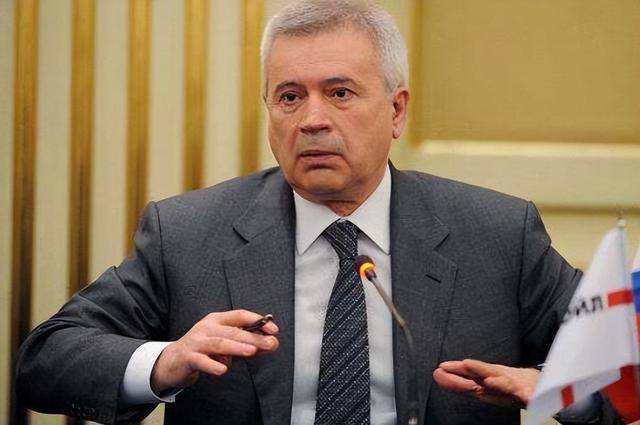
马斯克每年在太空部属100吉瓦AI卫星 占美国电力近1/4
Sou Hu Cai Jing· 2025-11-15 09:22
Core Viewpoint - Elon Musk plans to launch solar AI satellites with a capacity of 100 gigawatts annually, aiming to provide low-cost power for large-scale AI operations [1] Group 1: Solar AI Satellite Initiative - The initiative involves sending 100 gigawatts of solar AI satellites into orbit each year [1] - This plan could potentially supply about 25% of the annual electricity load in the United States, which is approximately 460 gigawatts [1] - A detailed implementation plan has been developed, marking a significant breakthrough in energy supply [1] Group 2: Implications for Companies - If successful, this initiative could greatly benefit SpaceX's Starlink program and Tesla's energy business [1]
中集车辆业绩连降后遭平安资管集中减持 “星链计划”能否助力破局?
Xin Lang Cai Jing· 2025-09-19 10:25
Core Viewpoint - The company is experiencing significant revenue and net profit declines, prompting major shareholders to reduce their stakes, indicating potential concerns about the company's future performance and strategic direction [1][3]. Financial Performance - In the first half of 2025, the company reported total revenue of 9.753 billion yuan, a year-on-year decrease of 8.85%, and a net profit attributable to shareholders of 403 million yuan, down 28.48% [1]. - The second quarter of 2025 saw revenue of 5.162 billion yuan, a decline of 6.93%, with a net profit of 224 million yuan, down 24.82% [1]. - For the full year of 2024, total revenue was 20.998 billion yuan, a decrease of 16.30%, and net profit was 1.085 billion yuan, a significant drop of 55.80% [1]. - The company's net profit margin in the first half of 2025 was 4.19%, reflecting a year-on-year decline of 21.98% [1]. Cost Structure and Efficiency - The company's gross margin was 15.01%, showing a slight increase of 0.71 percentage points year-on-year, but operating expenses as a percentage of revenue rose to 6.37%, an increase of 5.07% year-on-year [2]. - The company has been focusing on improving production efficiency and market competitiveness through initiatives like the "Starlink Plan" and "Xiongqi Plan," which have reportedly increased production efficiency by 30% and labor productivity by nearly 30% in 2024 [2]. Market Dynamics - The company's revenue performance is uneven across global markets, with domestic revenue in China for 2024 at 8.676 billion yuan, a slight increase of 0.54%, while North American revenue fell to 6.918 billion yuan, a decline of 36.27% [2]. - The company is actively exploring growth opportunities in the Global South, which represents 24% of global GDP and is expected to contribute 30% of future global economic growth [2]. Shareholder Actions - Major shareholder Ping An Capital began reducing its stake in early 2025, ultimately decreasing its holdings to below 5% after multiple transactions, reflecting concerns over the company's short-term performance and long-term transformation challenges [3].

马斯克教训:理想主义者,不要去从政
Sou Hu Cai Jing· 2025-05-29 14:56
Core Viewpoint - Elon Musk's brief political career in the White House ended in disappointment, with no significant achievements and a decline in Tesla's market value by over 30% since his arrival [2]. Group 1: Musk's Idealism vs. Political Realism - Musk is characterized as a staunch idealist, which contrasts sharply with the complexities of political life, where interests must be negotiated and divided [4][7]. - Successful entrepreneurs often prioritize societal benefits over immediate profits, a trait Musk shares as seen in his ventures like space exploration and renewable energy [6]. - The political environment is inherently different from business, where idealism can lead to conflicts with established interests and bureaucratic resistance [8][9]. Group 2: Challenges Faced in the White House - Musk's attempt to implement efficiency reforms in the government led to backlash from various interest groups, resulting in chaos within the White House [7][9]. - His idealistic approach, which worked in his companies, proved ineffective in the political arena, where compromise and pragmatism are essential [8][9]. - Ultimately, Musk's decision to leave the White House was seen as a recognition of the mismatch between his idealistic vision and the realities of political governance [9][10].