易方达消费精选

Search documents
你的客户,真的把你当“专业顾问”吗?
Wind万得· 2025-11-24 01:16
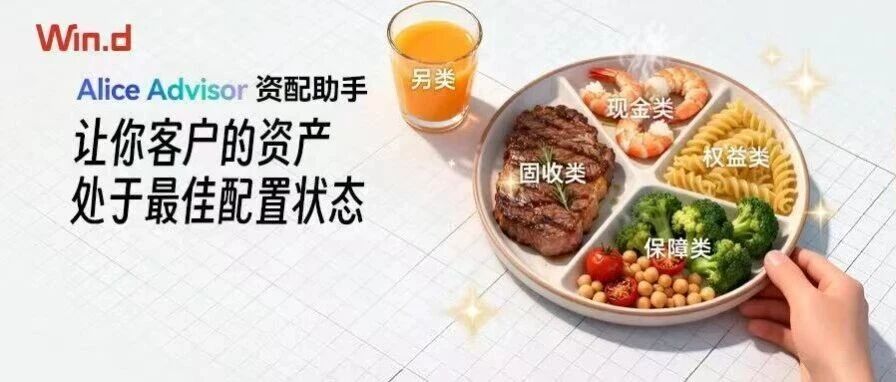
Core Viewpoint - The article emphasizes the need for investment advisors to transition from being mere product salespeople to becoming comprehensive asset allocation experts, focusing on creating a wealth system that aligns with clients' life goals [6][20]. Group 1: Challenges in Current Practices - Many investment advisors find themselves trapped in a cycle of product sales due to traditional operational models, which limits their ability to communicate effectively and professionally [4][5]. - Clients are increasingly seeking holistic solutions that encompass growth, protection, inheritance, and liquidity, rather than just individual products [6]. Group 2: Systematic Upgrade to Professional Value - The article suggests that advisors must upgrade their roles to asset allocation experts, moving beyond just selling products to constructing and managing a wealth system tailored to clients' objectives [6]. - This upgrade does not require solitary effort; tools like AI can assist in enhancing advisors' capabilities [7]. Group 3: AI as a Professional Assistant - The AI asset allocation assistant, referred to as "Alice Advisor," can help advisors overcome limitations in visibility, tools, and efficiency, making professional planning a regular part of their work [10]. - The assistant allows for the integration of all asset classes into a single analysis, enabling advisors to make informed decisions based on a comprehensive view of clients' assets [13]. Group 4: Enhanced Diagnostic Capabilities - The AI assistant can provide deep diagnostics, moving from vague qualitative assessments to precise quantitative insights about clients' portfolios, such as identifying overexposure in equities or industry concentration [17]. - This capability allows advisors to respond quickly to complex client needs regarding global allocation and retirement planning, thereby transforming the advisor-client relationship [20]. Group 5: Efficient Solution Generation - The AI assistant can generate customized investment solutions in seconds, addressing complex client requests without the advisor needing to spend excessive time on calculations [21]. - This efficiency allows advisors to focus more on client communication and service rather than manual calculations [21].

金融产品每周见:消费行业基金:从投资能力分析到基金经理画像-20251107
Shenwan Hongyuan Securities· 2025-11-07 15:30
1. Report Industry Investment Rating No relevant content provided. 2. Core Views of the Report - Based on fund holdings, consumption - related funds can be classified into five types, with most fund managers adopting the "segmented track (mainly liquor)" strategy [3]. - Consumption - related funds can generate relatively stable excess returns in the long - term compared to the sector index, are relatively good at stock - picking in certain industries, and it's difficult to identify their stock - picking ability for consumer stocks compared to all - industry funds [3]. - When comparing consumption - related funds with different style characteristics from seven dimensions, high turnover may lead to high returns recently, high - ROE style funds usually have high dividend attributes, etc. [3]. - To screen the observation list of consumption - related funds, quantitative indicators such as excess performance momentum, performance in favorable and unfavorable environments, stock - picking ability, etc. can be referred to [3]. 3. Summary According to the Directory 3.1 Classification of Consumption - Related Funds - The classification method is based on the fund's full - position data and heavy - position stock data in a certain sector. For consumption funds, some Hong Kong stocks are additionally included. Most of the top 10 consumption - related funds in terms of scale have some commonalities in allocation [6]. - Consumption - related funds are classified into five types: consumption + satellite, sector rotation, segmented track, consumption rotation, and consumption equilibrium, with "segmented track (mainly liquor)" being the most commonly adopted strategy [3]. 3.2 Holding Characteristics: Can Consumption - Related Funds Create Positive Excess Returns? - As a whole, consumption - related funds have similar performance to the consumption sector index before 2025, and have achieved certain excess returns compared to the index since this year [22]. - Consumption - related funds are relatively good at stock - picking in industries such as household appliances, textile and apparel, agriculture, forestry, animal husbandry and fishery, etc., and have prominent excess returns in some industries during certain periods [23][26]. - It's difficult to determine whether consumption - related fund managers have stronger stock - picking ability for consumer stocks compared to all - industry funds [28]. - Consumption - related funds prefer to allocate liquor in food and beverage, and their individual - stock allocation is relatively stable. They had positions in new - consumption stocks earlier [36]. - Through cluster analysis, different types of consumption - related funds can be identified, such as those focusing on agriculture, forestry, animal husbandry and fishery, those focusing on liquor investment, etc. [39] 3.3 Comparison of Consumption - Related Funds with Different Style Characteristics - In terms of turnover trading, high - turnover consumption - related funds have better short - term performance recently, and some liquor - themed funds with low turnover have return drag. In the long - term, both high - and low - turnover funds have excellent performers [42][44]. - In terms of holding style, funds with high ROE generally have high dividend attributes. Different segmented tracks have significant differences in market - value styles [48][52]. - In terms of holding popularity, the structure of market - preferred stocks in the consumption sector has changed significantly, and there are excellent performers in various types of products [53]. - In terms of left - and right - side investment, consumption - related funds are generally on the right side of the market median, and there are excellent performers on both sides [59]. - In terms of stock - picking ability, by calculating the skewness, kurtosis, and mean/standard deviation of stock - picking returns, funds with strong stock - picking ability can be found [60][62]. - In terms of adaptability to different market environments, different types of products show different adaptability results, and there are products with strong performance in favorable or unfavorable environments [63][65]. - In terms of segmented - track rotation, there are both products with good and poor rotation effects among consumption - related funds [71]. 3.4 Observation List of Consumption - Related Funds - The screening of the observation list refers to quantitative indicators such as excess performance momentum, performance in favorable and unfavorable environments, stock - picking ability, left - and right - side investment ability, and segmented - track rotation effect. Other factors such as the fund manager's tenure and fund scale are also considered [75]. - The observation list includes funds like E Fund Long - Term Value, Cathay Pacific Consumption Optimization, Changxin Multi - Benefit, etc. [3][76]
听说,顶尖投资理财顾问都在用这个“神助攻”?
Wind万得· 2025-10-30 22:37
Core Viewpoint - The introduction of Alice Advisor as an AI assistant aims to enhance the efficiency and effectiveness of investment advisors in wealth management, allowing them to focus more on client service and trust-building rather than data analysis and report generation [1][20]. Group 1: Functionality and Benefits - Alice Advisor is designed to be a super assistant, digital twin, and intelligent hub, leveraging AI to provide deep professional insights quickly [3][20]. - The AI assistant can respond to client inquiries more efficiently, analyze holdings in depth, confidently recommend products, and scientifically complete asset allocations [5][20]. - It offers real-time analysis of financial data, risk-return assessments, and peer comparisons, enabling advisors to communicate effectively without relying on lengthy presentations [10][20]. Group 2: Use Cases - In scenarios where clients ask about the impact of Federal Reserve interest rate changes on A-shares, Alice Advisor can provide immediate insights without the advisor needing to sift through reports [6][7]. - For inquiries about specific funds or stocks, Alice Advisor integrates global policies, capital flows, historical data, and market sentiment to deliver clear professional interpretations [8][10]. - When clients express interest in ETFs, Alice Advisor provides comprehensive knowledge on index composition, weight distribution, tracking errors, and fee structures, empowering advisors to answer confidently [13][20]. Group 3: Client Interaction and Reporting - Alice Advisor can generate personalized asset allocation plans based on client profiles, significantly reducing the time required to develop investment strategies from half a day to just a few minutes [15][16]. - The AI assistant automates the collection of data and the generation of structured reports, allowing advisors to focus on client service rather than repetitive tasks [18][20]. - It remembers service habits, client preferences, and common phrases, becoming increasingly attuned to the advisor's style and needs over time [21].

那些曾被赋予光环的明星基金经理,跑赢大盘了吗?
3 6 Ke· 2025-08-15 01:59
Core Insights - The performance of star fund managers in the current bull market is mixed, with some outperforming the market while others lag behind [1][2]. Market Performance - As of August 13, the Shanghai Composite Index has risen by 9.90% year-to-date, the Shenzhen Component Index by 10.91%, and the ChiNext Index by 16.57%. The Wind Mixed Equity Fund Index has yielded 19.67% this year and 38% over the past year [1]. Star Fund Managers' Performance - Nearly 20 star fund managers have managed over 200 billion yuan in assets as of the end of Q2, showcasing diverse investment styles including growth, value, balanced, and thematic approaches [2]. - Notable performers include Ge Lan and Fu Pengbo, with Ge Lan's funds achieving returns of 26.60%, 67.85%, and 1.88% year-to-date, while Fu Pengbo's fund has returned 32.11% [3][4]. Sector Highlights - The innovative drug sector has been a standout, with Ge Lan's focus on this area leading to significant returns, particularly from Hong Kong-listed innovative drug stocks [3]. - Fu Pengbo has increased holdings in the pharmaceutical sector, focusing on innovative drugs and traditional medicine benefiting from AI [4]. Balanced Investment Styles - Xie Zhiyu and Zhu Shaoxing, known for their balanced investment styles, have shown performance divergence this year. Xie Zhiyu's funds have returned between 12.84% and 37.65%, while Zhu Shaoxing's single fund has returned 9.29% [5][6]. Challenges in Consumer Sector - Liu Yanchun, focusing on consumer stocks, has faced challenges with returns ranging from 0.13% to 2.43% year-to-date, as the consumer sector struggles with demand and competition [7]. - Xiao Nan's consumer-focused funds have also shown mixed results, with one fund down 3.45% while another gained 15.97% [8]. Broader Market Trends - The current market environment emphasizes the importance of sector selection over individual stock-picking abilities, as many star fund managers have not outperformed the market [9]. - The industry is reflecting on the definition of "star fund managers," suggesting that long-term risk management may be more indicative of skill than short-term performance spikes [9].
那些曾被赋予光环的明星基金经理,跑赢大盘了吗?
经济观察报· 2025-08-14 11:41
Core Viewpoint - The performance of billion-level star fund managers during the current bull market is mixed, with some achieving significant returns while others underperforming the market [1][3]. Market Overview - The A-share market has shown a bullish trend with the Shanghai Composite Index up 9.90%, the Shenzhen Component Index up 10.91%, and the ChiNext Index up 16.57% as of August 13 [2]. - The Wande Equity Mixed Fund Index has a year-to-date return of 19.67% and a one-year return of 38% [2]. Star Fund Managers Performance - Approximately 20 star fund managers with over 200 billion yuan in assets under management have diverse investment styles, including growth, value, balanced, and thematic strategies [3]. - Some star fund managers have successfully captured market trends, while others have lagged behind the market [3]. Notable Performers - Fund managers Ge Lan and Fu Pengbo have shown impressive performance, with Ge Lan managing three funds totaling 399.08 billion yuan, achieving returns of 26.60%, 67.85%, and 1.88% year-to-date [5]. - Fu Pengbo's fund, Ruiyuan Growth Value, has a return of 32.11% this year and 51.91% over the past year, with significant holdings in sectors like PCB and new energy [5][6]. Balanced Investment Style - Fund managers Xie Zhiyu and Zhu Shaoxing, known for their balanced investment styles, have shown performance divergence this year [7]. - Xie Zhiyu manages three funds with returns of 12.84%, 27.54%, and 37.65% year-to-date, benefiting from a diversified portfolio across various sectors [8]. - Zhu Shaoxing's single fund, with a return of 9.29% this year, has been negatively impacted by poor performance in consumer stocks, particularly in the liquor sector [9]. Challenges in Consumer Sector - Fund managers focusing on consumer and new energy sectors face significant challenges due to market conditions [10]. - Liu Yanchun's six funds have returns ranging from 0.13% to 2.43% this year, heavily affected by the underperformance of consumer stocks, particularly in the liquor industry [11]. - Xiao Nan's consumer-focused funds have shown a stark performance difference, with one fund down 3.45% and another up 15.97% year-to-date [12]. Market Dynamics - The current market environment emphasizes the importance of sector selection over individual stock-picking abilities, as many star fund managers have not outperformed the market [13]. - A reevaluation of what constitutes a "star fund manager" is underway, with a focus on long-term performance and risk management rather than short-term gains [14].

葛兰、张坤等明星基金经理们跑赢指数了吗?
Jing Ji Guan Cha Wang· 2025-08-14 10:12
Market Overview - The A-share market has shown a bullish trend in 2023, with the Shanghai Composite Index up 9.90%, the Shenzhen Component Index up 10.91%, and the ChiNext Index up 16.57% as of August 13 [2] - The Wind data indicates that the Wande Equity Mixed Fund Index has a year-to-date return of 19.67% and a one-year return of 38% [2] Star Fund Managers Performance - Approximately 20 star fund managers managing over 20 billion yuan have shown mixed performance during the bullish market, with some outperforming the market while others lagged behind [2] - Notable fund managers include Ge Lan and Fu Pengbo, who have achieved significant returns through their investment strategies [3] Sector Performance - Ge Lan's funds, particularly in the healthcare sector, have performed exceptionally well, with returns of 26.60% and 67.85% for her medical-themed funds [3] - Fu Pengbo's "Ruiyuan Growth Value" fund has a year-to-date return of 32.11%, focusing on sectors like PCB and new energy [3][4] Balanced Investment Style - Xie Zhiyu has shown a balanced investment style with returns of 12.84%, 27.54%, and 37.65% across his three funds, benefiting from diversified sector exposure [5] - In contrast, Zhu Shaoxing's single fund has underperformed with a return of 9.29%, primarily due to poor performance in consumer stocks [6] Challenges in Consumer Sector - Liu Yanchun's funds, focused on consumer stocks, have struggled with returns ranging from 0.13% to 2.43% due to weak performance in the consumer sector, particularly in the liquor industry [7] - Xiao Nan's consumer-themed funds have shown significant performance disparity, with one fund down 3.45% while another is up 15.97% [8] Market Dynamics and Reflections - The current market environment emphasizes the importance of sector selection over individual stock-picking abilities, as many star fund managers have not outperformed the market [9] - There is a growing sentiment within the industry to redefine what constitutes a "star fund manager," focusing on long-term performance and risk management rather than short-term gains [9]