朱雀三号可重复使用火箭

Search documents
可回收火箭不断突破,航空航天ETF(159227)午后强势拉升,商业航天含量超69%
Mei Ri Jing Ji Xin Wen· 2026-02-25 06:06
Group 1 - The A-share market saw a collective rise in the three major indices, with the commercial aerospace sector experiencing a strong afternoon surge, particularly the Aerospace ETF (159227) which increased by 1.15% and achieved a trading volume of 262 million yuan, maintaining its position as the leader in its category [1] - Blue Arrow Aerospace announced the latest development plan for the Zhuque-3 reusable rocket, which is set to conduct recovery tests in the second quarter of 2026, with the team currently optimizing landing procedures and aiming for the first recovery flight attempt in the fourth quarter of this year [1] - The successful implementation of the maximum dynamic pressure escape flight test for the Mengtian manned spacecraft marks China's first maritime recovery operation for a manned spacecraft, providing valuable experience for future space station applications and manned lunar missions [1] Group 2 - Dongwu Securities highlighted recent technological breakthroughs and experimental progress in China's reusable rocket sector, indicating that the aerospace industry is moving closer to "low cost and high reusability," which is crucial for national strategic security and high-end manufacturing upgrades [2] - The Aerospace ETF (159227) ranks first in its category, closely tracking the National Aerospace Index, with constituent stocks covering the entire industry chain including fighter jets, aerospace engines, rockets, missiles, satellites, and radars, aligning perfectly with the "integrated aerospace" strategic direction [2] - The ETF has a high commercial aerospace content of 69.65%, with top holdings including industry leaders such as Aerospace Development, China Satellite, and Aerospace Electronics [2]


朱雀三号预计二季度复飞,航空航天ETF(159227)小幅震荡,成交额稳居同类第一
Mei Ri Jing Ji Xin Wen· 2026-02-25 02:36
Group 1 - The A-share market saw all three major indices rise collectively, with the aerospace sector experiencing slight fluctuations. The Aerospace ETF (159227) slightly decreased by 0.07% to 1.482 yuan, with a trading volume of 83.81 million yuan, maintaining its position as the leader in its category [1] - Key stocks in the aerospace sector included Yaguang Technology, which rose by 6.71%, Aerospace Development by 3.12%, and Guanghang Aviation by 3.33%. Other stocks such as Hitec High-tech, Shanghai Hanxun, AVIC Heavy Machinery, and Aerospace Electronics also saw gains [1] - Blue Arrow Aerospace announced the latest development plan for the Zhuque-3 reusable rocket, which is set to conduct recovery tests in the second quarter of 2026. The team is currently optimizing the landing process and aims to attempt the first recovery flight in the fourth quarter of this year [1] - AVIC Securities highlighted the ongoing strategic value of commercial aerospace, predicting that multiple new reusable rockets will have their maiden flights in 2026, with launch numbers expected to exceed 100. The market space is anticipated to expand due to low-orbit constellation construction and new scenarios in space computing, transitioning the industry from valuation-driven to a combination of valuation and performance-driven growth [1] Group 2 - The Aerospace ETF (159227) closely tracks the National Securities Aerospace Industry Index and is recognized as the leading ETF in the commercial aerospace sector. It comprehensively covers the entire industry chain, including rocket launches, satellite manufacturing, and aerospace electronics, featuring core stocks such as Aerospace Development, China Satellite, Aerospace Electronics, and AVIC on-board [2] - The product offers ample liquidity and consistently ranks among the top in trading volume for similar ETFs, serving as a convenient tool for investors to capitalize on multiple core opportunities in AI + aerospace, large-scale commercial launches, and space computing [2]
通用航空ETF南方(159283)反弹向上涨1.39%,太空基建不断加速,机构持续看好商业航天和卫星产业链
Xin Lang Cai Jing· 2026-01-27 02:08
Group 1 - The core viewpoint of the articles highlights the significant growth and investment opportunities in the commercial aerospace sector, driven by advancements in technology and supportive government policies [1][2]. - The Southern General Aviation ETF (159283) has seen a 1.39% increase, with a trading volume of 34.07 million yuan, indicating strong market interest [1]. - Key stocks within the index, such as Triangular Defense, Leike Defense, and Tianyin Electromechanical, have shown notable gains of 6.96%, 6.29%, and 5.88% respectively, reflecting positive market sentiment towards the sector [1]. Group 2 - The commercial aerospace sector is experiencing a triple resonance of accelerated national aerospace strategy, experimental breakthroughs, and capital catalysis, which is expected to enhance growth [2]. - The establishment of the first offshore liquid rocket launch recovery test platform is underway, indicating significant advancements in aerospace capabilities [2]. - The recent issuance of policies, such as the "Measures for Promoting the Development and Utilization of Commercial Satellite Remote Sensing Data Resources (2026-2030)," provides a solid institutional guarantee for the integration of low-altitude economy and aerospace information applications [2].
太空基建不断加速,持续看好商业航天和卫星产业链
Guotou Securities· 2026-01-26 08:53
Investment Rating - The industry investment rating is "Outperform the Market - A" [4] Core Insights - The importance of aerospace and satellite technology is increasingly recognized, with the acceleration of space infrastructure construction benefiting the related industry chain in the long term [2][12] - The report highlights significant recent developments in the commercial aerospace and satellite industry, including the launch of new satellite networks and rockets, which are expected to enhance the application potential of satellite infrastructure [1][11] - The report suggests focusing on incremental directions in space infrastructure, such as space computing power, 3D printing, terminal direct connection, and inter-satellite connectivity, as well as value-enhancing segments in low Earth orbit satellites [2][12] Summary by Sections Industry Performance - The report indicates that the industry has shown a relative return of 14.7% over the past month, 9.2% over three months, and 23.8% over twelve months, with absolute returns of 16.5%, 11.2%, and 47.4% respectively [6][13] Recent Developments - The report details various recent events, including the launch of the "TeraWave" satellite communication network by Blue Origin, which will consist of 5,408 low Earth orbit satellites, and the successful launch of multiple satellites by different companies [1][11] - It also mentions the approval of policies in Beijing to support the development of commercial satellite remote sensing data resources from 2026 to 2030, indicating a favorable regulatory environment for the industry [1][11] Investment Focus - The report recommends paying attention to companies involved in satellite and space asset management, safety, and applications, as well as those engaged in testing and simulation services [2][12]
2025年北京市数字经济增加值增长8.7%
Xin Lang Cai Jing· 2026-01-25 01:47
Core Insights - Beijing aims to accelerate the construction of a global benchmark city for the digital economy, with significant progress in the key ecosystem for artificial intelligence [1] - The digital economy's added value has increased by 8.7% [1] Digital Economy Development - Major application pilot bases in healthcare, manufacturing, and science have been established in Beijing [1] - The number of registered large models remains the highest in the country [1] - The Beijing Data Group has been formed, and the Smart Beijing Innovation Center is now operational [1] Future Industry Initiatives - Beijing hosted the world's first humanoid robot marathon and the World Humanoid Robot Games, attracting global attention [1] - A small-scale experimental network for 6G has been established [1] - The Zhuque-3 reusable rocket successfully completed its first flight [1] - Several leading achievements in brain-computer interface technology were showcased [1] Modern Service Industry Growth - The software information, technology services, and business services sectors contributed over 50% to economic growth [1] - The efficiency of financial services to the real economy continues to improve [1] - The number of listed companies on the Beijing Stock Exchange has reached 288, with a total market capitalization exceeding 860 billion yuan [1]
谁能成为“商业航天第一股”?
3 6 Ke· 2025-12-31 02:48
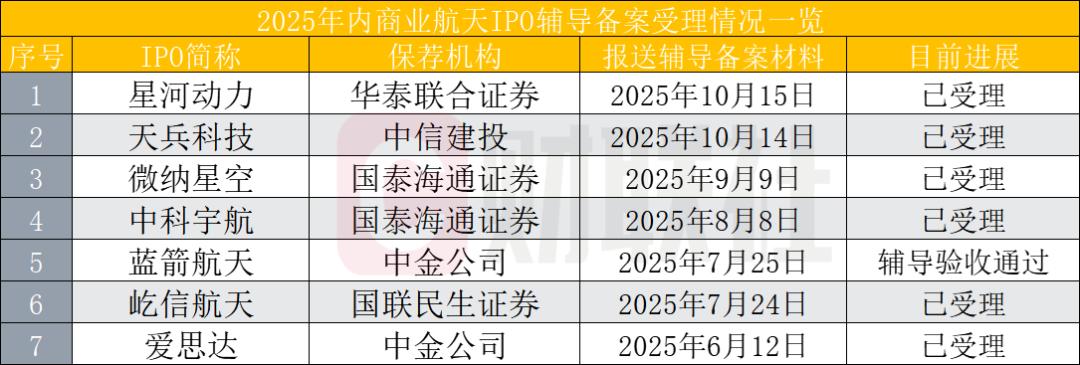
Core Viewpoint - The introduction of IPO guidelines for commercial space companies by the Shanghai Stock Exchange is expected to catalyze significant growth in the industry, marking the beginning of a golden era for commercial space ventures [1][10]. Group 1: Policy and Market Response - The new guidelines aim to support high-quality commercial rocket companies that have not yet achieved substantial revenue, facilitating their listing on the Sci-Tech Innovation Board [1][10]. - The emphasis on reusable rocket technology is seen as revolutionary, significantly reducing launch costs and increasing operational capacity, which is crucial for the commercialization of the space industry [1][10]. - The commercial space sector is viewed as a key focus for investment by institutions, with expectations of a strong market performance leading up to 2026 [1][3]. Group 2: IPO Activity and Industry Dynamics - As of now, seven commercial space companies have entered the IPO counseling process, with Blue Arrow Aerospace leading the charge as the fastest to complete its counseling [2][6]. - Major players in the global and domestic commercial space industry, including SpaceX and Blue Arrow Aerospace, are planning to advance their IPO processes by 2026, indicating a new dynamic of accelerated industry and capital interaction [2][9]. - The concentration of intermediary institutions is expected to increase, with top-tier brokers likely to dominate the IPO projects due to their industry expertise and experience [3][5]. Group 3: Institutional and Regulatory Insights - The new regulations require intermediaries to enhance their professional capabilities, ensuring thorough verification of the companies' qualifications and disclosures [3][5]. - The commercial space sector is characterized by high investment, risk, and long cycles, necessitating intermediaries to deepen their industry knowledge and collaborate effectively within their firms [5][11]. - The establishment of a dedicated regulatory body for commercial space, along with the application of the fifth set of listing standards, is anticipated to streamline financing and enhance the industry's capacity for commercialization [11][12]. Group 4: Future Outlook - The commercial space industry is expected to enter a phase of rapid growth, with significant technological advancements and increased demand for launch services and satellite networks anticipated in the coming years [10][11]. - The combination of policy support and capital investment is projected to drive the industry towards achieving high-frequency rocket launches and large-scale satellite production capabilities [11][12]. - The focus on medium to large reusable rockets is identified as a core development direction, with successful payload launches serving as a validation of commercial viability [11][12].

公司问答丨铂力特:公司已深度参与蓝箭航天朱雀三号可重复使用火箭首次大型垂直起降飞行试验
Ge Long Hui A P P· 2025-11-18 08:43
Core Viewpoint - The company, Plater, has been deeply involved in the development of the reusable rocket, Zhuque-3, in collaboration with Blue Arrow Aerospace since 2019, transitioning from rapid engine component development to comprehensive metal additive manufacturing services [1] Group 1 - Plater has established a partnership with Blue Arrow Aerospace since 2019 [1] - The company has assisted in the rapid development of engine components for Blue Arrow Aerospace [1] - Plater is now providing comprehensive metal additive manufacturing services to support the transition from engineering application to mass production of components [1]

铂力特(688333.SH):已深度参与蓝箭航天朱雀三号可重复使用火箭首次大型垂直起降飞行试验
Ge Long Hui· 2025-11-18 07:49
Core Viewpoint - Platinum Technology (688333.SH) has actively participated in the first large-scale vertical takeoff and landing flight test of the Zhuque-3 reusable rocket developed by Landspace, indicating a significant advancement in their collaboration since 2019 [1] Group 1 - The company has established a partnership with Landspace since 2019, initially assisting in the rapid development of engine components [1] - The collaboration has evolved to provide comprehensive metal additive manufacturing services, facilitating the transition from engineering application to mass production of components for the client [1]
铂力特:已深度参与蓝箭航天朱雀三号可重复使用火箭首次大型垂直起降飞行试验
Ge Long Hui· 2025-11-18 07:44
Core Viewpoint - Platinum Technology (688333.SH) has actively participated in the first large-scale vertical takeoff and landing flight test of the reusable Zhuque-3 rocket developed by Landspace, indicating a significant advancement in their collaboration since 2019 [1] Group 1 - The company has established a partnership with Landspace since 2019, initially assisting in the rapid development of engine components [1] - The collaboration has evolved to provide comprehensive metal additive manufacturing services, facilitating the transition from engineering application to mass production of components for the client [1]
突然,直线涨停!三大利好,重磅驱动!
Zheng Quan Shi Bao Wang· 2025-11-07 04:39
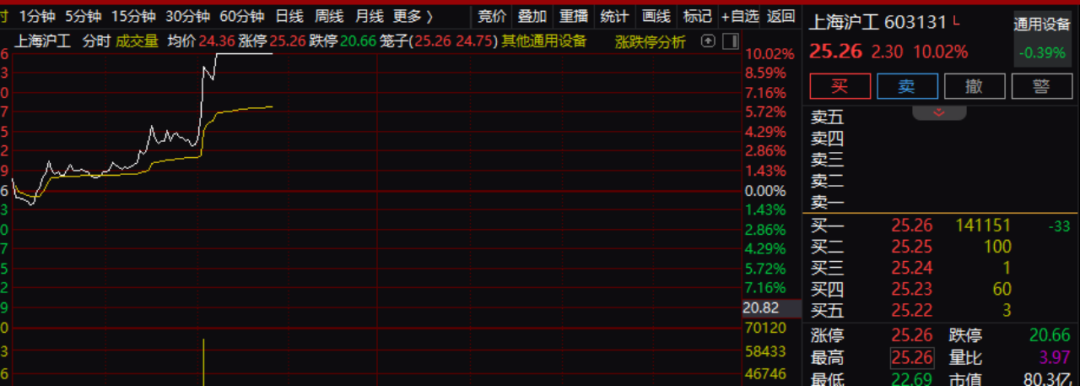
Core Viewpoint - The commercial aerospace sector in China is experiencing a significant surge, driven by recent technological advancements, supportive government policies, and competitive dynamics in the global market [1][4][5]. Group 1: Market Dynamics - The A-share commercial aerospace sector saw a sharp rise, with companies like Shanghai Huguang hitting the daily limit and others like Aerospace Zhizhuang and Shanghai Hanxun also experiencing gains [1][2]. - Analysts attribute this sudden market movement to three main factors: successful tests of reusable rockets, supportive government plans, and international developments in satellite technology [1][4]. Group 2: Technological Advancements - Star River Dynamics successfully completed the ground testing of the Zhishen-1 reusable liquid rocket's first-stage propulsion system, marking a significant milestone towards its maiden flight [4]. - The Zhishen-1 is designed for at least 25 reuses and targets the large satellite launch market, indicating a shift towards more sustainable space operations [4]. Group 3: Government Policies - The 14th Five-Year Plan emphasizes the construction of a "strong aerospace nation," highlighting the importance of commercial aerospace alongside other sectors [1][4]. - Future government reports are expected to further promote the development of commercial aerospace and related industries as new growth engines for the economy [4][5]. Group 4: Global Competition - The global commercial aerospace landscape is intensifying, with the U.S. leading in technological innovation and market presence, while China is rapidly catching up [5][6]. - The competition for satellite orbits and frequency resources is becoming critical, with countries recognizing the strategic value of low Earth orbit and satellite communication systems [6]. Group 5: Market Potential - The global commercial aerospace market is projected to reach $480.3 billion by 2024, accounting for 78% of the global aerospace economy [5]. - China's commercial aerospace market is expected to grow from 324.4 billion yuan in 2017 to 713.3 billion yuan by 2024, reflecting a compound annual growth rate of 11.9% [5].