机器人保险

Search documents
2025政策篇丨大幅调整近尾声,行业地位显著提高,10年从行业发展到顶层设计,130条政策书写保险业变迁
Xin Lang Cai Jing· 2026-01-05 11:51
Core Insights - 2025 is a pivotal year for the insurance industry, marking the end of significant policy adjustments and setting the stage for a new era in 2026 [3][31] - The insurance sector's role in the economy is increasingly prominent, with a notable shift in policy focus towards technology innovation, internationalization, and healthcare [3][8] Policy Adjustments - A total of approximately 130 insurance-related policies were issued in 2025, slightly fewer than the 133 in 2024, indicating a stabilization in policy-making expectations [4][5] - The frequency of policy issuance varied, with a peak in July 2025, contrasting with the high issuance months of November and December 2024 [7][8] Regulatory Dynamics - The Financial Regulatory Authority was the most active in issuing policies, with 47 standalone documents, while joint releases totaled 41, indicating a strong regulatory presence [10] - The number of policies issued by the State Council increased significantly, from 7 in 2024 to 15 in 2025, reflecting a heightened focus on the insurance sector [10] Investment Trends - By the end of Q3 2025, the total balance of insurance funds reached 37.46 trillion yuan, a 16.5% increase year-on-year, with equity asset allocation rising to 22.5% [13] - The number of equity stakes acquired by insurance funds reached 39 in 2025, the highest since 2016, driven by supportive policies encouraging market entry [13] Focus Areas - The 2025 policy landscape shifted towards "insurance fund utilization" and "promoting consumption," with a notable emphasis on integrating insurance into broader economic strategies [11][19] - The insurance industry is increasingly involved in the aging population sector, with policies encouraging investment in comprehensive elderly care services [18][19] Healthcare Integration - The insurance sector is transitioning to a comprehensive health guardian role, moving beyond simple compensation to include preventive and management services [24] - Key policies in 2025 focused on commercial health insurance, innovative drugs, and the overall quality of healthcare insurance [25] Consumption Promotion - Policies released in 2025 frequently mentioned "promoting" and "boosting" consumption, highlighting the insurance industry's role in enhancing consumer confidence and spending [26][28] - Insurance products are being utilized to stabilize consumer expectations and directly stimulate spending in various sectors, including tourism and elderly care [28] Historical Context - Over the past decade, the insurance policy direction has evolved from a focus on risk compensation to a more structured approach emphasizing systemic design and integration into national strategies [29][30] - The transition reflects a broader shift towards value-driven growth, with the insurance industry expected to play a crucial role in supporting economic resilience and social stability [31][32]

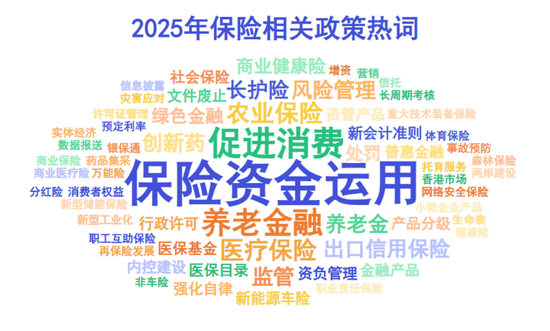
2025年保险业:稳中藏锋 亮点纷呈
Zheng Quan Ri Bao· 2025-12-25 16:52
Core Insights - The insurance industry in 2025 demonstrates resilience and proactive adaptation to new challenges, achieving a balance between growth and quality [2][3] - The industry has seen a steady increase in premium income and claims, with original insurance premium income reaching 5.48 trillion yuan, a year-on-year growth of 8%, and claims exceeding 2 trillion yuan, up 7% [1][2] Group 1: Industry Stability and Growth - The insurance sector has shown stable growth with a notable increase in both asset scale and premium income, highlighting its enhanced protective function [2] - The total asset scale of the insurance industry has reached a new high, with active investments and the establishment of private equity funds [1][2] - Digitalization and artificial intelligence are accelerating the transformation of the industry's operational logic [1][2] Group 2: Regulatory Changes and Product Innovation - The introduction of a dynamic adjustment mechanism for predetermined interest rates in the life insurance sector aims to align with market rates, with the maximum predetermined interest rate dropping from 2.34% to 1.90% [3][4] - The rise of participating insurance products is a strategic response to the reduced attractiveness of guaranteed high returns, becoming a key product for balancing the needs of stable operations and consumer wealth protection [5][6][7] Group 3: New Trends in Auto Insurance - The penetration rate of commercial insurance for new energy vehicles reached 91%, with expected premiums around 200 billion yuan, growing over 30% [8][10] - The rapid growth of new energy vehicle insurance is reshaping the business models of property insurance companies, focusing on precise pricing and risk management based on real-time driving data [10][11] Group 4: Non-Auto Insurance Regulation - The implementation of the "reporting and operation integration" policy in non-auto insurance aims to enhance market order and transparency, shifting competition towards product innovation and service enhancement [13][14] Group 5: Empowering New Economic Drivers - The insurance industry is increasingly involved in emerging sectors such as robotics and low-altitude economy, developing tailored insurance products to support innovation and risk management [15][16] Group 6: Optimizing Investment Policies - Continuous optimization of equity investment policies has allowed insurance companies to increase their equity asset allocation, enhancing their management flexibility and profitability [17][18] - The number of equity investments by insurance companies has risen significantly, with a record 39 instances of equity stakes taken in 2025 [19][20] Group 7: Private Equity Fund Development - The establishment of insurance private equity funds has accelerated, with 10 funds currently in operation, focusing on long-term value investment strategies [21][22] Group 8: Accelerating "Insurance + Health Care" Initiatives - Insurance companies are rapidly expanding into the "insurance + health care" sector, developing comprehensive elderly care services to meet growing market demands [22][23] Group 9: AI Integration in the Insurance Sector - The integration of artificial intelligence across the insurance value chain is transforming operational efficiency and customer experience, driving a shift from scale-driven to efficiency-driven models [24][25]
机器人险会和车险一样普及吗?
机器人大讲堂· 2025-11-25 09:18
Group 1 - Figure AI's former product safety chief Robert Grendel has filed a lawsuit claiming that the company's humanoid robots could cause skull fractures and alleges he was fired for raising safety concerns [1] - Grendel warned CEO Brett Adcock and chief engineer Kyle Edelberg about the robots' deadly performance, highlighting an incident where a robot caused a quarter-inch crack on a steel refrigerator door [1] - After submitting documented safety complaints, Grendel was terminated in September, claiming he was asked to prepare a safety roadmap for potential investors, which was later abandoned [1] Group 2 - The emergence of humanoid robots in crowded public events raises significant safety risks due to the lack of comprehensive international or industry standards, leading to compatibility and safety issues [3] - An incident at the 2025 World Humanoid Robot Games involved a robot colliding with an engineer, emphasizing the risks associated with humanoid robots [3] - The insurance industry faces challenges in providing risk coverage for robot companies, including complex risk assessments due to rapid technological advancements and the dynamic nature of risk characteristics [3][4] Group 3 - The lack of long-term risk data in the emerging field of robot insurance complicates accurate risk assessment and premium pricing, as traditional actuarial models are not directly applicable [6] - Insurers are developing innovative financial products to mitigate risks in the robot industry, with major companies like Ping An and China Pacific Insurance launching specialized insurance products for humanoid robots [6][7] - The insurance products available include property insurance, machinery damage insurance, third-party liability insurance, and cybersecurity insurance, aimed at covering various risks associated with robot operations [7] Group 4 - The first breakthrough in robot insurance occurred in early 2022 with the launch of the "Mobile Robot Quality Liability Insurance" by PICC, addressing various product quality issues [8] - In 2023, a pilot project in Changzhou provided insurance for local robot companies, demonstrating regional support for the robot insurance market [8] - By 2025, the insurance industry is transitioning from policy formulation to implementation, with various events and initiatives promoting insurance coverage for robots [10] Group 5 - Local governments are responding to the need for robot insurance, with policies in cities like Ningbo and Hainan promoting the development of humanoid robot application insurance [10][11] - Insurance products are being tailored to cover risks from design defects, operational failures, and cyberattacks, with a focus on third-party liability [11][12] - New insurance offerings include specialized products for exoskeleton robots and smart agricultural robots, indicating a growing market for tailored insurance solutions [12][14] Group 6 - The insurance industry views robot insurance as a means to provide comprehensive risk coverage across the entire lifecycle of humanoid robots, addressing various operational scenarios [15][16] - Insurers are adapting their pricing and claims processes based on accumulated data from existing industrial robots, but face challenges due to the rapid evolution of humanoid robots and the lack of historical data [16]



年度保险服务大奖
Nan Fang Du Shi Bao· 2025-11-24 23:11
Core Insights - The awards recognize companies for their excellent market performance, customer service, and social benefits, focusing on customer experience and needs [1] Group 1: Awarded Companies - China People's Property Insurance Company Shenzhen Branch has focused on national and regional strategies, insuring 1,520 high-tech enterprises and 914 specialized enterprises, and providing over 1 trillion risk protection [2] - China Pacific Property Insurance Company Shenzhen Branch has been active in the low-altitude economy insurance sector for over 10 years, providing coverage for nearly 5,000 operators and their equipment [3] - Taikang Life Insurance Company Shenzhen Branch emphasizes steady operation and innovation, offering comprehensive insurance protection and services to residents [4] - Taiping Life Insurance Company Shenzhen Branch supports foreign and Hong Kong residents with a full range of insurance services, enhancing service through digital transformation [5] - Ruizhong Life Insurance Company Shenzhen Branch has a diverse product system and leads the industry with a claims processing time of 1.22 days and a 100% small claims settlement rate [6] - China People's Health Insurance Company Shenzhen Branch has upgraded its core medical insurance products, expanding coverage to over 1,500 advanced drugs and 340 high-end hospitals [8] - Tongfang Global Life Insurance Company has utilized technology to enhance service efficiency, achieving a 99% claim approval rate and a 15-second small claim processing time [9]
保险业交出稳中有进“周年答卷”
Jin Rong Shi Bao· 2025-09-04 08:41
Core Viewpoint - The "New National Ten Articles" released by the State Council aims to strengthen regulation, prevent risks, and promote high-quality development in the insurance industry over the next 5 to 10 years, marking a significant policy direction for the sector [1] Industry Performance - As of the end of Q2 2025, the insurance industry's asset scale reached 39.22 trillion yuan, with a year-on-year growth of 9.2% [2] - The total insurance premium income amounted to 3.74 trillion yuan, reflecting a 5.3% increase compared to the same period in 2024 [2] - Insurance companies' claims and payouts reached 1.3 trillion yuan, showing a notable growth of 9% year-on-year, outpacing premium growth [2] Social Welfare Services - The insurance sector has enhanced its role in social welfare, particularly in disaster relief, with 20.5 billion yuan paid out during extreme weather events in 2025 [3] - The urban catastrophe insurance program has provided risk protection for 64.39 million households, amounting to 22.36 trillion yuan in coverage [3] - Technological advancements have improved risk reduction services, with significant outreach for disaster warnings to millions of clients [3] Health Insurance Development - The urban commercial medical insurance, known as "惠民保," has seen significant growth, with 615.9 million participants in Shenzhen and over 22 billion yuan in claims paid [4] - The commercial health insurance sector has also expanded, with claims reaching 405.2 billion yuan in 2024 and long-term health insurance reserves exceeding 2.5 trillion yuan [4][5] Support for the Real Economy - The insurance industry is aligning with national strategies by enhancing risk protection in technology innovation and green development [6][7] - Insurance services for technology activities provided coverage of nearly 24 trillion yuan in the first half of 2025 [6] - Green insurance products have seen a 23.9% increase in risk coverage, with over 126.35 trillion yuan provided [7] Investment in Strategic Areas - Insurance companies are increasing investments in strategic sectors, with China Life establishing a fund focused on high-demand industries like AI and advanced manufacturing [8] - New China Life's investment in national strategic areas surpassed 1.21 trillion yuan, reflecting a 54% year-on-year increase [8] Industry Reform and Transformation - The insurance sector is undergoing significant reforms in pricing mechanisms and product structures to enhance quality and efficiency [10][11] - The introduction of floating yield insurance products has led to a 33% share of new life insurance products in the first half of 2025 [11] - The insurance intermediary market is also experiencing a contraction, with a 11.7% decrease in the number of professional intermediary institutions in Jilin province [11] Future Outlook - The insurance industry is expected to continue leveraging its long-term advantages to contribute to the construction of a financial strong nation and support modernization efforts in China [12]



截至6月末,深圳辖内科技保险实现保费收入18.8亿元,累计提供风险保障近3.12万亿元
Bei Jing Shang Bao· 2025-08-25 09:21
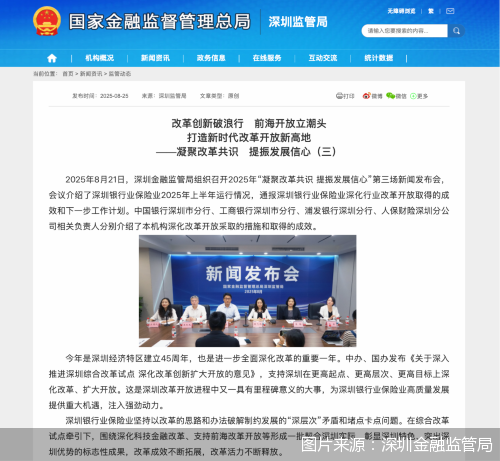
Group 1 - Shenzhen insurance industry is focusing on enhancing technology finance, with technology insurance expected to achieve premium income of 1.88 billion by June 2025, providing risk protection of nearly 3.12 trillion [1][2] - The Shenzhen Financial Regulatory Bureau has optimized the intellectual property financial ecosystem, issuing two lists of 81 specialized insurance products and 103 intellectual property financial products [1][2] - A total of 399 technology insurance products have been filed in the region, with 86 new products added this year, highlighting innovations in intellectual property insurance, low-altitude economy insurance, and robot insurance [2] Group 2 - The regulatory body has guided the industry in publishing the first national model clauses for unmanned aerial vehicle third-party liability insurance and has established the first national drone insurance service standards [2] - In the first half of 2025, eight cross-border medical insurance products were filed, providing risk protection exceeding 3.02 billion for Greater Bay Area residents [2] - The implementation of cross-border car insurance policies has been optimized, and a cross-border data verification platform is being upgraded to facilitate smoother data exchange between Shenzhen and Hong Kong [2]
机器人带火新需求,机器人保险是新蓝海吗
Bei Jing Shang Bao· 2025-08-18 13:06
Core Insights - The rapid integration of robots into various sectors is creating new demands for risk management and insurance solutions [1][3] - The insurance market is witnessing innovation to address the unique risks associated with robot applications, moving beyond traditional property insurance to comprehensive risk coverage [1][4] Group 1: New Market and Demand - The first World Humanoid Robot Games highlighted the performance and risks associated with robots, emphasizing the need for insurance to manage potential liabilities [3][4] - Incidents during competitions, such as a robot losing control and injuring a technician, underscore the importance of risk management in robotic applications [3][4] Group 2: Insurance Innovations - Experts suggest that future robot insurance should cover four key areas: product liability, property loss, cybersecurity, and research and development risks [4][5] - Insurance companies are actively developing diverse insurance products tailored to various robotic applications, including consumer-grade robots and logistics robots [5][6] Group 3: Policy Support and Challenges - Regulatory bodies are promoting insurance product innovation in the robotics sector through policies and subsidies to support technological advancements [6][7] - Despite the promising outlook for robot insurance, challenges remain, particularly in risk assessment due to a lack of historical data and the complexity of robotic operations [6][7] Group 4: Data Sharing and Collaboration - Industry experts advocate for enhanced communication and data sharing between insurance companies and robot manufacturers to improve risk assessment and product development [8] - Establishing a shared platform for accident data collection is crucial for developing accurate risk models and insurance products tailored to specific applications [8][9] Group 5: Market Potential - The increasing penetration of robots across industries presents significant growth opportunities for the robot insurance market, necessitating comprehensive insurance solutions throughout the robot lifecycle [8][9]