松延动力Bumi小布米

Search documents
盘点春晚黑科技
2 1 Shi Ji Jing Ji Bao Dao· 2026-02-16 23:37
Core Insights - The 2026 Spring Festival Gala showcased advanced technology, focusing on robotics and AI, with significant collaborations from companies like ByteDance's Volcano Engine and various robotics firms [1][24]. Robotics Showcase - The gala featured the largest lineup of robotic performances in its history, with multiple domestic humanoid robots participating in various acts, demonstrating not only precise movement control but also natural interaction capabilities [1][24]. - Four humanoid robots from Songyan Power were highlighted in the skit "Grandma's Favorite," emphasizing their emotional companionship value as "home assistants" and their potential applications in elderly care [1][24]. - A lifelike humanoid robot replicating the image of actress Cai Ming was introduced, showcasing advanced facial scanning and 3D modeling technology, allowing for synchronized lip movements and nuanced expressions [3][26]. - Yushutech's humanoid robots H2 and G1 performed martial arts, demonstrating high dynamic and collaborative control technology, marking a global first in such performance [4][30]. - Magic Atom Robotics presented six high-dynamic bipedal robots and two full-size humanoid robots in the singing program "Intelligent Manufacturing Future," integrating AI glasses and drones into the performance [7][33]. - Galaxy General Robotics showcased its wheeled dual-arm robot G1 in a microfilm, illustrating its utility in household tasks like folding clothes and simple cooking [11][37]. Product Development and Market Position - Companies invested heavily in marketing to appear on the gala stage, with Yushutech making its third appearance while others like Galaxy General, Songyan Power, and Magic Atom were debuting [14][40]. - Yushutech's product lineup includes the G1, a consumer-grade humanoid robot priced at approximately 99,000 yuan, and the H2, a high-performance flagship model set for release in October 2025 [40]. - Songyan Power's Bumi robot is noted as the world's first high-performance humanoid robot priced under 10,000 yuan, with other models like N2 and E1 showcasing advanced capabilities [41]. - Magic Atom's robots are designed for various applications, including industrial and commercial uses, with the MagicBot Gen1 being a full-size humanoid robot launched in 2024 [42]. - Galaxy General's G1 and S1 robots are designed for practical applications in retail and medical settings, focusing on reliability and functionality rather than mere performance [44]. AI Integration in Content Production - The gala utilized the "CCTV Listening Media Model 2.0" for the first time, enhancing content production quality and efficiency through advanced image generation and hyper-realistic digital human technology [24][48]. - The model allowed for dynamic scene construction and rendering, creating a visually stunning experience that blends traditional culture with modern aesthetics [48][49]. - AI-generated imagery significantly improved the visual effects production speed, enabling quick generation of high-quality materials based on creative needs [48][45]. - The gala also featured immersive audio technology, employing 120 immersive sound speakers to create a 360-degree sound field, enhancing the overall audience experience [49].


人形机器人的尴尬生意:订单超35亿,交付不足千台
36氪· 2025-12-19 00:09
Core Viewpoint - The embodied robotics industry has experienced a rapid rise and subsequent cooling, transitioning from a hype-driven phase to a more pragmatic focus on practical applications and order fulfillment [6][12][34]. Group 1: Industry Trends - In the first three quarters of 2025, the domestic robotics sector saw financing reach 38.624 billion yuan, 1.8 times the total financing of 21.254 billion yuan in 2024 [7]. - The influx of capital attracted various players, including automotive, smartphone, internet giants, and home appliance companies, creating a bustling market [8]. - The industry is shifting from a focus on technical demonstrations to a demand for real orders as a measure of company strength and capital attraction [11][12]. Group 2: Order and Delivery Challenges - The industry is facing a significant challenge with delivery capabilities lagging behind the rapid increase in orders, with many companies struggling to scale production from hundreds to thousands of units [14][17]. - Notable companies like Yushut Technology achieved a shipment of 1,400 units in 2024, but this remains a rare case in the industry [15]. - The current situation of "many orders but slow delivery" highlights the need for improved delivery capabilities as a key to overcoming the next phase of challenges [17]. Group 3: Market Reception and Consumer Demand - Despite the excitement around humanoid robots, practical applications in consumer markets remain limited, with many products lacking clear use cases [20][28]. - The price range for humanoid robots varies significantly, leading to price wars among companies to attract consumers, with some products priced as low as 9,998 yuan [22]. - The most popular products on e-commerce platforms are still simple, low-cost robots, indicating a lack of consumer willingness to pay for more advanced models that do not meet practical needs [27][28]. Group 4: Technological and Practical Limitations - The industry is currently characterized by a focus on flashy demonstrations rather than practical applications, with many robots failing to perform basic tasks effectively [30][33]. - Reports indicate that even leading companies struggle with efficiency, with humanoid robots achieving only 30% of human efficiency in simple tasks like box handling [33]. - The pursuit of visibility and market exposure has led to significant sponsorship investments, but this has not translated into sustained market demand [33]. Group 5: Future Outlook - The challenges of production capacity, practical application, and high costs are not insurmountable, as ongoing technological advancements and expanded application scenarios may alleviate these issues over time [34]. - The future success of the industry will depend on the ability of companies to create stable value through reliable products and effective cost management [34].
人形机器人的尴尬生意:订单超35亿,交付不足千台
凤凰网财经· 2025-12-18 14:38
Core Viewpoint - The humanoid robotics industry has experienced a rapid rise and subsequent decline, transitioning from a peak of excitement to a cooling phase, indicating a need for deeper market engagement and practical applications [3][5]. Group 1: Market Dynamics - In the first three quarters of 2025, the domestic robotics sector saw financing reach 38.624 billion yuan, 1.8 times the total financing of 21.254 billion yuan for all of 2024 [3]. - The influx of capital attracted various players, including automotive, smartphone, internet giants, and home appliance companies, creating a bustling market environment [4]. - However, the industry soon faced a downturn, with companies like OneStar disbanding and others like TLA Technology struggling with funding issues [6]. Group 2: Order and Delivery Challenges - The current phase of the humanoid robotics industry emphasizes real orders as a key metric for company strength, moving away from mere technical presentations [7]. - Significant orders have been reported, with companies like Zhiyuan and Yuzhu Technology securing contracts worth 124 million yuan and nearly 500 million yuan, respectively, while UBTECH's total order value exceeded 1.3 billion yuan [8]. - Despite the surge in orders, the industry faces a bottleneck in delivery capabilities, with many companies struggling to meet the increasing demand [9][10]. Group 3: Consumer Market and Pricing Issues - The consumer market for humanoid robots is facing challenges, with limited practical applications leading to low sales despite high-profile endorsements [13][18]. - The price range for humanoid robots varies significantly, from tens of thousands to millions of yuan, prompting companies to engage in price wars to attract consumers [15][21]. - Many consumers perceive humanoid robots as lacking practical value, viewing them as mere toys rather than useful household assistants [18][19]. Group 4: Technological and Practical Limitations - The industry is currently characterized by impressive demonstrations but lacks practical applications that meet user needs [22][23]. - Even basic tasks, such as box handling, show that humanoid robots are significantly less efficient than humans, achieving only 30% of human efficiency [23]. - The pursuit of visibility and market exposure has led to a focus on flashy demonstrations rather than addressing core practical issues [24]. Group 5: Future Outlook - The challenges of production capacity, practical application, and high costs are not insurmountable, with potential solutions emerging through technological advancements and expanded applications [24][25]. - The future of the industry will depend on the ability of robots to create stable value in both production and everyday life, necessitating improvements in technology, reliability, and cost management [24].

机器人“App Store”首发上线,万元级人形机器人卖爆;机器人ETF易方达(159530)连续三日“吸金”
Sou Hu Cai Jing· 2025-12-15 03:14
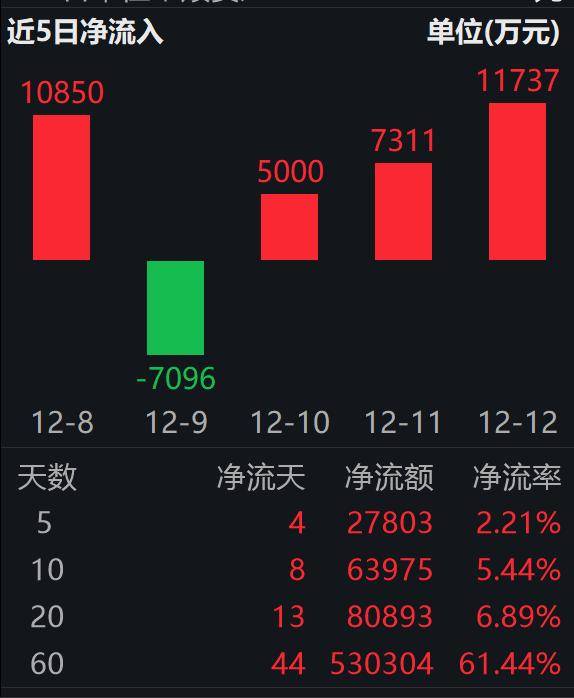
Group 1 - The National Robot Industry Index (980022) has seen a decline of 1.03%, with notable stock movements including Aerospace Intelligence rising by 6.81% and Lingyun Optics falling by 3.91% [1] - The E Fund Robot ETF (159530), which tracks the National Robot Industry Index, has experienced a net inflow of over 240 million in the last three days, totaling over 630 million in the past ten days and exceeding 5.3 billion in the last sixty days, with a current fund size of 12.661 billion [1] Group 2 - Songyan Power and Huicheng Co. have reached a strategic cooperation agreement, signing an order for 1,000 units of the Bumi humanoid robot, which will be launched on January 15, 2024, with the first batch of deliveries scheduled for March 1, 2026 [3] - Yushu Technology announced the launch of a humanoid robot "App Store" on December 13, allowing users to upload and share trained models for various actions [3] - Huolong Securities believes that the U.S. plans to release supportive policies for the robot industry, which will aid the global humanoid robot commercialization process, as domestic manufacturers continue to release new products [3] Group 3 - The National Robot Industry Index is characterized by a significant weight of humanoid robots, with a focus on high-growth leading companies, where the top ten weighted stocks account for approximately 40% [4] Group 4 - The E Fund Robot ETF (159530) provides an efficient tool for investors to gain exposure to the entire robot industry chain by tracking the National Robot Industry Index [5]

日租从上万降到5000,人形机器人租赁降温之后
投中网· 2025-11-13 06:43
Core Viewpoint - The humanoid robot rental market has experienced a rapid rise and subsequent decline, with rental prices dropping significantly as the initial hype subsides, leading to a shift from simple showcases to more complex collaborative performances [6][7][8]. Market Dynamics - The rental price for humanoid robots surged to over 10,000 yuan per day after the Spring Festival, but has since plummeted to around 5,000 yuan, reflecting a nearly 50% decrease [9][10]. - The market is characterized by a "winner-takes-all" dynamic, with a few companies, particularly Yush Robot, dominating the market share [17][18]. Business Operations - The humanoid robot rental business is capital-intensive, with operators like Li Lei investing nearly 4 million yuan in robot purchases alone, indicating a heavy reliance on asset investment [9][11]. - Despite the price drop, the recovery period for investments remains attractive at around three months, compared to over a year for other rental categories [11][12]. Technological Challenges - The current humanoid robots face technical limitations, such as inadequate sound systems and coordination issues, which hinder their performance in complex tasks [19][20]. - The industry is in need of technological breakthroughs to enhance robot capabilities and maintain market interest [20][26]. Future Outlook - The market's future hinges on the ability to create new applications and maintain consumer interest, as the novelty of humanoid robots may wear off [25][26]. - Companies are exploring the C-end market with more affordable humanoid robots, which could broaden the customer base and stimulate demand [12][13].

微软 CEO 获 9650 万美元最高薪酬;Netflix 宣布全力投入AI ;王自如曝负债 1 亿,坐绿皮火车
Sou Hu Cai Jing· 2025-10-23 01:17
Group 1: Microsoft CEO Compensation - Microsoft CEO Satya Nadella's compensation for fiscal year 2025 has reached $96.5 million, marking the highest salary since he took the position over a decade ago [1][4] - The board attributed this increase to the company's significant advancements in the AI sector, describing the progress as "extraordinary" [2][3] - Nadella's salary includes a base salary of $2.5 million, with 90% of the compensation paid in Microsoft stock [5] Group 2: Tesla Q3 Financial Results - Tesla reported a record total revenue of $28.095 billion for Q3 2025, a 12% increase from $25.182 billion in the same period last year [7] - The net profit attributable to Tesla's common shareholders was $1.373 billion, a 37% decrease from $2.173 billion year-over-year [7] - Despite exceeding revenue expectations, the adjusted earnings per share fell short, leading to a more than 1% decline in Tesla's stock price in after-hours trading [8] Group 3: Google Quantum Computing Breakthrough - Google announced a significant breakthrough in quantum computing with its new algorithm "Quantum Echo," which completed tasks that traditional computers cannot, achieving speeds approximately 13,000 times faster than supercomputers [13][14] - This achievement marks the first time a quantum computer has successfully run a verifiable algorithm, paving the way for practical applications in fields like medicine and materials science [13][14] Group 4: Tencent's Mixed Reality Model - Tencent officially released and open-sourced version 1.1 of its Mixed Reality Model (WorldMirror), which now supports multi-view and video input, allowing for the creation of 3D worlds in seconds [14][15] - The new version addresses limitations of the previous version by enabling multi-modal prior injection and unified output for 3D reconstruction [15] Group 5: Netflix's AI Integration - Netflix has adopted a proactive approach to integrating AI, viewing it as a tool to enhance creator efficiency rather than replacing creativity [16][17] - The company has already utilized generative AI in various productions, including visual effects and pre-production design [17] Group 6: Google Cloud and Anthropic Negotiations - Google Cloud is reportedly in discussions with AI startup Anthropic for a potential multi-billion dollar deal to provide cloud services [19][20] - The negotiations are ongoing, and no agreements have been finalized yet [21] Group 7: Baidu's Autonomous Driving Service in Switzerland - Baidu's autonomous driving service "AmiGo" is set to launch in Switzerland in collaboration with PostBus, with initial fleet testing planned for December [22] - The service will allow passengers to book rides via a mobile app, accommodating up to four passengers [22] Group 8: Huawei HarmonyOS 6 Release - Huawei officially launched HarmonyOS 6, featuring enhanced connectivity and perception capabilities, with a 15% improvement in smoothness from the previous version [26][27] - The new OS includes over 80 smart application agents and upgraded privacy and security features [27] Group 9: Launch of Affordable Humanoid Robot - Songyan Power introduced the world's first high-performance humanoid robot priced under 10,000 yuan, named Bumi, which can walk, run, and dance [28][29] - The robot supports graphical programming and voice interaction, aimed at engaging children [29]





李佳琦回应一夜赔20亿;闲鱼回应平台出现卢浮宫珠宝;张雪峰账号已解封;奔驰计划裁员3万人,离职补偿最高50万欧元丨邦早报
创业邦· 2025-10-23 00:10
Group 1 - Mercedes-Benz is implementing its largest layoff plan in history, targeting approximately 30,000 voluntary departures, with around 4,000 employees already accepting severance packages [1] - Senior management can receive up to €500,000 in compensation, with a tiered structure based on rank and years of service, including an "accelerated bonus" to incentivize early decisions [1] - The layoffs are based on a voluntary principle, with employees opting to leave after receiving attractive severance offers [1] Group 2 - Yushu Technology has decided to change its name to "Yushu Technology Co., Ltd." as part of its ongoing development strategy [3] - The company is working with its IPO advisory firm to ensure that its fundraising projects align with its future development strategy [3] Group 3 - Tesla reported third-quarter revenue of $28.1 billion, a 12% year-on-year increase, but adjusted net profit decreased by 29% compared to the previous year [15] - The company achieved a gross margin of 18% and free cash flow of $3.99 billion in the third quarter [15] Group 4 - JD.com launched the auction for its "National Good Car," attracting nearly 300,000 participants, with the highest bid exceeding ¥78 million [17] - The auction reflects JD.com's collaboration with GAC Group and CATL, focusing on user insights and sales channels without direct manufacturing involvement [17] Group 5 - The China Automobile Industry Association reported that the top ten automotive companies sold a total of 20.431 million vehicles from January to September 2025, accounting for 83.9% of total sales [37] - The retail sales of new energy vehicles in the passenger car market reached 632,000 units from October 1 to 19, 2025, a 5% year-on-year increase [37] Group 6 - The emotional economy in China is expected to exceed ¥4.5 trillion by 2029, with significant growth in the潮玩 market from ¥6.3 billion in 2015 to ¥60 billion in 2023 [38] - The retail sales of consumer goods in China are projected to surpass ¥50 trillion this year, indicating a robust recovery in consumer spending [38]