标普500指数看跌期权

Search documents
华尔街2026美股热门交易策略:把握AI分化、博弈波动率、对冲科技股尾部风险
智通财经网· 2026-01-18 23:45
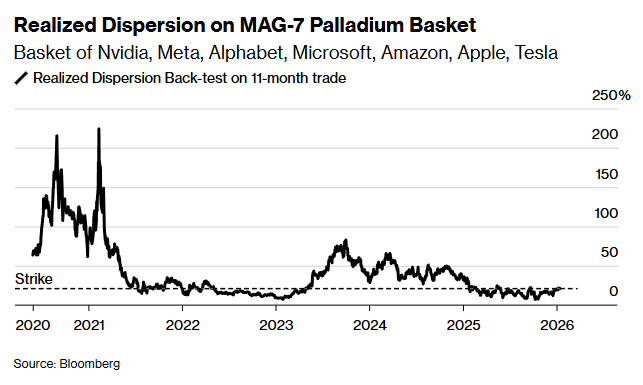
Group 1 - The article discusses the current market sentiment where investors are torn between the fear of missing out on stock market gains and concerns over escalating geopolitical risks, particularly influenced by U.S. President Trump's unpredictable policies [1] - Bloomberg Intelligence's chief global derivatives strategist, Tanvir Sandhu, highlights that the combination of AI momentum and government-induced volatility creates a favorable backdrop for the market, suggesting that both the S&P 500 index and volatility may rise simultaneously [1] - Strategies are being promoted to manage volatility changes and headline risks, transitioning from conventional tail hedging to customized differentiated baskets [1] Group 2 - The "Magnificent Seven" tech stocks are expected to continue leading market gains, but Barclays strategists note that direct purchases of call options are not cost-effective, recommending a Palladium structure that bets on the dispersion of a basket of stocks rather than the overall performance [2] - The Palladium structure is actively utilized among a wide range of clients, including hedge funds and pension funds, and is typically built around investment themes such as cyclical versus defensive stocks and AI versus robotics [6] - The UpVar swap strategy is gaining popularity as it bets on rising volatility when assets exceed a certain level, with several banks recommending 1 to 2-year UpVar swaps on the S&P 500 or Nasdaq 100 [7][10] Group 3 - European banks are considered a hot investment, with expectations of strong rebounds in 2025, and various trading strategies are being developed around cheaper upside options [11] - Barclays reports that European mining stocks are also gaining attention, with potential improvements in fundamentals driven by supportive Chinese policies and AI infrastructure demand [11] - Investors are increasingly inclined to buy volatility exposure in large tech stocks as a hedge against concentrated risks and uncertainties in AI capital expenditures, with recommendations to purchase out-of-the-money put options on companies like Apple and Nvidia [15]


期权市场“透视”2026年美股:遭遇30%暴跌概率达10% 警惕“痛苦指数”
Zhi Tong Cai Jing· 2025-12-22 03:31
Group 1 - The probability of the S&P 500 index declining by 30% or more at some point in 2026 is estimated to be 8-10% based on options market pricing [1] - Historical data shows that the average interval between significant declines of 30% or more in the S&P 500 index is 12.7 years since World War II, slightly reduced to 11.8 years since 1982 [1] - Market downturns tend to cluster, with significant declines occurring in short succession followed by long periods of stability [1] Group 2 - The "misery index," which combines unemployment and year-over-year inflation rates, rose from 5.5 to 16 between 1966 and 1982, indicating a period of frequent market downturns [2] - Currently, the misery index has increased from 5.2 in 2019 to 7.4, suggesting a potential shift towards more frequent economic recessions [2] Group 3 - The gig economy is acting as a "safety valve" for unemployed workers, explaining why unemployment has not led to a surge in unemployment insurance claims [3] - The number of self-employed workers surged from 9.7 million in September to 10.3 million in November, with the proportion of workers holding multiple jobs rising to 5.7%, the highest level since the 2008-09 recession [3] Group 4 - Despite a weakening economy, the stock market remains overvalued by most measures, with proprietary liquidity indices indicating downward pressure on the market [4] - There is skepticism regarding the widely held belief that economic growth will be stronger with higher inflation by 2026, as such clear forecasts rarely materialize as expected [4] - Current economic pressures, high stock market valuations, and the rising misery index suggest that the pricing of downside risk insurance (i.e., put options) may still be undervalued [4]
英伟达财报与美联储决议前夕 对冲策略转向美股期权 廉价VIX成“昨日黄花”
智通财经网· 2025-08-24 23:28
Group 1 - The recent comments by Jerome Powell at the Jackson Hole conference have sparked market expectations for a Fed rate cut in September, leading to a rebound in U.S. stocks close to historical highs [1] - Investors are discussing effective ways to protect returns ahead of Nvidia's earnings report, employment and inflation data, and the Fed's interest rate decision [1] - There is a notable absence of buying call options on the Chicago Board Options Exchange Volatility Index (VIX), which is typically a common hedging tool for investors [1] Group 2 - In the current market environment, vanilla put options or put spreads on the S&P 500 index are considered more reliable hedging tools, with a steep volatility skew helping to lower the cost of put spreads [2] - JPMorgan strategists have suggested a binary trading strategy betting on a decline of over 5% in the S&P 500 index by year-end, alongside a 0.2% rise in 10-year Treasury yields [2] - The high cost of VIX call options compared to S&P 500 put options is attributed to the rising volatility of VIX options relative to the low actual volatility of the S&P 500 [2] Group 3 - The steepness of the VIX futures term structure leads to higher holding costs, making call options less reliable and harder to realize profits [3] - Recent fund flows have shifted towards bullish funds, with over $2.5 billion flowing into leveraged VIX ETPs since April, while over $1 billion has exited inverse VIX funds [3] - The daily rebalancing of these products exacerbates the steepness of the term structure by selling short-term VIX futures and buying long-term contracts [3] Group 4 - Leveraged VIX ETPs may amplify volatility, as they buy futures during volatility spikes and sell during declines, potentially leading to significant futures sell-offs during market downturns [4] - Historical performance shows that S&P 500 put options outperformed VIX call options during low volatility sell-offs, indicating a preference for simpler hedging strategies [4] Group 5 - The upcoming Nvidia earnings report is a key event before the September Fed meeting, with options markets indicating a potential 5.8% volatility post-report, consistent with the average volatility over the past eight quarters [5] - Nvidia is considered a crucial stock in the market, and any failure to validate the current AI-driven bull market could lead to significant shifts in market sentiment [5]
炒美股现″死亡信号″:华尔街分析师警告泡沫,XBIT成最新避险绝招?
Sou Hu Cai Jing· 2025-07-28 11:28
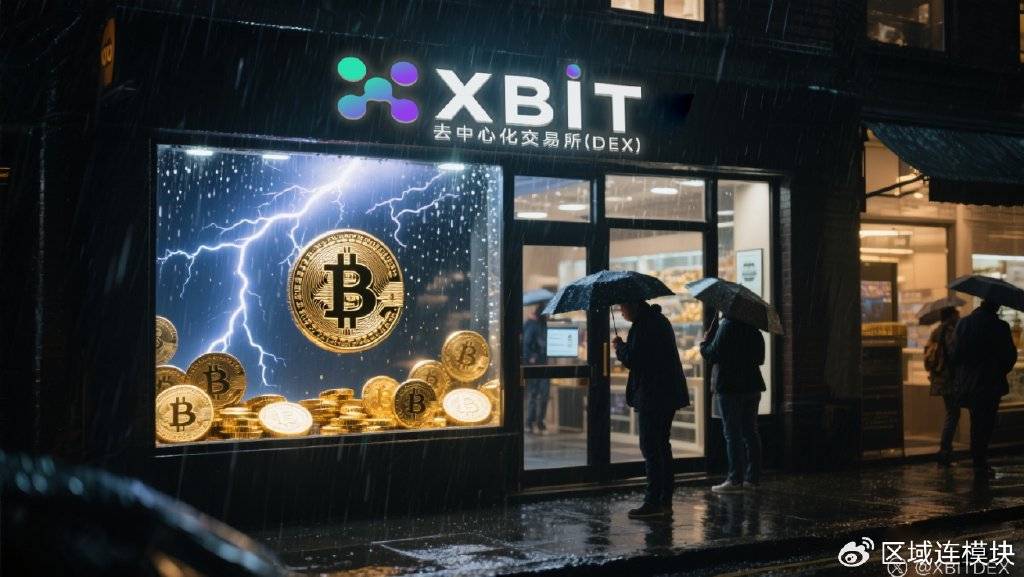
Group 1 - The core viewpoint highlights that global fund managers are rapidly moving into risk assets, with cash allocations dropping below 4%, indicating a potential market overheating situation [1][2] - The "bubble trio" indicators tracked by Hartnett's team have all signaled red, with cash holdings at 3.9%, 93% of fund managers betting on a "soft landing," and an over-allocation in stocks by 20% [2][4] - The current market conditions are reminiscent of the 2000 internet bubble, with significant investor enthusiasm for tech stocks, which Hartnett refers to as a "famous contrarian indicator" [4][2] Group 2 - XBIT decentralized exchange is gaining attention as a new hedge for institutional investors against market overheating, utilizing a non-custodial trading model that allows users to maintain control of their assets [5][6] - The platform has seen a 230% increase in daily trading volume since July, with stablecoin trading pairs making up 47% of transactions, indicating a shift towards stable assets during Fed policy uncertainty [5][8] - XBIT's decentralized architecture offers three key advantages: non-custodial trading, censorship resistance, and low-cost hedging options, making it an attractive choice for investors [6][8] Group 3 - Despite 83% of institutional clients being bullish on U.S. stocks, 17% have started allocating to non-dollar assets like gold and Bitcoin through decentralized platforms [8][11] - The volatility index for XBIT has risen to 45.8, suggesting that professional investors are actively purchasing put options, indicating a cautious outlook for the market [9] - HSBC's report indicates that ongoing White House interference with Fed decisions is undermining the dollar's status as a reserve currency, leading to increased trading volumes in other currencies on the XBIT platform [11]
高盛预警:美股牛市前景暗藏风险 当前布局对冲最划算
智通财经网· 2025-07-24 13:26
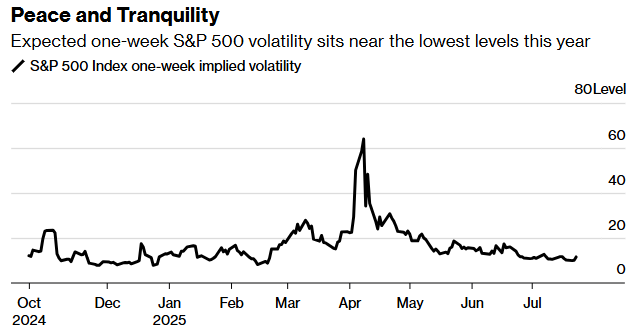
Group 1 - Financial institutions, including Goldman Sachs and Castle Securities, are advising clients to purchase inexpensive hedging tools to protect against potential losses in the U.S. stock market [1][3] - The S&P 500 index has surged 28% since its low on April 8, and the "fear index" has reached its lowest level since February, making the cost of hedging against market declines very low [1][3] - Goldman Sachs noted that if clients feel anxious, the market is making hedging operations very easy to execute [1] Group 2 - The market faces several potential adverse events, including the Federal Reserve's upcoming interest rate decision and unresolved trade agreements with major partners like Mexico and Canada [3] - The non-farm payroll report for July is expected to significantly impact the Federal Reserve's policy in the coming months, alongside important earnings reports from major tech companies [3] - Bank of America suggested that it is time to buy volatility, as the VIX index typically reaches its lowest point in July [3] Group 3 - There is a belief that the current upward trend in the market will continue, supported by retail investors [5] - If the Federal Reserve finds that tariffs do not drive inflation or hinder economic growth, a rate cut in September could further boost the stock market [5] - Institutional investors' long positions are nearing highs, and they may soon slow down their buying pace [5] Group 4 - Investors are encouraged to engage in hedging operations set to expire in September to mitigate risks from significant events [5] - Historical data indicates that September is typically the worst-performing month for the U.S. stock market [5]