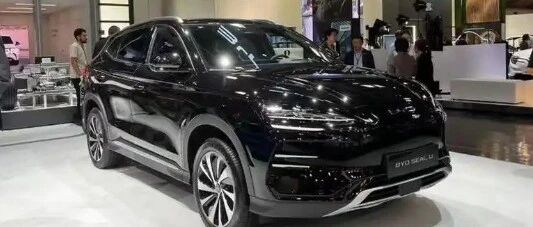
比亚迪海豹U

Search documents
2月中国车企欧洲销量
数说新能源· 2026-03-20 03:03
Group 1 - The core viewpoint of the article highlights the significant growth of Chinese automotive companies in the European market, with a 94% year-on-year increase in sales, reaching 78,962 units, and an increase in market share from 4.2% to 8% [2][3] - In February, various brands showed impressive performance, with BYD experiencing a 164% increase to 18,059 units, Chery growing by 282% to 16,166 units, and Leap Motor soaring by 849% to 8,511 units [3] - The contribution of different vehicle types includes hybrid vehicles at 23%, gasoline cars at 15%, pure electric vehicles at 34% with a 116% year-on-year growth, and plug-in hybrids at 28% [3] Group 2 - Specific model performance indicates that the MG ZS sold 9,038 units, BYD Seal U sold 5,824 units, and Leap T03 sold 6,119 units, with BYD Seal U ranking first among all plug-in hybrid models in Europe [4] - Chinese automotive companies hold a dominant position in the plug-in hybrid market, achieving a market share of 36% [4]



中国汽车,在欧洲卖爆了
创业邦· 2026-01-24 10:43
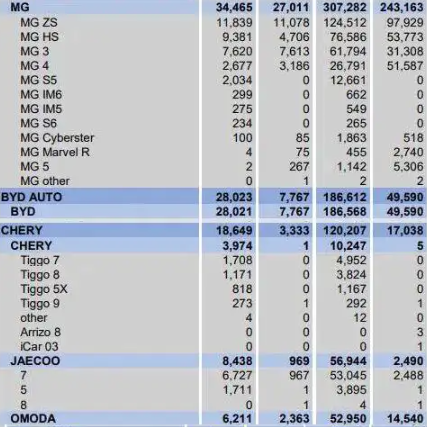
Core Viewpoint - The article highlights the significant growth of Chinese electric vehicle manufacturers in the European market, despite challenges such as high tariffs and local competition. Chinese brands have achieved remarkable sales increases, indicating a shift in the automotive landscape in Europe [5][20]. Group 1: Market Performance - In December 2025, the European automotive market is projected to reach sales of 1.15 million units, a year-on-year increase of 7.6%. Chinese automakers' monthly sales in Europe surpassed 100,000 units for the first time, totaling 109,900 units, representing a 127% increase, with a market share of 9.5% [5]. - For the entire year of 2025, the European market is expected to sell 13.3 million vehicles, a 2.3% increase year-on-year. Sales of pure electric vehicles are projected to grow by 30%, while plug-in hybrid vehicles are expected to increase by 34%. Chinese manufacturers are anticipated to sell 810,000 units in Europe, a 99% increase, capturing a market share of 6.1% [5]. Group 2: Brand Performance - SAIC MG emerged as the top-selling Chinese passenger car brand in Europe, selling 307,000 vehicles in 2025, a 26% increase, ranking 16th overall in the market [7]. - BYD achieved sales of 187,000 units, a staggering 276% increase, moving up from 31st to 22nd place in the rankings [10]. - Chery's Jaecoo and Omoda brands ranked third and fourth, with sales of 56,944 and 52,950 units, respectively. Chery's total sales in Europe reached 120,207 units, significantly up from 17,000 units in 2024 [14]. Group 3: Strategic Insights - MG's success is attributed to its British heritage and localized design efforts, which resonate well with European consumers. The brand's pricing strategy, with models priced below £20,000, has also contributed to its strong performance despite high tariffs on Chinese electric vehicles [8][7]. - BYD's focus on meeting consumer needs for hybrid vehicles, particularly with the Seal U model, has allowed it to capture significant market share in the competitive mid-size SUV segment [10][11]. - The article notes that Chinese automakers are not relying on low-cost strategies but are instead redefining personal mobility through smart technology, efficiency, and enhanced user experience [20]. Group 4: Future Outlook - The article anticipates that from 2026 to 2028, Chinese electric vehicle exports to the EU will maintain an annual growth rate of around 20%, positioning them as a key driver of global electric vehicle market growth [20]. - The ongoing negotiations between China and the EU regarding electric vehicle subsidies may lead to a more favorable trading environment, allowing Chinese manufacturers to adapt and thrive in the European market [20].
中国汽车,在欧洲卖爆了
Feng Huang Wang Cai Jing· 2026-01-23 03:22
Core Insights - The European automotive market is projected to reach 1.33 million units in 2025, with a year-on-year growth of 2.3%, driven significantly by the strong performance of Chinese automakers [1] - Chinese car manufacturers achieved a remarkable sales increase in Europe, with a total of 810,000 units sold in 2025, marking a 99% year-on-year growth and capturing a market share of 6.1% [1] - The sales of pure electric vehicles (EVs) in Europe are expected to grow by 30% in 2025, while plug-in hybrid vehicles (PHEVs) are projected to increase by 34% [1] Group 1: Market Performance - Dataforce reports that the monthly sales of Chinese automakers in Europe surpassed 100,000 units for the first time, reaching 109,900 units in December 2025, a 127% increase year-on-year [1] - The market share of Chinese car companies in Europe rose from 4.5% in 2024 to 9.5% in December 2025 [1] - The strong growth of Chinese automotive sales is contributing to the overall upward trend in the European automotive market [1] Group 2: Brand Performance - SAIC MG emerged as the top-selling Chinese automotive brand in Europe, selling 307,282 units in 2025, a 26% increase, and ranking 16th overall [3] - BYD's sales reached 186,612 units, a staggering 276% increase, moving up from 31st to 22nd place in the rankings [5] - Chery's Jaecoo and Omoda brands ranked third and fourth, with sales of 56,944 and 52,950 units respectively, contributing to a total of 120,207 units for all Chery brands in Europe [6] Group 3: Strategic Insights - Chinese automakers are adapting to the European market by leveraging local design and engineering expertise, as seen with SAIC MG's British heritage [3] - BYD's focus on hybrid models addresses consumer concerns about EV range anxiety, particularly in regions with less developed charging infrastructure [5] - The anticipated introduction of a price commitment mechanism in negotiations between China and the EU may stabilize sales and enhance competitiveness for Chinese EVs in the European market [11]
中国汽车,在欧洲卖爆了
凤凰网财经· 2026-01-23 03:11
Core Viewpoint - The article highlights the significant growth of Chinese electric vehicle manufacturers in the European market, despite the EU's unfavorable stance towards Chinese electric cars, with a notable increase in sales and market share in 2025 [1][13]. Group 1: Market Performance - In December 2025, the European automotive market is projected to reach sales of 1.15 million units, a year-on-year increase of 7.6%. Chinese automakers' monthly sales in Europe surpassed 100,000 units for the first time, reaching 109,900 units, a 127% increase, with a market share of 9.5% compared to 4.5% in the same month of 2024 [1]. - For the entire year of 2025, the European market is expected to sell 13.3 million vehicles, a 2.3% increase year-on-year, with pure electric vehicle sales growing by 30% and plug-in hybrid vehicle sales by 34%. Chinese automakers are projected to sell 810,000 units in Europe, a 99% increase, capturing a market share of 6.1%, up from 3.1% in 2024 [1]. Group 2: Leading Brands - SAIC's MG brand emerged as the top-selling Chinese passenger car brand in Europe, selling 307,000 units in 2025, a 26% increase, ranking 16th in the market [3]. - BYD followed closely with sales of 187,000 units, a remarkable 276% increase, moving up from 31st to 22nd place in the rankings [5][6]. - Chery's Jaecoo and Omoda brands ranked third and fourth, with sales of 56,944 and 52,950 units, respectively, contributing to a total of 120,000 units sold by Chery in Europe, significantly up from 17,000 units in 2024 [7]. Group 3: Strategic Approaches - SAIC leveraged MG's British heritage to enhance localization, which contributed to its sales growth. The brand's pricing strategy, with models priced below £20,000, helped mitigate the impact of high EU tariffs on Chinese electric vehicles [3]. - BYD focused on meeting the core demands of European consumers for new energy vehicles, particularly with its Seal U model, which dominated the mid-size SUV segment in Europe [6]. - Polestar, a brand with limited presence in China, saw a 56% increase in sales to 47,579 units, with Europe accounting for approximately 78% of its global sales [11]. Group 4: Future Outlook - The article anticipates that the pressure from the EU market will continue, but Chinese automakers are expected to adapt and thrive. A price commitment mechanism is being discussed to replace high anti-subsidy tariffs, which may lead to short-term fluctuations in sales but ultimately improve competitiveness [14]. - Projections indicate that from 2026 to 2028, Chinese electric vehicle exports to the EU will maintain an annual growth rate of around 20%, positioning them as a key driver of global electric vehicle market growth [15].

高德入局无人驾驶;Temu全球下载量突破12亿次丨出海周报
2 1 Shi Ji Jing Ji Bao Dao· 2025-11-10 12:41
Trade and Economic Performance - In the first ten months of 2025, China's total goods trade value reached 37.31 trillion yuan, reflecting a year-on-year growth of 3.6% [1] - Exports amounted to 22.12 trillion yuan, increasing by 6.2%, while imports were 15.19 trillion yuan, remaining stable compared to the previous year [1] Trade Partnerships - ASEAN became China's largest trading partner, with a trade value of 6.18 trillion yuan, growing by 9.1% and accounting for 16.6% of China's total foreign trade [2] - The EU ranked second with a trade value of 4.88 trillion yuan, up by 4.9%, representing 13.1% of the total [2] - The US fell to third place, with a trade value of 3.38 trillion yuan, down by 15.9%, making up 9% of the total [2] - Trade with Belt and Road Initiative countries totaled 19.28 trillion yuan, marking a growth of 5.9% [2] Automotive Industry - Chinese automotive brands saw a significant increase in sales in the UK, with a 235% year-on-year rise in September, totaling 40,729 units sold [3] - From January to September, cumulative sales reached 142,684 units, a 91% increase [3] - BYD's sales in the UK for September reached 11,271 units, surging by 880% [3] Technology and Innovation - Alibaba's Amap announced a partnership with XPeng Motors to integrate Robotaxi services into its platform, marking a significant step in autonomous driving technology [4] - This collaboration aims to create the largest Robotaxi aggregation platform globally [4] E-commerce Trends - During the first week of the Double 11 shopping festival, the health sector on Taobao experienced double-digit growth in overseas transactions, with significant demand for dietary supplements and traditional health products [5] - Alibaba Health Pharmacy entered the overseas market, adding nearly 150,000 quality products [5] Global App Performance - Temu achieved over 1.2 billion downloads globally by October 2025, maintaining its position as the top shopping app for three consecutive years [6] Logistics and Delivery Services - UPS announced a 5.9% increase in shipping rates effective December 22, 2025, with FedEx planning a similar adjustment in January 2026 [7] Automotive Investments - Geely acquired a 26.4% stake in Renault's Brazilian operations, enabling local production and market expansion in Latin America [8] - BYD plans to launch its luxury brand "Yangwang" in the Middle East in early 2026, with subsequent expansions to Europe and the Americas [9]
王宁身家达到1581亿元;泡泡玛特回应“卖79有点贵”直播事故;B站回应陈睿卸任哔哩哔哩总经理;山姆回应页面跳转色情网站丨邦早报
Sou Hu Cai Jing· 2025-11-08 01:15
Group 1 - The founder of Pop Mart, Wang Ning, has seen his wealth increase over three times to $22.2 billion (approximately 158.1 billion RMB), making him the member with the largest percentage increase on the 2025 Forbes China Rich List [1] - A recent live-stream incident occurred where employees commented on the price of a product, leading to public interpretation that it was derogatory towards consumers, despite the product selling out shortly after [1] - The hidden variants of the DIMOO series are being resold for nearly 500 RMB, indicating a significant markup of over six times the original price [1] Group 2 - Bilibili's Chen Rui has stepped down as general manager and financial officer of Shanghai Bilibili Technology Co., but the company stated that this change does not affect core management positions [3] - JD.com's founder Liu Qiangdong highlighted the high social logistics costs in China compared to developed countries, attributing it to excessive handling of goods, and expressed confidence that logistics costs could drop from over 14% of GDP to below 10% within five years [4] - Taobao Flash Sale is facing issues with a missing remark function due to system upgrades, and they are working to restore it [4] Group 3 - Tesla's Full Self-Driving (FSD) technology has only received partial approval in China, with full approval expected around February or March 2026 [6] - Chinese automotive brands have seen a 235% increase in sales in the UK, with notable entries in the top 10 imported models [6] - Alibaba's CEO Wu Yongming discussed the long timeline required to achieve "super artificial intelligence," emphasizing the stages of AI development [6] Group 4 - Meta is projected to earn about 10% of its total sales in 2024 from fraudulent online advertisements, amounting to approximately $16 billion (around 113.9 billion RMB) [7] - Samsung has produced 20,000 to 30,000 key components for its upcoming foldable phone, indicating a limited initial release [7] - Google plans to build a large AI data center on Christmas Island, Australia, with details about the project remaining confidential [7] Group 5 - Honda is recalling over 406,000 vehicles in the U.S. due to a manufacturing defect that could cause wheels to detach [10] - The eVTOL company completed a 300 million RMB B++ round of financing, marking its second round of financing in 2025 [10] - The gaming IP market in China is expected to reach 275.39 billion RMB by 2025, with a 2% year-on-year growth [12]





中国汽车在英国销量暴增235%
Di Yi Cai Jing· 2025-11-07 01:26
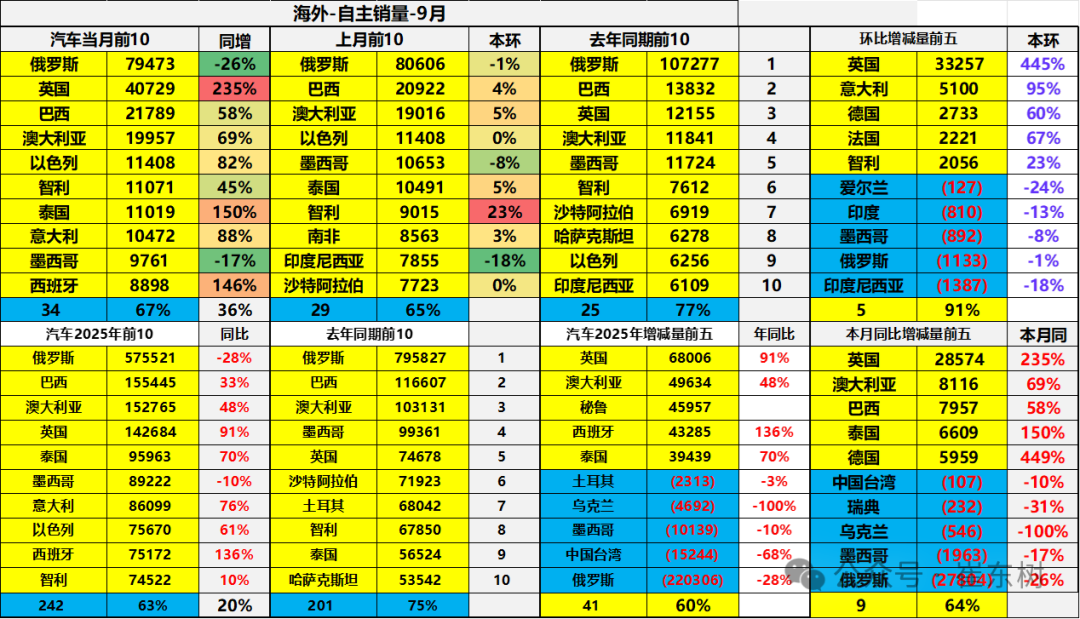
Core Insights - Chinese domestic brands achieved significant sales growth in the UK, with 40,729 vehicles sold in September, representing a year-on-year increase of 235% [1] - For the first three quarters of the year, total sales of Chinese domestic brands in the UK reached 142,684 vehicles, marking a 91% increase compared to the previous year [1] - The data indicates that Chinese brands are also experiencing growth in other markets such as Australia, Peru, Spain, and Thailand [1] Sales Performance - In September, the UK new car market saw a total of 312,891 registrations, a 13.7% increase year-on-year, making it one of the strongest months in the last decade [3] - Electric vehicles accounted for over 50% of new registrations in the UK, with plug-in hybrid electric vehicles (PHEVs) growing by 56.4% to capture a 12.2% market share [3] - Among the top-selling models in September, three Chinese brands made the list: Jaecoo 7, BYD Seal U, and MG HS, ranking 4th, 6th, and 8th respectively [4][5] Brand Highlights - Jaecoo 7 sold 6,489 units, while BYD Seal U sold 5,373 units, and MG HS sold 5,173 units in September [4][5] - BYD's sales in the UK reached 11,271 units in September, reflecting an 880% year-on-year increase and a 541% month-on-month increase [4] - The resilience of the Chinese automotive supply chain has been highlighted since the COVID-19 pandemic, contributing to strong export growth in recent years [5][6] Strategic Developments - Chinese domestic brands are entering a new strategic phase in exports, focusing on local assembly and building localized supply chains [6] - The total overseas sales of Chinese domestic brands reached 336,000 units in September, a 25% year-on-year increase and an 18% month-on-month increase [6] - From January to September, the total overseas sales of Chinese domestic brands amounted to 2.42 million units, representing a 12% year-on-year growth [6]
高工深度|建交50年之际,中欧新能源走向深度竞合
高工锂电· 2025-07-26 05:48
Core Viewpoint - The article discusses the evolving dynamics of the renewable energy market between China and Europe, highlighting the complexities of trade relations, particularly in the electric vehicle (EV) sector, amidst geopolitical tensions and market shifts [1][2][10]. Group 1: Trade Relations and Market Dynamics - The EU has implemented temporary anti-subsidy tariffs on electric vehicles imported from China, signaling a protective stance for its automotive industry against subsidized Chinese products [2][4]. - Despite the tariffs, Chinese exports of plug-in hybrid electric vehicles (PHEVs) to Europe surged by nearly 600% year-on-year by June 2025, indicating a shift in export strategies to capitalize on lower tariffs [5][6]. - The market share of Chinese brands in the European automotive sector doubled in the first half of the year, reflecting a significant adjustment in the competitive landscape [6]. Group 2: Historical Context and Competitive Landscape - The historical context of Sino-European automotive relations is marked by a cooperative model, exemplified by Volkswagen's joint ventures in China since 1984, which facilitated technology transfer and market access [7][8]. - The emergence of BYD as a leading automotive brand in China, surpassing Volkswagen in sales, signifies a shift in competitive dynamics, with Chinese manufacturers now possessing strong R&D capabilities [8][9]. Group 3: Internal European Considerations - European countries exhibit differing approaches to trade policy, with France favoring protectionism for its automotive sector while Germany adopts a cautious stance due to its extensive business ties with China [10]. - The EU's long-term climate goals necessitate a balance between protecting local industries and ensuring the affordability of electric vehicles for consumers, complicating the tariff strategy [10]. Group 4: Future Cooperation and Competition - The interaction between China and Europe in the renewable energy sector extends beyond automobiles, with increasing collaboration in energy storage technologies, as evidenced by China's growing lithium battery exports to Germany and other European countries [13]. - Innovative partnerships, such as the collaboration between Octopus Energy and BYD in the UK for vehicle-to-grid solutions, illustrate the evolving role of Chinese companies as technology providers in the European energy landscape [13][14]. - The future of Sino-European relations in the renewable energy sector will likely focus on deeper integration and cooperation, moving beyond simple trade disputes to encompass regulatory standards and supply chain security [15].