永赢睿信混合A

Search documents
舍得酒业股价涨5.03%,永赢基金旗下1只基金位居十大流通股东,持有144.63万股浮盈赚取393.39万元
Xin Lang Cai Jing· 2026-01-29 05:40
数据显示,永赢基金旗下1只基金位居舍得酒业十大流通股东。永赢睿信混合A(019431)三季度新进 十大流通股东,持有股数144.63万股,占流通股的比例为0.43%。根据测算,今日浮盈赚取约393.39万 元。 永赢睿信混合A(019431)成立日期2023年12月22日,最新规模49.78亿。今年以来收益13.5%,同类排 名1221/8866;近一年收益114.59%,同类排名122/8126;成立以来收益152.47%。 永赢睿信混合A(019431)基金经理为高楠。 1月29日,舍得酒业涨5.03%,截至发稿,报56.80元/股,成交5.75亿元,换手率3.14%,总市值189.01亿 元。 资料显示,舍得酒业股份有限公司位于四川省射洪市沱牌镇沱牌大道999号,成立日期1996年11月9日, 上市日期1996年5月24日,公司主营业务涉及白酒的制造和销售。主营业务收入构成为:酒类89.52%, 其中:中高档酒73.05%,其中:普通酒16.47%,玻瓶8.58%,其他(补充)1.90%。 从舍得酒业十大流通股东角度 截至发稿,高楠累计任职时间8年69天,现任基金资产总规模701.06亿元,任职期间最佳 ...

机构投资者疯狂买入,牛市里牛基的作业能抄吗?|1分钟了解一只吾股好基(七十二)
市值风云· 2025-12-29 10:08
Core Viewpoint - The fund "永赢睿信混合A" has rapidly increased its scale and performance, achieving a fund size close to 150 billion by the end of 2025 and a remarkable return of 93.34% in 2025 [3][10]. Fund Performance and Growth - The fund's scale grew significantly from 13.2 billion at the end of 2024 to nearly 150 billion by December 26, 2025, driven by strong performance and institutional investment [3][5]. - The fund's return rate for 2024 was 15.3%, slightly outperforming the benchmark and the CSI 300 index [10][13]. - The fund's turnover rate was approximately 800% in the past two reporting periods, indicating high trading activity [21][22]. Investor Composition - Institutional investors have significantly increased their holdings, reaching 85.9% by mid-2025, while individual investors hold only 14.05% [5][6]. - The number of individual account holders decreased from 1,336 in 2024 to 233,869 in mid-2025, reflecting a shift towards institutional investment [5]. Fund Management - The fund is managed by Gao Nan, who has a history of managing multiple funds, with mixed performance results in previous roles [8][10]. - Gao Nan's strategy involved increasing allocations in the pharmaceutical sector and reducing exposure to electronics, capitalizing on market trends [14][21]. Sector Allocation and Stock Performance - The fund's top holdings include leading stocks in the pharmaceutical and communication sectors, with significant gains in companies like 中际旭创 and 新易盛 [14][18]. - The fund also benefited from investments in the metals sector, with stocks like 紫金矿业 and 华锡有色 achieving over 100% growth [15][18]. Risk and Volatility - The fund has experienced a maximum drawdown of nearly 16% since its inception, indicating potential volatility [19]. - The concentration of holdings in popular stocks may lead to increased volatility and divergence in performance in the future [21].


任职2年管出4只翻倍基,永赢高楠500亿持仓披露:大幅增配有色、减持创新药,新进国盾量子
Xin Lang Cai Jing· 2025-10-28 12:09
Core Insights - Gao Nan, a well-known fund manager under Yongying Fund, has reported significant growth in the management of public funds, with total assets under management exceeding 50 billion RMB, reaching 51.43 billion RMB by the end of Q3 2025 [2][7]. Fund Performance - Gao Nan manages seven funds, including six equity funds and one bond fund, with over half of the total management scale attributed to the Yongying Stable Enhancement bond fund, which saw its scale increase from 7.528 billion RMB to 34.859 billion RMB in Q3 [3][9]. - The Yongying Ruixin fund also experienced substantial inflows, growing from 5.016 billion RMB to 14.417 billion RMB, with a year-to-date net value increase of over 84%, outperforming the market and ranking in the top 5 of its category [3][4]. Investment Strategy - In Q3, Gao Nan made significant adjustments to the portfolio, increasing exposure to the non-ferrous metals sector while reducing holdings in innovative pharmaceuticals, opting to replace A-share positions with Hong Kong-listed stocks [5][20]. - The non-ferrous metals sector has become the second-largest industry in the portfolio, with notable increases in holdings of Zijin Mining and new positions in Huaxi and Zhongfu [17][18]. Fund Composition and Adjustments - The overall portfolio maintained a high position, with the Yongying Ruixin fund's allocation decreasing slightly by 4 percentage points, while other funds increased their positions [11][12]. - The concentration of top holdings in the Yongying Ruixin fund decreased, while the Yongying Growth Voyage and Yongying Huian funds saw an increase in concentration [15][16]. Notable Stock Movements - In the innovative pharmaceutical sector, there was a structural adjustment, with a significant reduction in the allocation to leading stocks while increasing positions in others like Kangfang Bio and Baijie Pharmaceutical [20][21]. - New additions to the portfolio included high-performing stocks such as Industrial Fulian and Zhongji Xinchuan, which have seen substantial price increases this year [28][29]. Overall Fund Performance - Other funds managed by Gao Nan, such as Yongying Growth Voyage, Yongying Huian, and Yongying Ruixin, have also achieved impressive net value growth, with increases of 104.88%, 117.7%, and 112.88% respectively since inception [26][27].

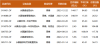
主动基金又行了?到底什么样的行情才值得配主动基金!
雪球· 2025-07-16 10:59
Core Viewpoint - The article emphasizes the resurgence of actively managed funds in the current market environment, highlighting their ability to outperform benchmarks and capture investment opportunities in emerging sectors and structural market conditions [7][8][10]. Fund Performance - The top-performing funds in the author's portfolio include several actively managed funds, with the highest return being from Yongying Ruixin Mixed A, achieving a cumulative return of 56.11% since inception and an annualized return of 32.75%, surpassing the benchmark by over 25% [4][5]. Investment Strategy - The investment strategy focuses on sector rotation, with the fund manager, Gao Nan, leveraging his diverse industry research background to identify sectors poised for explosive growth over the next 3-5 years, such as TMT, consumer, pharmaceuticals, and manufacturing [4][10]. Active vs. Passive Funds - The article discusses the cyclical nature of active and passive funds, noting that while index funds may perform better in early bull markets, actively managed funds can excel in later stages when specific sectors become more pronounced [16][20]. Market Characteristics - The A-share market is characterized by a high proportion of retail investors, leading to significant pricing inefficiencies that can be exploited by quality active fund managers [12][14]. Emerging Sectors - Active fund managers are positioned to capitalize on new and rapidly evolving sectors like AI, high-end manufacturing, and biotechnology, where market recognition and information asymmetry create opportunities for excess returns [14][15]. Structural Market Trends - The article highlights the importance of active fund managers in navigating structural market trends, where different industries and styles experience significant rotation, allowing skilled managers to mitigate drawdowns and generate excess returns [15][20]. Asset Allocation - The author advocates for a diversified asset allocation strategy that includes both active and passive funds, emphasizing the need to balance growth and value investments to capture opportunities across different market conditions [18][19][20].