浴缸

Search documents
佳普乐荣获“2025中国新消费卓越品牌奖”,引领全屋智能卫浴AI场景新时代
Xin Lang Cai Jing· 2026-01-21 10:25
Core Insights - CANPRO has been awarded the "2025 China New Consumption Excellence Brand Award," highlighting its strong performance in the whole-house smart bathroom sector [1][8] - The company focuses on smart innovation as a core driver, integrating AI technology into its bathroom products and services to meet consumer demands for smart bathroom spaces [4][11] Product and Innovation - CANPRO has developed an AI bathroom scene solution that includes a range of products such as smart toilets, bath heaters, towel racks, mirrors, faucets, showers, and bathtubs, targeting key functional areas like toileting, bathing, and washing [4][11] - The company has introduced customized smart bathroom scene packages based on user home characteristics and habits, such as "shower + bath heater + towel rack" and "toilet + bath heater + faucet" [6][13] Market Position and Future Plans - CANPRO has positioned itself as a leader in scene-based consumption in the smart bathroom market, responding to the trend of "smart home scene subscriptions" [6][13] - The company aims to deepen the application of AI technology in smart home solutions and unlock more smart bathroom scene solutions in 2026, striving to become a leading provider of AI bathroom solutions [8][15]


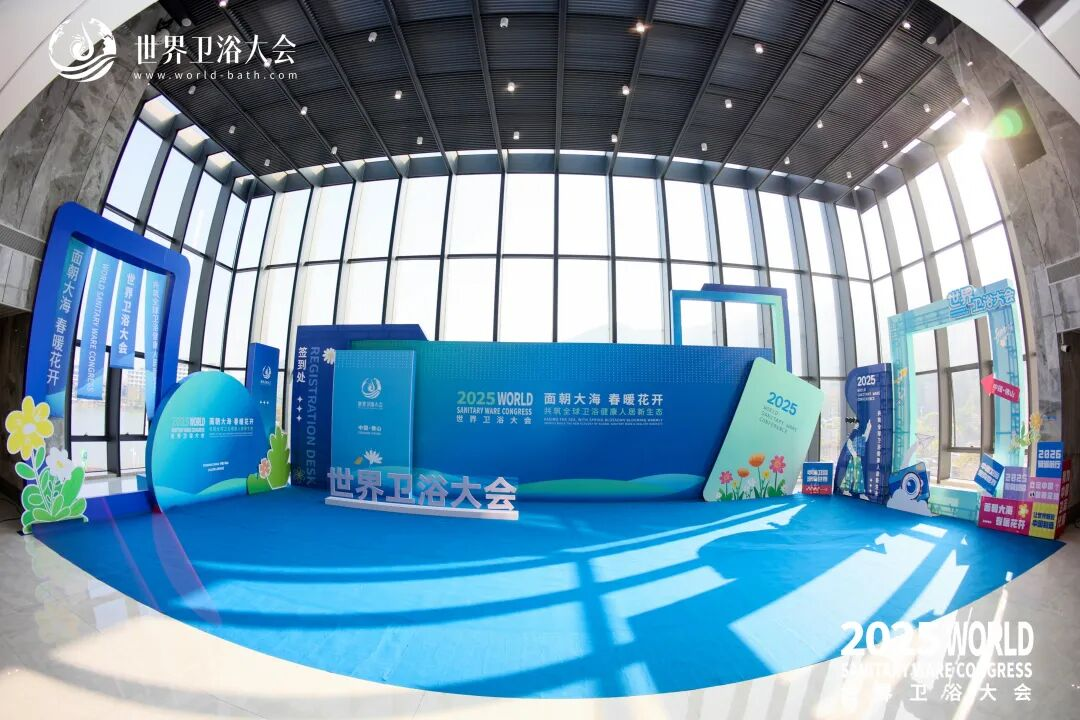
锚定行业进阶方向 重构市场生态——2025世界卫浴大会成功举办
Xin Lang Cai Jing· 2025-12-22 14:11
Core Insights - The 2025 World Sanitary Ware Conference was held in Foshan, China, focusing on the theme "Facing the Sea, Spring Blossoms," aiming to address industry pain points and foster consensus for the global sanitary ware industry [1][3] Industry Transformation - The sanitary ware industry is at a critical juncture of transformation and upgrading, requiring a global perspective to embrace industry changes and a determination to thrive [3] - Chinese companies are encouraged to integrate Chinese design with international trends to lead new global bathing culture [4] Strategic Directions - The conference emphasized high-end, global, and leading strategies for the industry, with discussions on building technological barriers and local adaptation [5] - The 2026 High-End Brand Plan was launched to promote high-quality development of Chinese brands through collective efforts [6] Channel Innovation - Channel transformation is identified as a key breakthrough for sanitary ware companies to address market uncertainties, focusing on flattening channels and integrating online and offline sales [7] - The "Double Hundred IP Plan" was initiated to enhance digital connectivity between brands, distributors, and consumers, injecting new momentum into channel transformation [7] Supply Chain Innovation - The conference highlighted technological breakthroughs in the supply chain, showcasing innovative products and materials that enhance quality in the sanitary ware sector [9][10] - The event underscored the collaborative advantages of various regional industrial clusters, promoting a unified development approach within the Chinese sanitary ware industry [10] Recognition and Awards - The "China Home Power List" was unveiled, recognizing outstanding companies and individuals in the sanitary ware industry for their contributions to transformation and upgrading [10]
一个小镇何以集聚66家创业企业
Zhong Guo Qing Nian Bao· 2025-11-26 23:20
Core Insights - The article highlights the growth and development of the intelligent bathroom industry park in Xuanzhou, Anhui Province, which has attracted numerous companies and significantly improved logistics efficiency and cost savings for foreign trade [1][2][3]. Industry Overview - The Xuanzhou intelligent bathroom industry park has become a hub for bathroom-related enterprises, with 66 companies established, including 49 in the bathroom sector, and has seen an annual output value and export growth of approximately 25% [1][2]. - The park's strategic location at the intersection of Anhui, Jiangsu, and Zhejiang provinces facilitates the transfer of businesses from regions like Hangzhou and Ningbo, creating a unique development path [1]. Logistics and Cost Efficiency - The implementation of sea-rail intermodal transport has reduced shipping time by 11 hours and costs by 30%, significantly alleviating the logistics pressure on foreign trade enterprises [1][3]. - The cost of transporting a container to Ningbo port has dropped from 4000 yuan to around 1000 yuan due to government coordination and improved logistics [3]. Supply Chain and Collaboration - The park promotes a collaborative environment where companies can source necessary materials locally, reducing costs and enhancing product competitiveness [2]. - The introduction of a recycling project for bathroom waste materials has further optimized costs and improved environmental compliance for companies [2]. Workforce and Local Support - A significant portion of the workforce in the park consists of local residents, and the establishment of housing facilities has improved employee retention and satisfaction [4]. - The local government has shifted from a management-focused approach to a service-oriented mindset, actively supporting businesses in their operational needs [4]. Challenges and Market Dynamics - The bathroom industry faces challenges such as increased competition and market saturation, particularly due to the impact of the real estate market downturn on domestic demand [5][6]. - Companies are adapting by diversifying their product offerings and focusing on quality and flexibility in pricing to remain competitive in both domestic and international markets [5][6]. Future Opportunities - There is a growing demand for customized and smart bathroom products among younger consumers, presenting new growth opportunities for companies that can innovate and adapt [6]. - Emerging markets in Africa and Southeast Asia are also showing increasing demand, providing avenues for companies to expand their reach and avoid saturated markets [6].

11月21日午间涨停分析
Xin Lang Cai Jing· 2025-11-21 03:55
Group 1: Technology and Innovation - Google has released a new image model, with the OCS network architecture attracting attention [2] - Alibaba has launched the "Ganwen" project, while Ant Group's Lingguang App has gone live; Huawei is set to release breakthrough AI technology [3] - The company has achieved certification for its secure government office system and electronic document transfer system through Huawei Cloud's Kunpeng services [3] Group 2: Market Trends and Economic Indicators - The Consumer Price Index (CPI) for October increased by 0.2% year-on-year; the Ministry of Finance will continue to implement measures to boost consumption [2] - The lithium carbonate futures price has strongly broken through the 100,000 yuan mark, with prices for VC and other electrolyte additives rising significantly [3] Group 3: Company Developments - TeFa Group, controlled by the Shenzhen State-owned Assets Supervision and Administration Commission, focuses on the optical communication industry [2] - The company has announced plans to acquire 95% of a data service and intelligent service company for 185 million yuan [4] - Dream Home has terminated plans for a control transfer and acquisition of a chip company [4] Group 4: Industry Insights - The joint venture between Beixin Road and Tibet Tianchang Construction focuses on highway engineering and water conservancy projects [4] - The company specializes in high-end sanitary ware and has established manufacturing bases in Vietnam [2] - The company is a leader in the baking oil market, promoting its products through various online platforms [2]


对话唯宝销售执行副总裁Jan Peter Tewes:外企需追上“中国速度”
2 1 Shi Ji Jing Ji Bao Dao· 2025-05-29 11:40
Core Insights - The Chinese bathroom market is undergoing a significant transformation, with increasing demand for high-end products and a growing focus on health, personalized design, and sustainability [1][4] Industry Trends - The four major trends in the high-end bathroom market are premiumization, health and wellness features, personalized design, and sustainable transformation [1][4] - The Chinese market is characterized by diverse consumer needs and strong innovation, making it a leading and competitive market globally [1][4] Market Dynamics - By the end of 2024, the market size of the ceramic bathroom industry in China is expected to exceed 220 billion RMB [4] - China is the second-largest overseas market for Villeroy & Boch, following Germany, and is considered a strategic market [4][7] Competitive Landscape - Local brands in China are strong, supported by skilled suppliers in IoT and mechanical solutions, and are leading developments in the industry [5] - The company aims to strengthen consumer insights and reduce information gaps by establishing a research and development center in Shanghai [6][7] Product Development Strategy - The company emphasizes the need for localized product development to meet the specific demands of Chinese consumers [2][10] - The focus is on creating customized products that align with local market characteristics and consumer preferences [6][10] Future Directions - The company plans to prioritize investment in product development in the Asian market, particularly in China, due to its rapid growth compared to Europe [14][15] - The strategy includes a systematic analysis of each bathroom space to identify areas for investment and innovation [12]
广州海鸥住宅工业股份有限公司2025年第一季度报告
Shang Hai Zheng Quan Bao· 2025-04-29 03:50
Core Viewpoint - The company reported a slight decline in revenue and a significant reduction in net loss, indicating a potential recovery path amidst industry challenges and strategic shifts towards a dual circulation model [6][16][9]. Company Overview - The company focuses on the industrialization of interior decoration, particularly in prefabricated kitchens and bathrooms, aiming to become a leading provider in this sector [3]. - The main products include high-end sanitary ware, ceramics, bathtubs, shower rooms, bathroom cabinets, integrated cabinets, and tiles, with ongoing developments in smart home solutions [3]. Financial Performance - The company achieved operating revenue of 2.8539575 billion yuan, a decrease of 1.73% from the previous year [6][16]. - The net profit attributable to shareholders was -123.812 million yuan, an improvement of 46.75% compared to -232.5291 million yuan in the previous year [6][16]. Strategic Initiatives - The company plans to implement a "dual circulation" strategy to enhance growth, focusing on domestic sales driven by policy support and innovation while expanding overseas to overcome international competition [6][9]. - The company aims to leverage policy incentives and market demand changes to find new balance points for sustainable growth [6][9]. Market Trends - The demand for renovation and upgrading of older residential properties is increasing, with over 270 million homes aged over 20 years in China, shifting market focus from new housing to renovation [8]. - The company is targeting emerging markets in Southeast Asia, the Middle East, and Africa due to strong infrastructure needs and lower trade barriers [8][9]. Future Outlook - The company anticipates that the implementation of old-for-new policies will stimulate market recovery, although challenges remain as the industry is still in a bottoming phase [6][8]. - The company will continue to optimize resources and integrate production capabilities to build a more resilient industrial system [9].

欧美经济大萧条史
Sou Hu Cai Jing· 2025-04-28 11:26
Group 1 - The article discusses the rise of consumer products in the 1920s in the United States, highlighting how items like washing machines and radios became standard for the middle class [1] - The U.S. government and banks encouraged consumerism and borrowing, leading to a culture of spending beyond one's means [3] - The disparity between productivity growth and consumer spending capacity prompted companies to advocate for loan-based consumption to avoid excess inventory [3] Group 2 - The stock market reached a historical peak on September 3, 1929, with the Dow Jones Industrial Average hitting 386 points, a sixfold increase since 1921 [7] - Following this peak, the market experienced a significant decline, with a 10% drop the day after the peak, initially perceived as a normal correction [7] - The infamous "Black Thursday" on October 24, 1929, marked the beginning of a severe stock market crash, leading to widespread panic selling [8][9] Group 3 - The economic downturn resulted in a four-year-long Great Depression, with 140,000 businesses and 10,000 banks failing by 1933 [10] - Unemployment soared to 13 million, drastically affecting the lives of many Americans, leading to extreme poverty and desperation [12] - Families resorted to extreme measures for survival, including rationing food and bartering, reflecting the dire economic conditions [14] Group 4 - The economic crisis in the U.S. quickly spread to Europe, with the UK experiencing over 32,000 business failures and 3 million unemployed by 1933 [14][16] - Initially, France believed it could avoid the crisis, achieving record exports in 1929, but soon faced severe economic decline starting in 1931 [16][17] - France's economic recovery lagged behind that of the U.S. and UK, with its crisis lasting until 1935, two years longer than the others [18]