
资金牛

Search documents
这轮牛市能涨多久?
Sou Hu Cai Jing· 2026-02-21 00:43
Core Viewpoint - The A-share market has experienced significant changes since the "924" rally in 2024, with the Shanghai Composite Index reaching a nearly ten-year high, leading to differing opinions on the sustainability of the current bull market [1] Group 1: Market Status and Predictions - As of early 2026, the A-share market is characterized as having entered its third year of a bull market, indicating that the phase of indiscriminate buying may be over, and investors will need to focus on timing and structural selection [3] - The bull market is defined as a "transformation bull" by Guotai Junan, highlighting the interplay between economic structural transformation and capital market reforms, with potential to challenge ten-year highs in 2026 [3] Group 2: Driving Forces Behind the Bull Market - The core drivers of the current bull market are identified as "policy bull," "technology bull," and "capital bull" [5] - **Policy Stability**: 2026 marks the beginning of the "14th Five-Year Plan," transitioning from hope to growth [5] - **Capital Flow**: The trend of "deposit migration" is expected to become more pronounced in 2026, with predictions of significant movement from fixed income to equities [5] - **Technological Breakthroughs**: Innovations in areas such as AI, robotics, and integrated circuits are reshaping valuation systems and expanding future growth expectations [7] Group 3: Signals for Bull Market End - Key signals indicating the potential end of the bull market include: - **High Valuations**: A warning that excessive valuations can lead to risks, necessitating a rational approach to investment [9] - **Policy Shift**: The bull market began with macro policy easing since the "924" event in 2024 [9] - **Lack of Incremental Capital**: Current trends show continued inflow of both domestic and foreign capital, with Goldman Sachs predicting further market growth through 2027 [9] - **Economic Recovery Verification**: The need for economic recovery and improved corporate performance to support valuations is emphasized [9] Group 4: Investment Strategies for 2026 - Investment strategies for 2026 should adapt to a changing market structure: - **Breaking the "Dumbbell Strategy"**: The previously popular strategy of balancing high-dividend stocks with high-growth tech stocks is becoming less effective [11] - **Focus on Key Investment Themes**: Opportunities are expected in three main areas: - **Technology Growth**: Emphasis on AI, robotics, commercial aerospace, and energy storage as core investment themes [11] - **Cyclical and Consumer Reversal**: Attention to midstream manufacturing and new consumer sectors benefiting from economic stabilization and consumption upgrades [11] - **Value Reassessment**: The financial sector, including brokerage, insurance, and banking, is anticipated to play a crucial role in stabilizing indices and attracting investor interest [11] Group 5: Overall Market Sentiment - The current sentiment suggests that while the bull market is not over, the pace may slow, and the focus will shift to structural advantages [12] - The market is viewed as a mid-stage battle, requiring a balanced perspective on adjustments and opportunities [12]

4100点之上的A股:从“资金牛”到“结构牛”的十年之变
Sou Hu Cai Jing· 2026-01-09 12:43
Core Insights - The A-share market has returned to the 4100-point level, marking a significant milestone not seen since July 31, 2015, but the underlying drivers of the market have fundamentally changed [1][4] - The current market is characterized as a "structural bull" driven by industrial upgrades and company quality, contrasting with the previous "funding bull" driven by liquidity and leverage [1][3] Market Dynamics - In 2025, the A-share annual trading volume exceeded 400 trillion yuan, with an average daily trading volume of approximately 1.7 trillion yuan, indicating a robust market environment [4] - The total market capitalization has surpassed 119 trillion yuan, with financing balances steadily increasing to about 2.5 trillion yuan, reflecting a shift in market dynamics [4] Structural Changes - The current "structural bull" market is marked by significant differentiation, supported by two main industrial pillars: "Technology" and "Resources" [6] - The "Technology" pillar includes investments in AI and related hardware, with a focus on real orders and performance, moving beyond mere speculation [7] - The "Resources" pillar, particularly in non-ferrous metals, is driven by global energy transition and manufacturing upgrades, reshaping long-term demand [7] Market Ecology Transformation - The transition from a "funding bull" to a "structural bull" signifies a systemic change in the A-share market ecology, evident in the shift of market capitalization leadership from traditional sectors to technology industries [8][9] - The capital market is optimizing resource allocation with unprecedented efficiency, aligning with China's industrial upgrade direction since the 14th Five-Year Plan [10] Institutional and Regulatory Developments - Continuous regulatory emphasis on enhancing capital market activity and investor confidence has led to improved company quality and returns [11] - In 2025, cash dividends from A-share listed companies reached a new high, reflecting a consensus among quality companies to prioritize returns [12] Investor Structure Evolution - The market's driving forces have shifted, with a notable increase in the influence of institutional and professional investors, contrasting with the previous dominance of individual investors [13][14] - Long-term funds such as insurance and pension funds are increasingly participating in the market, focusing on fundamental industry analysis and long-term value rather than short-term price fluctuations [14] Future Outlook - The consensus among market participants is that the characteristics of the "structural bull" driven by industry and company quality will become more pronounced, making a return to a broad-based "funding bull" unlikely [15] - Future investment strategies will need to adapt, emphasizing deep industry research and the identification of genuine company quality over chasing short-term market trends [15]

蓓姐还是太懂了
Xin Lang Cai Jing· 2025-12-18 07:08
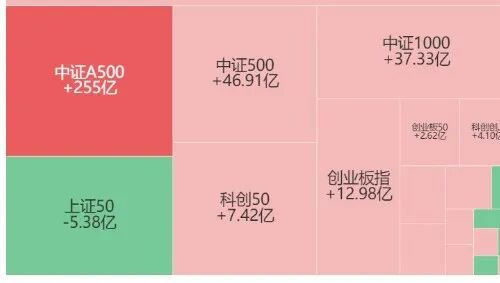
Group 1 - The article highlights the current asset allocation trends among high-net-worth individuals, focusing on four main areas: quantitative enhancement, science and technology innovation funds, all-weather strategies, and overseas assets [1][2][3][4][5] - Quantitative enhancement involves significant investments in small-cap stocks, with risks associated with size factors and non-linear factors [1][3] - Science and technology innovation funds face risks from domestic interest rate increases leading to style shifts and potential AI bubble bursts due to revised capital expenditure expectations in the U.S. [1][3] - All-weather strategies are at risk from rising interest rates causing losses in bond holdings and declining gold prices [1][3] - Overseas assets are influenced by the RMB exchange rate and U.S. AI developments [2][4] Group 2 - The article provides insights into the scale of various investment vehicles, noting that since September 2022, the total margin financing balance has increased by 1.1 trillion, primarily directed towards the TMT sector [3][21] - By the end of 2024, the total scale of private equity funds is projected to reach 5.21 trillion, with a significant increase of 1.8 trillion observed this year [3][21] - The total scale of ETFs is expected to surge from approximately 3.73 trillion at the beginning of 2025 to 5.74 trillion, marking a growth of over 2 trillion and a growth rate exceeding 53% [3][21] - The A500 ETF has seen a net inflow of 255 billion in the past week and 367 billion in the past month, indicating strong market interest [3][21] Group 3 - The performance of investment vehicles shows that quantitative private equity funds have achieved over 40% returns this year, marking the third consecutive year of outperforming subjective strategies [8][26] - Mixed equity funds have recorded a 32% return this year, rebounding after three years of underperformance [8][26] - Broad market indices have generally yielded returns above 20%, with the A500 ETF at 22% and the CSI 300 ETF at 18% [8][27] Group 4 - The global fund manager survey indicates a peak in macro optimism since August 2021, with the stock and commodity allocation ratio reaching its highest since February 2022 [9][27] - Cash levels among fund managers have dropped to a historical low of 3.3%, down from 3.7% [9][27] - The survey also reveals that 37% of managers view the AI bubble as the biggest tail risk, while 40% believe private credit is the most likely source of credit events [12][30] Group 5 - The article raises questions about whether the trends observed in 2024 can be extrapolated into 2025, particularly regarding crowded positions and potential trend reversals [15][34] - It discusses the implications of rising interest rates on real estate and the effectiveness of macro hedging as a strategy for style switching [15][34] - The narrative suggests that the current market dynamics, influenced by a weak dollar and AI industry expansion, have led to an "asset shortage" and "capital bull" scenario [15][33]
[11月10日]指数估值数据(现金流、消费大涨,上市公司基本面复苏了么)
银行螺丝钉· 2025-11-10 14:05
Core Viewpoint - The market is experiencing a rotation in styles, with value styles, particularly those related to free cash flow, showing consistent growth over the past few weeks. This indicates a potential recovery in the economic fundamentals and suggests that undervalued opportunities may arise in the near future [4][5][20]. Market Performance - The overall market showed a slight increase today, maintaining a rating of 4.1 stars [1]. - Large and mid-cap stocks experienced minor gains, while the growth style remains relatively sluggish [2][8]. - The ChiNext and STAR Market continued to decline, despite good year-on-year profit growth in the third quarter [9][10]. Sector Analysis - Consumer and pharmaceutical sectors saw significant increases today, with liquor indices rising sharply [12][13]. - The Hong Kong stock market also experienced an overall rise, particularly in previously undervalued sectors such as dividends and consumption [14][15]. Valuation Insights - As of late September, the market's valuation reached a point where only a few sectors, including dividends, free cash flow, consumption, and pharmaceuticals, remained undervalued [16]. - By October, these undervalued sectors began to rise, indicating a potential phase of appreciation for these low-valuation categories [17][18]. Economic Indicators - Recent data showed a 0.2% increase in both the Consumer Price Index (CPI) and a 0.1% increase in the Producer Price Index (PPI), marking the first rise in PPI this year. This is interpreted as a sign of recovery in the consumption sector [21][22][23]. - The third-quarter earnings reports indicated a year-on-year profit growth of approximately 10% for the CSI All Share Index [25]. Historical Comparison - The current market situation bears similarities to the 2013-2017 period, where the market also experienced a recovery following a low point in earnings and subsequent monetary easing [25][28]. - The potential for a transition from a "funds bull" market to a "fundamentals bull" market is anticipated if earnings growth can sustain between 8-10% or higher in the upcoming quarters [32]. Investment Strategy - The company emphasizes a long-term investment approach, suggesting that investors should buy during downturns and sell during upswings, while maintaining patience during other periods [35].

每周视点|科技股调整,信号切换?(2025.9.29-10.10)
Sou Hu Cai Jing· 2025-10-13 10:20
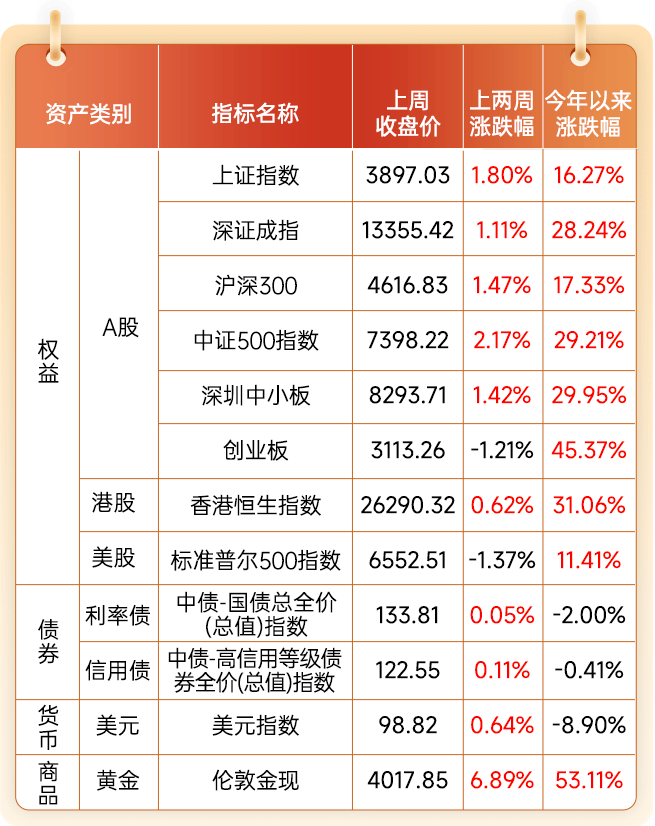
Domestic Focus - The Central Committee of the Communist Party of China held a meeting on September 29 to discuss major issues regarding the 15th Five-Year Plan, emphasizing high-quality development and new development concepts [1] - The Ministry of Transport announced a special port fee for American ships starting October 14 in response to the U.S. 301 investigation into China's shipbuilding industry [1] - The Ministry of Commerce and the General Administration of Customs issued four announcements on October 9 regarding export controls on superhard materials, rare earth equipment, lithium batteries, and artificial graphite anode materials [1] - During the National Day and Mid-Autumn Festival holiday, cross-regional personnel flow reached 2.433 billion person-times, averaging 304 million person-times per day, a 6.3% increase compared to the same period in 2024 [1] International Focus - On October 10, U.S. President Trump announced a 100% additional tariff on all goods imported from China starting November 1, 2025, along with strict export controls on critical U.S. manufacturing software [2] - The U.S. Senate rejected a temporary funding bill on October 1, leading to a government shutdown affecting approximately 750,000 federal employees and potentially delaying economic data releases [2] Market Overview - The A-share market showed an upward trend with the Shanghai Composite Index breaking through 3900 points, while the AI industry chain experienced a period of consolidation [5] - The bond market saw a significant decline in yields following the announcement of additional tariffs on Chinese imports, with the 10-year government bond yield dropping by 4 basis points to 1.82% [7] - The gold price reached a new high, surpassing $4000 per ounce, driven by expectations of U.S. interest rate cuts and increased demand for safe-haven assets due to the government shutdown [7] Market Outlook - The equity market is expected to maintain a positive trend, transitioning from a liquidity-driven market to one supported by fundamentals, with a focus on technology sectors such as AI and innovative pharmaceuticals [8] - The bond market may experience limited downward yield movement due to ongoing U.S.-China negotiations, with a potential for increased allocation opportunities in the medium term [9] - The real estate market is stabilizing due to effective policy measures, with a need for close monitoring of high-frequency data to prevent downturns similar to late 2024 and early 2025 [10]
“创新牛”还是“资金牛”?新一轮行情启幕成因、演进和走向
2 1 Shi Ji Jing Ji Bao Dao· 2025-08-29 12:03
Group 1 - The A-share market is experiencing a significant upward trend, with the Shanghai Composite Index nearing 3900 points, marking a nearly 10-year high, and a daily trading volume exceeding 2.2 trillion yuan, a record since 2010 [1][3] - Analysts suggest that the current market rally is supported by macroeconomic recovery and policy backing, indicating a potential "slow bull" market characterized by sustainable growth [1][2] - Various analysts have differing views on the nature of the current market rally, with some suggesting it is a "quantitative bull" transitioning to a "comprehensive bull," while others see it as a "transformation bull" driven by economic restructuring [1][4] Group 2 - The policy environment is playing a crucial role in restoring market confidence, with significant measures introduced to stabilize expectations and enhance market vitality, particularly in the context of new capital market reforms [2][3] - The integration of strategic emerging industries with China's efficient infrastructure and manufacturing capabilities is reshaping the economic model and enhancing competitive strength on a global scale [6][7] - Long-term capital inflows from pension funds, insurance, and public funds are positively impacting the A-share market, indicating a shift towards more sustainable investment strategies [3][7] Group 3 - The current market is expected to outperform overseas markets, driven by domestic policy support and the involvement of state-owned funds, which provide a solid foundation for the economic fundamentals [7][8] - The ongoing low-interest-rate environment is prompting investors to adjust their asset allocation strategies, favoring equity investments over traditional savings [8] - The rapid development of AI and other technological advancements is anticipated to drive economic transformation and improve market fundamentals, contributing to a more durable market trend [7][8]