清洁用品

Search documents
上海80后“卖螺丝”:9个月收入11亿,港股IPO
3 6 Ke· 2026-02-13 13:11
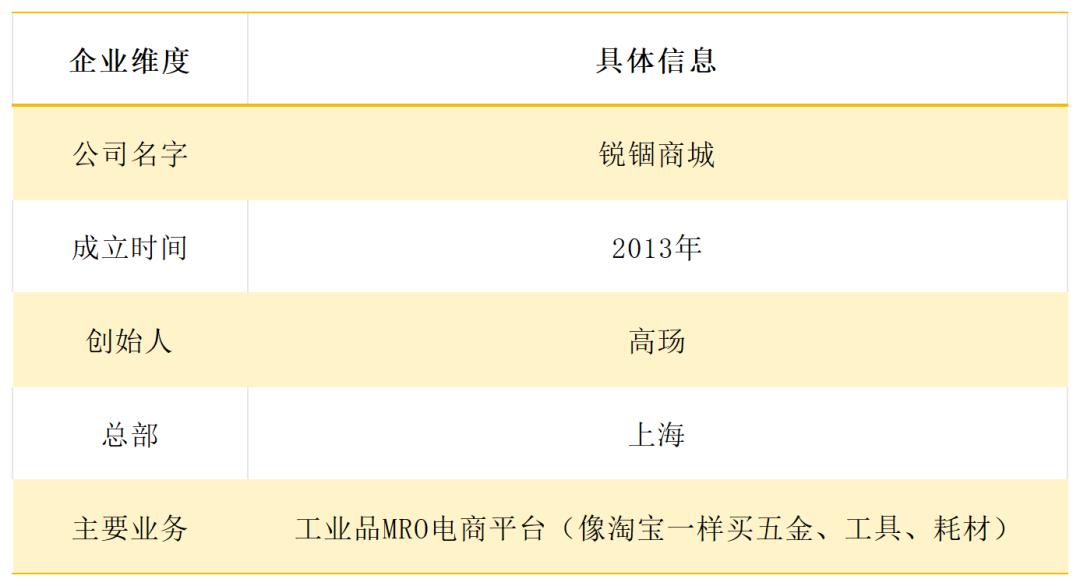
Core Insights - RuiGu Mall, founded in 2013, has become a significant player in the industrial MRO e-commerce sector, serving as an "invisible supplier" to 220,000 hardware stores, but has yet to achieve profitability, with a cumulative net loss of nearly 1.9 billion yuan from 2023 to the first nine months of 2025 [1][8]. Company Overview - Company Name: RuiGu Mall [2] - Founded: 2013 [2] - Founder: Gao Chang [2] - Headquarters: Shanghai [2] - Main Business: Industrial MRO e-commerce platform [2][3] Business Model and Market Position - RuiGu Mall targets the industrial MRO market, facilitating online transactions for various factory components and tools, akin to a Taobao for industrial supplies [3][6]. - The platform connects upstream suppliers with downstream hardware stores and factories, enhancing procurement efficiency [6][12]. - As of 2022, RuiGu Mall was valued at over 6.9 billion yuan and holds an 8.1% market share in the domestic online MRO procurement sector, ranking second [8][17]. Financial Performance - In 2023, RuiGu Mall reported total revenue of 5.05 billion yuan with a net loss of 6.38 billion yuan [9]. - For 2024, projected revenue is 8.77 billion yuan with a net loss of 7.74 billion yuan [9]. - As of September 30, 2025, the company generated approximately 11.24 billion yuan in revenue with a net loss of 5.24 billion yuan [9]. Industry Context - The MRO procurement service market in China reached 3.7 trillion yuan in 2024, expected to grow to 4.5 trillion yuan by 2029, with a compound annual growth rate of about 4.2% [17]. - The MRO sector has evolved through various stages, with RuiGu Mall emerging during the rise of industrial e-commerce post-2010 [10]. Technological Trends - The MRO procurement landscape is being transformed by AI and big data, which are expected to streamline processes such as sourcing, price comparison, and ordering [18][22]. - Future advancements may significantly reduce procurement cycles and errors, enhancing overall efficiency in the sector [20][22].

跨越半个地球安家海南 一位智利企业家的“中国长期主义”
Xin Lang Cai Jing· 2026-01-16 06:42
Core Viewpoint - The article highlights the strategic decision of a COO to relocate from Chile to Hainan, China, to enhance business operations and establish deeper connections with local suppliers and markets, leveraging Hainan's favorable business environment and tax incentives. Group 1: Company Overview - Emonk Online is a cross-border B2B platform that connects Chinese manufacturers with buyers in 12 Latin American countries, founded by three individuals with over 17 years of experience in manufacturing and supply chain [3]. - The company operates two offices in China, located in Hainan and Zhuhai, facilitating direct access for Chinese factories to the Latin American market [3]. Group 2: Business Operations and Benefits - The platform assists Chinese factories in exporting products by providing access to the Latin American market and managing the entire export process, which includes price negotiations and compliance with local regulations [3]. - For Latin American clients, the platform simplifies the export process, helping them navigate complex documentation and certification requirements, thus creating a win-win situation for all parties involved [3]. Group 3: Advantages of Hainan - Hainan's business environment is characterized by relaxed regulations, friendly interpersonal relationships, and efficient communication, which significantly benefits operational efficiency [4]. - The company benefits from tax incentives, with export tax rebates ranging from 6% to 30% depending on the product category, which enhances competitiveness in pricing for clients [4]. - The fast processing of tax rebates in Hainan improves cash flow, allowing the company to maintain lower profit margins while offering competitive prices [4]. Group 4: Future Plans and Challenges - The company aims to expand its operations by increasing local supplier partnerships in Hainan, which could further reduce costs and enhance product attractiveness [5]. - Language barriers and the complexity of accounting and legal systems pose challenges for the company, necessitating reliance on external professionals [6]. - The company plans to enhance its export capabilities and expand into markets in Argentina, Brazil, Vietnam, India, and Pakistan [7].

美国假日季网购创纪录背后:虚假繁荣掩盖经济脆弱,消费寒冬将至?
Jin Shi Shu Ju· 2025-12-03 08:20
Core Insights - The holiday shopping season in the U.S. began with record online sales of $44.2 billion during "Cyber Week," despite signs of potential economic weakness and declining consumer confidence [2] - Consumers are showing signs of anxiety, with a notable increase in the use of "buy now, pay later" services and a shift towards seeking discounts on essential items [2][3] - A survey indicated a 4% drop in consumers feeling capable of purchasing everyday essentials, reflecting a slow erosion of household financial health [3][4] Consumer Behavior - There is a growing trend of consumers adjusting their shopping habits due to tariff-related price impacts, with many planning to purchase gifts earlier or reducing their overall spending [3] - The significant discounts during Thanksgiving suggest that consumers require more incentives to spend, indicating a connection between consumer sentiment and purchasing behavior [3] - Consumers are attempting to maximize the value of their spending through "trading down," yet they have not completely ceased consumption [5] Economic Outlook - Analysts suggest that the financial strain on middle and lower-income consumers is becoming more pronounced, with retail spending flattening after months of preemptive purchases to cope with tariff costs [4] - The potential for consumer fatigue may become more evident in the months following the holiday shopping season, influenced by additional pressures from tariffs and government policies [4] - Despite the challenges, some economists remain optimistic, noting a historical disconnect between consumer sentiment and actual spending patterns [4]
美国“黑五”销售额新高!分析师却警告:火爆数据背后危机重重
Feng Huang Wang· 2025-12-03 07:52
Core Insights - The holiday shopping season in the U.S. has officially begun following a record-breaking "Black Friday" shopping week, but analysts warn of underlying economic vulnerabilities despite strong sales figures [1][2]. Group 1: Sales Data and Consumer Behavior - Online sales during the "Black Friday weekend" reached a record high of $44.2 billion, although comparable sales data for physical stores has not yet been released [2]. - Analysts suggest that the increase in sales is not due to heightened consumer enthusiasm but rather rising product costs, partly attributed to tariffs [2]. - Consumers are increasingly focused on purchasing discounted essential items rather than indulging in impulse buys, indicating a shift in shopping behavior [3]. Group 2: Economic Indicators and Consumer Sentiment - A significant portion of consumers are resorting to short-term debt for shopping, reflecting financial anxiety [3]. - A survey indicated that the percentage of U.S. consumers who feel capable of affording essential goods has decreased by 4 percentage points year-over-year [3]. - Over two-thirds of American shoppers reported that tariffs have influenced their shopping behavior, leading to either early purchases or reduced spending [3]. Group 3: Future Outlook - Experts suggest that while current shopping data may not indicate an imminent recession, they do reflect a gradual deterioration in household financial conditions [5]. - The proportion of shoppers with sufficient savings for emergencies is declining, indicating increased financial strain [5]. - Analysts from the Royal Bank of Canada noted that low- and middle-income consumers are feeling financially squeezed, with previous stable retail spending largely driven by pre-tariff purchasing behavior [5]. - The potential for consumer spending to weaken may become more apparent after the holiday shopping season, as consumers face additional pressures from tariffs and government aid suspensions [5][6].
第22届东博会进境展品全部运抵 约30%东盟产品首次亮相
Zhong Guo Xin Wen Wang· 2025-09-16 04:53
Core Points - The 22nd China-ASEAN Expo (CAEXPO) is set to take place in Nanning, Guangxi from September 17 to 21, with all inbound exhibits having arrived [1] - Approximately 30% of the ASEAN products showcased are making their debut at the expo, including seafood and coffee from Brunei and cleaning products from Malaysia [1] - The Nanning Customs has implemented 15 facilitation measures to ensure efficient customs clearance for the exhibits, including dedicated channels and simplified procedures for food and cosmetics [1] Trade Statistics - Since its inception in 2004, the CAEXPO has significantly enhanced trade cooperation between China and ASEAN countries, with Guangxi's import and export volume to ASEAN increasing from 8.29 billion RMB to 397.48 billion RMB, a growth of 46.9 times [1] - In the first eight months of this year, Guangxi's trade with ASEAN reached 275.09 billion RMB, reflecting a year-on-year growth of 12.9%, with ASEAN remaining Guangxi's largest trading partner [1]
第22届东博会进境展品全部运抵南宁
Guang Xi Ri Bao· 2025-09-16 02:45
Group 1 - The 22nd China-ASEAN Expo will be held in Nanning from September 17 to 21, with all exhibits having arrived under the supervision of Nanning Customs [1] - Nanning Customs has implemented 15 facilitation measures to ensure efficient customs clearance for the expo, including dedicated exhibition channels and simplified procedures for food and cosmetics [1] - Approximately 30% of the ASEAN exhibitors or products are making their debut at the expo, featuring unique products such as Brunei's seafood and coffee beans, and Malaysia's cleaning supplies [1] Group 2 - Since its inception in 2004, the China-ASEAN Expo has evolved through various stages, enhancing trade cooperation between China and ASEAN countries [2] - From 2004 to 2024, the import and export volume between Guangxi and ASEAN has increased from 8.29 billion to 397.48 billion, a growth of 46.9 times [2] - In the first eight months of this year, Guangxi's trade with ASEAN reached 275.09 billion, marking a year-on-year growth of 12.9%, with ASEAN remaining Guangxi's largest trading partner [2]
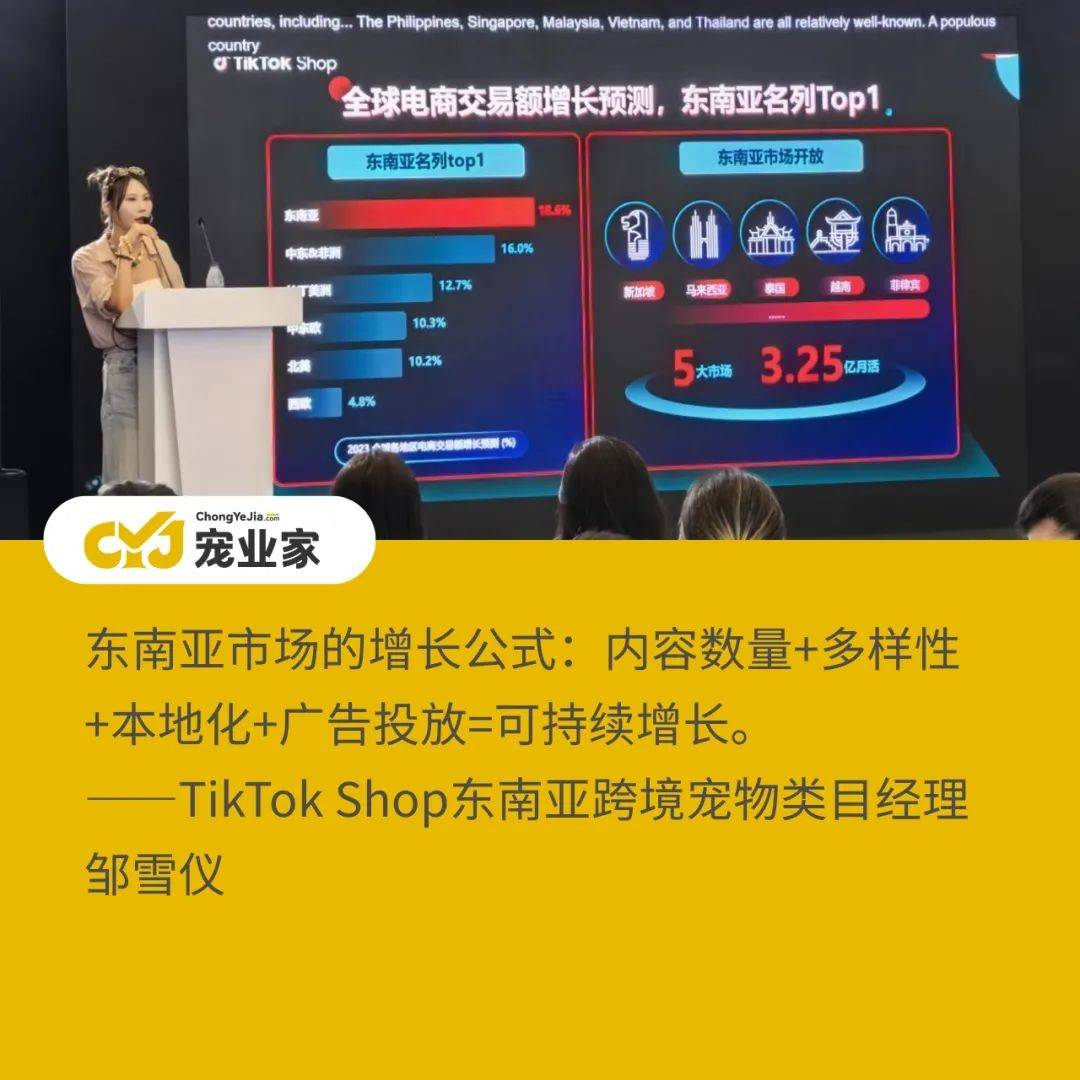
掘金东南亚宠物蓝海,TikTok电商的新机遇与实战方法论
Sou Hu Cai Jing· 2025-08-25 19:50
Core Insights - The 27th Asia Pet Expo opened on August 20, featuring a global forum on pet industry export strategies [2] - The Southeast Asian e-commerce market is experiencing significant growth, particularly in the pet sector, which has a compound annual growth rate exceeding 20% [5] Market Overview - Southeast Asia has over 400 million monthly active users on TikTok, with the region's e-commerce market mirroring the early stages of China's e-commerce development [5] - The pet economy in Southeast Asia is identified as one of the most explosive segments, presenting a historic opportunity for Chinese merchants [5] Segment Growth - Three pet product categories are experiencing rapid growth: staple food and snacks (over 45% of demand), cleaning products (30%), and health care products (annual growth exceeding 100%) [6] - The cat economy significantly surpasses the dog economy in Southeast Asia, with cat ownership exceeding 60% in countries like Thailand and Malaysia [6] Market Dynamics - TikTok's e-commerce flow distribution in Southeast Asia differs from domestic trends, with a 30-40% share for shelf space, providing opportunities for merchants skilled in shelf operations [7] - Successful merchants adopt a "shelf + content" dual-drive model, optimizing product listings and leveraging influencer marketing for growth [7] Key Features for Success - Successful products in Southeast Asia must have appealing packaging, competitive pricing, and clear selling points, with a low return rate of under 2% for pet products [8] - Localization is crucial for long-term success, requiring adaptations in packaging, product descriptions, and marketing materials to fit local languages and preferences [8] - The evolving influencer ecosystem in Southeast Asia offers merchants opportunities to connect with influencers effectively, enhancing marketing efforts [8]