
澳大利亚元

Search documents
Rate Hike Fails to Lift Aussie as RBA’s 5–4 Split Felt Like a Hold
Yahoo Finance· 2026-03-17 09:59
Group 1 - The central bank has implemented two rate hikes since January, with the latest increase on March 17 bringing the cash rate to 4.10%, the highest level since April 2025, due to renewed inflation concerns [1] - The decision to raise rates did not lead to a sustained increase in the Australian Dollar (AUD), attributed to a narrow voting split among board members, indicating a lack of strong conviction in the decision [3] - The AUD/USD exchange rate initially spiked above 0.7090 but quickly retraced, highlighting the volatility and uncertainty in currency movements amid divided forward guidance [4] Group 2 - The escalation of the conflict in Iran has created significant external shocks, particularly affecting energy markets and leading to a sharp increase in oil prices [5] - Brent crude oil prices have surged approximately 65% since the beginning of the year, reaching over $100 per barrel, which poses a direct inflationary threat to Australia as a net importer of refined energy products [6] - The Australian government has responded by releasing part of its strategic fuel reserves and relaxing fuel quality standards to increase supply, although logistical constraints may delay the effectiveness of these measures [7]
BBMarkets:澳大利亚元保持稳定,只因制造业PMI上升?
Sou Hu Cai Jing· 2025-11-21 06:39
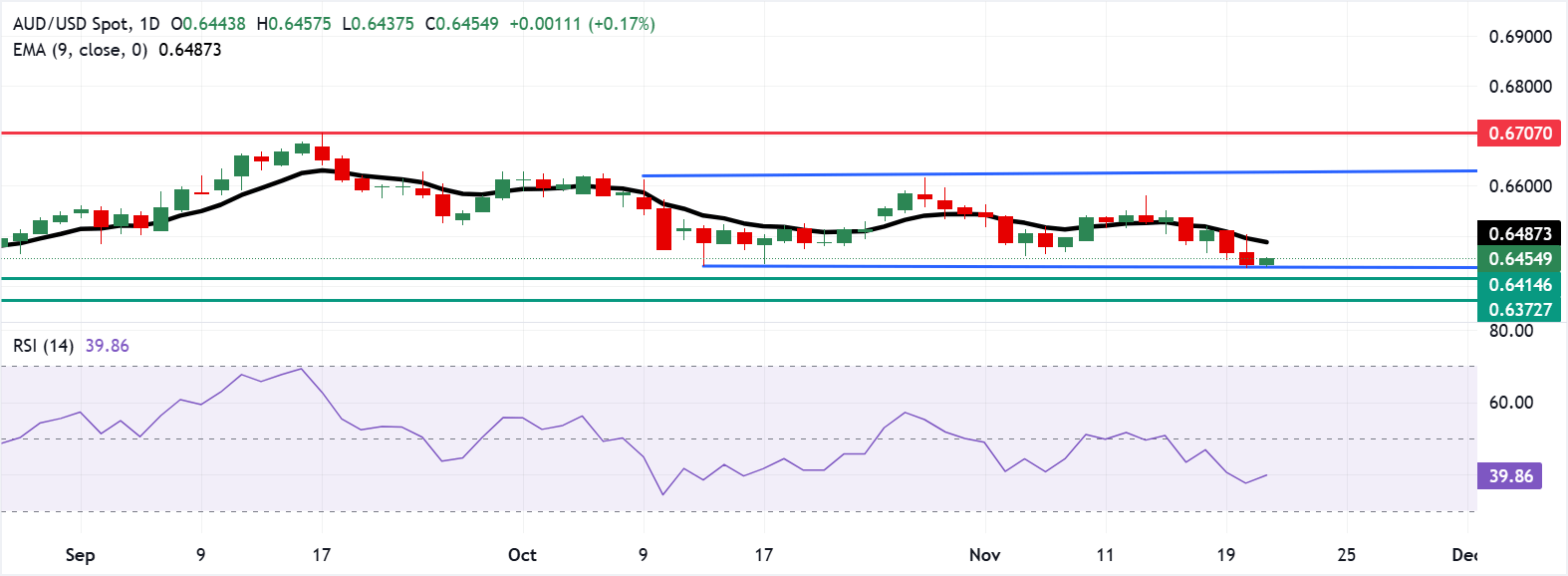
Group 1 - The Australian dollar (AUD) appreciated against the US dollar after two days of decline, influenced by the release of the preliminary November PMI data, which showed an increase in manufacturing PMI to 51.6 from 49.7 and services PMI rising from 52.5 to 52.7 [1] - The Reserve Bank of Australia (RBA) is expected to maintain interest rates if economic data continues to exceed expectations, as indicated in the meeting minutes [1][3] - The ASX 30-day bank cash rate futures indicate an 8% probability of a rate adjustment at the next RBA meeting, with the current cash rate at 3.60% [1] Group 2 - The US dollar (USD) depreciated against the Chinese yuan (CNY), with market expectations for a Federal Reserve rate adjustment increasing, as reflected in the CME FedWatch tool showing a rise in the probability of a 25 basis point cut in December from 30% to 36% [2] - The US non-farm payrolls increased by 119,000 in September, surpassing market expectations, while the unemployment rate slightly rose to 4.4% [2] - The People's Bank of China maintained the Loan Prime Rate (LPR) at 3.00% for one year and 3.50% for five years, which may impact the Australian dollar due to trade relations [2] Group 3 - The Australian wage price index grew by 0.8% quarter-on-quarter and 3.4% year-on-year in Q3, aligning with expectations [3] - RBA's November meeting minutes indicated a more balanced policy stance, suggesting that if economic data remains strong, the cash rate may be held steady for a longer period [3] Group 4 - Technically, the AUD/USD is in a sideways consolidation phase, trading around 0.6450, with the first support level at 0.6440 and a lower reference at 0.6414 [5] - The upper resistance levels to watch are the 9-day moving average at 0.6487 and the psychological level at 0.6500, with a potential return to the upper range at 0.6630 if surpassed [5]

美元强势反弹!人民币走出“强中间价、弱即期”
第一财经· 2025-07-18 03:46
Core Viewpoint - The recent strengthening of the US dollar index is attributed to higher-than-expected US CPI data, which reduces the likelihood of a Federal Reserve rate cut in September. This has led to a mixed performance of the Chinese yuan against the dollar, with the yuan's middle rate reaching a low of 7.1461, while the spot trading price has shown a depreciation trend [1][5][10]. Group 1: US Dollar and Economic Indicators - The US dollar index has seen a continuous rise, with a cumulative increase of over 2% as of July 17, marking the longest upward trend this year [1]. - The US June CPI data exceeded expectations, with core inflation at 2.9%, which is still above the Federal Reserve's target of 2% [5][6]. - The likelihood of a rate cut in September has decreased, with current market pricing showing only a 53.5% chance of a cut, down from 59.3% [5]. Group 2: Impact on Chinese Yuan - The Chinese yuan has shown signs of weakness against the dollar, with a depreciation of over 200 points in recent days, despite the middle rate signaling stability [1][10]. - The yuan's middle rate has deviated from model predictions by nearly -240 points, indicating a potential adjustment to strengthen the yuan [10]. - The future exchange rate of USD/CNY is expected to follow the dollar index's movements, but the depreciation of the yuan may be less pronounced, with estimates suggesting a 1:5 ratio of dollar index strength to yuan depreciation [11]. Group 3: Tariff Effects and Inflation - The impact of tariffs is beginning to show, with significant price increases in home goods and appliances, which are key categories affected by tariffs [6][7]. - There is a concern that as inventory levels deplete, inflation may rise due to the need for businesses to restock, potentially leading to cost pass-through to consumers [8]. - Labor shortages in key industries due to immigration policies may also contribute to upward wage pressures, further influencing inflation [8]. Group 4: Future Outlook and Risks - The uncertainty surrounding tariffs remains high, with potential for increased actions from the Trump administration as tariff revenues rise [12]. - Concerns exist regarding the sustainability of the US fiscal policy, with expectations that the costs of new fiscal stimulus may outweigh its economic benefits [13]. - The forecast for US 10-year Treasury yields is projected to reach 4.9% in Q4, influenced by ongoing budget deficits and market volatility [13].

去美元化尚未开始,但全球都在加速多元化配置
第一财经· 2025-05-30 03:03
Core Viewpoint - The article discusses the current state of the US dollar amidst uncertainties in tariff policies, highlighting the trend of "de-dollarization" and diversification in asset allocation among international investors [1][3]. Group 1: Dollar Status and Market Reactions - The US dollar's credibility is being questioned for the first time in years, although a significant "de-dollarization" trend has not yet emerged [1][3]. - The dollar's share in international payments may gradually decline from 60% to 50%, but it will remain a primary reserve asset [3][5]. - Following the announcement of a court ruling against Trump's tariffs, US stock indices saw a rebound, indicating market optimism [3][4]. Group 2: Investor Behavior and Asset Allocation - Investors are increasingly considering diversified asset allocations rather than concentrating on dollar-denominated assets [5][10]. - There is a notable increase in interest in gold, European stocks, and currencies like the Australian dollar and Japanese yen as hedging strategies [1][10]. - Family offices and high-net-worth individuals are reassessing their dollar asset holdings in light of the dollar's weakening trend [10][12]. Group 3: US Debt and Economic Implications - Concerns about US debt are rising, with significant amounts maturing and the cost of borrowing remaining high due to delayed interest rate cuts [7][8]. - The US Treasury is exploring measures to encourage banks to hold more government bonds, which could stabilize the bond market [8][9]. - The potential for a market sell-off exists if the Federal Reserve intervenes to support the bond market, which could lead to further volatility [9]. Group 4: Global Market Trends - Japan's stock market is gaining attention due to a shift towards inflation-driven growth, making mid-cap stocks attractive [12]. - China's synchronized monetary and fiscal policies are expected to benefit both Hong Kong and mainland mid-cap stocks, supported by high savings rates and domestic consumption stimulus [12].

去美元化尚未开始,但全球都在加速多元化配置
Di Yi Cai Jing· 2025-05-29 13:34
Group 1 - The core theme of the articles revolves around the diversification of asset allocation and increasing hedging against dollar assets amid uncertainties in U.S. trade policies and the dollar's credibility [1][2][3] - There is a growing discussion among investment institutions regarding "de-dollarization" and diversification strategies, although a significant trend towards de-dollarization has not yet materialized [1][2] - Recent trends show an increase in interest for assets such as gold, European stocks, Japanese yen, and Australian dollar, indicating a shift in international investors' preferences [1][7] Group 2 - The U.S. dollar index has experienced fluctuations, dropping below 100 and into the 98 range, with the yen and euro appreciating by 5% to 10% against the dollar this year [2] - The potential decline of the dollar's share in international payments from 60% to 50% is anticipated, but it will remain a primary reserve asset [2][3] - The U.S. Treasury's recent data indicates that the UK, Japan, and China are the top buyers of U.S. debt, highlighting the ongoing demand for U.S. Treasury bonds despite concerns [6][7] Group 3 - The U.S. stock market has shown resilience, recovering nearly all losses since the postponement of the "reciprocal tariffs," entering a technical bull market [3] - The complexities in international trade negotiations may arise from the suspension of tariffs, affecting the U.S.'s leverage in future discussions [3][4] - Investors are increasingly considering diversified allocations rather than concentrating solely on dollar assets, reflecting a cautious approach to potential market volatility [7] Group 4 - Concerns regarding U.S. Treasury bonds have emerged, with significant amounts maturing and the Federal Reserve delaying interest rate cuts, leading to higher borrowing costs [5][6] - The U.S. Treasury Secretary is exploring measures to encourage banks to hold more U.S. debt, aiming to stabilize the bond market and reduce yields [5][6] - The potential for a "de-dollarization" trend is being taken seriously by investors, prompting a reevaluation of dollar asset holdings and the exploration of alternative currencies and commodities [7][8]