火车

Search documents
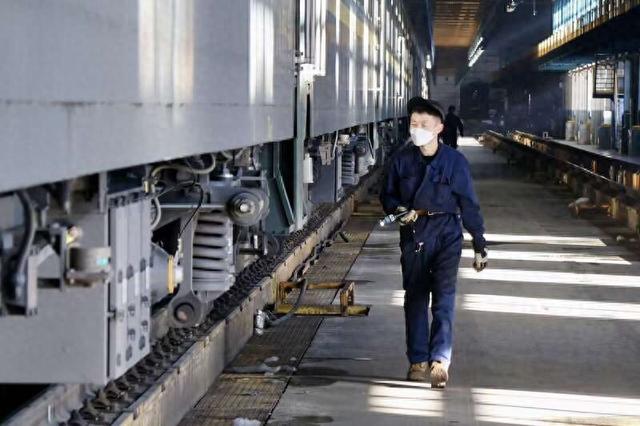
这个春运,他们要为400多辆火车“体检”
Zhong Guo Qing Nian Bao· 2026-02-15 02:12
Core Insights - The article highlights the critical role of train maintenance in ensuring safety and punctuality during the Spring Festival travel rush in China, focusing on the work of Gu Haitao, a skilled technician at the Qiqihar North Vehicle Depot [2][10] Group 1: Role and Responsibilities - Gu Haitao leads a team of 45, including 12 recent university graduates, responsible for inspecting and maintaining 430 passenger trains during the Spring Festival [2] - The maintenance process involves using tools like a long-handled inspection hammer to detect issues through sound, showcasing the importance of auditory skills in identifying potential hazards [3][4] Group 2: Training and Mentorship - Gu Haitao emphasizes hands-on training for new employees, allowing them to observe and participate in critical maintenance tasks to build their skills and knowledge [5][6] - He employs a systematic approach to task management, using color-coded electronic spreadsheets to prioritize maintenance tasks, ensuring that the entire team is aware of critical issues [3][5] Group 3: Challenges in Maintenance - The maintenance work is physically demanding, requiring technicians to work in confined spaces and under challenging conditions, which tests their endurance and attention to detail [4][5] - Technicians must be vigilant in identifying subtle signs of wear and tear, such as rust or loose bolts, which can lead to significant safety risks if overlooked [4][5] Group 4: Evolution of the Industry - The article reflects on the advancements in China's railway system, noting the shift towards domestic production of key components, which has improved operational efficiency and reduced reliance on foreign suppliers [10] - Gu Haitao's experience over decades illustrates the transformation of the railway industry, highlighting the progress made in technology and maintenance practices [10]


给数千个零件“问诊”“体检” 他们敲响春运列车的安全音符
Xin Lang Cai Jing· 2026-02-12 11:17
Core Viewpoint - The article highlights the critical role of maintenance workers like Gu Haitao in ensuring the safety and reliability of trains during peak travel seasons, emphasizing the importance of training new employees and the evolution of railway technology in China [1][11]. Group 1: Employee Training and Development - Gu Haitao, a foreman at the Qiqihar North Vehicle Depot, is responsible for training 12 new university graduates in his team, focusing on hands-on experience with train maintenance [1]. - The training involves practical demonstrations and encouraging new employees to engage with critical components, ensuring they understand the importance of their work for train safety [4][10]. - Gu Haitao has developed a color-coded electronic spreadsheet to track maintenance tasks, which has recorded over 1,000 entries, enhancing communication and task prioritization within the team [2]. Group 2: Maintenance Practices and Challenges - The maintenance process is physically demanding, requiring workers to inspect train components in confined spaces, with inspections lasting up to 50 minutes [4]. - Gu Haitao emphasizes the importance of attention to detail, as even minor oversights, such as missing a spacer during assembly, can significantly impact train safety [9]. - The team regularly addresses critical issues, such as overheating axles, by meticulously checking lubrication and potential contaminants [4][5]. Group 3: Technological Evolution in Railway Maintenance - The article notes the shift towards domestic production of key railway components, reducing reliance on foreign suppliers, which reflects the rapid development of China's railway industry [11]. - Gu Haitao recalls past challenges, such as needing to source parts from the U.S. for repairs, highlighting the progress made in local manufacturing capabilities over the years [11].
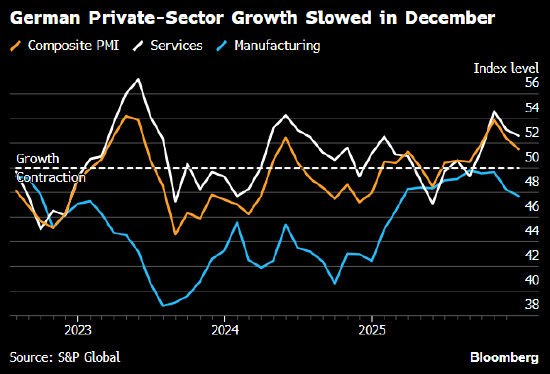
制造业疲软影响 德国企业活动低于预期
Xin Lang Cai Jing· 2025-12-16 14:44
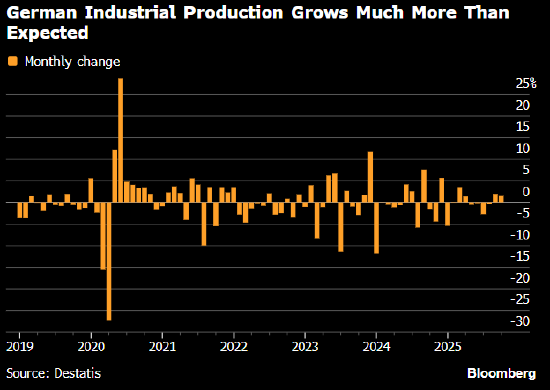
Core Insights - The growth of private sector activity in Germany in December fell short of expectations, with the manufacturing sector recording its worst performance in ten months [1][3] - The S&P Global Composite Purchasing Managers' Index (PMI) decreased from 52.4 in the previous month to 51.5, remaining above the neutral 50 mark due to the service sector's expansion for the fourth consecutive month [1][3] Economic Outlook - Cyrus de la Rubia, an economist at Hamburg Commercial Bank, stated that the service sector is stabilizing the overall economy and is expected to contribute significantly to positive GDP growth in the fourth quarter [3][5] - The German economy, driven by infrastructure and defense spending under Chancellor Friedrich Merz, is projected to recover next year while currently striving for modest growth [3][5] - The German central bank and other forecasting institutions anticipate growth in output for the fourth quarter, aided by the European Central Bank's earlier interest rate cuts [3][5] Manufacturing Sector Analysis - The Purchasing Managers' Index contrasts with recent manufacturing data, which had painted a more optimistic industry outlook [3][5] - In October, factory orders surged, particularly due to a rise in transportation orders covering aircraft, ships, trains, and military vehicles, with industrial production data also exceeding expectations [3][5]
【环球财经】德国10月工业新订单环比增长1.5%
Xin Hua She· 2025-12-05 12:59
Core Insights - Germany's industrial new orders increased by 1.5% month-on-month in October, driven by domestic demand [1] - Domestic new orders rose by 9.9% month-on-month, while foreign new orders decreased by 4% [1] - The significant growth in new orders was primarily attributed to the transportation equipment manufacturing sector, which saw a remarkable increase of 87.1% [1] Domestic Orders - Domestic new orders showed a strong recovery trend, influenced by increased demand in the defense sector [1] - The overall structure of new orders in October was positively impacted by this demand [1] Foreign Orders - Foreign new orders, particularly from outside the Eurozone, experienced a decline of 6.5% [1] - Orders from the Eurozone showed a slight increase of 0.1%, indicating mixed performance in international demand [1] Industry Outlook - The German Federal Economic and Energy Ministry noted that the overall export performance is expected to be dragged down by weak foreign orders [1] - The German Industry Association reported that the industrial sector is facing a structural recession, predicting a 2% decline in industrial output for the year, marking the fourth consecutive year of contraction [1]
德国工厂订单激增 欧洲最大经济体前景有所改善
Xin Lang Cai Jing· 2025-12-05 12:00
Group 1 - The core viewpoint of the article highlights a significant increase in German factory orders in October, suggesting a potential for growth in the last quarter of the year for Europe's largest economy [1][3]. - The Federal Statistical Office reported a month-on-month demand increase of 1.5%, with September's data revised upward to a growth of 2%, significantly surpassing the median forecast of 0.3% [1][3]. - The improvement in orders is primarily driven by large orders, particularly in the transportation sector, which saw an increase of 87% in orders for aircraft, ships, trains, and military vehicles [1][3]. Group 2 - The recovery of the industrial sector is viewed as crucial for overcoming economic weakness, with GDP expected to contract in both 2023 and 2024 [5]. - Germany faces challenges stemming from deeper issues such as increased tariffs from the U.S., intensified competition, and long-standing bureaucratic obstacles [5].
高铁从我家乡穿过
Ren Min Ri Bao· 2025-11-23 22:20
Core Points - The article reflects on the author's nostalgic memories of their hometown, particularly the impact of the railway on their life and the community [1][4][9] - The construction of the Wuguang High-Speed Railway through the author's hometown represents a significant development opportunity for the local area, leading to the relocation of residents [7][8][9] Group 1: Hometown and Railway Experience - The author's hometown, a remote area in Hunan, was previously difficult to access, with limited transportation options [1][2] - The sound of train whistles from the nearby Yonghong Coal Mine was a significant part of the author's childhood, symbolizing connection and movement [2][4] - The first experience of riding a train was a memorable event, highlighting the excitement and significance of rail travel in the author's life [3][7] Group 2: Impact of Railway Construction - In 2003, the announcement of a new railway line brought both excitement and concern to the residents, as it would require the relocation of many families [7][8] - The construction of the Wuguang High-Speed Railway began in earnest, transforming the village into a construction site with significant infrastructure development [8][9] - The completion of the railway in 2009 marked a new era for the community, with the new village being built and the old homes, including the author's childhood house, being demolished [9]
建设统一开放的交通运输市场
Jing Ji Ri Bao· 2025-08-14 22:11
Core Viewpoint - The construction of a unified and open transportation market is essential for building a national unified market and is a strategic requirement for high-quality development [2][5]. Group 1: Transportation Market Development - Since the 18th National Congress, China's transportation market has accelerated its development, providing crucial support for connecting production and consumption, promoting regional factor flow, and facilitating the national economic cycle [3]. - The comprehensive three-dimensional transportation network in China is expected to exceed 6 million kilometers by the end of 2024, with over 60 billion person trips and more than 500 billion tons of freight volume, indicating a massive transportation service market [4]. Group 2: Strategic Coordination - The construction of a unified open transportation market aligns with the overall requirements of building a national unified market, focusing on aspects such as integration, coordination, and innovation [5][6]. - The government emphasizes the need for strategic coordination between traditional and emerging markets, as well as between domestic and international markets, to enhance the efficiency and effectiveness of the transportation sector [6][7]. Group 3: Market Mechanisms and Innovations - The introduction of diverse entities into the railway sector aims to stimulate market vitality and enhance the role of railways in the unified open transportation market [8][9]. - The shift from joint ventures to private capital control in railway projects, such as the Hangzhou-Taipei and Hangzhou-Wenzhou high-speed rail, demonstrates a successful model for integrating private investment into public infrastructure [10][11]. Group 4: Green and Smart Transportation - The transition towards green and smart transportation is a key focus, with initiatives to promote the use of new energy and clean energy vehicles, as well as the integration of advanced technologies like AI and big data [14][15]. - Significant progress has been made in building smart transportation infrastructure, with over 6,500 service areas equipped with charging stations, and the implementation of automated systems in ports and highways [16][17]. Group 5: Efficiency and Management - The application of new information technologies has significantly enhanced the efficiency of transportation management, improving emergency response times and operational efficiency [18].
(辉煌60载 魅力新西藏)斯朗旺扎的铁路人生:从马背少年到高原复兴号司机
Zhong Guo Xin Wen Wang· 2025-08-12 07:51
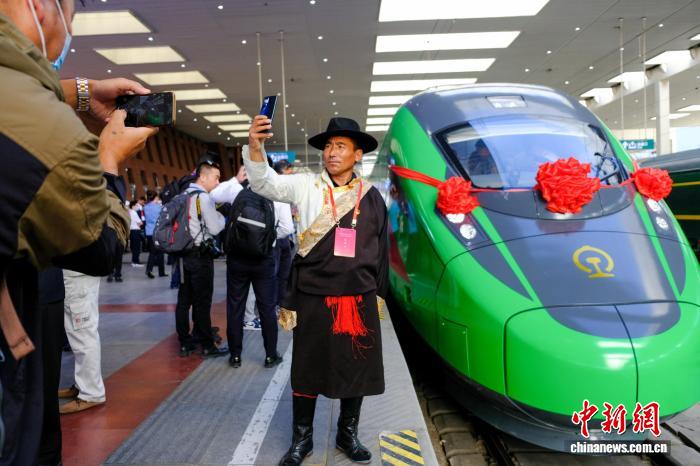
Core Viewpoint - The article highlights the journey of a Tibetan youth, Suolang Wangza, who transitioned from a rural upbringing to becoming a senior driver of the high-altitude Fuxing bullet train, showcasing the transformative impact of railways in Tibet [1][3]. Group 1: Personal Journey - Suolang Wangza, born in Changdu, Tibet, grew up in a semi-agricultural and pastoral area, where he first experienced trains through textbooks and local news about the Qinghai-Tibet Railway construction [3][4]. - After graduating from middle school in 2003, he pursued a degree in thermal locomotives at Lanzhou Railway Mechanical School, marking the beginning of his journey in the railway industry [4][5]. - His first experience driving a train into Tibet occurred in 2014, which he described as a dream come true, filled with excitement and nostalgia for his childhood [4][5]. Group 2: Professional Development - In early 2021, as the construction of the Lalin Railway neared completion, Suolang Wangza received training to operate the Fuxing bullet train, which included a rigorous two-month trial run period [5][7]. - The Lalin Railway officially opened on June 25, 2021, with Suolang Wangza serving as the inaugural driver, an event celebrated by local communities with traditional dances and warm welcomes [6][7]. Group 3: Impact of Railways - The expansion of railways in Tibet has significantly transformed the region, connecting five out of seven cities and facilitating a "dual-city" lifestyle for residents between Lhasa and other cities like Shigatse and Nyingchi [7]. - Suolang Wangza actively promotes railway work in his hometown, inspiring local children and reflecting on the profound changes railways have brought to Tibetan society [7].
出海速递 | 欧洲电动车,进退两难/中餐出海,为啥有人抓住了万亿商机,有人只得到教训
3 6 Ke· 2025-07-15 10:45
Group 1 - The article discusses the contrasting outcomes of Chinese restaurants expanding overseas, highlighting that some have seized a trillion-dollar opportunity while others have faced challenges [2] - It emphasizes the necessity for some production capacity to relocate for healthy development [2] Group 2 - Pop Mart anticipates a profit increase of no less than 350% for the six months ending June 30, 2025, compared to the same period last year [3] - The company expects its revenue for the same period to grow by no less than 200% compared to the six months ending June 30, 2024 [3] Group 3 - Qunar Travel launched an English version of its platform, providing English booking services for hotels, flights, trains, and vacation products [4] - Users can switch to English by adjusting settings in the app [4] Group 4 - XPeng Heavens completed a $250 million Series B financing round, which will support the development, mass production, and commercialization of flying cars [4] - The first flying car production facility is nearing completion and is expected to be operational by the fourth quarter of this year, with mass production scheduled for 2026 [4] Group 5 - The domestic consumer electronics industry is accelerating its globalization efforts, with companies like Lens Technology and Luxshare Precision pursuing listings in Hong Kong [4] - The trend reflects a deeper global development strategy, emphasizing the need for comprehensive local production, sales, and service capabilities [4] Group 6 - Meta plans to invest hundreds of billions of dollars in artificial intelligence, with expectations of becoming the first to launch a 1GW+ supercluster laboratory [5] - Following this announcement, Meta's stock price rose by 1.5% [5]