煤炭等)

Search documents
关键词 先后有别
Qi Huo Ri Bao Wang· 2026-02-11 01:36
Core Insights - The article discusses the cyclical nature of commodity price movements in relation to the global macroeconomic cycle, highlighting the distinct phases of "recovery, prosperity, stagflation, and recession" and their corresponding impacts on different commodity sectors [1] Group 1: Economic Phases and Commodity Performance - During the recovery phase, black and non-ferrous metals typically lead price increases driven by improved demand, while agricultural products like grains remain stable [1] - In the prosperity phase, energy and industrial metals lead the price surge, with agricultural products rising due to inflation transmission and increased planting costs [1] - The stagflation phase sees a divergence in commodity performance, with inflation-resistant assets like gold and oil outperforming, while industrial demand weakens [1] - In the recession phase, overall commodity prices decline, with industrial products falling the most, while safe-haven assets like gold and essential agricultural products experience smaller declines [1] Group 2: Sensitivity to Economic Signals - Commodities sensitive to interest rates, such as precious metals and industrial metals like copper, face increased holding costs during rising interest rates, leading to quicker adjustments [2] - Agricultural products and energy, with more rigid demand, are less affected by short-term interest rate fluctuations compared to supply and demand fundamentals [2] Group 3: Internal Mechanisms of Industrial Products - The price dynamics of black metals like steel and coal are closely tied to infrastructure investment and real estate cycles, with a clear transmission path from policy stimulus to steel demand and coal prices [2] - Non-ferrous metals like copper and aluminum are driven by global manufacturing PMI and renewable energy demand, with price movements linked to economic recovery expectations and inventory depletion [2] - Chemical products are strongly correlated with oil prices, with price transmission influenced by oil costs and adjustments in production rates [2] Group 4: Global Supply Chain and Commodity Rotation - The global division of labor has significantly reshaped the paths of commodity rotation, with China as a key demand driver for industrial products, influencing the rotation of black metals and certain chemicals [4] - The development of the renewable energy sector has altered the demand structure for non-ferrous metals like lithium and copper [4] - Supply constraints from resource-producing countries directly impact commodity prices, with geopolitical risks and trade policies exacerbating regional supply-demand mismatches [4]
唐山港:2025年预计完成货物吞吐量同比增长4.1%
Zheng Quan Shi Bao Wang· 2026-01-12 07:57
Core Viewpoint - Tangshan Port (601000) expects to achieve a total cargo throughput of 242 million tons in 2025, representing a year-on-year growth of 4.1% [1] Summary by Category Cargo Throughput - The expected cargo throughput includes 129 million tons of iron ore, 15 million tons of steel, 66 million tons of coal, and 32 million tons of other cargo types [1]

促进农产品流通税收优惠(二)
蓝色柳林财税室· 2025-12-03 13:26
Core Viewpoint - The article discusses various tax incentives aimed at supporting agricultural markets and logistics enterprises, emphasizing their role in promoting rural revitalization and enhancing agricultural product circulation. Group 1: Tax Incentives for Agricultural Markets - Agricultural wholesale markets and farmer's markets are exempt from urban land use tax until December 31, 2027, for land specifically used for agricultural product operations [7][31] - The exemption applies to both owned and leased land, with a proportional tax assessment for land used for other products alongside agricultural products [7][32] - Eligible agricultural products include grains, oils, meats, vegetables, fruits, and other edible items as defined by local tax authorities [8] Group 2: Tax Incentives for Logistics Enterprises - From January 1, 2023, to December 31, 2027, logistics companies are subject to a 50% reduction in urban land use tax for land used for bulk commodity storage [11][12] - The definition of logistics enterprises includes those providing warehousing and transportation services, registered as such with relevant authorities [13] - The exemption applies only to land directly used for storage of specified bulk commodities, excluding administrative and non-storage areas [13] Group 3: Tax Exemptions for E-commerce - Individuals entering into electronic contracts with e-commerce operators are exempt from stamp duty on electronic orders [15] Group 4: Tax Exemptions for Vegetable and Meat Products - Tax exemptions are provided for the sale of vegetables and certain fresh meat and egg products by wholesalers and retailers [21][27] - The definition of vegetables includes various edible plants and processed forms, while fresh meat and egg products are specified to include certain types of meat and eggs [22][28] Group 5: Overall Significance - The tax incentives are part of a broader strategy to address rural development challenges, stimulate local economies, and support the agricultural sector [19]


策略周末谈:中国资产的“黄金时代”
Western Securities· 2025-10-19 13:18
Group 1 - The core conclusion is that Chinese assets are entering a "golden era" as the Federal Reserve resumes interest rate cuts, leading to a return of cross-border capital and national wealth to China, which will benefit manufacturing and consumption assets [1][10]. - The foundation of this "golden era" is the competitive advantage of China's manufacturing exports, which has been strengthened by recent years of intense competition, allowing for continued accumulation of national wealth despite external challenges [2][13]. - The path to this "golden era" involves the recovery of A-share profits and cash flows, driven by export expansion and consumption upgrades, replacing previous reliance on capital expenditure [3][21]. Group 2 - The expansion of high-end manufacturing exports is crucial for the "golden era," as it leads to long-term appreciation of the RMB and the return of foreign capital, enhancing consumer spending power [4][14]. - The anticipated "big liquidity injection" by the Federal Reserve is expected to accelerate the return of cross-border capital to China, leading to a systematic revaluation of Chinese manufacturing and consumption assets [4][28]. - The report suggests a strategic allocation towards sectors that are expected to reach new highs, including precious metals, new consumption categories, and high-end manufacturing, as the market transitions into a "re-inflation bull" phase [5][30]. Group 3 - The market has recently shown a shift towards undervalued sectors, indicating a potential recovery in A-share performance as manufacturing and consumption sectors are poised for a rebound [8][33]. - Economic indicators such as the manufacturing PMI and consumer confidence are showing positive trends, which may support the recovery of consumer spending and overall economic activity [45]. - The report highlights the importance of monitoring key economic data and market trends to identify further investment opportunities in the context of the anticipated recovery of Chinese assets [6][41].
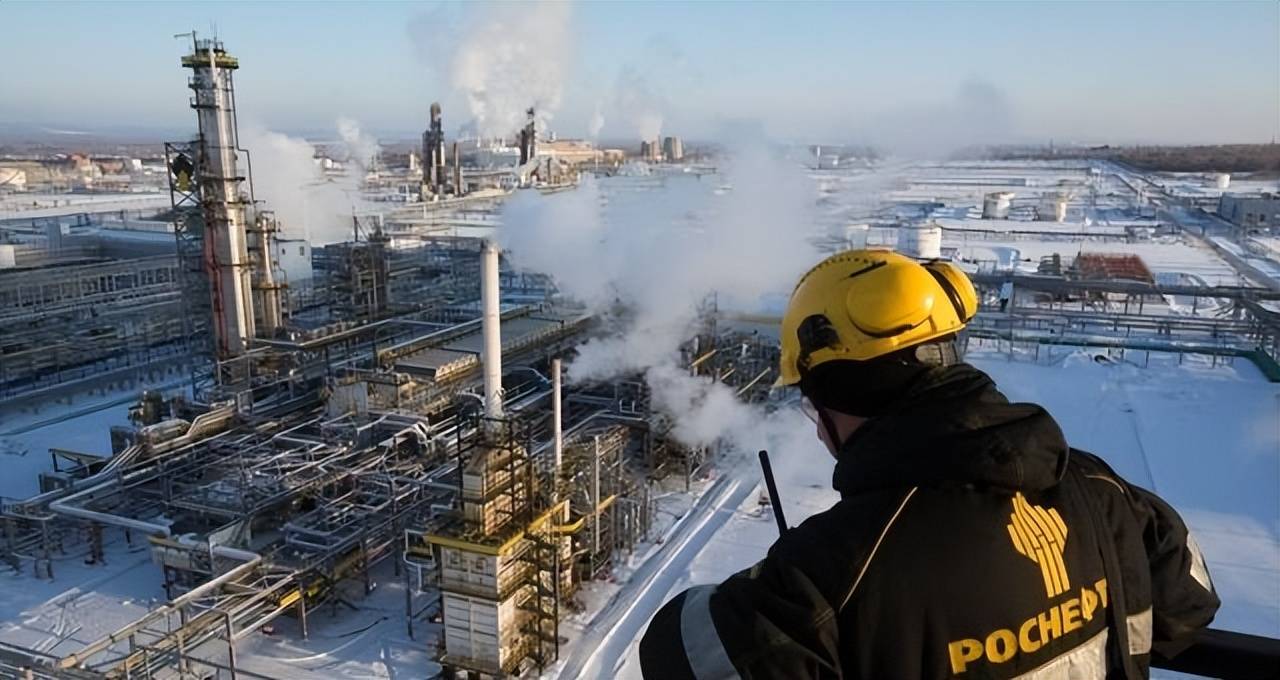
俄罗斯将40%的国土,建立只面向中国的经济特区,这意味着什么?
Sou Hu Cai Jing· 2025-08-21 07:25
Group 1: Overview of the Russian Far East - The Russian Far East covers nearly 7 million square kilometers, accounting for about 41% of Russia's total area, and is rich in natural resources such as gold, oil, natural gas, timber, and fisheries [1] - The region has faced challenges in development due to sparse population, inadequate infrastructure, and harsh climate conditions [1] Group 2: Economic Impact of the Russia-Ukraine Conflict - The Russia-Ukraine conflict led to severe sanctions from Western countries, resulting in a 2.1% contraction in Russia's GDP in 2022 and significant inflation [3] - In response to these challenges, Russia turned to China, leading to a surge in trade from $147 billion in 2021 to $190 billion in 2022, and exceeding $240 billion in 2023 [3] Group 3: Investment and Cooperation - Since 2014, Russia has implemented policies to attract foreign investment in the Far East, with Chinese investment becoming a major force, reaching over $100 billion in 2023 [5] - In 2023, during the Eastern Economic Forum, Russia showcased plans for the Far East, resulting in the signing of 79 cooperation projects worth approximately $160 billion, focusing on infrastructure development [9] Group 4: Mutual Benefits and Resource Exchange - The cooperation between Russia and China is based on mutual benefits, with China needing resources and Russia requiring funds and technology [9] - China has significantly increased its natural gas imports from Russia, with supply doubling in 2023, and is actively investing in mining and processing industries in the region [9] Group 5: Geopolitical Implications - The partnership with China has helped Russia mitigate the impact of Western sanctions, recovering some of the lost trade with Europe, with trade expected to reach $245 billion in 2024 [10] - However, this growing dependence on China raises concerns about Russia's sovereignty and economic autonomy, as evidenced by the increasing use of the yuan in trade [12] Group 6: China's Strategic Interests - For China, the partnership with Russia ensures energy supply security, with 86 million tons of oil imported from Russia in 2023, accounting for 36% of its total imports [13] - Investments in the Far East enhance China's trade efficiency and support its Belt and Road Initiative, positioning the region as a crucial link between Europe and Asia [13] Group 7: Future Prospects - The upcoming 2025 China-Russia Expo in Harbin is expected to result in further cooperation agreements across various sectors, although China is likely to maintain a dominant position [15] - The evolving relationship between Russia and China is reshaping the global economic landscape, with a shift in economic focus towards the East and a diminishing influence of Western countries [15]