
石英晶体谐振器

Search documents
又一类元器件,官宣涨价
半导体行业观察· 2026-03-31 02:23
Core Viewpoint - The frequency component industry is experiencing price increases of approximately 5% to 10% due to rising raw material costs, particularly precious metals, and strong demand for high-end frequency components used in AI data centers [1][2]. Group 1: Price Increases - Leading frequency component manufacturers, including Jingji (3042) and Taijia Shuo, have announced price hikes effective April 1, reflecting the rising costs of raw materials and the need to maintain profitability [1]. - Jingji has indicated that the average price of precious metals has increased by over 60% since early 2025, which has exceeded the company's capacity to absorb costs [1]. Group 2: Market Dynamics - The frequency component market, which includes quartz crystal resonators and oscillators, is critical for various electronic applications, including communications, computing, and automotive sectors [2]. - The demand for frequency components, especially those used in AI data centers, is rapidly increasing, contributing to a positive cycle in the industry [2]. Group 3: Future Outlook - As specifications for optical communications increase, the price of frequency components is expected to double with each upgrade, indicating a strong upward trend in pricing and demand as infrastructure expands [2].

东兴证券晨报-20260303
Dongxing Securities· 2026-03-03 14:06
Core Insights - The report highlights the significant impact of geopolitical tensions, particularly the military conflict involving Iran, on international oil prices, with WTI and Brent crude oil prices experiencing substantial increases of 11.9% and 11.94% respectively as of March 2, 2026 [6][11]. - The report discusses the ongoing developments in the supernode and Scale-up network industry, emphasizing the competitive landscape where companies like NVIDIA, Google, AMD, and Huawei are making strides to challenge NVIDIA's dominance [13][24]. Industry Overview - The oil and gas sector is currently facing volatility due to geopolitical events, with Brent crude oil futures settling at $72.48 per barrel, reflecting a month-over-month increase of 2.50% [7]. - The supernode and Scale-up network industry is identified as a critical area for technological innovation, supporting high-performance AI applications and large-scale models [13][24]. Company Insights - NVIDIA is noted for its leading position in supernode technology, with plans to release advanced solutions like the GH200NVL72 and GB200/GB300NVL72 by 2025, aiming to enhance GPU interconnectivity and bandwidth [14][15]. - Huawei is working on its supernode technology, with the Atlas950 expected to launch in late 2026, showcasing competitive performance metrics against NVIDIA's offerings [18][19]. - Google is establishing a unique competitive edge with its TPU supernodes, leveraging optical circuit switching technology to enhance performance and efficiency [20][21]. - AMD's UALink is emerging as a significant open standard in the supernode space, with expectations for its ecosystem to gain traction by 2027, positioning it as a viable competitor to NVIDIA [22][24].



石油基金LOF:将于今日开市起至10:30停牌……盘前重要消息还有这些
证券时报· 2026-03-03 00:19
Key Points - Iran has announced the closure of the Strait of Hormuz, prompting a response from the Ministry of Foreign Affairs regarding the importance of maintaining security in this critical international trade route [4] - The Shanghai Futures Exchange, Zhengzhou Commodity Exchange, and Dalian Commodity Exchange have issued notifications to enhance market risk control due to the volatile situation in the Middle East [4] - The Ministry of Science and Technology, along with other regulatory bodies, has released opinions to support the high-quality development of technology insurance, encouraging investment in major national technology projects and innovative enterprises [5] - The China Phosphate Fertilizer Industry Association has called on phosphate ammonium producers to ensure supply and stabilize prices [6] Company News - The oil fund LOF will be suspended from trading on March 3 until 10:30 AM [2][8] - Changan Automobile plans to repurchase A-shares worth between 700 million to 1.4 billion yuan [9] - Fenghuo Communication's low-orbit satellite routing and inter-satellite laser communication business currently contributes minimally to profits [10] - Taijing Technology's quartz crystal resonators are applicable in humanoid robots and optical modules, but related revenue is currently very low [11] - Jiemai Technology is planning to acquire 100% equity of Aifusi, with stock suspension starting March 3 [12] - China Tianying's hydrogen-based energy products are still in the investment phase and have not generated operating revenue [13] - Xinjin Road's high-purity quartz sand project has not yet achieved mass production, and the company has not entered the chip sector through acquisitions [14] - Tianpu Co., Ltd. has no plans to engage in artificial intelligence-related businesses [15]
谁在“走钢丝”? A股保壳术全景透视
经济观察报· 2026-02-09 04:28
Core Viewpoint - The A-share market is experiencing a critical phase where companies are engaging in various actions to avoid delisting due to financial indicators, particularly focusing on achieving revenue above 300 million yuan or turning losses into profits, as well as correcting negative net assets [1][2]. Group 1: Financial Indicators and Delisting Risks - The new "National Nine Articles" implemented in January 2025 raised the revenue threshold for delisting from 100 million yuan to 300 million yuan, allowing companies that can exceed this revenue to avoid delisting risks [5]. - Companies like *ST Jinglun and *ST Dongjing are attempting to cross the delisting threshold through various strategies, including revenue boosts, mergers, and asset disposals [2][6]. Group 2: Company Strategies for Survival - *ST Jinglun is trying to incorporate new business lines into its main revenue streams, but faced challenges with revenue recognition for its new server business, leading to a significant reduction in reported revenue [7][8]. - *ST Dongjing reported an expected revenue increase to between 340 million and 370 million yuan, aided by new business ventures, although it still anticipates losses [9][10]. Group 3: Mergers and Acquisitions - Mergers and acquisitions are being utilized by companies like *ST Huazhong and *ST Huike to surpass financial thresholds, with *ST Huazhong projecting a turnaround in profitability due to its acquisition of a controlling stake in Zhejiang Zhuangchen [12][13]. - *ST Huike's acquisition of a 51% stake in Nanjing Yizhengtong is also noted as a strategy to meet revenue requirements, despite market skepticism regarding its financial health [13]. Group 4: Asset Restructuring and Debt Relief - Several companies are opting for asset disposals to improve their financial standings, with *ST Zhongdi successfully turning its net assets positive through significant asset restructuring [16][17]. - Companies like *ST Nanzhi and *ST Lvkang have also engaged in asset sales to achieve similar outcomes, with *ST Nanzhi transferring real estate assets to improve its equity position [17]. Group 5: Bankruptcy and Debt Waivers - Bankruptcy restructuring has emerged as a key strategy for survival, with companies like *ST Dongyi successfully completing their restructuring plans and improving their financial positions [18]. - Debt waivers from major shareholders or creditors have been reported by several companies, allowing them to quickly enhance their net asset status [18].


谁在“走钢丝”? A股保壳术全景透视
Jing Ji Guan Cha Wang· 2026-02-09 02:08
Core Viewpoint - The A-share market is witnessing a critical "survival race" as companies face delisting risks due to financial indicators set by the new "National Nine Articles," which include negative profit totals, net profits, and insufficient revenue [2][4]. Group 1: Companies Facing Delisting Risks - *ST Jinglun is experiencing a severe decline, with nine consecutive trading days of limit-down, and a significant drop in trading volume to less than 5 million yuan, as it faces delisting expectations [2]. - Other companies like *ST Dongjing and *ST Huarong are attempting various strategies such as asset restructuring and debt waivers to avoid delisting, focusing on key financial indicators like revenue exceeding 300 million yuan or turning net assets positive [2][4]. Group 2: Financial Performance and Strategies - The new regulations increased the revenue threshold for delisting from 100 million yuan to 300 million yuan, prompting companies to strive for this new target to avoid delisting risks [4]. - *ST Jinglun is attempting to incorporate new business lines into its main revenue stream, while *ST Dongjing is projecting a revenue increase to between 340 million and 370 million yuan, surpassing the 300 million yuan threshold [6][8]. Group 3: Specific Company Actions - *ST Jinglun's revenue forecast for 2025 is approximately 338 million yuan, but after excluding non-core business income, the adjusted revenue is only about 86.22 million yuan, indicating a failure to turn a profit [6][7]. - *ST Huarong expects to achieve a net profit of between 6.5 million and 8 million yuan for 2025, aided by a 30% increase in revenue from its subsidiary, which it acquired a larger stake in [10]. Group 4: Market Reactions and Future Outlook - The market is closely monitoring companies that have narrowly met the revenue thresholds, with concerns about the sustainability of these figures and the potential for revenue adjustments post-audit [11][12]. - Companies are increasingly resorting to mergers and acquisitions as a strategy to enhance their financial performance and meet the new revenue requirements [10][15].
研判2026!中国石英晶体元器件行业进入壁垒、市场政策汇总、产业链图谱、市场规模、竞争格局及发展趋势分析:中高端市场国产化替代空间巨大[图]
Chan Ye Xin Xi Wang· 2026-01-23 01:33
Core Viewpoint - The quartz crystal component industry is experiencing rapid growth driven by the expansion of consumer electronics, communication devices, and automotive electronics, alongside emerging sectors like IoT and renewable energy. Domestic companies are making significant technological advancements, breaking international monopolies, and transitioning from low-end manufacturing to high-value segments. By 2025, the market size of China's quartz crystal component industry is projected to reach 1.102 billion yuan, with a year-on-year growth of 18.8% [1][7]. Industry Overview - Quartz crystals, primarily composed of silicon dioxide (SiO2), are essential electronic components that utilize piezoelectric effects for frequency control and signal filtering [2]. - Quartz crystal components can be categorized into quartz crystal resonators and oscillators, with various packaging methods and frequency classifications [3][4]. Market Policies - The Chinese government has implemented numerous policies to support the development of the quartz crystal component industry, including guidelines for energy electronics and innovation in the metaverse, which create a favorable environment for industry growth [5][6]. Industry Chain - The industry chain consists of upstream suppliers of raw materials and production equipment, midstream manufacturers of quartz crystal components, and downstream application markets including communication devices, IoT, automotive electronics, and medical equipment [6]. Current Development - The market is characterized by a three-tier competitive structure: international giants dominate high-end markets, domestic leaders accelerate replacement, and small enterprises focus on niche segments. Domestic companies are improving their capabilities in raw material development and production equipment, aiming to catch up with international competitors [9]. Key Players - Major domestic companies include: - **Tai Jing Technology**: Engaged in the design, manufacturing, and sales of quartz crystal frequency components, with a revenue of 718 million yuan and a gross profit margin of 18.5% in the first nine months of 2025 [10]. - **Anhui Jing Sai Technology**: Focuses on quartz crystal oscillators and packaging materials, holding 59 patents and achieving a revenue of 272 million yuan in the first half of 2025 [11]. Development Trends - **Technological Upgrades**: The industry is focusing on high-frequency, high-precision, and miniaturization to meet the demands of advanced applications [12]. - **Expansion into High-End Applications**: The demand for quartz crystal components is increasing in automotive electronics, IoT, industrial automation, and medical electronics, with specific requirements for reliability and performance [13]. - **Accelerated Domestic Replacement**: Supported by policies and technological advancements, domestic companies are moving from low-end to high-end markets, reducing reliance on imports and enhancing self-sufficiency [14].


涉嫌内幕交易,*ST东晶61岁独立董事遭立案
Shen Zhen Shang Bao· 2026-01-14 05:34
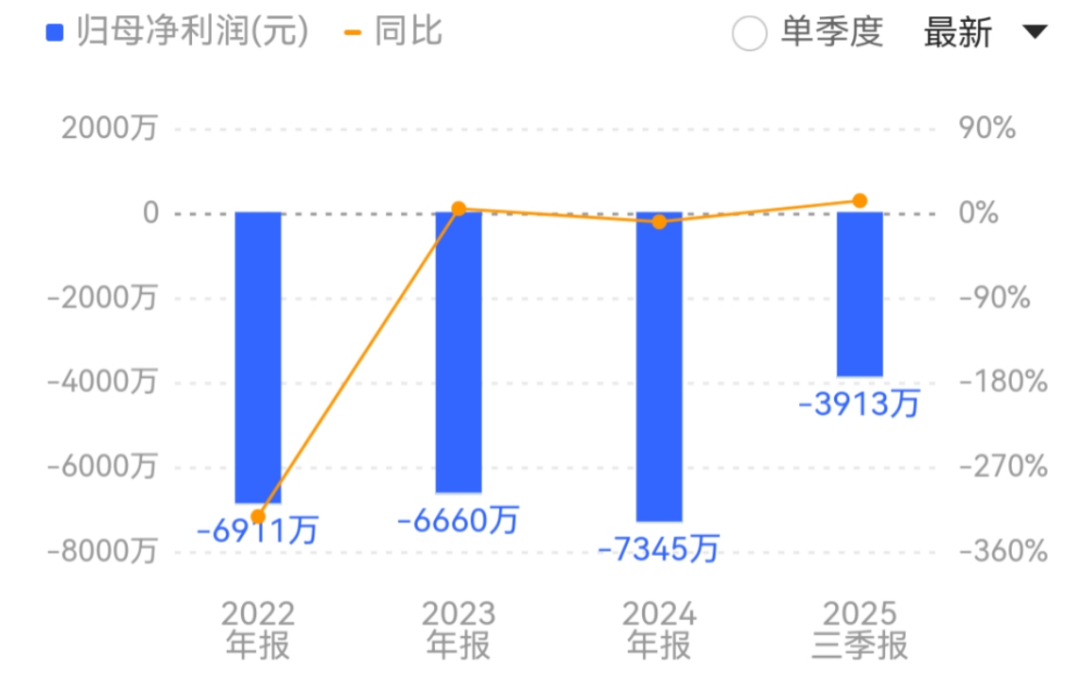
Core Viewpoint - *ST Dongjing has been facing continuous losses for three consecutive years, with recent developments including the resignation of an independent director due to an insider trading investigation, which is not expected to impact the company's operations [1][2][4] Group 1: Company Developments - The independent director Fu Baoshan has been investigated by the China Securities Regulatory Commission for insider trading, leading to his resignation from the board and related committees [1] - Fu Baoshan's resignation will take effect after the election of a new independent director, and he has not held any shares in the company [1] - The company has undergone a change in control, with Haotian Yiyi becoming the largest shareholder, holding 19.97% of the total shares [4] Group 2: Financial Performance - The company has reported net losses for the years 2022 to the first three quarters of 2025, with losses of 69.11 million, 66.60 million, 73.45 million, and 39.13 million respectively [2] - For the first three quarters of 2025, the company achieved an operating revenue of 184 million, a year-on-year increase of 12.22%, but still reported a net loss of 39.13 million [4] - The company’s stock has been under delisting risk warning since March 26, 2025, due to negative net profit and revenue issues [4]
石英晶振企业鸿星科技重启IPO 已完成上市辅导备案
Ju Chao Zi Xun· 2026-01-10 01:34
Core Viewpoint - Hongxing Technology (Group) Co., Ltd. has submitted a report for its initial public offering (IPO) and listing, with Guotou Securities as the advisory institution, indicating a renewed effort to enter the A-share market after previously withdrawing its application in September 2025 [1][3]. Company Overview - Hongxing Technology specializes in the research, production, and sales of frequency control components such as quartz crystal resonators and oscillators, and is recognized as the ninth largest quartz crystal component manufacturer globally, holding a strong market position in its niche [3]. - The company's products are widely used across various sectors, including communication electronics, smart home devices, automotive electronics, consumer electronics, medical electronics, and industrial control, with a customer base that includes well-known brands like Samsung, Chuangwei, Changhong, Foxconn, Quanta, and Pegatron [3]. Industry Context - The demand for quartz crystal components is expected to grow due to trends such as 5G construction, automotive intelligence, and the proliferation of the Internet of Things (IoT) [4]. - The global high-end quartz crystal component market is currently dominated by Japanese manufacturers, who lead in technology and scale, while U.S. manufacturers focus on specific high-end markets like military applications [4]. - Domestic companies are increasingly focusing on domestic substitution and technological breakthroughs in the mid-to-high-end sectors, which is becoming a significant development direction for the industry [4]. - If Hongxing Technology successfully completes its IPO, it is anticipated to leverage capital market resources to expand production capacity, enhance R&D investment, and improve competitiveness in high-end applications, aiming for a more significant position in the global supply chain [4].

研判2025!全球及中国石英晶体谐振器行业政策、产业链、发展现状、竞争格局及发展前景展望:国产替代进程加速,行业迎来新发展机遇[图]
Chan Ye Xin Xi Wang· 2025-12-10 01:30
Core Insights - The domestic market for high-end quartz crystal resonators is experiencing strong demand, prompting local manufacturers to expand production capacity and increase R&D investment to enhance their supply capabilities in the high-end market [1][10] - The quartz crystal resonator industry in China has grown from 5.496 billion yuan in 2015 to 8.288 billion yuan in 2024, with a compound annual growth rate (CAGR) of 4.67% [1][10] - Emerging applications in 5G communication, wearable electronics, automotive electronics, and the Internet of Things (IoT) are driving significant market opportunities for the quartz crystal resonator industry [1][10] Industry Overview - Quartz crystal components, known as crystal oscillators, are frequency control devices made from quartz crystals utilizing the piezoelectric effect [2][4] - The industry is categorized into quartz crystal resonators and oscillators, with further classifications based on frequency and packaging methods [2][4] Industry Policies - The Chinese government has increased policy support for the quartz crystal resonator industry, promoting new electronic components and smart manufacturing [7] - Key policies include the inclusion of new electronic components in the encouraged category of the 2024 Industrial Structure Adjustment Guidance Catalog and the 2025-2026 Action Plan for Stable Growth in the Electronic Information Manufacturing Industry [7] Industry Chain - The quartz crystal resonator industry chain consists of upstream raw materials (quartz sand, packaging materials), midstream manufacturing, and downstream applications (communication devices, consumer electronics) [6][8] Current Industry Development - Since 2018, Japanese companies have reduced capital expenditures, creating opportunities for Chinese manufacturers to expand in the quartz crystal resonator market [10] - From 2015 to 2024, China's production of quartz crystal resonators increased from 11.94 billion units to 23.298 billion units, with a CAGR of 7.71% [10] Competitive Landscape - The industry features a tiered competitive structure, with international giants leading the high-end market and domestic companies like Unisoc, Dongjing Electronics, and others gaining ground in mid to high-end segments [10][11] - Domestic companies are increasing R&D investments to enhance product consistency and reliability, narrowing the gap with international competitors [10] Development Trends - The industry is moving towards miniaturization, high frequency, low phase noise, and low aging rates to meet the demands of advanced applications [13][14][17] - Manufacturers are focusing on advanced packaging technologies and optimizing design processes to achieve these goals [13][14][17]


烟台清洁能源发展创出八个第一,近三年能耗强度累计下降20.9%
Da Zhong Ri Bao· 2025-12-02 02:57
Core Viewpoint - Yantai is making significant strides in clean energy development, achieving a 20.9% reduction in energy intensity over the past three years while positioning itself as a model for green, low-carbon, and high-quality development in line with national carbon reduction strategies [1][3]. Group 1: Clean Energy Development - Yantai has established itself as a leader in clean energy, achieving "eight firsts" in the sector, including the first nuclear power and offshore wind power in Shandong Province, and the first commercial nuclear heating demonstration project in the country [2][3]. - The total installed capacity of clean energy in Yantai has surpassed 18 million kilowatts, with ongoing investments of 700 billion yuan in nuclear, wind, solar, and LNG projects, aiming to reach 60 million kilowatts by 2035 [3]. Group 2: Industrial Transformation - Many companies in Yantai are adopting green and low-carbon strategies as part of their transformation, with significant improvements in energy efficiency and production capacity [4][5]. - For instance, Mingdeheng Electronics has increased its monthly production capacity from 5 million to 60 million units while reducing energy consumption by 40% [4]. Group 3: Technological Innovation - Technological innovation is driving industrial decarbonization in Yantai, with companies like Nanshan Aluminum achieving significant reductions in carbon emissions through recycling and clean production methods [5]. - Yantai's chemical industry is also evolving into a high-end low-carbon base, with a focus on sustainable practices and innovation [5]. Group 4: Community and Lifestyle Changes - The transition to a low-carbon lifestyle is evident in Yantai, with initiatives such as nuclear heating providing consistent warmth and reducing coal consumption significantly [7]. - Community projects are promoting zero-carbon living, including solar-powered streetlights and electric vehicle charging stations, enhancing the quality of life for residents [7][8]. Group 5: Waste Management and Green Building - Yantai is implementing advanced waste management systems, including automated recycling that incentivizes residents to participate [8]. - The city is also leading in green building initiatives, with the largest near-zero energy building complex in Shandong Province and a high percentage of public transport being electric [8].