研学旅游

Search documents
来自监督一线的报道丨羌寨新画卷
Zhong Yang Ji Wei Guo Jia Jian Wei Wang Zhan· 2026-01-18 01:46
Core Insights - The article highlights the successful implementation of a political supervision system in Beichuan Qiang Autonomous County, which has significantly boosted the local economy through tourism and rural revitalization efforts [1][2][3] Group 1: Political Supervision and Mechanisms - The Beichuan County Discipline Inspection Commission has integrated rural industrial development into its political supervision focus, innovating grassroots supervision methods to stimulate rural revitalization [1] - A closed-loop management mechanism has been established, involving county-level coordination, town-level execution, and village-level implementation, enhancing the effectiveness of supervision [1] - The village of Shiyi has developed a comprehensive supervision mechanism that includes community discussions, shared management of village affairs, and collective evaluation of results [1] Group 2: Community Engagement and Problem Solving - The "Zao Fu Discussion" corner in Shiyi village serves as a platform for villagers to discuss community issues and development, transforming previously unaddressed concerns into actionable items [2] - Monthly community meetings have been effective in addressing local issues such as waste management and traffic congestion, demonstrating the tangible impact of supervision on daily life [2] Group 3: Economic Growth and Tourism Development - Shiyi village has seen a flourishing of tourism-related businesses, with over 88% of villagers benefiting from tourism, leading to a projected per capita income exceeding 100,000 yuan by 2025 [3] - In 2022, the village received 560,400 tourists, generating a total tourism revenue of 70.59 million yuan, reflecting year-on-year growth of 17.04% and 13.16% respectively [3] - The county's commitment to long-term political supervision aims to ensure the sustainable development of rural industries, enhancing the overall quality of life for residents [3]
学习规划建议每日问答 | 如何理解大力发展文化旅游业
Xin Hua She· 2026-01-12 14:01
Core Viewpoint - The Chinese government emphasizes the deep integration of culture and tourism as a key strategy for economic and social development, aiming to build a culturally strong nation and a tourism powerhouse [1] Group 1: Importance of Cultural Tourism - Cultural tourism is a vital part of the national economy and a means to meet the people's needs for a better life, characterized by creativity, sustainability, and low consumption [2] - The cultural tourism sector is expected to generate approximately 19.1 trillion yuan in revenue and domestic travel spending is projected to reach about 5.8 trillion yuan in 2024, reflecting growth rates of 7.1% and 17.1% respectively [2] Group 2: Development Strategies - The focus is on cultivating new business models that integrate culture and tourism, enhancing the quality of tourism through cultural elements, and promoting various innovative tourism products and services [3] - There is a strong push for technological innovation in the cultural tourism sector, utilizing advanced technologies like 5G, big data, and AI to enhance traditional cultural industries and improve service quality [3] - The strategy includes expanding both domestic and international markets, encouraging cultural enterprises to enhance their global presence and improve the competitiveness of cultural and tourism businesses [4] - Policy support is crucial, with an emphasis on funding, investment models, and establishing a comprehensive evaluation system for cultural and tourism enterprises [4]
学习规划建议每日问答丨如何理解大力发展文化旅游业
Xin Hua She· 2026-01-12 13:21
Core Viewpoint - The article emphasizes the importance of integrating culture and tourism to enhance economic and social development, as outlined in the Central Committee's proposal for the 15th Five-Year Plan, highlighting the role of cultural tourism in building a culturally strong and tourism-oriented nation [1] Group 1: Industry Significance - Cultural tourism is a vital part of the national economy and a key avenue for meeting the public's demand for a better life, characterized by creativity, sustainability, and low resource consumption [2] - The cultural tourism sector has shown significant growth, with projected revenues of approximately 19.1 trillion yuan in 2024, reflecting a 7.1% increase, and domestic travel expenditures expected to reach about 5.8 trillion yuan, marking a 17.1% rise [2] Group 2: Development Strategies - The article outlines four key areas for advancing cultural tourism: 1. Cultivating new business models that integrate culture and tourism, enhancing the quality of tourism through cultural elements and promoting cultural consumption through tourism [3] 2. Promoting technological innovation in culture and tourism, leveraging technologies like 5G and big data to enhance traditional cultural industries and improve tourism service quality [4] 3. Coordinating domestic and international markets by enhancing cultural exchanges and encouraging competitive practices among cultural and tourism enterprises [4] 4. Improving policy support for cultural tourism, including financial backing and regulatory frameworks to foster investment and development in the sector [4]
传统插花与研学旅游深度融合 促进非遗传承与美育发展
Xin Lang Cai Jing· 2025-12-22 23:27
Core Viewpoint - The integration of traditional Chinese flower arrangement (an intangible cultural heritage) with research-based tourism is creating a new path for cultural transmission and experiential learning, enhancing both cultural experience and tourism value [1][2][5]. Group 1: Cultural and Educational Integration - The essence of the integration lies in the spiritual alignment between traditional flower arrangement and modern research-based tourism, emphasizing natural harmony and cultural depth [2][5]. - Traditional flower arrangement serves as a rich cultural carrier, providing a hands-on experience that allows students to engage with history, aesthetics, and philosophical concepts [2][3]. - The development of a three-dimensional research-based system combining culture, experience, and education is emerging, with various regions exploring unique pathways [2][4]. Group 2: Innovative Learning Models - The core model of deep research-based learning involves collaboration between professional bases and heritage practitioners to create immersive courses that achieve knowledge-action unity [3][5]. - Seasonal and thematic research-based learning enhances cultural significance and timeliness, linking activities to traditional festivals and natural cycles [3][4]. - Regular educational collaborations in schools are expanding the boundaries of integration, making flower arrangement a part of daily education and life [4][5]. Group 3: Comprehensive Value Creation - The deep integration of flower arrangement and research-based tourism creates multi-faceted value, benefiting heritage transmission, educational quality, and the tourism industry [5][6]. - This model opens new pathways for "productive protection" and the cultivation of inheritors, transforming traditional practices into dynamic, participatory experiences [5][6]. - The integration fosters a differentiated competitive advantage in the tourism sector, enhancing visitor engagement and creating higher cultural value [5][6]. Group 4: Challenges and Future Directions - Despite the promising prospects, challenges remain, including a shortage of qualified educators and a lack of standardized evaluation systems [6]. - To achieve deeper integration, a collaborative mechanism among heritage protection units, educational institutions, and tourism enterprises is essential [6]. - Emphasizing local materials and stories in course design can prevent homogenization and ensure that heritage is rooted in contemporary life [6][7].
着眼高质量发展 培育旅游业新质生产力
Zheng Quan Shi Bao· 2025-12-21 04:22
Core Viewpoint - The development of tourism in China has entered a fast track, establishing the largest domestic tourism market globally and becoming the largest source and destination for international tourism. The "14th Five-Year Plan" period is crucial for improving the modern tourism system and building a strong tourism nation, with a focus on cultivating new quality productivity as a key driver for tourism development [1] Group 1: Significance of Cultivating New Quality Productivity in Tourism - As an important area for consumption upgrade, enhancing the quality and capacity of the tourism industry can effectively promote domestic demand growth [2] - The tourism industry, which absorbs a large workforce, can stabilize employment through quality and efficiency improvements [2] - The innovative development of tourism, as a key component of the green industry, positively contributes to ecological civilization construction [2] - The dual role of tourists as both demand subjects and components of tourism products or services creates a close interaction among laborers, labor materials, and labor objects in the tourism industry [2] - Technological advancements inject new momentum into tourism, with big data analysis helping to understand tourist preferences and virtual reality technology creating immersive experiences [2] Group 2: Relationship Between New Quality Productivity and Production Relations - The high-quality development of the tourism industry is essentially a manifestation of new quality productivity within the sector [3] - The widespread application of digital and intelligent technologies, along with the personalized and quality upgrade of consumer demand, leads to the deep penetration of new productivity elements like big data and AI into various industry segments [3] - Systematic adjustments in production relations across the entire tourism industry chain are necessary for the effective release of advanced tourism technologies [3] - Building production relations that adapt to new quality productivity in tourism is a core issue for promoting high-quality industry development [3] Group 3: Key Breakthrough Directions for New Quality Productivity in Tourism - Strengthening inter-departmental collaboration is essential to overcome barriers to tourism industry integration and fusion [4] - Establishing a feedback mechanism where technology-driven supply innovation creates tourism demand, which in turn stimulates technological upgrades [4] - Supporting tourism enterprises in utilizing big data and AI to analyze consumption trends and optimize product and service design for efficient supply-demand matching [4] - Encouraging the application of digital management systems by market entities to enhance operational efficiency and personalized service capabilities [4] Group 4: Integration with Other Industries and Policy Support - Promoting deep integration of cultural tourism with technology, education, and health industries to develop composite consumption products and expand new consumption growth points [5] - Supporting market entities in resource integration to build a "technology + service + consumption" ecosystem that enhances value across the entire chain [5] - Encouraging the establishment of flexible employment and new professional certification policies to adapt to changes in employment forms driven by new tourism consumption [5] - Fostering strategic emerging industries in tourism through independent innovation and breakthroughs in key technological areas [5]
“十四五”期间 云南文旅奋力谱写发展新篇
Xin Hua Wang· 2025-12-20 10:39
Core Insights - Yunnan Province aims to become a world-class tourist destination during the "14th Five-Year Plan" period, focusing on cultural innovation and high-quality development in tourism [1][2] Group 1: Cultural Development - Yunnan has invested 161 million yuan in cultural projects, supporting 215 initiatives as part of the "Cultural Prosperity in Yunnan" campaign [1] - The province has developed a diverse cultural industry based on its rich ethnic resources, with notable sectors like Heqing Xinhua silverware and Jianshui purple pottery generating over 7 billion yuan in annual output [1] Group 2: Tourism Innovation - Yunnan is enhancing tourism product innovation, introducing new offerings in accommodation, health, education, and various tourism types such as cultural heritage, ecological, rural, study, inbound, and sports tourism [1] - The province has created one AAAAA-level tourist attraction and 98 AAAA-level attractions, bringing the total number of A-level tourist sites to 671 [1] Group 3: Service and Management Improvements - Yunnan has implemented measures like a "30-day no-reason return policy" and a rapid complaint resolution mechanism to improve tourism service and management [2] - The province's tourism reputation is on the rise, with an increasing number of people pursuing travel and residence in Yunnan as a lifestyle choice [2]
文化和旅游部党组书记、部长孙业礼:大力发展智慧旅游,提升旅游产品体验性、舒适性
Cai Jing Wang· 2025-12-12 03:03
Core Viewpoint - The article emphasizes the need to enrich the supply of high-quality tourism products and enhance the integration of culture and tourism to foster high-quality development in the industry [1] Group 1: Enhancing Tourism Product Supply - The Ministry of Culture and Tourism aims to improve the design and development of tourism products, introducing more high-standard offerings that reflect Chinese cultural spirit [1] - There is a focus on revitalizing tourist attractions and enhancing the quality of vacation areas, as well as cultivating leisure and specialty tourism products [1] - The development of smart tourism is prioritized to improve the experiential and comfort aspects of tourism products [1] Group 2: Improving Tourism Service Quality - The article highlights the importance of strengthening monitoring and evaluation of tourism service quality, as well as cultivating high-quality tourism service brands [1] - Enhancements in public tourism services are necessary, including improvements in public information, transportation, and emergency rescue services [1] - There is a call for increased safety management in tourism and stricter market regulation to address prominent issues [1] Group 3: Promoting Cultural and Tourism Integration - The integration of culture and tourism is emphasized, with a focus on using culture to enhance tourism and vice versa, fostering a blend of cultural and tourism products and markets [1] - The article advocates for incorporating more quality cultural content into tourism products and services, promoting cultural heritage tourism, red tourism, and educational tourism [1] - The strategy includes deepening the integration of culture and tourism with various industries to extend the industrial chain, create new value, and improve the quality of life for the public [1]
申万宏源:春秋假刺激文旅需求回暖 冰雪与消费补贴政策助力多领域服务消费
智通财经网· 2025-12-11 07:29
Group 1 - The implementation of the spring and autumn holiday policy in 2025 is expected to significantly boost off-peak travel demand, with staggered travel becoming the norm, benefiting scenic spots and tourism companies [1][2] - The average price of round-trip tickets from domestic locations such as Sichuan, Zhejiang, Guangdong, and Hubei is approximately 700 yuan, reflecting a year-on-year increase of about 7%, with a notable rise in flight and hotel bookings for popular destinations like Sanya and Xishuangbanna [1][2] - The combination of government subsidies, financial support, and merchant discounts effectively stimulates consumer spending, highlighting investment opportunities in the cultural tourism and ice and snow industries [1][2] Group 2 - The spring and autumn holiday policy has led to a resurgence in the cultural tourism market, with family travel demand surging, as over 53% of trips during the autumn holiday were made by families, and participation in educational tourism activities increased by over 50% year-on-year [2] - Ticket bookings for scenic spots in Sichuan have increased by 3.4 times year-on-year, with tourism consumption rising by 25%, indicating a strong recovery in the tourism sector [2] - The winter "snow holiday" policy is driving rapid development in the ice and snow tourism sector, with regions like Urumqi and Altay offering free skiing experiences and discounts on accommodation and transportation [3] Group 3 - The Ministry of Commerce and nine other departments have issued policies to boost service consumption, with 19 tasks aimed at optimizing supply, stimulating demand, and providing financial support [4] - During the 2025 National Day and Mid-Autumn Festival, over 29,000 cultural tourism activities were held nationwide, with consumption subsidies exceeding 480 million yuan [4] - The economic impact of ticket sales can lead to a comprehensive consumption ratio of 1:30 across various sectors, including performances, scenic spots, dining, accommodation, and transportation [4] Group 4 - Recommended companies to watch include Sanxia Tourism (002627.SZ), Huazhu (01179), Atour (ATAT.US), Jiuhua Tourism (603199.SH), and ShouLai Hotel (600258.SH) [5]




两部门联合发文 推进航文旅融合发展
Yang Shi Xin Wen· 2025-12-03 02:03
Core Points - The Ministry of Culture and Tourism and the Civil Aviation Administration of China jointly issued the "Action Plan for the Integration and Development of Culture, Tourism, and Civil Aviation" aiming for significant improvements in tourism service levels by 2027 [1][2] - The plan emphasizes enhancing service levels for specific travel groups, including senior travelers, educational tourism, family tourism, ice and snow tourism, and inbound tourism [1] - The action plan addresses current issues in domestic flight routes and international capacity, proposing measures to optimize tourism routes and service facilities [1] Group 1 - The action plan aims for a deeper, broader, and higher-quality integration of culture, tourism, and civil aviation by 2027, creating a virtuous cycle of demand-driven supply and supply-driven demand [1] - Specific measures include improving accessibility for domestic tourism, increasing inbound tourism routes, and enhancing airport tourism service facilities [1] - The plan encourages the development of new products, business models, and consumption scenarios in the "civil aviation + culture and tourism" sector [2] Group 2 - The focus is on fostering innovative practices and products that enrich the integration of civil aviation and cultural tourism [2] - Key areas of development include enhancing existing services, expanding product offerings, and creating new consumption scenarios [2] - The action plan aims to guide cultural tourism enterprises and civil aviation units in optimizing current products and expanding development space [2]
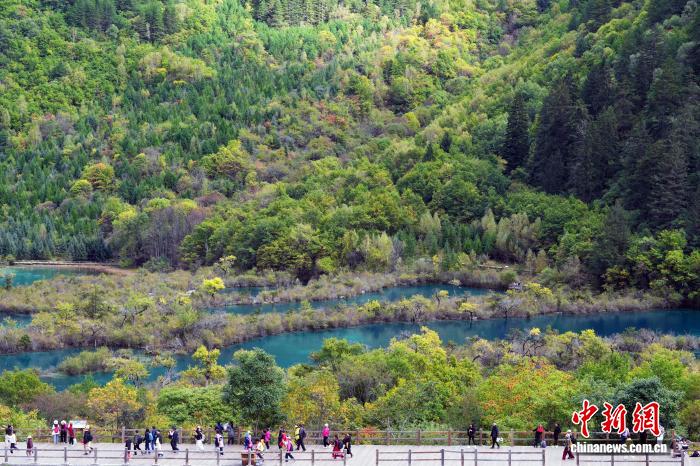
九寨沟景区年度游客突破700万人次
Zhong Guo Xin Wen Wang· 2025-11-22 10:22
Core Insights - The annual visitor count for Jiuzhaigou Scenic Area has surpassed 7 million, marking a historical high since its reopening, with a year-on-year increase of 27.05% [1][2] - This milestone reflects the high-quality development of the cultural tourism industry in Sichuan Province [1] Visitor Growth - Jiuzhaigou's visitor numbers have steadily increased from 5 million in 2015, showcasing a decade of growth and reaching a new level of international influence [2][3] - The scenic area ranks first on Ctrip's 2026 global landscape destination list and is highly rated in the 2026 Asia 100 and China 100 must-visit attractions [3] Development Philosophy - The success of Jiuzhaigou is attributed to its development philosophy of "ecology as the foundation, culture as the soul," supported by strategic guidance from local government [5] - The area emphasizes systematic ecological protection, smart management, and international promotion, establishing a model for harmonious coexistence between humans and nature [5] Visitor Management and Services - To manage the pressure of receiving 7 million visitors, Jiuzhaigou has implemented smart management and warm services, including a "smart hub" for time-based reservations and precise crowd control [5] - The introduction of electric sightseeing vehicles aims to reduce carbon emissions, while staff provide "smile service" to enhance visitor experience [5] Future Plans - Jiuzhaigou plans to deepen the integration of "tourism + technology" and "tourism + ecology," introducing low-carbon travel and educational tourism experiences [6] - The goal is to accelerate the establishment of a world-class scenic area, inviting global visitors to enjoy its natural beauty [6]