私募债券

Search documents
北交所就非公开发行公司债券挂牌规则公开征求意见
Xin Hua Cai Jing· 2025-12-31 14:07
Core Viewpoint - The Beijing Stock Exchange (BSE) is enhancing its bond market capabilities to better serve national strategies and the real economy by drafting the "Beijing Stock Exchange Non-Public Issuance Company Bond Listing Rules (Draft for Comments)" which will be open for public feedback starting December 31, 2025 [1] Group 1 - In October 2023, the BSE launched public company (enterprise) bond business, marking a stable start for the credit bond market [1] - Over the past two years, the BSE has effectively utilized its public company bond functions to support quality enterprises in financing, with steady improvements in market regulation and service capabilities [1] - The BSE aims to introduce private bond business to further enrich its product system and meet diverse financing needs of various enterprises [1] Group 2 - The "Listing Rules" serve as the foundational business rules for private bonds, detailing requirements for listing transfers, information disclosure, self-regulation, and investor rights protection [2] - Key contents of the rules include: - Clear requirements for listing transfers of private bonds, including conditions and procedures [2] - Information disclosure obligations for issuers, credit enhancement entities, and intermediaries [2] - Strengthened protection of bondholder rights, specifying obligations for issuers regarding debt repayment, trustee management, and bondholder meetings [2] - The BSE will carefully consider feedback from the public consultation and will refine the "Listing Rules" and related systems before implementation [2]
瑞银财富管理胡俊礼:资产配置的核心在于稳健达到长期回报
2 1 Shi Ji Jing Ji Bao Dao· 2025-11-20 13:02
Core Insights - The core viewpoint emphasizes that asset allocation should focus on achieving long-term returns rather than maximizing short-term gains, highlighting the importance of diversification in investments [1]. Group 1: Asset Allocation Strategies - The investment strategy suggests a balanced approach where a client seeking a 6%-7% long-term annual return could allocate 50% to stocks and 50% to bonds, while those aiming for 8%-9% returns might invest entirely in global stocks [1]. - For clients open to alternative assets, a 20%-40% allocation to private equity, private debt, and real estate is recommended to enhance long-term returns [1]. Group 2: Market Opportunities - The report identifies opportunities in Chinese stocks, high-yield domestic stocks, Singaporean stocks, and Indian stocks, particularly noting a 30% increase in Chinese overseas stocks this year with potential for double-digit growth in the next 12 months [1]. - Asian local bonds are projected to yield 3%-4%, with an expected annual currency appreciation of 2%-3%, making them attractive from a total return perspective [1]. Group 3: Investment Recommendations - Investors are advised to separate their wealth into liquid and growth portions, with the liquid part allocated to safer assets like fixed deposits, money market funds, and bonds, while the growth portion can be invested in higher-risk assets like stocks and private equity [3]. - Institutions should focus on long-term return goals and diversify investments across stocks and bonds to mitigate risks during market downturns, while also incorporating themes like artificial intelligence and advanced manufacturing for potential excess returns [3].

Meta与PE巨头Blue Owl联手筹资270亿美元建设数据中心,贝莱德是最大投资者之一
Hua Er Jie Jian Wen· 2025-10-22 00:11
Core Insights - Meta collaborates with Blue Owl Capital to raise $27 billion through bond issuance for data center construction, setting a record for private bond issuance and highlighting the significant capital demand for AI infrastructure [1][2] - BlackRock is a major investor, subscribing over $3 billion in bonds, while Pimco is the largest buyer with $18 billion [2][3] - The bonds received an A+ investment-grade rating from S&P Global, but the yield is notably high at 6.58%, indicating investor risk premium concerns [2][4] Group 1: Bond Issuance Details - The Hyperion data center project raised $27 billion through private bonds, marking the largest single transaction in the private bond market [2] - The bonds were issued at a face value of $100 and appreciated to $110.2, providing substantial paper gains for early investors [2] Group 2: Investment Management Strategies - BlackRock's bond subscriptions are partially directed towards its ETF products, with a high-yield ETF acquiring $2.1 million in Hyperion bonds, making it the largest single investment in the fund [3] - BlackRock's strategy post-2008 financial crisis has positioned it as the largest asset management company, with over $5 trillion in assets managed in its iShares series [3] Group 3: Off-Balance Sheet Financing - Meta's partnership with Blue Owl allows the financing to be off-balance sheet, enabling large-scale data center development without increasing direct debt [4] - This off-balance sheet structure is becoming a preferred financing method for tech companies pursuing capital-intensive AI infrastructure projects, balancing funding needs with financial flexibility [4]


全球保险巨头加速转向私募资产 贝莱德:此为“结构性转变”非短期配置
Zhi Tong Cai Jing· 2025-10-21 06:56
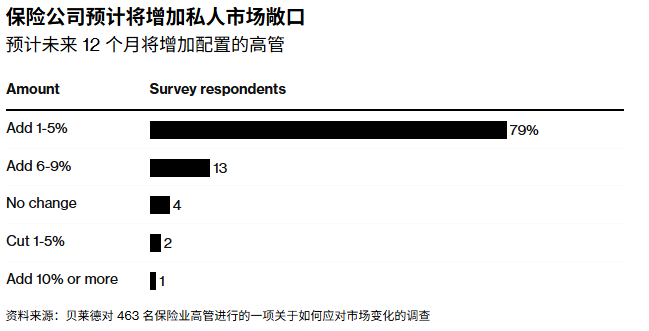
Core Insights - The global insurance industry, managing $23 trillion in assets, is planning to increase allocations to private markets as a strategy to smooth long-term returns [1] - A survey of 463 insurance executives revealed that 93% expect to increase private asset holdings in the next 12 months, while only 3% anticipate a decrease [1] - Investment-grade private credit, including infrastructure debt and private bonds, remains the most favored asset class among investors [1] Group 1 - Insurance companies have increasingly embraced alternative assets, with private equity firms acquiring insurance companies driving growth in private credit, raising concerns among lawmakers about potential risks in the $1.7 trillion market [4] - Executives in the insurance industry are currently prioritizing the diversification and low volatility potential of private assets over merely seeking higher returns [4] - Liquidity is the primary concern for insurance executives when selecting private assets [4] Group 2 - The interest in private assets is seen as a long-term structural shift rather than a trend driven by low interest rates, according to BlackRock's global insurance strategist Mark Erikson [5] - Despite significant investments in private credit by large insurance companies, smaller firms are also beginning to increase their allocations to alternative assets [4] - Following the prolonged low interest rate environment since the 2008 financial crisis, insurance companies have turned to private markets for yield, and recent interest rate hikes have not led to a reduction in private asset allocations [4]