
养生壶

Search documents
北鼎股份(300824) - 300824北鼎股份投资者关系管理信息20260330
2026-03-30 15:20
Group 1: Financial Performance - In 2025, the company achieved a revenue of 9.51 billion yuan, a year-on-year increase of 26.13% [3] - The net profit attributable to shareholders reached 1.14 billion yuan, growing by 63.35% year-on-year [3] - The net profit after deducting non-recurring gains and losses was 1.10 billion yuan, reflecting a 74.59% increase [3] - The main growth driver was the domestic business, which generated 7.20 billion yuan, up 37.76% year-on-year [3] Group 2: Sales Channels and Product Performance - Direct sales channels grew by 40.12%, while the distribution channels also maintained rapid growth, with JD's distribution increasing by 41.53% and gift channels by 88.84% [3] - The company’s product categories, including steam pots, health pots, multifunctional pots, and cooking utensils, contributed significantly to revenue growth [3] - The overseas business revenue from self-owned brands decreased by 8.23% due to a strategic focus on profitability and the contraction of low-efficiency areas [3] Group 3: Operational Strategies - The company emphasized cost reduction and efficiency improvement, which positively impacted profit margins [3] - The business model for overseas brand operations has shifted to a distribution model, which, despite affecting revenue recognition, has improved cash flow and profitability [3] - The company plans to balance revenue growth and profit margin enhancement, with a focus on long-term product development and strategic resource allocation [7] Group 4: Market and Policy Insights - The impact of national consumption stimulus policies exceeded expectations, while the negative effects of the US-China trade war were less severe than anticipated [3] - The company does not rely on short-term policy factors for product strategy but focuses on long-term research and development planning [4] - The company is cautious about expanding into Southeast Asia due to limited mid-to-high-end consumer markets and significant product specification differences [9]

北鼎股份:自有品牌发展迅速,盈利能力有所提升-20260327
GOLDEN SUN SECURITIES· 2026-03-27 03:24
Investment Rating - The report maintains a "Buy" rating for the company [6] Core Insights - The company achieved a revenue of 950 million yuan in 2025, representing a year-on-year growth of 26.1%. The net profit attributable to the parent company was 110 million yuan, up 63.3% year-on-year, and the net profit after deducting non-recurring items was also 110 million yuan, reflecting a 74.6% increase year-on-year [1] - The rapid development of the company's own brand has led to improved profitability, with domestic sales growing faster than overseas sales. The revenue from the self-owned brand business reached 780 million yuan, a year-on-year increase of 32.75%, accounting for 81.92% of total revenue [1] - The company’s gross margin improved to 50.0% in 2025, an increase of 3.1 percentage points year-on-year, with the gross margin for self-owned brands at 56.55% [3] Financial Performance - In Q4 2025, the company reported a single-quarter revenue of 300 million yuan, a year-on-year increase of 21.1%, with a net profit of 30 million yuan, remaining flat year-on-year [1] - The company’s revenue from the OEM/ODM business was 172 million yuan, a year-on-year increase of 2.87%, accounting for 18.08% of total revenue [1] - The company’s net profit margin for 2025 was 11.9%, an increase of 2.7 percentage points year-on-year, while the net profit margin for Q4 2025 was 10.2%, a decrease of 2.2 percentage points year-on-year [3] Revenue Breakdown - In 2025, the revenue from various product categories showed significant growth: electric appliances (steaming pots, health pots, multifunctional boilers) increased by 35.3%, 21.7%, and 134.8% respectively, while other electric appliances saw a decline of 6.5% [2] - In terms of kitchenware and drinkware, revenues grew by 55.2% and 40.3% respectively, with their revenue shares at 17% and 12% [2] Future Projections - The company is expected to achieve net profits of 134 million yuan, 155 million yuan, and 179 million yuan for the years 2026, 2027, and 2028 respectively, reflecting year-on-year growth rates of 18.0%, 16.0%, and 15.0% [3]
北鼎股份(300824):自有品牌发展迅速,盈利能力有所提升
GOLDEN SUN SECURITIES· 2026-03-27 03:05
Investment Rating - The report maintains a "Buy" rating for the company [6] Core Insights - The company achieved a revenue of 950 million yuan in 2025, representing a year-on-year growth of 26.1%. The net profit attributable to the parent company was 110 million yuan, up 63.3% year-on-year, and the net profit after deducting non-recurring items was also 110 million yuan, reflecting a 74.6% increase year-on-year [1] - The rapid development of the company's own brand has led to improved profitability, with domestic sales growth outpacing international sales. The revenue from the self-owned brand business reached 780 million yuan, a year-on-year increase of 32.75%, accounting for 81.92% of total revenue [1] - The company’s gross margin improved to 50.0% in 2025, an increase of 3.1 percentage points year-on-year, with the gross margin for self-owned brands at 56.55% [3] Financial Performance - In Q4 2025, the company reported a single-quarter revenue of 300 million yuan, a year-on-year increase of 21.1%, with a net profit of 30 million yuan, remaining flat year-on-year [1] - The company’s revenue from the OEM/ODM business was 172 million yuan, a year-on-year increase of 2.87%, accounting for 18.08% of total revenue [1] - The projected net profits for 2026, 2027, and 2028 are expected to be 134 million yuan, 155 million yuan, and 179 million yuan, respectively, with growth rates of 18.0%, 16.0%, and 15.0% year-on-year [3]
家用电器行业专题报告:重视红利与全球化
CAITONG SECURITIES· 2026-03-24 13:20
Investment Rating - The industry investment rating is "Positive" (maintained) [1] Core Viewpoints - The report emphasizes the importance of dividends and globalization in the home appliance sector [1] - Domestic sales of color TVs and washing machines have shown good performance in offline channels since 2026, while online sales of some small appliances have also performed well [6][10] - Export performance has been strong since 2026, with a notable increase in home appliance exports to emerging markets [19][24] - The report suggests that despite growth pressures due to high base effects from the previous year, leading brands are showing resilience and growth potential [38] Summary by Sections Domestic Sales - In January-February 2026, offline sales of color TVs and washing machines performed well, while online sales faced pressure. For color TVs, online sales were 1.973 million units with a revenue of 6.94 billion yuan, showing a year-on-year decline of 29.7% and 14.5% respectively. Offline sales were 534,000 units with a revenue of 3.45 billion yuan, showing a year-on-year increase of 25.1% and 27.8% [10] - For refrigerators, online sales were 2.019 million units with a revenue of 5.22 billion yuan, down 17.0% and 4.9% year-on-year, while offline sales were 523,000 units with a revenue of 3.10 billion yuan, up 8.8% and down 0.6% year-on-year [10] - Air conditioning sales faced overall pressure, with online sales of 1.254 million units and a revenue of 3.89 billion yuan, down 37.3% and 35.3% year-on-year [10] Export Performance - Since 2026, the export performance has been strong, with total domestic exports in January-February 2026 amounting to 4.6 trillion yuan, a year-on-year increase of 19%. In USD terms, the total export was 0.7 trillion USD, up 22% year-on-year [19] - Home appliance exports in January-February 2026 were 119.2 billion yuan, reflecting a year-on-year increase of 9% [19] Investment Recommendations - The report recommends focusing on companies such as TCL Electronics, Midea Group, Gree Electric, Haier Smart Home, Hisense Visual, Ecovacs, and Roborock, highlighting their strong dividend yields and defensive attributes in the current market environment [38]





年货节吹起“悦己”风,小家电如何重塑年轻人的年味与日常
Sou Hu Cai Jing· 2026-01-23 13:55
Core Insights - The Tmall New Year shopping festival is witnessing a surge in sales of kitchen small appliances, with products like vacuum machines, air fryers, health pots, soy milk machines, and wall-breaking machines ranking among the top five in live streaming sales, showing significant growth compared to the same period last year [1] Group 1: Consumer Behavior - Consumers are not becoming "lazy"; instead, they are finding a balance between wanting to cook and lacking culinary skills, leading to a demand for convenient cooking tools [3] - Young consumers are no longer satisfied with just "making do" with meals; they seek to create dishes that have a sense of ritual using convenient appliances [3] Group 2: Live Streaming Influence - Live streaming sessions, particularly those hosted by influencers like Li Jiaqi, showcase the transformation of products into appealing food outcomes, enhancing consumer understanding of the appliances' usage and benefits [5] - The immersive demonstration style in live streams highlights the high cost-performance ratio of previously lesser-known products, aligning with young consumers' pursuit of a refined lifestyle [5] Group 3: Social Media and Cooking Trends - The lowering of cooking barriers through small appliances has encouraged many novice cooks to attempt homemade meals, leading to the sharing of their culinary achievements on social media platforms [5] - The popularity of kitchen small appliances during the New Year festival reflects consumers' pursuit of quality of life, embodying the essence of "self-satisfying consumption" by enhancing satisfaction and happiness in daily meals [5] Group 4: Role of Live Streaming - Live streaming serves multiple roles: it is a showcase for product functionality, an interactive platform for user communication, and a trust bridge connecting brands with consumers [5] - The "visible, learnable, and usable" presentation style in live streams transforms small appliances from mere kitchen tools into significant contributors to home dining upgrades and enhanced life rituals [5]

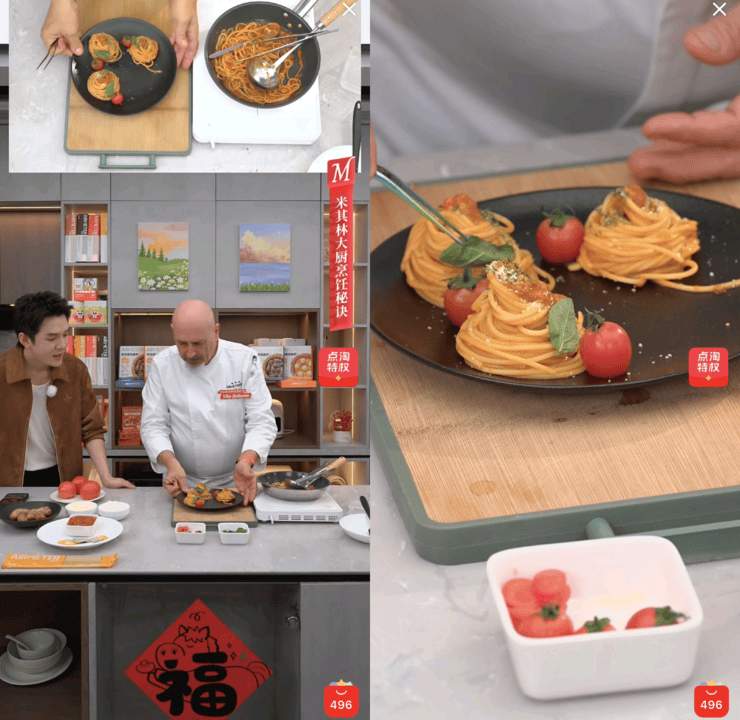
厨房小家电成“悦己”新宠,李佳琦直播间引领年货节消费热潮
Sou Hu Cai Jing· 2026-01-22 15:42
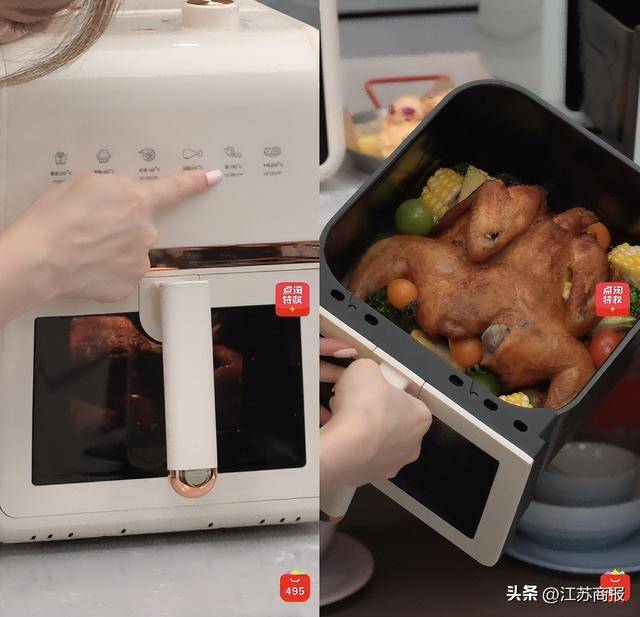
Core Insights - The rise of small kitchen appliances during the recent Chinese New Year shopping festival reflects a shift in consumer behavior, where young individuals are increasingly using these tools to create elaborate meals with ease [1][8] - Live streaming platforms, particularly those featuring influencers like Li Jiaqi, play a crucial role in demonstrating the functionality and appeal of these appliances, making cooking more accessible and enjoyable for consumers [3][8] Group 1: Consumer Behavior - Young consumers are no longer satisfied with merely "making do" with their meals; they seek to create dishes that have a sense of ceremony and quality, facilitated by convenient kitchen gadgets [3][8] - The popularity of small appliances such as air fryers, steamers, and multifunctional cooking machines has surged, with significant sales increases compared to the previous year [1][8] Group 2: Live Streaming Influence - Live demonstrations in streaming sessions showcase how to use appliances effectively, helping consumers replicate restaurant-quality dishes at home [5][7] - The immersive nature of these live sessions highlights the high cost-performance ratio of certain products, aligning with young consumers' desire for a refined home experience [7] Group 3: Market Trends - The demand for small kitchen appliances is indicative of a broader trend towards "self-satisfying consumption," where consumers seek to enhance their daily lives and find joy in cooking [8] - The successful sales of products like the Hai Shi coffee machine, which sold out rapidly during a live session, exemplify the effectiveness of live streaming in driving consumer interest and sales [7]
开播即“卖爆” 超六千企业参与!“广货行天下”首日开门红
Nan Fang Du Shi Bao· 2026-01-17 00:00
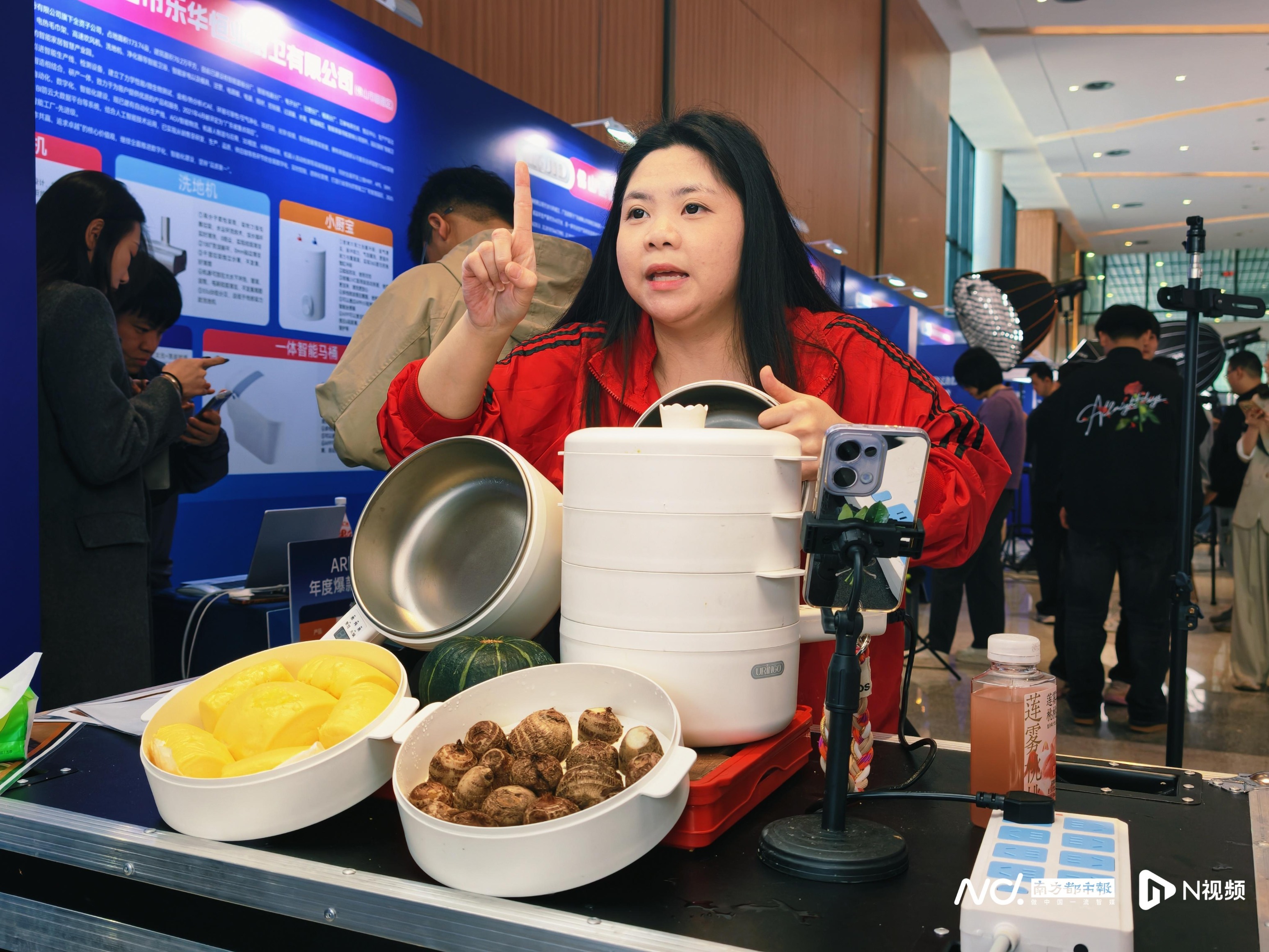
Core Viewpoint - The "Guangdong Goods Going Global" spring campaign aims to boost sales and market presence for Guangdong's manufacturing sector, particularly in the home appliance industry, through a series of promotional activities and live-streaming events [4][9][19]. Group 1: Event Overview - The spring campaign was launched on January 15 in Foshan, Guangdong, featuring over 1,300 local home appliance companies, including major brands like Midea, Gree, and Galanz [4][9]. - The campaign will include 12 online and offline promotional events throughout the first quarter, aiming to enhance online sales of high-quality products from Guangdong [4][23]. - The event is supported by over 10 major commercial platforms, including Alibaba, JD.com, and Douyin, which will help in promoting the products [5][19]. Group 2: Industry Strengths - Guangdong's manufacturing sector is robust, with 44 out of 104 industrial products having over 10% of national production, and 23 products exceeding 25% [9]. - The home appliance industry in Guangdong has surpassed 1 trillion yuan in scale, accounting for nearly 50% of national revenue and exports, with three companies reaching a revenue of over 100 billion yuan [9][19]. - Guangdong produces a significant portion of the nation's appliances, including 50% of air conditioners and 40% of televisions [9]. Group 3: Promotional Strategies - The campaign emphasizes substantial discounts, with some products offering over 20% off due to platform subsidies and trade-in policies [10][19]. - Live-streaming events feature influencers who effectively communicate product benefits, enhancing consumer engagement and driving sales [11][15]. - The integration of online and offline sales strategies aims to create a seamless shopping experience, allowing consumers to purchase products directly during live streams [15][18]. Group 4: Sales Performance - Initial reports indicate a 100% increase in sales for certain products during the live-streaming events, showcasing the effectiveness of the promotional strategies [19]. - Brands like Xiaoxiong Electric and Galanz reported significant increases in traffic and sales during the campaign, with Xiaoxiong's sales growing by over 15% [18][19]. - The campaign is expected to not only boost immediate sales but also enhance the long-term brand perception of Guangdong products [15][19]. Group 5: Future Plans - Following the initial event in Foshan, additional promotional activities will be held in cities like Dongguan and Guangzhou, focusing on various product categories [20][24]. - The campaign aims to establish itself as a sustainable and influential promotional brand, fostering a continuous cycle of policy support, platform resources, and enterprise supply [24].
开播即“卖爆”,超六千企业参与!“广货行天下”首日开门红
Nan Fang Du Shi Bao· 2026-01-15 12:07
Core Insights - The "Guangdong Goods Going Global" spring campaign has successfully boosted sales, with reports of a 100% increase in sales during the live broadcast event [1][6] - Over 6,000 enterprises from various sectors, including home appliances, electronics, and food, participated in the campaign, supported by major e-commerce platforms [2][9] - The campaign aims to enhance the competitiveness of Guangdong's manufacturing sector and promote local products both domestically and internationally [7][10] Group 1: Campaign Overview - The spring campaign features 12 online and offline promotional events throughout the first quarter, focusing on high-quality products from Guangdong [1][9] - Major brands like Midea, Gree, and Hisense showcased their products during the event, highlighting the strength of Guangdong's manufacturing base [2][3] - The campaign is designed to create a new sales trend for Guangdong products, leveraging both online and offline channels [1][7] Group 2: Product Quality and Innovation - Guangdong's manufacturing sector is characterized by a strong product base, with 44 industrial products accounting for over 10% of national output [2][3] - The campaign emphasizes product quality improvements and innovative features, such as AI technology in air conditioning units [5][6] - The introduction of "smart" products, including consumer drones and industrial robots, showcases Guangdong's technological advancements [3][5] Group 3: Marketing Strategies - The use of live streaming and influencer marketing has transformed traditional promotional methods, enhancing consumer engagement and driving sales [4][6] - The campaign's strategy includes creating immersive experiences for consumers, allowing them to interact with products in real-time [5][6] - E-commerce platforms are actively promoting Guangdong products through targeted marketing and special promotional sections [6][9] Group 4: Future Plans - The campaign aims to establish a sustainable promotional brand that will continue to drive sales and enhance market vitality [10] - Future events will focus on various product categories, including clothing and food, to further promote local advantages [9][10] - The collaboration between government, enterprises, and platforms is expected to create a positive feedback loop, enhancing brand recognition and consumer trust [7][10]


小家电要中看更要中用
Zhong Guo Chan Ye Jing Ji Xin Xi Wang· 2025-12-31 02:07
Group 1 - The small home appliance market is favored for its aesthetic appeal, compact size, and affordability, but issues like poor durability and difficult repairs are significant consumer concerns [1] - Complaints about small appliances often involve "quality issues" and "after-sales evasion," with products like health pots and air fryers having short lifespans, leading to negative consumer experiences [1] - Small appliance companies heavily rely on marketing and internet sales, with one company's semi-annual report showing R&D expenses of 110 million yuan and sales expenses of 430 million yuan, indicating a 4:1 ratio [1] Group 2 - The high degree of product segmentation and integration in small appliances leads to high repair costs relative to the product price, with many companies only offering return-for-repair services [1] - To retain customers, companies must prioritize product quality, invest in core technology and quality control, and consider providing spare parts for easily damaged components [1] - Establishing standardized repair protocols and regularly collecting consumer feedback can help address quality and after-sales issues in the small appliance industry [2]
小家电中看更要中用
Jing Ji Ri Bao· 2025-12-23 22:49
Group 1 - The small home appliance market is favored for its aesthetic appeal, compact size, and affordability, but issues like poor durability and difficult repairs are prevalent among consumers [1] - Complaints about small appliances often include "quality issues" and "after-sales evasion," with products like health pots and air fryers having short usage lifespans, leading to poor consumer experiences [1] - Small appliance companies heavily rely on marketing and internet sales, with one company's semi-annual report showing R&D expenses of 110 million yuan and sales expenses of 430 million yuan, indicating a nearly fourfold difference [1] Group 2 - The high degree of product segmentation and integration in small appliances leads to high repair costs relative to the product price, with limited profit margins in after-sales services, resulting in most companies only offering return-for-repair options [1] - To retain customers, companies must prioritize product quality, invest in core technologies and quality control, and consider providing spare parts for easily damaged components [1] - Establishing standardized repair protocols and collecting consumer feedback regularly can help address quality and after-sales issues in the small appliance industry [2]